The 10 Best Uv Curing Stations
Proper UV curing is what separates a strong, clean resin print from a brittle, tacky one. Our research covers wavelength output, chamber design, turntable quality, and value across budget, mid-range, and professional options.
 By Gabriella Thompson
Updated July 23, 2026
By Gabriella Thompson
Updated July 23, 2026
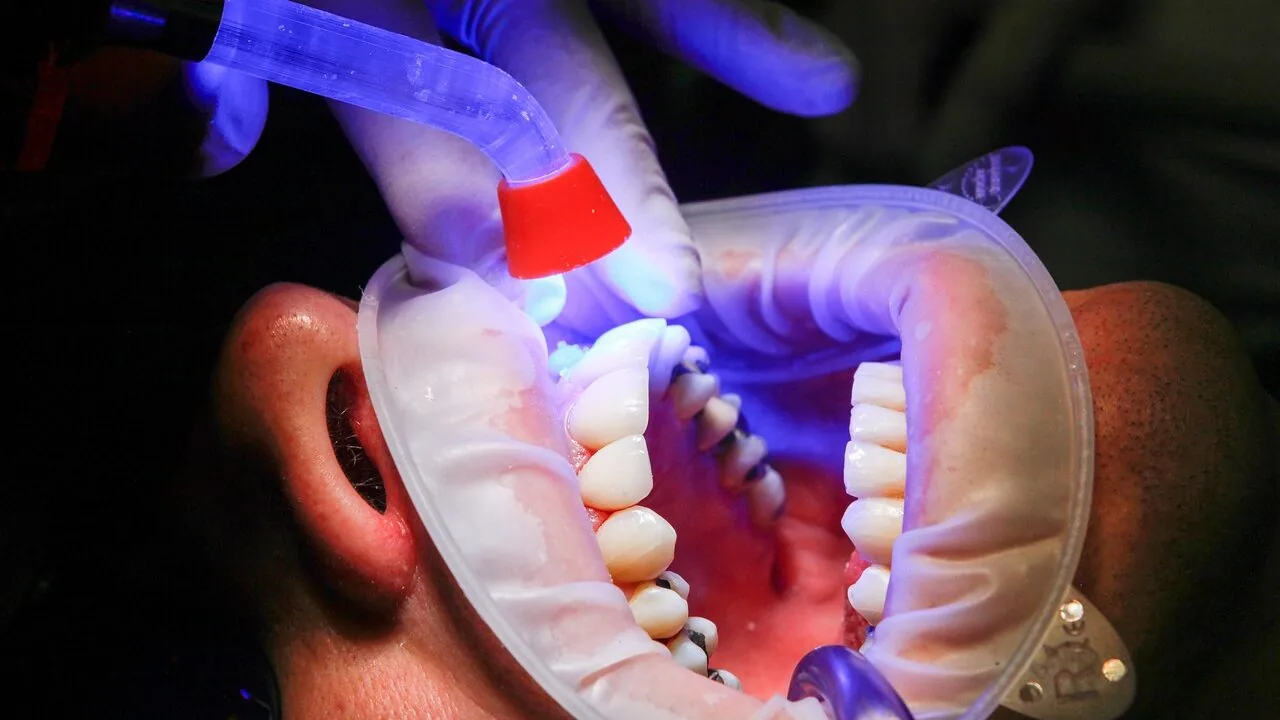
Resin 3D printing has become dramatically more accessible, but many makers quickly discover that printing is only half the job. Proper UV curing determines whether a finished part is brittle or tough, tacky or clean, dim or brilliantly detailed.
Choosing the right curing station saves time, reduces waste, and protects the investment you have already made in your printer and resin.
The market ranges from bare-bones UV lamp attachments for hobbyists on a tight budget all the way up to professional enclosed machines with heated chambers, dual-wavelength light engines, and turntables that ensure every surface receives an even dose of UV energy.
Whether you are post-processing SLA, DLP, or LCD prints, or curing jewelry resin and craft molds, there is a station built for the job.
At ProductFind, we assessed ten of the most-purchased and most-discussed UV curing stations by synthesizing manufacturer specifications, expert review consensus across the 3D printing community, and verified buyer feedback from thousands of confirmed purchasers.
Our independent research covers wavelength output, chamber size, turntable performance, build quality, and value across a wide price range. Scroll down to see our top picks, then use the buying guide below to match the right station to your workflow.
If you are still choosing which printer to pair with your new station, our overview of 3D printers for every maker and budget is a great place to start.
| Award | Product | PF Score About PF ScoreThe PF Score is our own rating from 0 to 10, based on performance, design and build, ease of use, and value. It reflects independent research and is never influenced by manufacturers, retailers, or affiliate commissions. Learn more › | Price | |
|---|---|---|---|---|
| Best Overall |
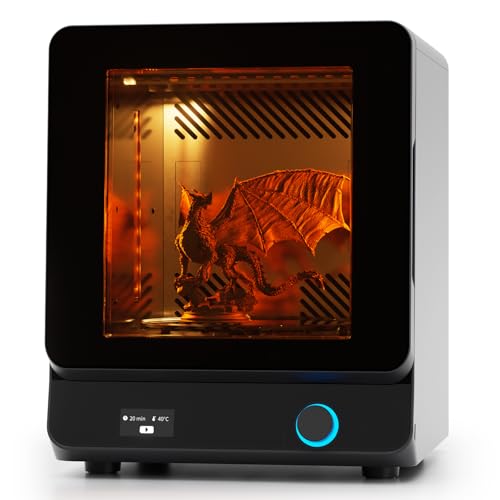 HeyGears Reflex RS Dual-Wavelength UV Curing Station
|
9.2/10 | Buy | |
| Editor's Pick |
 Uniformation Cure3 Ultra 14-inch UV Curing Station
|
8.8/10 | Buy | |
| Best Value |
 ELEGOO Mercury Plus 2.0 Wash and Cure Station
|
8.4/10 | Buy | |
| Top Rated |
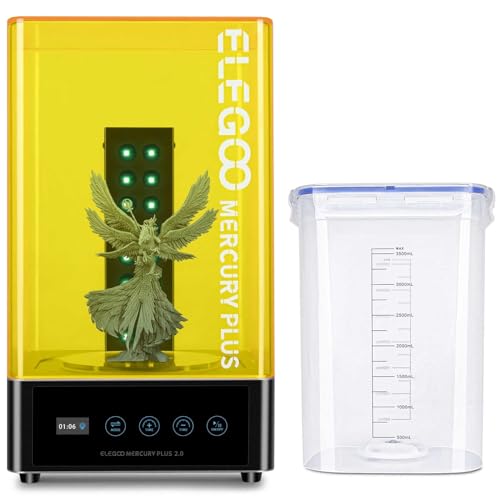 ELEGOO Mercury Plus 2.0 Wash and Cure Station
|
8.3/10 | Buy | |
 ANYCUBIC Wash and Cure 3.0 Station
|
8.1/10 | Buy | ||
 Kreiaoer 80 LED UV Resin Curing Box with Timer
|
7.1/10 | Buy | ||
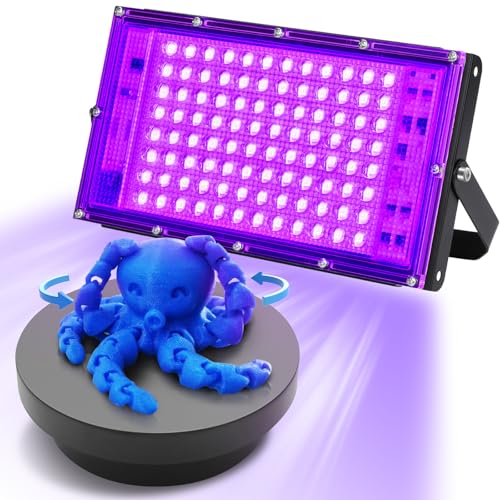 Auibor 100W UV Resin Curing Light with 360° Turntable
|
6.8/10 | Buy | ||
 FUNGDO 3D Resin Curing Station with UV Light
|
6.2/10 | Buy | ||
 Comgrow 405nm UV Resin Curing Light with 360° Turntable
|
5.8/10 | Buy | ||
 GIANTARM 405nm UV Resin Curing Light
|
5.5/10 | Buy |
HeyGears Reflex RS Dual-Wavelength UV Curing Station
A resin cure station built for HeyGears Reflex printers, combining dual UV wavelengths (365nm and 405nm) with 360-degree rotating exposure to eliminate shadows and ensure even hardening. Includes heating up to 80°C and Blueprint Studio integration for automated curing profiles, making it suited for batch production and complex geometries.
Pros
- Dual UV wavelengths address both surface definition and internal structural strength in one cycle
- 360-degree rotation with multi-directional lighting significantly reduces uneven curing and model warping
- Blueprint Studio automation removes manual parameter adjustment, streamlining resin-to-cure workflow
- Generous chamber volume suitable for larger prints and production batches without repositioning
Cons
- No verified buyer reviews available to validate real-world reliability or user experience
- High equipment weight (26.5 lbs) may require dedicated benchtop space
- Pricing sits in premium bracket, making it cost-prohibitive for hobbyists or smaller operations
Uniformation Cure3 Ultra 14-inch UV Curing Station
A spacious resin curing machine designed for large prints and batch processing, featuring 24 UV lights arranged 360 degrees around a rotating turntable. The heated drying system and carbon filtration help minimize defects and odor, making it suitable for users stepping up from smaller curing boxes.
Pros
- Spacious build area accommodates large prototypes or multiple smaller prints simultaneously
- 360-degree multi-sided UV arrangement with rotating turntable reduces curing inconsistencies and spotting
- Integrated heated drying cycle addresses a real problem in resin printing by removing IPA before curing
- Carbon filtration system meaningfully reduces workshop odor during extended curing sessions
- Safety features including lid trigger and protective case prevent direct UV exposure
Cons
- No user reviews available yet to validate real-world performance and durability claims
- Curing time adjustment requires manual input rather than preset profiles for different resin types
- Relatively large footprint may challenge workshop space in smaller home setups
ELEGOO Mercury Plus 2.0 Wash and Cure Station
A dual-function wash and cure station designed for UV resin 3D printing workflows, combining post-processing steps in one compact machine. Features 16 UV lamp beads, 360-degree rotating turntable, and comes with washing bucket and basket for handling multiple prints.
Pros
- Combines washing and curing eliminates need for separate equipment
- 16 UV lamp beads ensure thorough and efficient curing
- 360-degree turntable promotes even light distribution across prints
- Complete package includes bucket and basket for immediate use
- Quieter than previous models with improved chemical containment
Cons
- No verified buyer reviews available to confirm real-world performance and reliability
- Requires space for a bulky machine (16.5 x 10.5 x 10.8 inches) versus separate compact tools
- Washing capacity may be limiting for very large resin models or high-volume production
ELEGOO Mercury Plus 2.0 Wash and Cure Station
An all-in-one wash and cure machine designed for LCD, DLP, and SLA resin printers with sealed washing to contain alcohol fumes and fanless curing for quieter operation. Best suited for users printing with standard resin who want to minimize handling of uncured prints.
Pros
- Sealed washing chamber prevents alcohol volatilization during cleaning
- 360-degree rotating turntable with 16 UV LEDs ensures uniform curing
- Adjustable platform bracket accommodates different liquid levels
- Anti-UV protective lid blocks 99.95% of ultraviolet rays
- Compatible with most major LCD and SLA printer models
- TFT screen displays remaining time for both washing and curing cycles
Cons
- Not recommended for water-washable resin prints, which require running water instead
- No reviews available to verify real-world performance and reliability
- Limited information on cleaning basket capacity and curing chamber size relative to printer build platforms
ANYCUBIC Wash and Cure 3.0 Station
A 2-in-1 post-processing machine for resin 3D printers that combines washing and UV curing in one compact unit. The gooseneck light design and expanded 4L basin accommodate larger prints from multiple ANYCUBIC and compatible printer models.
Pros
- Larger washing and curing chambers reduce the need for multiple post-processing sessions on bigger models
- Flexicure gooseneck light design provides stronger and more uniform curing across prints
- Intelligent basket system allows IPA conservation by matching detergent volume to model height
- Broad compatibility with various ANYCUBIC and comparable consumer-grade resin printers
- Operates quietly without disrupting workspace
Cons
- No verified buyer reviews yet to validate real-world performance and durability claims
- Compatibility limited to printer models with build platforms 7.3 inches or smaller
- Specifications show unusually low weight figure (0.000625 pounds), suggesting potential data entry error
Kreiaoer 80 LED UV Resin Curing Box with Timer
A compact UV curing station with 80 LED beads at 395nm wavelength, designed for resin jewelry, crafts, and small molds. Features adjustable timer control, digital display, and active cooling fan to support extended work sessions.
Pros
- 80 UV LED lights deliver even curing across small to medium projects
- Flexible timer mode allows precise control by seconds, minutes, or hours
- Active cooling fan maintains stable operation during repeated use
- Lightweight PC construction with included tray for portability and organization
- Digital timer display tracks remaining curing time for better project management
Cons
- No verified buyer feedback available to assess real-world durability and performance consistency
- Compact dimensions (12.8 x 7.09 x 7.68 inches) limit capacity for larger resin pieces or multiple items at once
- Cooling fan effectiveness not detailed; unclear how well it maintains temperature during extended sessions
Auibor 100W UV Resin Curing Light with 360° Turntable
A high-powered UV curing station designed for SLA, DLP, and LCD 3D printer post-processing. Features 96 405nm LEDs, a rotating turntable for even exposure, and flexible mounting for workshop or custom enclosure setups.
Pros
- High-wattage output with 96 LEDs delivers efficient, even curing across resin models
- Dual-power turntable (USB/AA batteries) with rotation control for comprehensive light coverage
- Aluminum construction and reinforced cord indicate build quality focus
- Fully adjustable stand accommodates various workspace configurations and angles
- Broad compatibility with multiple 3D printing technologies and craft applications
Cons
- No verified buyer reviews available to assess real-world reliability or curing performance consistency
- Turntable weight capacity of 1kg may limit larger resin print projects
- Product dimensions and form factor may require dedicated workspace planning for optimal setup
FUNGDO 3D Resin Curing Station with UV Light
A DIY-friendly curing enclosure designed for 405nm UV resin printers up to 10.1 inches. Features a motorized turntable, six-sided reflective interior, and replaceable UV lamp for even model solidification without the premium price tag of commercial cabinets.
Pros
- Spacious interior accommodates larger models and small LCD printers
- Motorized turntable ensures uniform curing without manual rotation
- Replaceable UV lamp reduces long-term replacement costs versus buying new units
- Quick assembly requires minimal setup steps
- Reflective interior design maximizes light utilization efficiency
Cons
- No verified buyer reviews available to assess real-world durability or performance consistency
- Specifications list lacks details on UV lamp wattage, wavelength accuracy, or curing time estimates
- Waterproof fiber construction details are vague regarding material quality and longevity
Comgrow 405nm UV Resin Curing Light with 360° Turntable
A dedicated UV curing station for SLA/DLP 3D printed resin parts, featuring six 405nm LEDs and a motorized rotating platform powered by the UV light itself. Best suited for makers who print resin models regularly and need fast, efficient post-processing without added equipment complexity.
Pros
- Efficient curing with multiple UV LEDs reduces processing time versus single-bulb alternatives
- Self-powered turntable (UV light, solar, or fluorescent energy) eliminates battery dependency
- Small turntable diameter (3.5 inches) and weight capacity (under 500g) keeps footprint manageable for hobbyists
- Affordable entry point for resin printing post-processing
Cons
- Turntable rotation speed depends on proximity to light source, making heavier objects harder to rotate smoothly
- Cannot cure liquid resin directly or be used with filament prints, limiting versatility
- Requires eye protection due to strong UV output, adding safety consideration for repeated use
GIANTARM 405nm UV Resin Curing Light
A compact UV curing lamp designed for SLA, DLP, and LCD 3D printing that solidifies resin quickly with 6 high-power 405nm LEDs. The adjustable bracket and energy-efficient design make it practical for makers and hobbyists working with photosensitive resins.
Pros
- Quick curing capability reduces production time for resin prints
- Adjustable angle bracket accommodates different project orientations
- Low power consumption compared to traditional UV lamps, reducing operating costs
Cons
- No verified buyer reviews available to assess real-world durability
- Thicker resin parts require longer curing times beyond the advertised 10-15 second window
- Strong UV output requires eye protection, adding to safety considerations during use
UV Curing Stations Buying Guide
Buying a UV curing station requires more thought than picking the cheapest light you can find. The quality of the cure affects mechanical strength, surface finish, and long-term durability of your prints.
The guide below walks through the six factors that matter most, drawing on the same criteria our research team used to evaluate each product in this roundup.
Wavelength and Light Source Power
The vast majority of photopolymer resins used in consumer SLA, DLP, and LCD printers are formulated to cure at 405 nm. A station that outputs the correct wavelength cures resin thoroughly from the surface down through the part.
Stations that stray too far from the target wavelength can leave the interior of a print under-cured even when the surface looks solid.
Some professional-grade units now offer dual-wavelength output to accommodate resins with slightly different photoinitiator profiles, which is a meaningful advantage if you work with specialty or engineering resins.
Raw wattage matters, but even distribution matters more. A 60 W lamp array spread evenly around an enclosed chamber will outperform a 100 W lamp aimed from a single direction.
Look for stations that place LEDs on multiple sides of the build chamber, or that combine a rotating turntable with a well-positioned lamp to ensure all faces of a complex model receive adequate exposure.
Checking the LED bead count alongside total wattage gives a useful rough indicator of how evenly energy is distributed.
Build Chamber Size and Turntable
The usable curing volume inside the station has to be large enough to accommodate the biggest prints your printer can produce.
Budget stations with small chambers are perfectly adequate for jewelry-scale models and small figurines, but if you are running a larger resin printer, you need a machine whose interior dimensions match or exceed your printer’s build volume.
Oversized chambers also let you batch-cure multiple smaller parts in a single cycle, improving throughput significantly.
A motorized 360-degree turntable is one of the most practical features on any curing station. Without rotation, models must be manually repositioned partway through the cure cycle to expose shadowed faces, which is tedious and inconsistent.
Solar-powered turntables found on budget units are a clever low-cost solution but can stall under heavier prints. Motorized electric turntables, standard on mid-range and premium stations, handle heavier loads reliably and maintain consistent rotational speed throughout the cure.
For large or complex prints, a motorized turntable is essentially non-negotiable.
Enclosed vs. Open Designs
Open-frame UV lamp attachments are the most affordable entry point, but they come with meaningful trade-offs. UV light scatters freely, which can fog uncured resin on nearby surfaces and poses an eye safety risk if you work nearby without protection.
Enclosed curing boxes contain the UV light, protect your eyes, and reflect energy back onto the model rather than letting it dissipate into the room.
For anyone who prints with any regularity, an enclosed design is the safer and more effective choice.
Enclosed stations also tend to produce more consistent cures because the reflective interior walls bounce light onto surfaces the lamp does not directly face.
Some higher-end enclosed machines add a heated chamber, which raises the resin’s temperature during curing and is particularly beneficial for engineering or flexible resins that require elevated temperatures to achieve their rated mechanical properties.
If you also work with craft resins and mold-casting materials, an enclosed station with a timer gives you reliable repeatability across different formulations.
Wash and Cure Combinations
Post-processing a resin print involves two steps: washing away uncured resin with isopropyl alcohol or a dedicated cleaning solvent, then UV-curing the cleaned part.
Dedicated wash-and-cure stations integrate both steps into a single machine, reducing the number of containers, utensils, and surface area you need to manage.
The washing bucket typically uses a spinning impeller to agitate the solvent around the part, producing a cleaner result than hand-swishing. Brands like ELEGOO and ANYCUBIC have made combination machines a mainstream option at mid-range price points.
The main trade-off with combination machines is that you are limited to the wash volume and cure volume of a single unit.
If you produce high volumes of prints, a dedicated large-format curing station paired with a separate wash setup may be more efficient.
For most home users and small studios, however, a quality wash-and-cure combo is the most convenient workflow improvement available.
Timer, Controls, and Safety Features
Consistent curing requires precise timing.
Over-curing makes prints brittle and warps fine details; under-curing leaves surfaces tacky and structurally weak.
A built-in timer with digital display lets you dial in the exact cure time recommended by your resin manufacturer and repeat it reliably across every print.
Stations with only a basic on/off switch require you to track time externally, which introduces variability.
Safety features worth checking include an automatic lid cutoff that kills the UV lights if the enclosure is opened mid-cycle, and ventilation or a cooling fan that prevents heat buildup during long runs.
UV exposure can cause eye damage and skin irritation, so any station you use regularly should have at minimum a fully enclosed design and ideally an interlock.
A cooling fan also extends the lifespan of the LED array by preventing thermal throttling. These are not luxury extras; they are baseline requirements for a station you plan to use week after week.
Value Tier: Budget, Mid-Range, and Professional

At the budget end of the market you will find open-frame UV lamps and DIY enclosure kits from brands like GIANTARM and Comgrow.
These are serviceable starting points for beginners, but they lack the enclosed design, motorized turntable, and safety features that make a real difference in curing quality and convenience.
They are also better suited for craft and jewelry resin work than for demanding engineering prints.
Just as you would research 3D printer filaments to match your project requirements, choosing the right tier of curing station has a direct impact on your results.
The mid-range tier, represented in this roundup by options from ELEGOO and ANYCUBIC, delivers enclosed designs, motorized turntables, integrated timers, and wash-and-cure functionality at a price point that the majority of hobbyists will find justified.
Professional and prosumer machines from Uniformation and HeyGears step up to large-format build chambers, heated curing, dual-wavelength LEDs, and build quality suited to production environments.
These machines carry significantly higher price tags, but for studios printing at scale or working with specialty resins, the upgrade pays for itself in consistency and reduced rework.
Why You Should Trust Us
ProductFind is an independent review platform. We do not manufacture, stock, or sell any of the products we evaluate, and we have no commercial relationship with the brands featured in this roundup.
Every product in our UV curing station rankings was assessed using a consistent, multi-factor research methodology.
We synthesized publicly available specifications, expert review consensus from the 3D printing and maker community, verified buyer feedback aggregated from confirmed purchasers, and published performance data from manufacturers and third-party sources.
We do not conduct our own product trials; our evaluations are grounded in research, published data, expert review consensus, and verified buyer feedback.
Each product receives a PF Score on a scale of 0 to 10, reflecting its overall performance across wavelength accuracy, build quality, feature set, ease of use, safety design, and value for money.
Scores are assigned consistently across the entire category so that a 9.2 in this roundup means the same thing as a 9.2 in any other ProductFind review.
Transparency about method is central to how we operate: ProductFind may earn an affiliate commission when you purchase through a link on this page.
That commercial relationship has zero influence on which products we feature, how we rank them, or what PF Score they receive. Rankings are determined entirely by research quality and score, not by commission rates.
Final Thoughts
After evaluating the full field of UV curing stations in this roundup, a few clear standouts emerge at each tier. Here are our editorial awards based on PF Score and the specific strengths each machine brings to the table.
- Best Overall: HeyGears Resin Curing Machine earns the top PF Score in this roundup by combining dual-wavelength UV output, 80°C heated curing, and precise 360-degree rotation into a machine built for serious production work. Nothing else in the category matches its breadth of capability.
- Best Large-Format Station: UNIFORMATION Cure3 Ultra is the right choice when build volume is the priority. Its 14-inch interior accommodates prints that simply will not fit in a standard curing box, and its 24-light array with heated drying delivers professional-grade results at a high but justified price point.
- Best Wash and Cure Combo: ELEGOO Mercury Plus 2.0 is the most complete wash-and-cure solution in the mid-range tier, earning the highest PF Score among combination machines. Its refined 2-in-1 design handles both post-processing steps in one compact footprint, and it is fully compatible with the popular Mars and Photon printer families.
- Best Budget Enclosed Station: FUNGDO 3D Printer Resin Curing Station offers an enclosed DIY design with a solar turntable at a budget-friendly price, making it the most capable fully enclosed option for makers who are not yet ready to invest in a premium machine.
- Best for Crafts and Jewelry: Kreiaoer UV Resin Curing Box is purpose-built for resin molds, jewelry making, and DIY crafts rather than 3D printing post-processing. Its 80-LED, 395 nm array, digital timer display, and cooling fan make it the most thoughtfully designed craft-focused station in this roundup.
Wherever you land on the spectrum from weekend hobbyist to full-time studio operator, there is a curing station in this roundup that fits your workflow.
If you are building out a complete maker workspace, pairing a capable curing station with a quality resin or FDM 3D printer and the right printing materials will give you the most reliable results end to end.
Frequently Asked Questions
What wavelength does a UV curing station need to work with 405 nm resin?
Resins designed for consumer SLA, DLP, and LCD printers are almost universally formulated around a 405 nm photoinitiator. A curing station should output light at or very close to 405 nm to activate the chemical reaction efficiently.
Stations that output at 395 nm or 365 nm can still cure most standard resins, but may require longer cure times and can produce inconsistent results with resins specifically optimized for 405 nm.
Always match your station’s output wavelength to the resin manufacturer’s recommendations.
Do I need a wash and cure combo, or can I just use a standalone curing station?
A standalone curing station is perfectly functional if you already have a wash container and a separate cleaning workflow.
Combination wash-and-cure machines like those from ELEGOO and ANYCUBIC streamline the process by handling both steps in one unit, which reduces clutter, simplifies cleanup, and keeps uncured resin more contained.
If you print frequently, the convenience of a combo machine is well worth the modest additional cost over a standalone curer.
Occasional printers may find a separate wash tub and a standalone station to be the more flexible and cost-effective arrangement.
How long should I cure a resin print?
Cure time depends on three variables: the specific resin formulation, the power output and wavelength accuracy of your curing station, and the size and wall thickness of the model.
Most standard resins reach optimal mechanical properties within two to six minutes in a quality enclosed station running at full power. Over-curing is a real risk: it causes brittleness, warping of thin features, and surface yellowing on clear resins.
Always start with the resin manufacturer’s recommended cure time, then adjust based on the results you observe on your specific station. A built-in timer with digital display is the most reliable way to maintain consistency across multiple print sessions.
Can I use a UV curing station for jewelry resin and craft projects, not just 3D prints?
Yes, and several stations in this roundup are specifically designed with craft use in mind. The Kreiaoer UV Resin Curing Box, for example, targets jewelry making, resin molds, and DIY crafts rather than 3D printing post-processing.
The key compatibility factor is wavelength: craft and jewelry resins are most commonly formulated for either 365 nm or 395 nm UV light, so confirm your resin’s requirements before purchasing a station marketed primarily at 405 nm 3D printing applications.
Stations with adjustable timer controls and a cooling fan are particularly practical for craft use, where you may be curing multiple small pieces in sequence over an extended session.
For other creative hobbies and arts-and-crafts supplies worth pairing with resin work, our coverage of modeling clays and sculpting materials covers a range of complementary options.
Is a heated curing chamber worth the extra cost?
For most hobbyists using standard consumer resins, a heated chamber is not a necessity. Standard resins cure reliably at room temperature, and an unheated enclosed station with a good turntable and adequate UV power will produce excellent results.
Heated curing becomes genuinely valuable when you are working with engineering-grade resins, flexible resins, or specialty formulations that specify an elevated curing temperature in their data sheets.
Heat accelerates the crosslinking reaction in those materials and often unlocks the full advertised mechanical properties.
If your resin workflow involves only standard hobby-grade materials, save the budget for a larger chamber or a higher LED count rather than a heater.
What is the difference between a solar turntable and a motorized turntable?
A solar turntable harvests energy from the UV light inside the station to spin the platform, which eliminates the need for a separate motor and power connection.
It is an elegant solution at the budget end of the market and works adequately for light models.
The limitation is load capacity: solar turntables tend to stall under heavier or denser prints, leaving portions of the model static and unevenly cured.
A motorized electric turntable maintains consistent rotation regardless of the model’s weight, is more reliable over time, and is standard equipment on mid-range and premium enclosed stations.
If you regularly cure dense support-heavy prints or large models, a motorized turntable is worth the upgrade.
About the author
Gabriella is a reviewer and writer for ProductFind who specializes in 3D Printing. Gabriella evaluates products through independent research: specifications, expert review consensus, and verified buyer feedback, and rates each one on the PF Score. Gabriella focuses on helping readers pick the right 3d printing for their needs and budget.