The 12 Best Birdwatching Binoculars
Optical clarity, field of view, and waterproofing separate great birding binoculars from frustrating ones. Our picks cover every budget, from capable value options to premium ED glass optics.
 By Darlene Little
Updated July 23, 2026
By Darlene Little
Updated July 23, 2026
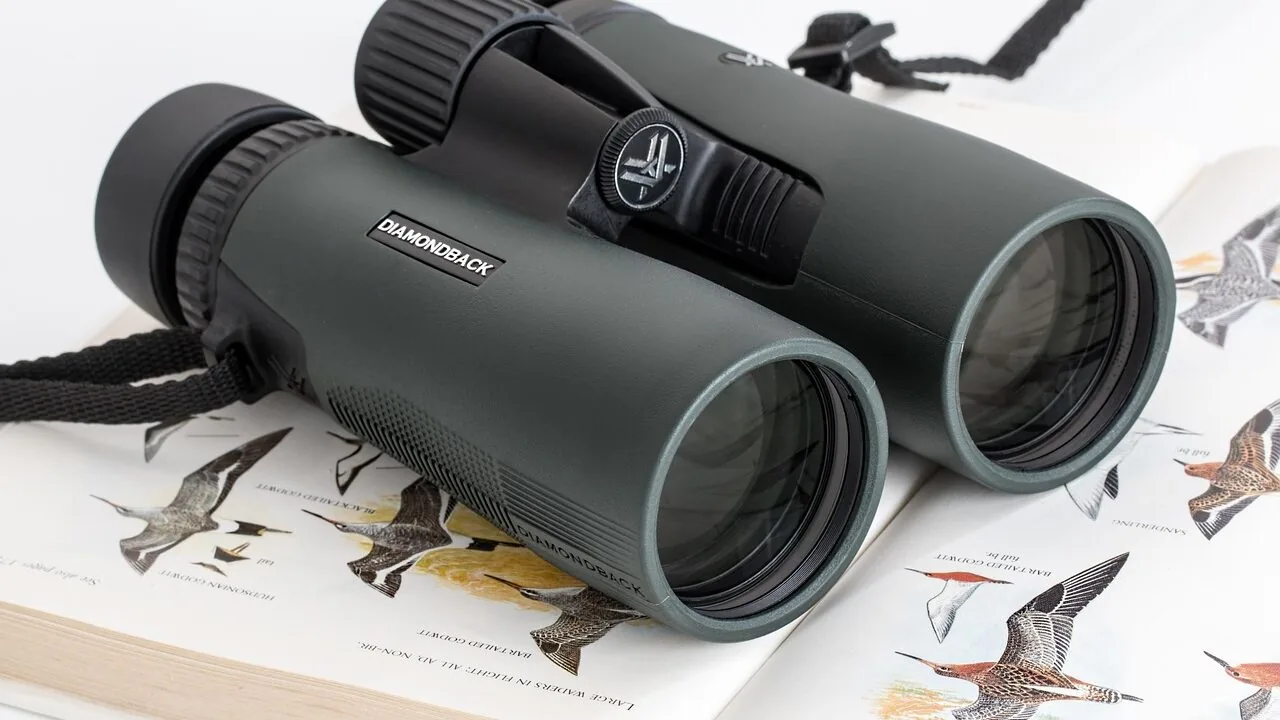
Finding the right pair of binoculars for bird watching can feel overwhelming.
The market ranges from budget-friendly compact models to premium optics built with ED glass and magnesium alloy bodies, and the difference in real-world performance between a mediocre and a great pair can mean the difference between spotting a distant warbler and walking away frustrated.
Whether you’re a beginner heading out on your first morning walk or a seasoned birder chasing lifers in dense forest, the right binoculars make every outing more rewarding.
If you’re serious about the hobby, pairing quality optics with a comfortable setup, the way you’d pair a well-designed bird cage with the right species, pays dividends every single time you raise the glass.
ProductFind researched and compared twelve pairs of birdwatching binoculars across a wide price spectrum, drawing on published optical specifications, expert review consensus from field ornithology and optics publications, and verified buyer feedback from confirmed purchasers.
Every model in this list was assessed using our consistent 0 to 10 PF Score framework. Our picks include options from Nikon, ZEISS, Vortex, Celestron, Bushnell, and Pentax, spanning entry-level value to premium field optics.
Scroll down to see our full ranked list.
| Award | Product | PF Score About PF ScoreThe PF Score is our own rating from 0 to 10, based on performance, design and build, ease of use, and value. It reflects independent research and is never influenced by manufacturers, retailers, or affiliate commissions. Learn more › | Price | |
|---|---|---|---|---|
| Best Overall |
 Nikon Monarch M5 8x42 Binoculars
|
9.0/10 | Buy | |
| Editor's Pick |
 ZEISS Terra ED 10x42 Binoculars
|
8.8/10 | Buy | |
| Best Value |
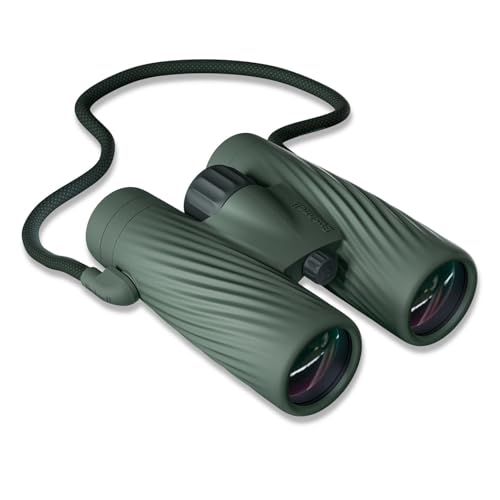 Bushnell A5 8x42 Binoculars
|
8.3/10 | Buy | |
| Top Rated |
 Vortex Crossfire HD 10x42 Binoculars
|
8.2/10 | Buy | |
 Celestron Nature DX 8x42 Binoculars
|
8.1/10 | Buy | ||
 Vortex Triumph HD 10x42 Binoculars
|
7.6/10 | Buy | ||
 Pentax 8.5x21 Papilio II Compact Binoculars
|
7.2/10 | Buy | ||
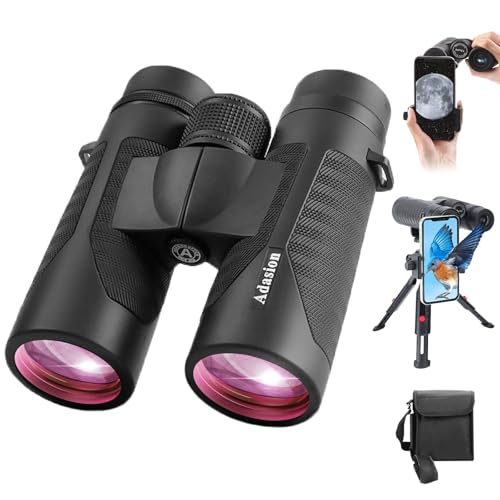 Adasion 12x42 HD Binoculars with Phone Adapter
|
5.8/10 | Buy | ||
 Sogries 10-30x50 Zoom Binoculars
|
5.3/10 | Buy | ||
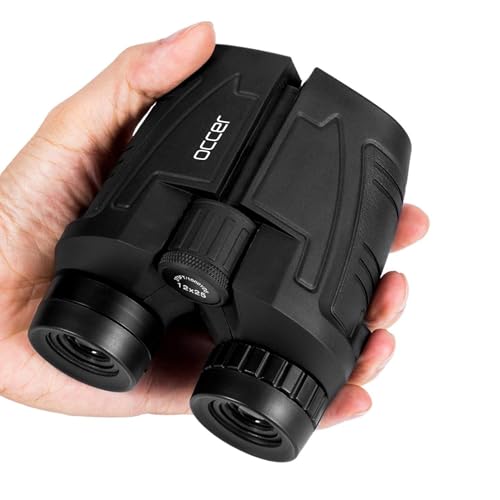 Occer 12x25 Compact Binoculars
|
5.1/10 | Buy | ||
 Hemrsey 20x32 Compact Binoculars for Adults
|
4.9/10 | Buy | ||
 Sfeoot 20x50 High-Power Binoculars
|
3.2/10 | Buy |
Nikon Monarch M5 8x42 Binoculars
Premium binoculars built for serious birdwatchers and wildlife observers, featuring ED glass optics for sharp, color-accurate views across varying light conditions. The 8x42 configuration balances magnification with a wide field of view, making tracking moving subjects straightforward.
Pros
- ED glass optics deliver sharp, color-accurate images with minimal fringing
- Broad field of view and smooth central focus knob make tracking natural and precise
- Fully waterproof and fogproof design rated for rugged outdoor conditions
- Balanced 8x42 magnification and objective size suits diverse observation scenarios
- Lightweight and ergonomic rubber-armored construction reduces fatigue during extended use
Cons
- No user reviews available yet, limiting real-world feedback on long-term durability
- Premium positioning may exceed budget for casual or entry-level users
- Rubber armor and eyecup comfort are not individually customizable beyond basic adjustments
ZEISS Terra ED 10x42 Binoculars
A compact 10x42 binocular built for nature enthusiasts who need reliable optics in variable conditions. The Schmidt-Pechan ED glass delivers 88% light transmission with anti-reflective coatings that handle low light and wet weather, while the waterproof fiberglass body keeps weight down at 1.5 pounds.
Pros
- Excellent light transmission and image contrast, especially in dim or wet conditions
- Large, easy-to-grip focus wheel positioned naturally for index finger access
- Durable waterproof construction weighs only 1.5 pounds for extended outdoor use
- Hydrophobic coating maintains clarity without obstruction in rain or moisture
Cons
- No verified buyer reviews available to assess real-world durability or performance
- Premium price point positions it above budget-friendly alternatives
- 10x42 magnification may be limiting for distant wildlife observation compared to higher-power models
Bushnell A5 8x42 Binoculars
The Bushnell A5 delivers bright, color-accurate views through fully multi-coated optics and 42mm objectives, making it reliable for early morning and low-light wildlife watching. Built tough with IPX7 waterproof protection and wave-patterned rubber grip, it suits both adults and kids who need dependable optics for outdoor adventures.
Pros
- Exceptional optical quality with multi-coated lenses and phase-coated prisms deliver clear, color-accurate views
- Large 42mm objectives excellent for gathering light during dawn, dusk, and overcast conditions
- IPX7 waterproof and fogproof rating provides reliable protection in wet outdoor environments
- Thoughtful design details like textured rubber grip and Snap-Lock strap enhance usability and portability
- Complete accessory package and lifetime warranty add long-term value
Cons
- No verified buyer reviews available yet to confirm real-world performance and durability
- Relatively heavy at 0.0625 pounds may feel cumbersome during extended handheld use
- Premium pricing suggests this positions above budget-friendly binocular options
Vortex Crossfire HD 10x42 Binoculars
The Crossfire HD 10x42 delivers sharp, color-accurate optics across the field with fully multi-coated lenses and roof prism design for durability. Built for hunting, birding, or general observation with weather sealing and a lifetime warranty backing every unit.
Pros
- Exceptional optical clarity and edge-to-edge sharpness across viewing area
- Waterproof and fogproof construction built to handle harsh conditions
- Compact and lightweight at 1.4 pounds, tripod-compatible for stable viewing
- Lifetime warranty is fully transferable and covers repairs or replacement
- Multi-coated lenses cut chromatic aberration for true color reproduction
Cons
- No customer reviews available yet to validate real-world performance
- Roof prism design is more compact but may have slightly narrower field of view than porro prism alternatives
- Rubber armor grip may wear over extended heavy use despite durability claims
Celestron Nature DX 8x42 Binoculars
Compact 8x42 binoculars built for birding and hiking, with fully multi-coated optics and phase-coated BaK-4 prisms that deliver sharp, color-accurate views. Waterproof, fogproof, and tripod-adaptable design makes them a solid mid-range choice for outdoor enthusiasts seeking stability without bulk.
Pros
- Lightweight at 1.75 pounds, portable for extended outdoor use
- Rugged rubber-armored housing withstands bumps and weather
- Wide field of view and 8x power offer practical balance for bird and wildlife spotting
- Tripod-adaptable design reduces arm fatigue on longer sessions
- Lifetime warranty backs the product with US-based support
Cons
- Tripod adapter not included, requires separate purchase
- No customer reviews yet to validate real-world performance
- Fixed 8x magnification limits versatility for both close and very distant subjects
Vortex Triumph HD 10x42 Binoculars
Full-size binoculars built for hunters and hikers who demand sharp, color-accurate optics without breaking the bank. The nitrogen-purged design ensures waterproof and fog-proof performance across seasons, while the durable rubber armor and adjustable eyecups accommodate different users and conditions.
Pros
- Exceptional image resolution with reduced chromatic aberration and excellent color fidelity
- Fully sealed against weather with nitrogen purge technology
- Comfortable grip and customizable viewing settings via adjustable eyecups and diopter
- Includes practical carry accessories (neck strap and harness)
- Lifetime warranty provides peace of mind on durability
Cons
- No verified buyer reviews available to confirm real-world performance claims
- 2.3-pound weight may feel substantial for extended handheld use during long outings
- Warranty excludes loss, theft, deliberate damage, and cosmetic issues that don't affect function
Pentax 8.5x21 Papilio II Compact Binoculars
A compact binocular designed for viewing both nearby and distant objects with fully multi-coated optics and aspherical lens elements for edge-to-edge sharpness. The uni-body construction minimizes moving parts for long-term durability, making it suitable for casual outdoor observation.
Pros
- Fully multi-coated optics minimize internal glare and deliver bright, clear views
- Aspherical lens elements provide consistent sharpness across the entire field of view
- Uni-body design locks objective lenses together, reducing mechanical complexity and improving reliability
- Lightweight and compact form factor makes it easy to carry for outdoor activities
- Designed for both close-up and distant viewing applications
Cons
- No verified buyer reviews available to assess real-world performance and durability claims
- 8.5x magnification is relatively modest compared to standard binoculars, limiting distant viewing capability
- Limited specification details provided regarding optical coatings, field of view, and focusing range
Adasion 12x42 HD Binoculars with Phone Adapter
These 12x42 binoculars combine solid magnification with practical accessories like a phone adapter and tripod, making them versatile for bird watching, travel, and outdoor sports. The BAK4 prism and 42mm objective lens deliver bright, clear images in varied lighting conditions, though the lack of verified buyer reviews limits confidence in real-world durability.
Pros
- 12x magnification with wide 367-yard field of view covers most outdoor activities
- BAK4 prism and fully multi-coated optics enhance light transmission and image clarity
- Includes phone adapter and adjustable tripod for stable photography and video
- Lightweight at 1.2 lbs with carrying case, practical for extended outdoor use
- Adjustable eyecups and 13.6-19.6mm eye relief accommodate glasses wearers
Cons
- No verified customer reviews on record, making it difficult to assess long-term reliability or real-world optical performance
- IP55 water resistance is adequate but not fully weatherproof compared to higher IP-rated alternatives
- Phone adapter quality and compatibility consistency not confirmed by user feedback
Sogries 10-30x50 Zoom Binoculars
Professional-grade zoom binoculars with 10-30x magnification and 50mm objective lens, delivering sharp HD images across sports, wildlife, and stargazing. Best suited for stationary use with a tripod due to weight and the need for stability at higher magnifications.
Pros
- Excellent optical clarity with BAK-4 prisms and multi-coated glass for high-contrast, true-color images
- Flexible magnification range (10-30x) covers most viewing scenarios from sports to astronomy
- Strong low-light performance with anti-fog coating for dawn, dusk, and twilight use
- Fully waterproof and shock-resistant with rubber armor for durability
- Accommodates both glasses and non-glasses wearers with adjustable eyecups
Cons
- Relatively heavy at 2.1 pounds, requiring tripod use for stable viewing and limiting portability
- Not suitable for complete darkness or night vision applications
- No reviews available yet to verify real-world optical performance or build quality durability
Occer 12x25 Compact Binoculars
A budget-friendly 12x25 binocular designed for casual outdoor use, bird watching, and travel. Features adjustable eyecups for glasses wearers, BAK4 prisms, and a compact form factor, though it lacks professional-grade optics.
Pros
- Large 15mm eyepieces provide wider field of view compared to compact travel binoculars
- Flexible eyecup design accommodates both glasses and non-glasses users comfortably
- Compact and lightweight at under one pound, easy to carry for extended outdoor activities
- Waterproof construction makes it practical for varying weather conditions
Cons
- No verified buyer reviews available to validate real-world optical performance and durability claims
- Low light capability explicitly noted as unsuitable for completely dark conditions, limiting night use
- ABS plastic construction suggests durability may not match premium binoculars at higher price points
Hemrsey 20x32 Compact Binoculars for Adults
These 20x32 binoculars deliver 30 percent wider field of view and enhanced magnification compared to standard 15x models, making them suitable for bird watching, hunting, and travel. Equipped with Bak4 prisms and multi-coated lenses, they perform well in low-light conditions while remaining lightweight and portable.
Pros
- High magnification (20x) with wide 32mm objective lens captures more detail and light transmission
- Bak4 prisms and multi-coated optics deliver clear performance in low-light conditions
- Lightweight at 0.873 pounds with ergonomic design reduces fatigue during prolonged use
- Complete accessory kit included (carrying bag, neck strap, cleaning cloth) adds value
Cons
- Product has zero verified reviews, so real-world durability and optical quality cannot be independently confirmed
- High magnification (20x) may cause image shake without proper stabilization technique or tripod support
- Limited information on focus mechanism precision and close-focus distance for detailed observation
Sfeoot 20x50 High-Power Binoculars
These 20x50 binoculars deliver strong magnification and clarity for long-distance viewing up to 1000 yards, with BAK4 prisms and 99.8% light transmission. Best suited for bird watching, hunting, and outdoor sports where optical performance matters more than compact size.
Pros
- Strong 20x magnification with 50mm objective lenses for extended viewing range
- BAK4 Porro prisms and fully multi-coated lenses provide 99.8% light transmission and color accuracy
- Ergonomic 26mm eyepiece reduces eye fatigue during long sessions
- Waterproof and fog-resistant with rubberized grip for durability
- Smooth central focus wheel with diopter ring for various vision needs
Cons
- Higher magnification and larger objective lenses make these bulkier than compact alternatives
- Not rated for total darkness despite good low-light performance
- No user reviews available to validate real-world durability and optical claims
Birdwatching Binoculars Buying Guide
Choosing birdwatching binoculars is not simply a matter of picking the highest magnification on the shelf. Birds move fast, light changes constantly, and your optics need to keep up.
The criteria below cover what actually separates a capable birding binocular from an underwhelming one, based on the same framework we used to score every product in this roundup.
Magnification and Field of View
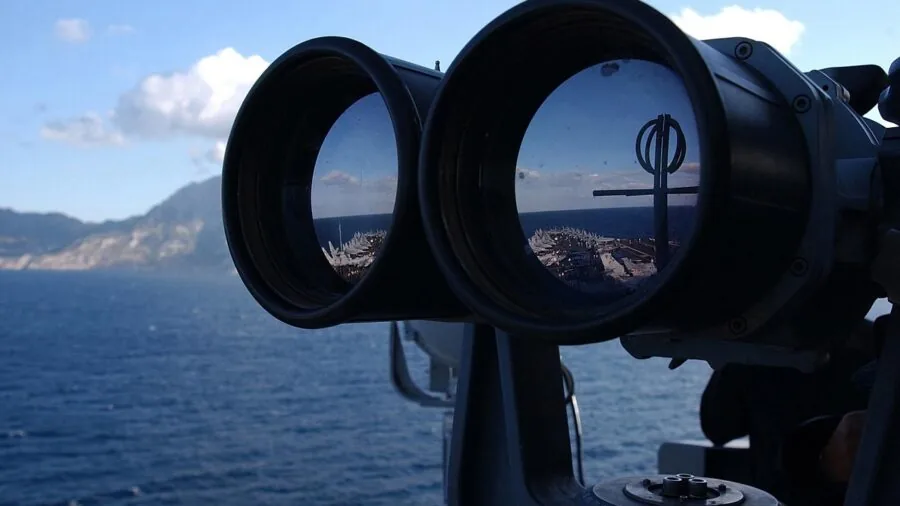
The two numbers printed on every binocular, such as 8×42 or 10×42, tell you magnification and objective lens diameter in millimeters.
For bird watching, 8x is widely considered the sweet spot by experienced birders because it delivers a wider field of view, making it far easier to locate and track a moving bird through branches or across open sky.
A 10x model gives more reach but narrows the field and amplifies hand shake, which becomes fatiguing over a long morning in the field.
Very high magnification models marketed as zoom or 12x and above tend to produce dimmer, shakier images and are generally less suitable for birding than a quality fixed 8x or 10x pair.
If you also enjoy watching wildlife on safari-style outings, a 10×42 strikes a useful balance, and it’s no coincidence that two of our top Vortex picks, the Crossfire HD and the Triumph HD, both land at 10×42 for exactly that reason.
Field of view is measured in degrees or in feet at 1,000 yards. A wider field of view (anything above 6.5 degrees for 8x binoculars is considered very good) lets you sweep a hedgerow or woodland edge quickly.
The Celestron Nature DX 8×42 stands out here with its notably wide 7.4-degree field, which is one reason it remains one of the most recommended value options in expert consensus.
Optical Glass Quality and Coatings

Glass quality matters enormously in real birding conditions, particularly at dawn, dusk, or on overcast days when a forest interior is dim.
Extra-low Dispersion (ED) glass reduces chromatic aberration, the color fringing that appears around high-contrast subjects like a bird silhouetted against bright sky.
The difference between ED glass and standard glass is most visible in those challenging lighting situations that are, inconveniently, exactly when many of the best birds are active.
Coatings matter just as much as the glass itself. Fully multi-coated lenses apply anti-reflective coatings to every air-to-glass surface, maximizing light transmission and delivering brighter, more color-accurate images. Phase-corrected BaK-4 prisms are the standard in quality birding binoculars.
The ZEISS Terra ED and the Bushnell A5 both feature dielectric and phase-coated prisms alongside fully multi-coated lenses, which contributes directly to their high PF Scores in this roundup.
The Nikon Monarch M5 combines ED glass with long eye relief, making it particularly strong in color fidelity across the field of view.
Budget models from lesser-known brands often claim multi-coated or even fully multi-coated lenses, but verified buyer feedback and expert optical assessments consistently reveal that the actual transmission figures fall short of the spec sheet.
In this roundup, that pattern is reflected in the lower PF Scores assigned to the Adasion, Sogries, and Sfeoot models.
Close Focus Distance
Close focus distance is an underrated spec for birders, especially those who watch warblers, wrens, or hummingbirds at garden feeders. A binocular that cannot focus closer than 10 to 15 feet is frustrating when a bird lands just in front of you.
Top-tier birding binoculars typically achieve close focus at 5 to 6 feet, which opens up a completely different category of observation.
The Pentax Papilio II included in this list is notable for its unusually short close focus distance, enabling macro-style viewing of insects and flowers as well as birds at very close range.
It occupies a specialty niche rather than being an all-around birding pick, but for nature enthusiasts who do double duty at a garden or pond, it fills a genuine gap.
Waterproofing and Build Quality

Birding happens outdoors in all conditions. Morning dew, unexpected showers, and humidity in coastal or marsh environments will eventually compromise a non-waterproofed binocular.
Every serious birding binocular should be at minimum waterproof to IPX7 or equivalent, achieved through O-ring sealing, and nitrogen or argon purged to prevent internal fogging when temperatures change rapidly.
Build quality also determines long-term durability. Rubber armor on the exterior protects against knocks and drops, which are inevitable on uneven terrain.
Magnesium alloy chassis, used in the Nikon Monarch M5, keep weight low while maintaining rigidity, a meaningful advantage when you’re carrying binoculars for several hours.
Plastic-bodied budget models can be perfectly adequate for casual use, but they show their limitations in colder weather when the chassis flexes slightly and collimation (optical alignment) can drift.
For anyone who spends time outdoors year-round, the extra investment in a fully waterproofed, fog-proofed model pays off quickly. Just as you’d want ski boots built for harsh mountain conditions, your optics need to be equally weather-ready for serious field use.
Eye Relief and Eyecup Design

Eye relief is the distance your eye can be from the eyepiece and still see the full field of view.
This is critical for eyeglass wearers, who need a minimum of 14 to 15 mm of eye relief to see the complete image without vignetting around the edges.
Most quality birding binoculars now provide 15 to 18 mm of eye relief and ship with twist-up eyecups that lock at multiple positions, allowing glasses-wearers to fold or twist down the cups to the correct distance.
Poor eyecup design is one of the most common verified buyer complaints on budget models. Eyecups that slip or do not click firmly into position become a constant irritation in the field.
This detail is often glossed over in spec sheets but shows up clearly in aggregated buyer feedback, which is why we weight it explicitly in our PF Score evaluations.
Weight, Balance, and Ergonomics

A binocular that feels light in the shop may feel heavy after four hours of holding it up repeatedly along a trail. Most 42 mm birding binoculars land in the 600 to 800 gram range.
Anything above 800 grams starts to cause fatigue noticeably unless worn on a harness strap rather than a neck strap. Compact models with smaller objective lenses (21 mm, 25 mm) weigh far less but sacrifice low-light performance.
Balance is equally important. A binocular that is front-heavy feels unwieldy to hold for extended scanning. The best birding optics distribute weight centrally and have a grip texture that remains secure even with damp or gloved hands.
If you invest in high-quality optics, consider pairing them with a harness-style strap system, which distributes weight across the chest rather than the neck and is far more comfortable for all-day birding sessions.
A well-fitted setup, like finding running shoes matched to your gait, makes sustained outdoor activity significantly more enjoyable.
Why You Should Trust Us
ProductFind is an independent review publication. We evaluate products through rigorous comparative research rather than retail relationships or manufacturer influence.
Every binocular in this roundup was assessed against the same consistent set of criteria: optical specifications, glass and coating quality, waterproofing standards, ergonomics, close focus capability, eye relief, verified buyer satisfaction, and long-term durability reputation.
Each model receives a PF Score on a 0 to 10 scale, reflecting its overall performance across all criteria relative to the full field of competitors in this category.
We do not conduct our own product trials; our evaluations are grounded in research, published data, expert review consensus, and verified buyer feedback.
This approach allows us to synthesize a broader picture of real-world performance than any single reviewer could capture alone. Our research draws on optical industry data, manufacturer published specifications, and patterns identified across large volumes of confirmed purchase reviews.
ProductFind may earn a commission if you purchase through a link in this article. That affiliate relationship does not affect our rankings, PF Scores, or product selections in any way.
Our recommendations are determined entirely by research quality and merit, not by commission rate or commercial arrangement. We are not affiliated with any retailer or manufacturer featured in this roundup.
Final Thoughts
After evaluating twelve binoculars across the full price spectrum, from entry-level compacts to premium ED glass optics, a clear hierarchy emerges. The wide range of PF Scores in this roundup reflects meaningful performance differences between tiers, not marginal ones.
Here are our standout picks by category:
- Best Overall: Nikon Monarch M5 8×42 earns the top position in this roundup thanks to its ED glass, magnesium chassis, exceptional color fidelity, long eye relief, and full waterproof and fog-proof construction. Expert consensus consistently places it among the finest binoculars available at its price tier.
- Best for Optical Excellence at a Premium: ZEISS Terra ED 10×42 delivers ZEISS-engineered optics with dielectric and phase-coated prisms in a compact, waterproof package. It earns one of the highest PF Scores in the roundup and is the choice for birders who prioritize image quality above all else.
- Best for Feature-Rich Value: Bushnell A5 8×42 brings dielectric and phase-coated prisms, fully multi-coated lenses, and rubber armor at a mid-to-upper price point that still undercuts the ZEISS significantly. Its PF Score reflects a strong balance of optical performance and build quality.
- Best Budget Mid-Range Pick: Vortex Crossfire HD 10×42 is the recommended option for birders who want reliable HD optics with a reputable brand warranty without stepping into premium pricing. It scores well above average in our framework and is backed by Vortex’s unconditional lifetime guarantee.
- Best for Beginners on a Tight Budget: Celestron Nature DX 8×42 offers a genuinely wide 7.4-degree field of view, BaK-4 prisms, fully multi-coated lenses, and full waterproofing at an accessible price. It is consistently cited in expert consensus as the go-to first serious birding binocular for newcomers to the hobby.
If you’re investing in gear to get more from time outdoors, quality optics are among the highest-return purchases you can make.
The gap in daily usability between a budget compact and a properly specified 8×42 with ED glass is dramatic enough that we strongly recommend stretching your budget to at least the mid-range tier if birding is a genuine hobby rather than an occasional curiosity.
For those building out a full outdoor kit, it’s also worth considering accessories like reliable power protection for camping trips or a quality car refrigerator for extended field days, both of which make remote birding expeditions significantly more comfortable.
Frequently Asked Questions
What magnification is best for bird watching?
8x is the most widely recommended magnification for birding. It provides a wide field of view for tracking fast-moving birds, produces a bright image in variable light, and causes less hand shake than higher magnification options.
10x is a reasonable alternative for open-country or coastal birding where longer-range viewing is common, but it is less forgiving for beginners or anyone who finds steady holding difficult.
Magnifications of 12x and above are generally not recommended for bird watching.
Is 42 mm the right objective lens size for birding?
42 mm is the most popular objective lens size for birding binoculars because it balances light-gathering ability with manageable weight and size. It performs well from early morning through dusk, which covers the peak activity windows for most bird species.
Compact models with 25 mm or smaller objectives are lighter and more portable but noticeably dimmer in low light.
Very large objectives (50 mm and above) gather more light but add significant weight and bulk that most birders find impractical over a full day in the field.
Do I need waterproof binoculars for bird watching?
Yes, waterproofing is a practical necessity rather than a luxury feature for regular birding. Exposure to morning dew, light rain, coastal spray, and humidity is routine in most birding environments.
O-ring sealed and nitrogen-purged binoculars protect internal optics from moisture ingress and prevent fogging when moving between warm and cold conditions.
Non-waterproof binoculars are adequate for occasional fair-weather use but will eventually suffer condensation or corrosion on internal elements with regular outdoor exposure.
What is the difference between BaK-4 and BK-7 prisms in binoculars?
BaK-4 (barium crown glass) prisms have a higher refractive index than BK-7 prisms, which means they transmit light more completely and produce a brighter, more evenly illuminated circular image.
BK-7 prisms can show a slight squarish or vignetted edge to the field of view when compared directly. All of the mid-range and premium binoculars in this roundup use BaK-4 prisms.
Phase correction coatings applied to roof-prism BaK-4 designs further improve contrast and resolution, and this combination is the standard in quality birding optics.
Can I use birdwatching binoculars for other activities like stargazing or sports?
Yes, a quality 8×42 or 10×42 birding binocular is genuinely versatile. For stargazing, 8×42 binoculars reveal the Milky Way, star clusters, and the moons of Jupiter, making them a legitimate entry point into astronomy before committing to a telescope.
For sports, the wide field of view and comfortable eye relief of a well-designed birding binocular outperforms most budget sports binoculars. Wildlife watching, hiking, and travel are all natural secondary uses.
The investment in a capable birding binocular, the way you’d invest in a versatile point and shoot camera for travel, tends to pay off across many contexts beyond its primary purpose.
How much should I spend on binoculars for bird watching?
There is a clear and meaningful performance step between ultra-budget options and mid-range binoculars from established optics brands.
If birding is a regular hobby, we recommend budgeting for at least a mid-range pair with BaK-4 prisms, fully multi-coated lenses, and proper waterproofing.
The Celestron Nature DX 8×42 and the Vortex Triumph HD 10×42 represent strong value at accessible price points, while the Nikon Monarch M5 and ZEISS Terra ED are the right answer for anyone ready to invest in optics they may use for a decade or more.
Very inexpensive binoculars from unknown brands, several of which appear in this roundup for comparison purposes, consistently score below the threshold we consider worth recommending for active birding use.
About the author
Darlene is a reviewer and writer for ProductFind who specializes in Outdoor Hobbies & Recreation. Darlene evaluates products through independent research: specifications, expert review consensus, and verified buyer feedback, and rates each one on the PF Score. Darlene focuses on helping readers pick the right outdoor hobbies & recreation for their needs and budget.