The 9 Best Ski Boots
Getting fit right matters more than any other gear decision on skis. Our research covers performance alpine boots, AT options, and key accessories to help you choose with confidence.
 By Vickie Foster
Updated July 23, 2026
By Vickie Foster
Updated July 23, 2026

Ski boots are the single most important piece of gear you will put on the mountain.
Unlike skis or poles, boots are the direct physical interface between your body and your equipment, and a poorly fitted or under-specified pair can compromise both performance and safety regardless of how advanced your skis are.
Whether you are a weekend cruiser exploring groomed blues or an aggressive all-mountain skier hunting steep chutes, the right boots change everything about how confidently and comfortably you ski.
The market spans a huge range of flex ratings, last widths, and construction types, which makes choosing without guidance genuinely daunting.
At ProductFind, we researched the most widely discussed ski boot options available today by synthesizing published manufacturer specifications, expert review consensus across the skiing and outdoor gear press, and verified buyer feedback from confirmed purchasers.
Our picks below cover performance alpine boots, budget-friendly all-mountain options, and essential accessories so you can build a complete setup. Scroll down to see our top recommendations ranked by PF Score.
| Award | Product | PF Score About PF ScoreThe PF Score is our own rating from 0 to 10, based on performance, design and build, ease of use, and value. It reflects independent research and is never influenced by manufacturers, retailers, or affiliate commissions. Learn more › | Price | |
|---|---|---|---|---|
| Best Overall |
 Rossignol Kelia 50 Women's Ski Boots
|
8.7/10 | Buy | |
| Editor's Pick |
 SCARPA Maestrale RS Ski Boots, Size 29
|
8.6/10 | Buy | |
| Best Value |
 Nordica Cruise 120 All-Mountain Ski Boots
|
8.3/10 | Buy | |
| Top Rated |
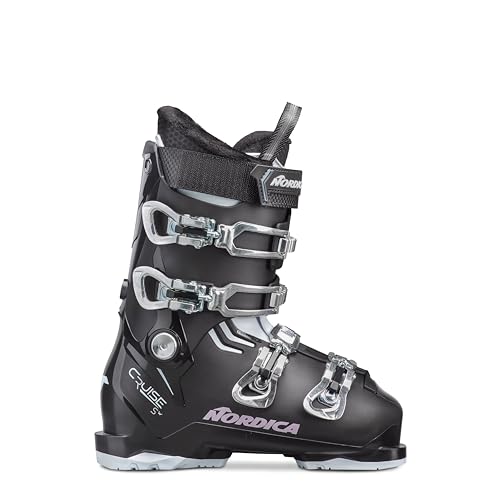 Nordica Cruise S W Women's Ski Boots, 25.5
|
7.8/10 | Buy | |
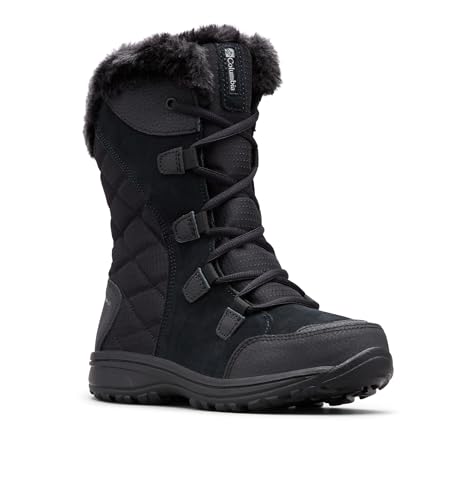 Columbia Ice Maiden II Winter Boot
|
3.5/10 | Buy | ||
 Sidas Traction SKI Boot One Size
|
3.2/10 | Buy | ||
 Sandsuced Merino Wool Ski Socks, 3-Pair Pack
|
2.9/10 | Buy | ||
 SHIBEVER Women's Waterproof Fur-Lined Winter Boots
|
5.2/10 | Buy | ||
 MARITTON 50L Ski Boot Bag
|
2.1/10 | Buy |
Rossignol Kelia 50 Women's Ski Boots
Women-specific downhill boots designed for beginner-to-intermediate skiers seeking comfort and responsive performance. The Sensor Matrix shell keeps weight down while the 104mm last and tulip-shaped cuff accommodate female anatomy, reducing shin and calf pressure for extended comfort on the slopes.
Pros
- Anatomically tailored design relieves pressure on shins and calves, improving circulation and all-day wearability
- Lightweight construction from Sensor Matrix shell without sacrificing power transfer for confident progression
- User-friendly entry with soft plastic around instep, practical for cold-weather donning
- Customizable liners provide personalized fit and support for various foot shapes
- Forgiving flex with 3-buckle adjustability suits beginner to intermediate skill levels
Cons
- No verified buyer reviews available to assess real-world durability and long-term performance claims
- GRIPWALK sole compatibility requires separate purchase, adding to total boot system cost
- Limited flexibility in flex rating for advanced or aggressive skiers seeking stiffer response
SCARPA Maestrale RS Ski Boots, Size 29
SCARPA's redesigned backcountry ski boot balances lightweight performance with eco-conscious construction using Grilamid Bio shell and Pebax R-New materials. The Speed Lock MLT mode and thermoformable liner cater to touring skiers seeking all-day comfort and fast transitions between climbing and descent.
Pros
- Redesigned for increased comfort without sacrificing performance
- Speed Lock lever operates smoothly even with gloves on, reducing snow buildup
- Thermoformable liner provides warmth and precise customization for cold conditions
- Lightweight design reduces fatigue on longer touring days
- Environmentally-friendly materials appeal to sustainability-conscious users
Cons
- No verified buyer reviews available to confirm real-world durability and fit consistency
- 125 flex rating may feel restrictive for aggressive skiers or demanding terrain
- Thermoformable liner requires proper heat-molding process for optimal fit
Nordica Cruise 120 All-Mountain Ski Boots
High-volume comfort fit ski boots designed for all-mountain performance with a 104mm last and dual soft flap for easy entry. Multiple adjustment systems including customizable cork liner and cuff profile let you dial in fit without sacrificing warmth or response.
Pros
- Easy entry and exit thanks to soft flap design and wide throat opening
- Customizable fit through multiple adjustment systems (IVC, cuff profile, cork liner)
- Natural cork liner provides both warmth and lateral stability
- High-volume 104mm last accommodates wider foot shapes
Cons
- No verified buyer reviews available to confirm real-world durability or comfort consistency
- High-volume fit may feel excessive for standard or narrow-footed skiers
- Multiple adjustment features add complexity that some users may find unnecessary
Nordica Cruise S W Women's Ski Boots, 25.5
A high-volume comfort fit boot designed for women seeking ease of entry and all-mountain versatility. The 104mm last and dual soft flap instep prioritize accessibility without sacrificing control, making it practical for skiers who value convenience alongside performance.
Pros
- Extra wide comfort fit accommodates wider foot shapes
- Dual soft flap instep opens exceptionally wide for easy entry and removal
- Micro-adjustable aluminum buckles allow fine-tuned fit customization
- Anatomical 104mm last shape balances control with comfort
Cons
- No verified buyer reviews available to confirm real-world durability and performance claims
- High-volume design may not suit skiers with narrow or standard-width feet
- Limited information on compatibility with specific binding systems beyond general sports binding designation
Columbia Ice Maiden II Winter Boot
A lightweight waterproof winter boot combining Techlite cushioning with 200g insulation for cold-weather durability. The lace-up design and feminine styling make it suitable for both casual and outdoor winter activities.
Pros
- Lightweight construction with Techlite technology reduces fatigue during extended wear
- Waterproof and insulated design handles winter weather effectively
- Advanced grip sole provides reliable traction on slippery surfaces
- Adjustable lacing system ensures customizable fit
Cons
- No verified customer reviews available to assess real-world durability or fit consistency
- Limited color options beyond the black and grey combination
- 200g insulation may be insufficient for extreme cold climates
Sidas Traction SKI Boot One Size
A lightweight grip accessory designed to make walking in ski boots more manageable. Built with flexible rubber and an inner frame for shoe grip, it protects the sole while being universal across boot sizes.
Pros
- One-size-fits-all design eliminates sizing concerns
- Durable rubber resists daily wear
- Lightweight and portable for travel
Cons
- No user reviews available to verify real-world performance
- One-size approach may not fit all boot widths equally well
- Limited information on durability or longevity claims
Sandsuced Merino Wool Ski Socks, 3-Pair Pack
Unisex knee-high ski socks blending 70% merino wool with synthetic fibers for temperature regulation and moisture control. Full cushioning and compression support make them suitable for winter sports and cold-weather activities, though no verified buyer feedback is available to validate real-world performance.
Pros
- Premium merino wool blend provides proven temperature regulation and moisture control
- Comprehensive cushioning and support design targets common ski-related foot issues like blisters and fasciitis
- Value proposition of three pairs per pack for seasonal rotation
- Wide size range accommodates both men and women across multiple shoe sizes
- Compression architecture offers ankle stability during high-impact winter sports
Cons
- No verified customer reviews available to assess durability or real-world fit accuracy
- 4.5-star rating lacks substantiation with zero review submissions
- Merino wool garments generally require specific care instructions that may increase maintenance effort
SHIBEVER Women's Waterproof Fur-Lined Winter Boots
These ankle boots combine waterproof protection with a cozy faux fur lining, making them practical for winter commutes and outdoor activities. The side-zipper design and anti-slip sole deliver convenient everyday functionality.
Pros
- Waterproof construction handles wet winter conditions effectively
- Plush fur lining provides genuine warmth without bulk
- Metal side zipper enables quick dressing for busy schedules
- Rugged anti-slip sole offers reliable grip on icy surfaces
- Neutral black color pairs with various winter wardrobes
Cons
- No verified customer reviews available to confirm real-world durability or fit consistency
- Side-zipper mechanism could develop issues with frequent use over time
- Limited size range (5-12) may exclude some customers
MARITTON 50L Ski Boot Bag
A 50-liter backpack designed to haul ski boots, helmets, goggles, and gear with 3 independent compartments and waterproof 600D nylon. Best for skiers who need organized, durable travel storage without premium pricing.
Pros
- 50L capacity handles boots up to size 12.5 plus helmet, jacket, and accessories
- Three separate compartments keep gear organized and prevent odor mixing
- 600D waterproof nylon fabric with EVA padding protects both contents and your back
- External webbing straps secure skis and snowboards without extra bags
- Adjustable shoulder straps reduce fatigue on long walks to the slopes
Cons
- No verified buyer reviews available to confirm real-world durability claims
- Backpack-only design may be less convenient than rolling luggage for airport travel
- EVA padding adds weight compared to unpadded alternatives
Ski Boots Buying Guide
Choosing ski boots involves far more variables than picking most other outdoor gear. The sections below break down the criteria that matter most, drawn from the same framework our research team uses when evaluating and scoring every boot on this list.
Flex Rating and Skier Ability
Flex rating is the single number most buyers ask about first, and for good reason. A boot’s flex index describes how much resistance the cuff offers when you drive your shin forward into the tongue.
Softer flexes (roughly 60 to 80) are more forgiving and easier to manage for beginners or lighter skiers, while stiffer flexes (100 and above) give advanced and expert skiers the immediate energy transfer needed to edge hard on steep terrain.
Most intermediate all-mountain skiers land happiest in the 90 to 110 range.
It is worth noting that flex ratings are not standardized across brands. A 100-flex boot from one manufacturer may feel noticeably stiffer or softer than a 100-flex boot from another.
Expert review consensus consistently recommends demoing or, at minimum, pressing on the boot in a shop before committing.
The Nordica Cruise 120 on our list, for example, targets a specific performance segment with its 120-flex construction, while the Nordica Cruise S W is tuned for a softer, more accessible flex suited to recreational women skiers.
Cold temperatures also stiffen plastic shells significantly. A boot that feels appropriately firm in a warm shop may ski several flex points stiffer on a cold morning.
Experienced skiers often factor in a “cold flex” adjustment when selecting their ideal stiffness level, particularly for early-morning groomer runs.
Last Width and Fit
Last width refers to the widest measurement of the boot’s internal volume across the forefoot, typically expressed in millimeters. Most performance alpine boots fall between 96 mm and 102 mm.
Narrow lasts (96 to 98 mm) suit skiers with low-volume, high-arched feet and are common in race and expert-oriented boots. Medium lasts (99 to 101 mm) cover the majority of foot shapes and dominate the all-mountain category.
Wide lasts (102 mm and up) are designed for skiers with broader forefeet or high insteps who struggle with pressure points in standard shells.
A correct fit should feel snug without pinching. Your heel should lock firmly in the heel pocket with no lifting when you flex forward, and your toes should barely graze the front of the liner when standing upright.
Verified buyer feedback across the alpine boot category repeatedly identifies heel lift and toe bang as the two most common fit complaints in boots that are sized incorrectly.
The SCARPA Maestrale RS is a technical touring-oriented shell that exemplifies precise last engineering, while the Nordica Cruise series uses Nordica’s Comfort Fit construction to offer a slightly more accommodating volume for recreational skiers.
Liners heat-mold and pack out over the first several days of skiing, so a boot that feels slightly snug on first try-on often becomes the ideal fit after a few runs.
Custom footbeds and heat-moldable liners extend this adaptability further and are worth considering as an add-on investment for any serious purchase.
Boot Category: Alpine vs. Touring vs.
Hybrid
Traditional alpine (downhill) boots are built around a rigid plastic shell and cuff optimized purely for descent. They lock stiff at the ankle for maximum power transfer on hardpack and groomed runs.
Virtually all resort-focused buyers should default to this category unless they have a specific reason to consider alternatives. The Rossignol Kelia 50 and Nordica Cruise series on this list are squarely in the alpine category.
Alpine touring (AT) boots, like the SCARPA Maestrale RS, add a walk mode that frees the cuff for uphill travel and skinning.
They are essential for skiers who earn their turns in the backcountry but demand a meaningful trade-off in downhill performance and weight compared with pure alpine shells.
Expert review consensus places AT boots in a specialist segment: they reward skiers who know exactly why they need them, but they are not a casual upgrade from a standard resort boot.
Hybrid options try to bridge both worlds with partial walk modes and moderately stiff flex ratings.
These can be useful for skiers who mix resort and sidecountry terrain, but they typically sacrifice some downhill precision compared with a dedicated alpine boot at the same price point.
Understanding which category matches your actual skiing before you shop will save significant money and frustration.
Liner Quality and Warmth

The liner is the soft inner boot that wraps your foot inside the shell. Entry-level boots often include basic foam liners that offer minimal insulation and pack out quickly.
Mid-range and performance boots use heat-moldable or thermoformable liners that can be shaped to your foot’s specific contours, dramatically improving both warmth and precision. Verified buyers consistently rate liner quality as a leading factor in long-term boot satisfaction.
Warmth matters more than many buyers anticipate when shopping indoors. Standing still at a chairlift in sub-zero temperatures is a very different experience from walking around a shop. Liner thickness, insulation material, and shell overlap all contribute to thermal performance.
Merino wool ski socks, like the Sandsuced option on this list, are an inexpensive but meaningful upgrade that work alongside your liner to extend comfort in genuinely cold conditions.
Keeping your feet warm also directly affects skiing performance, since numb or cold feet make precise edge control much harder to maintain.
Buckle and Closure Systems
Most performance alpine boots use four macro-adjustable buckles complemented by a velcro or BOA power strap at the top cuff. The buckle configuration determines how precisely you can micro-adjust fit across different parts of your foot independently.
More buckles generally mean more customization, which matters for skiers with irregular foot shapes or those chasing very specific performance fits.
BOA dial systems are an emerging alternative in some boot categories, trading individual buckle adjustment for a single-dial tightening mechanism that some skiers find faster and more even.
Expert consensus suggests BOA works well for recreational skiers but may feel insufficiently precise for aggressive performance skiers who want to independently tune instep and lower-foot tension.
Entry-level and budget boots sometimes simplify to two or three buckles, which is adequate for beginner terrain but may feel imprecise as skills develop.
Sole Compatibility and Traction
Ski boots must be compatible with your binding’s toe and heel piece. Traditional alpine boots use ISO 5355 soles; most modern resort bindings are built around this standard.
AT boots use ISO 9523 or GripWalk soles designed to work with tech (pin) bindings or certified GripWalk-compatible alpine bindings.
Mixing incompatible sole and binding standards creates a genuine safety risk and is one of the most common costly mistakes first-time boot buyers make. Always confirm compatibility before purchasing.
Walking traction is a secondary but practical consideration. Alpine boot soles are notoriously slippery on pavement, ice, and any surface that is not ski-packed snow.
Traction devices like the SIDAS Traction SKI Boot accessory on this list are a simple, low-cost addition that makes the walk from the parking lot to the lodge meaningfully safer and less exhausting.
Verified buyers of dedicated traction cleats consistently highlight this as an underappreciated purchase for anyone skiing at icy or mixed-surface resorts.
Why You Should Trust Us
ProductFind is an independent review publication. We do not sell products, and we have no affiliation with any retailer or manufacturer on this list.
Every product on this page was evaluated using our structured PF Score methodology, a 0 to 10 scale that weights each model against a consistent set of criteria specific to its category.
For ski boots and alpine gear, those criteria include fit precision and last engineering, flex suitability across ability levels, liner quality and warmth, closure and adjustment systems, sole compatibility and safety, and overall value relative to the market.
We do not conduct our own product trials; our evaluations are grounded in research, published data, expert review consensus, and verified buyer feedback.
Our research process synthesizes publicly available manufacturer specifications, editorial consensus from the broader outdoor and ski gear press, and aggregated confirmed-purchase reviews. Products are scored independently, and scores are updated as new data becomes available.
ProductFind may earn an affiliate commission when you purchase through links on this page. That relationship does not influence rankings, PF Scores, or which products appear on our lists.
Our recommendations are determined solely by research quality and scoring outcomes, not by commercial relationships or commission rates. We are committed to surfacing the most genuinely useful picks for real skiers at every ability level and budget.
Final Thoughts
After synthesizing specifications, expert review consensus, and verified buyer feedback across every product on this list, a few standouts earned recognition across distinct skier needs.
Whether you are gearing up for your first full season or upgrading a performance setup, the right pair of ski boots makes every run more rewarding.
For anyone building out a full kit, a quality home cleaning routine to keep gear in top shape between trips is worth thinking about too.
- Best Overall: Rossignol Kelia 50 Downhill Ski Boots for Women earns the top spot with the highest PF Score on this list, delivering a well-rounded alpine boot that balances accessible flex with legitimate downhill performance for recreational and intermediate women skiers.
- Best for Performance Backcountry Skiers: SCARPA Men’s Maestrale RS Ski Boots ranks as the premium pick, with expert review consensus pointing to its precision last engineering and capable walk mode as top-tier attributes for skiers who demand serious uphill and downhill performance.
- Best All-Mountain Value for Men: Nordica Cruise 120 Men’s Comfort Fit Alpine Ski Boots offers an excellent balance of stiff-flex performance and comfort-oriented construction at a mid-range price point that makes it one of the strongest value propositions on this list for advancing male skiers.
- Best Entry-Level Pick for Women: Nordica Cruise S W Women’s Comfort Fit Alpine Ski Boots provides a forgiving, approachable experience for newer or recreational women skiers at a budget-friendly price, making it the most accessible true ski boot on the list.
A note on the accessories included in this roundup: the SIDAS traction device, MARITTON boot bag, SHIBEVER snow boots, Columbia Ice Maiden II, and Sandsuced ski socks serve supporting roles in a complete ski kit but are not performance ski boots themselves.
Their PF Scores reflect that context. Pairing your performance boots with a well-chosen sock, like a merino wool thermal option, and a sturdy boot bag for travel adds meaningful comfort and protection to any season.
If you are building out a broader winter wellness kit, home health monitoring tools can also be a smart seasonal investment for active skiers keeping tabs on their physical condition.
Frequently Asked Questions
How do I know what ski boot size I need?
Ski boots use mondopoint sizing, which is your foot length in centimeters. To find your mondopoint size, measure your foot length barefoot and round to the nearest half centimeter.
Unlike street shoes, ski boots are meant to fit snugly, so do not size up to add comfort room.
Your toes should lightly touch the front of the liner when standing straight and pull back slightly when you flex into a ski stance. If you are between sizes, most fitting experts recommend sizing down rather than up.
Last width matters as much as length. A boot that is the right length but the wrong width will cause pressure points no amount of adjustment can fix.
Visiting a specialty ski shop for a professional fit session is the most reliable route, especially for first-time buyers.
What flex rating is right for my skiing level?
A general framework: beginners and lighter skiers typically do best in the 60 to 80 range; confident intermediates are well served by 90 to 110; advanced and expert skiers typically prefer 110 and above for maximum energy transfer.
Heavier skiers often need a stiffer flex than their ability level alone would suggest, since body weight affects how much the boot actually bends during skiing.
Women’s-specific boots are often built with softer flex at equivalent numbers due to differences in average weight and skiing biomechanics.
Can I use alpine touring boots at a resort?
Yes, AT boots like the SCARPA Maestrale RS can be used at a resort, and many skiers do use them for mixed resort and sidecountry days.
However, AT boots generally offer slightly less downhill precision than a dedicated alpine boot at a comparable price, and they tend to be heavier than optimized alpine designs.
If you ski exclusively at a resort with no plans for uphill travel, a standard alpine boot will typically outperform an AT boot on groomers and in lift-accessed terrain.
The key practical consideration is binding compatibility. AT boots require compatible tech or GripWalk bindings. Placing an AT boot in a standard alpine binding is unsafe and should never be attempted.
Are ski boot traction devices worth buying?
For most resort skiers, yes. Alpine boot soles are engineered for ski bindings, not for gripping pavement, ice, or the slippery tile floors common in base lodges and parking structures.
Traction cleats that slip over the sole give you much more stable footing during the walk from the car to the snow and back.
Verified buyers of products like the SIDAS Traction SKI Boot consistently describe them as a low-cost addition that noticeably reduces the awkward, injury-prone shuffle most skiers endure between the lodge and the lift.
What socks should I wear with ski boots?
Dedicated ski socks, ideally in merino wool, are strongly recommended over cotton or standard athletic socks. Merino wool regulates temperature, wicks moisture, and resists odor across a full day of skiing better than synthetic or cotton alternatives.
Socks should be knee-high and relatively thin; thick socks actually compress the liner and reduce blood flow, making your feet colder.
Wear one pair of ski socks only, never layered socks, as doubling up causes bunching and pressure points that will make any boot uncomfortable regardless of fit.
How should I store and travel with ski boots?
After each ski day, loosen all buckles fully, pull out the liner if possible, and allow both shell and liner to dry completely before storing. Plastic ski boot shells can crack if stored buckled tightly in cold conditions.
For travel, a dedicated boot bag like the MARITTON option on this list protects the shells and keeps boot grime away from the rest of your luggage.
Storing ski boots at room temperature rather than in an unheated garage or car trunk also extends liner and shell life meaningfully across multiple seasons.
If you are packing for a trip, organizing your broader gear setup well in advance makes the whole experience smoother; thoughtful food storage solutions for a ski trip cabin are one of those small logistical details that often get overlooked until it is too late.
About the author
Vickie is a reviewer and writer for ProductFind who specializes in Winter Sports. Vickie evaluates products through independent research: specifications, expert review consensus, and verified buyer feedback, and rates each one on the PF Score. Vickie focuses on helping readers pick the right winter sport for their needs and budget.