The 11 Best Ski Socks
Warm feet start with the right sock. Our research-backed picks cover merino wool, cushioning levels, and fit for skiers of every ability and budget.
 By Vickie Foster
Updated July 23, 2026
By Vickie Foster
Updated July 23, 2026

Your feet are the foundation of every run on the mountain, and the wrong socks can turn a perfect powder day into a miserable experience full of pressure points, numb toes, and blisters.
Unlike everyday socks, ski-specific options are engineered to manage moisture, deliver targeted cushioning inside a stiff boot, and stay put for hours without bunching or slipping.
Whether you ride groomers, chase backcountry lines, or spend full days on the lift, a purpose-built ski sock makes a measurable difference in how your boots fit and how your feet hold up.
At ProductFind, we evaluated eleven top-selling models across a range of brands including Smartwool, Darn Tough Vermont, Pure Athlete, Hylaea, SAMSOX, and others by analyzing published specifications, expert review consensus from the ski and outdoor industry, and verified buyer feedback from thousands of confirmed purchasers.
Our picks cover every budget and skiing style, so you can find the right match without guesswork. Here are our top-rated ski socks right now.
| Award | Product | PF Score About PF ScoreThe PF Score is our own rating from 0 to 10, based on performance, design and build, ease of use, and value. It reflects independent research and is never influenced by manufacturers, retailers, or affiliate commissions. Learn more › | Price | |
|---|---|---|---|---|
| Best Overall |
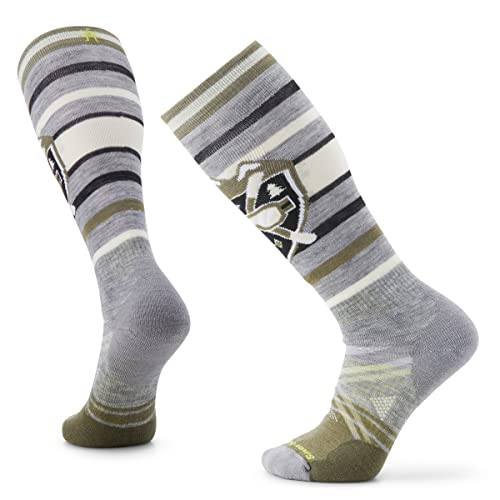 Smartwool Ski Alpine Edge Over-the-Calf Full Cushion
|
8.9/10 | Buy | |
| Editor's Pick |
 Smartwool Ski Full Cushion Over the Calf Socks
|
8.7/10 | Buy | |
| Best Value |
 Smartwool Women's Ski Full Cushion OTC Socks
|
8.5/10 | Buy | |
| Top Rated |
 Darn Tough Vermont Solstice OTC Lightweight Ski Sock
|
8.3/10 | Buy | |
 Pure Athlete Ultra Light Merino Wool Ski Socks
|
7.2/10 | Buy | ||
 Hylaea Merino Wool Ski Socks, Large (3 Pairs)
|
7.1/10 | Buy | ||
 SAMSOX Merino Wool Ski Socks, 2-Pair
|
7.0/10 | Buy | ||
 Cirorld Merino Wool Ski Socks, Knee-High
|
6.8/10 | Buy | ||
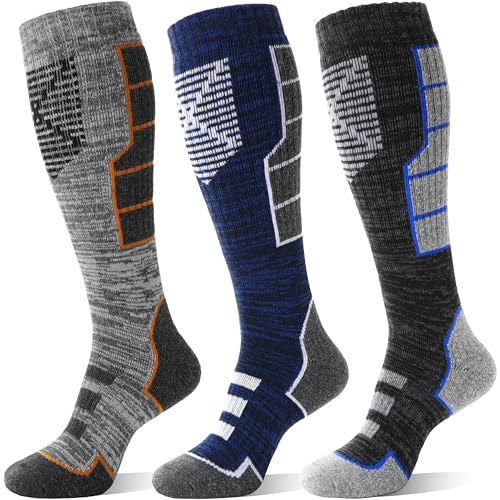 Anlisim Merino Wool Ski Socks, 3-Pair Pack
|
6.5/10 | Buy | ||
 Eocom Merino Wool Ski Socks, 3-Pair Set
|
6.4/10 | Buy | ||
 Generic Merino Wool Over-Calf Ski Socks
|
2.1/10 | Buy |
Smartwool Ski Alpine Edge Over-the-Calf Full Cushion
Merino wool ski sock designed for performance with full cushioning and over-the-calf coverage. Built with Smartwool's durability tech and virtually seamless toe construction for long days on the mountain.
Pros
- High merino wool content (61%) provides natural temperature control and odor resistance
- Full cushioning suited for impact-heavy skiing activities
- Reinforced toe and heel areas reduce common wear points on ski socks
- Virtually seamless toe minimizes blister risk during extended wear
- Recycled nylon content shows sustainable material use
Cons
- No verified buyer reviews available to assess real-world durability claims
- Full cushion may feel thick for skiers preferring minimal boot feel
- Premium price point typical of specialty ski socks
Smartwool Ski Full Cushion Over the Calf Socks
Merino wool ski socks built for durability in high-impact zones with strategic cushioning and breathability. Designed for serious skiers seeking reliable blister protection and long-lasting performance on the mountain.
Pros
- Durable construction targets wear zones where socks fail first
- Breathable mesh zones prevent overheating without sacrificing cushioning
- Seamless toe reduces pressure points and friction-related discomfort
- Merino wool naturally regulates temperature in variable conditions
Cons
- No verified buyer reviews available to assess real-world performance claims
- Premium pricing typical for specialty ski socks may not suit budget-conscious buyers
- Limited size and color options may restrict fit customization
Smartwool Women's Ski Full Cushion OTC Socks
Merino wool ski socks designed for cold weather performance with cushioning and arch support. The 4-Degree Elite Fit System keeps them in place during active use, while a virtually seamless toe reduces friction.
Pros
- Merino fibers provide natural softness and breathability
- Dual-elastic fit system keeps socks anchored without bunching
- Full cushioning absorbs impact during high-impact winter sports
- Virtually seamless toe construction reduces hotspots on long days
- Indestructawool engineered for long-term durability
Cons
- No verified buyer reviews available to assess real-world performance
- Premium price typical of Smartwool brand may not suit budget shoppers
- OTC length may be too tall for some boot fits or personal preference
Darn Tough Vermont Solstice OTC Lightweight Ski Sock
A lightweight merino wool blend ski sock built with seamless construction and true-to-size fit for all-day mountain comfort. Backed by Darn Tough's unconditional lifetime replacement guarantee and made entirely in Vermont.
Pros
- Seamless construction provides comfort for long days on the slopes
- Merino wool blend wicks moisture and resists odor naturally
- Lifetime guarantee means no risk if socks wear through
- Over-the-calf design offers full coverage under ski boots
Cons
- No verified customer reviews available to confirm real-world durability claims
- Lightweight construction may not provide enough cushioning for all-day resort skiing or off-piste use
- Merino wool blend at this price point is premium positioning with limited feedback to justify
Pure Athlete Ultra Light Merino Wool Ski Socks
Thin-profile ski socks engineered with 200-needle merino wool construction for lightweight warmth and moisture-wicking performance on the slopes. The elastic top and strategic mesh ventilation keep feet secure and temperature-regulated during extended winter sports use.
Pros
- Premium merino wool regulates temperature effectively in cold conditions
- Lightweight design fits comfortably in fitted ski boots without excess bulk
- Elastic binding keeps socks secure throughout the day on the slopes
- Breathable mesh sections manage moisture while retaining body heat
Cons
- Ultra-thin profile not suitable for users preferring thick, heavily cushioned socks
- No verified buyer reviews available to assess real-world durability or sizing accuracy
- Limited color options, available only in black
Hylaea Merino Wool Ski Socks, Large (3 Pairs)
Merino wool blend socks designed for cold weather sports with Thermolite technology, thick cushioning at heel and toe, and moderate compression arch support. Best suited for skiers, snowboarders, and outdoor winter athletes seeking moisture-wicking warmth without bulk.
Pros
- Merino wool blend naturally resists odors and wicks moisture effectively
- Targeted padding on forefoot, heel, and toe minimizes friction and absorbs shock
- Elastic arch band with moderate compression prevents sliding during activity
- Versatile for skiing, snowboarding, hiking, hunting, and cold-weather sleep
- Knee-high cut provides extended coverage for winter sports
Cons
- No verified buyer reviews available to confirm real-world durability or fit consistency
- Size chart spans wide ranges (Large fits Men 7-9.5), which may require careful selection
- Merino wool socks typically require specific care (hand wash recommended) to maintain performance
SAMSOX Merino Wool Ski Socks, 2-Pair
A midweight merino wool ski sock built for warmth and dry feet on cold days. The 2-pair set features targeted cushioning at pressure points, mesh ventilation, and an over-the-calf cut designed to work with winter boots.
Pros
- Merino wool provides effective insulation without excessive bulk
- Mesh ventilation panels on instep boost breathability
- Strategic cushioning reduces fatigue during long ski days
- Seamless toe construction avoids pressure points
- Includes 2 pairs, improving value per sock
Cons
- No verified buyer reviews available to confirm real-world durability or fit accuracy
- Merino wool socks require careful washing to maintain quality over time
- Over-the-calf height may feel restrictive for some boot fits
Cirorld Merino Wool Ski Socks, Knee-High
Unisex knee-high ski socks made with merino wool blend, designed for winter sports and cold-weather outdoor activities. Features seamless toe construction, full-length cushioning, and moisture-wicking properties to keep feet warm and dry during extended wear.
Pros
- Seamless toe construction minimizes friction and blister formation during prolonged activity
- Full cushioning combined with merino wool provides both insulation and moisture management
- Extended knee-high length ensures adequate leg coverage in ski boots and winter gear
- Elastic cuff design maintains fit without slipping after extended wear
- Multi-purpose utility beyond skiing, including hiking, camping, and household use
Cons
- No verified buyer reviews available to assess real-world durability and long-term performance
- Merino wool content percentage not specified in product details
- Limited color options listed (Black and Blue only)
Anlisim Merino Wool Ski Socks, 3-Pair Pack
Merino wool blend ski socks with compression support and full cushioning, designed for winter sports and cold weather activities. Unisex sizing in two options fits most adults, though no verified buyer feedback is available to confirm real-world performance.
Pros
- High merino wool content (70%) provides natural insulation and temperature regulation
- Targeted compression zones support blood circulation and reduce foot fatigue
- Full cushioning throughout absorbs impact and reduces blister risk
- Breathable construction designed to wick moisture and prevent odor
- Three-pair package offers good value for winter sports enthusiasts
Cons
- No verified customer reviews available to assess durability or sizing accuracy
- Sizing runs unisex only (M/L), which may not fit all foot widths precisely
- Price point not specified, so value comparison against competitors unclear
Eocom Merino Wool Ski Socks, 3-Pair Set
A merino wool blend thermal sock designed for winter sports like skiing and snowboarding, featuring cushioned footbeds and compression support. Built for unisex sizing across both men and women, these knee-high socks aim to keep feet warm and dry during cold-weather activities.
Pros
- High merino wool content (65%) for natural temperature regulation and warmth
- Comes with 3 pairs in different colors for variety
- Reinforced heel and thickened toe area to reduce blister risk
- Compression support in cuff and arch to reduce fatigue
- Unisex sizing available in two ranges covering most shoe sizes
Cons
- No verified buyer reviews available to assess real-world durability or fit accuracy
- Limited material detail on exact color variations and how they perform over time
- Compression and cushioning claims lack independent testing data to validate effectiveness
Generic Merino Wool Over-Calf Ski Socks
Merino wool ski socks designed for cold weather with moisture-wicking properties and seamless toe construction. Built for snowboarding and winter sports, they feature a non-slip cuff and machine-washable durability.
Pros
- Merino wool naturally regulates temperature and manages moisture
- Over-the-calf length with non-slip cuff designed specifically for ski boot fit
- Seamless toe design minimizes blister formation during extended wear
- Machine washable with durable construction that retains shape
- Two distinct size options accommodate a wide range of foot sizes
Cons
- No verified buyer reviews available to validate performance claims
- Random color assignment may not align with personal preference
- Brand listed as Generic, lacking established reputation or warranty details
Ski Socks Buying Guide
Choosing the right ski sock is less obvious than it seems. The wrong thickness, fiber blend, or height can affect how your boots feel, how warm your feet stay, and whether you develop hot spots over a long day.
Before you buy, consider the factors below, which reflect the criteria we used to evaluate every product in this roundup.
While you are outfitting your feet, it is also worth reviewing your broader cold-weather layering setup, including thermal underwear and ski gloves, since no single piece of gear works in isolation.
Material: Merino Wool vs. Synthetic Blends
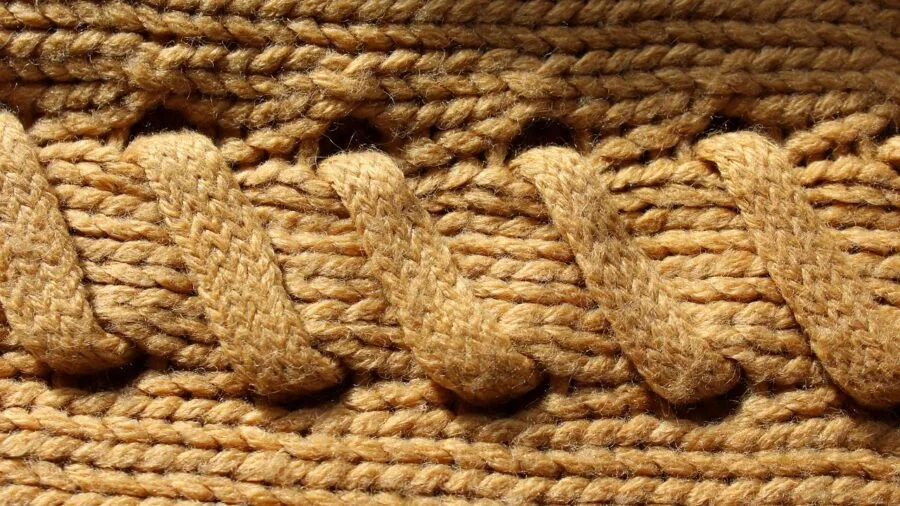
The fiber content of a ski sock determines nearly everything else about its performance.
Merino wool is the gold standard because it regulates temperature across a wide range of conditions, wicks moisture away from skin, resists odor naturally, and remains warm even when damp.
The merino used in premium socks such as those from Smartwool and Darn Tough Vermont is typically a fine-gauge variety (measured in microns) that feels soft against skin rather than scratchy, making it tolerable for all-day wear inside a boot.
Synthetic blends incorporating nylon and elastane are common in budget-oriented socks because they lower cost and add durability or stretch.
A well-designed synthetic sock can perform adequately in mild conditions, but it tends to fall short of merino when temperatures drop significantly or on multi-hour days when moisture management becomes critical.
Many of the best performing socks in our roundup use a merino-dominant blend with a small percentage of nylon for structural reinforcement and elastane for a secure fit, giving you the best of both materials.
Avoid cotton entirely. Cotton absorbs moisture without releasing it, leaves feet cold and clammy, and dramatically increases blister risk inside a ski boot. Every pick in this guide uses a wool or synthetic moisture-wicking construction for exactly that reason.
Cushioning Level

Ski sock cushioning is described on a spectrum from ultralight through lightweight, midweight, and full cushion. The right level depends on your boot fit and personal preference.
A boot with a very precise, snug fit (common in race-oriented or high-performance alpine boots) benefits from a lighter sock that does not compress the fit or reduce energy transfer.
Recreational skiers and those spending full days in more comfortable boots often prefer a midweight or full-cushion option for padding over high-impact zones.
Pay attention to where cushioning is placed, not just how much there is overall. Targeted cushioning over the shin, toe box, and heel delivers comfort and protection without adding bulk in the areas where precision matters most.
Uniform cushioning throughout a sock can make the boot feel tighter and reduce feedback.
Products in our roundup labeled “full cushion” from Smartwool, for example, use strategic placement to balance comfort with boot performance rather than padding uniformly from toe to knee.
Height: Over the Calf vs. Crew
Over-the-calf (OTC) height is the near-universal recommendation for ski socks, and every strong performer in this roundup uses it. Ski boots extend well above the ankle and apply significant pressure on the shin during forward flex.
An OTC sock provides a protective layer between your skin and the boot cuff, prevents the top edge of the sock from digging in mid-calf, and holds itself in place without slipping down throughout the day.
A sock that bunches inside a boot creates immediate pressure points and is one of the most common causes of discomfort reported by skiers.
Crew-height socks can work in snowboard boots, which have a softer cuff and different fit geometry. If you split time between skiing and snowboarding, consider a dedicated OTC ski sock for alpine days and a midweight crew for the board.
For ski-specific use, stick with OTC. Our guide to snowboard boots covers how sock choice affects fit on the snow side as well.
Fit and Stay-Up Performance
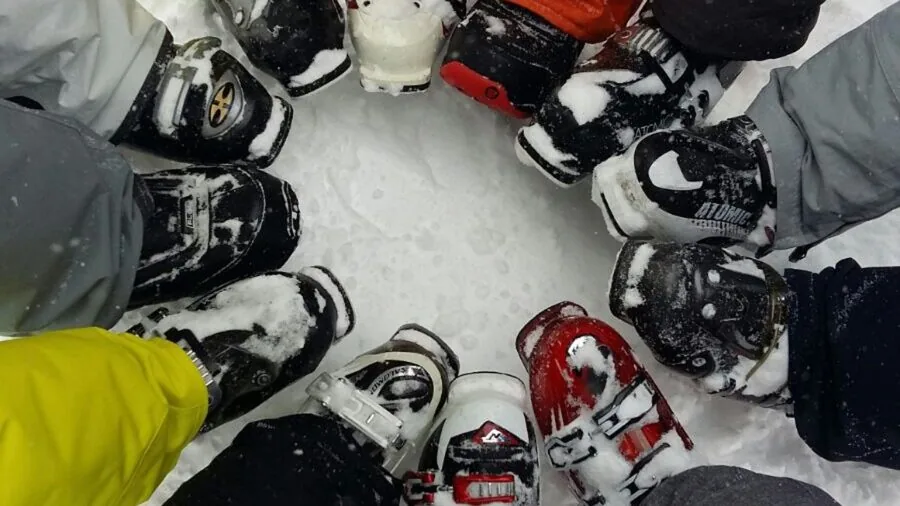
Ski socks need to fit precisely because there is very little room to move inside a boot.
A sock that is too large bunches around the toe box or slips behind the heel; one that is too small compresses circulation and causes numbness.
Most reputable brands size their ski socks by shoe size, and it is worth buying exactly to size rather than rounding up. If you are between sizes, favor the smaller option for alpine skiing where a snug fit is preferable.
Arch compression bands and elastane channels throughout the foot and calf help a sock maintain its position without requiring constant readjustment.
Verified buyer feedback for top picks in this guide consistently mentions that well-fitting ski socks stay put from first run to last, a detail that separates performance products from budget alternatives.
Pay attention to how a sock is constructed at the heel pocket as well; a defined, shaped heel cup holds position far better than a plain tube construction.
Warmth and Breathability Balance
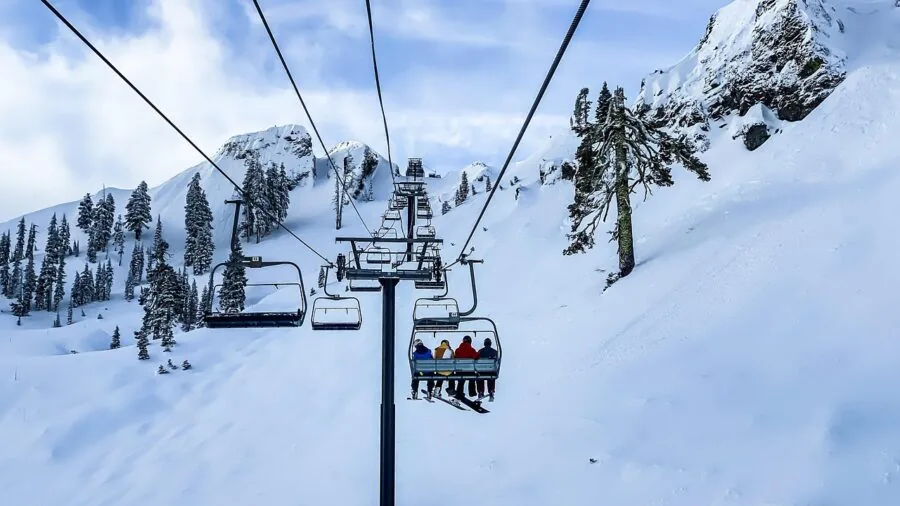
Counterintuitively, ski socks are not primarily about maximum insulation. Your ski boot provides substantial thermal protection on its own, and feet that overheat inside a boot sweat excessively, leading to cold, wet socks by mid-morning.
The goal is a sock that regulates temperature efficiently, moving sweat away from skin while maintaining a comfortable warmth baseline during cold lift rides and high-output descents alike.
Merino wool manages this balance better than any other fiber category because of its natural ability to absorb moisture vapor before it condenses to liquid.
Lightweight and midweight merino socks from premium brands consistently earn the highest marks in warmth-to-breathability ratings among expert reviewers, a pattern reflected clearly in the PF Scores of the top picks in this roundup.
If you frequently ski in very cold climates, pairing quality ski socks with boot warmers is a more effective strategy than simply choosing a thicker sock, which may compromise your boot fit.
Durability and Value Over Time
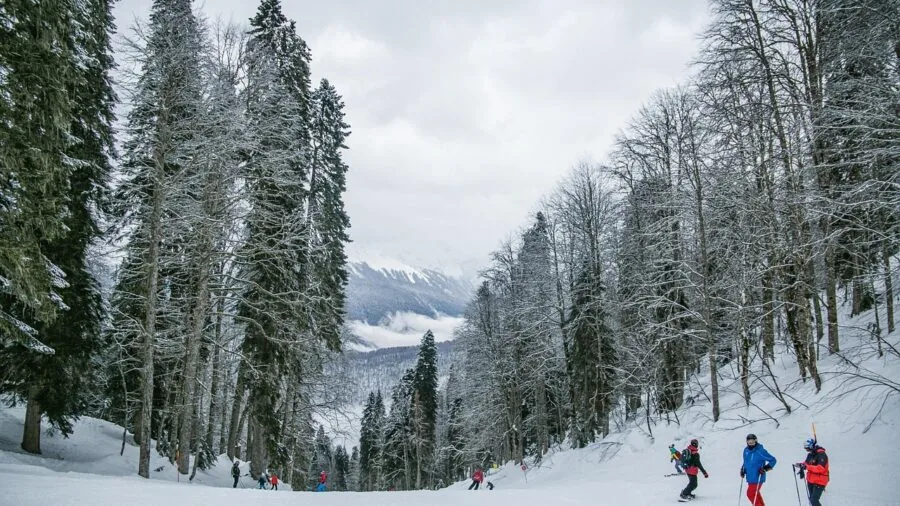
Ski socks take significant abuse: repeated compression from rigid boot buckles, friction from liner materials, and frequent washing over the course of a season.
The best socks use reinforced construction at the toe and heel, high-tenacity nylon in wear-zone yarns, and quality elastane that retains elasticity after dozens of washes.
Some brands, notably Darn Tough Vermont, back their products with lifetime guarantees, which reflects genuine confidence in long-term durability and justifies a higher initial price point relative to budget alternatives.
When evaluating value, consider cost-per-use across a full season rather than sticker price.
A pair of quality merino ski socks worn thirty days a year that lasts three to four seasons represents substantially better value than a budget pair replaced annually.
Budget socks have their place for casual or infrequent skiers, but regular riders will benefit from investing in a proven construction.
Outfitting your entire kit properly, from ski boots to poles, is always a better approach than cutting corners on the individual pieces that directly contact your body.
Why You Should Trust Us
ProductFind is an independent review publication. We do not sell products, accept free samples in exchange for coverage, or allow brand relationships to influence our rankings.
Every product in this guide was assessed using our standardized evaluation framework, and each received a PF Score on a 0 to 10 scale reflecting its overall merit across the criteria most relevant to skiers: material quality, cushioning design, fit and stay-up performance, warmth-to-breathability balance, and long-term durability.
We do not conduct our own product trials; our evaluations are grounded in research, published data, expert review consensus, and verified buyer feedback.
Our research process draws on published specifications from manufacturers, independent assessments from ski and outdoor industry experts, aggregate feedback from verified purchasers across major retail platforms, and publicly available material science data on merino wool and synthetic fiber performance.
Where expert reviewers disagree, we weight the majority consensus and note where opinions diverge.
ProductFind may earn an affiliate commission if you purchase through a link on this page. That relationship has no bearing on which products appear in our roundup, the order in which they are ranked, or the PF Scores assigned.
Rankings are determined entirely by our research-based evaluation criteria, not by commission rates or brand relationships.
Our goal is to give you the information you need to make a confident, well-informed purchase decision, whether you are equipping yourself for a weekend at the resort or a full season on the mountain.
We apply the same methodology across all of our winter sports coverage, from ski goggles to snowshoes.
Final Thoughts
After evaluating eleven ski socks across a wide range of price points and constructions, the standout performers are concentrated among the merino-dominant options from Smartwool and Darn Tough Vermont.
Budget picks can serve occasional skiers reasonably well, but the gap in material quality, fit precision, and long-term wear performance is pronounced once you compare verified buyer feedback at scale. Here are the distinction awards from our research:
- Best Overall: Smartwool Ski Alpine Edge Full Cushion Merino Wool Over The Calf Socks earned the highest PF Score in the entire roundup. Expert reviewers and verified buyers consistently praise its merino-dominant construction, full-length OTC height, and cushioning design that performs across groomed and off-piste conditions alike.
- Best for Everyday Resort Skiing: Smartwool Ski Full Cushion Over the Calf Socks earns top marks for its balanced warmth and breathability, making it the most versatile choice for skiers who spend long days on varied terrain. It sits just below the top overall pick and represents outstanding value at a mid-range price.
- Best for Women: Smartwool Women’s Ski Full Cushion OTC is purpose-built with a narrower profile and women-specific sizing to deliver the same merino quality in a fit optimized for women’s ski boot lasts. Verified buyers report significantly less bunching and heel slippage compared to unisex alternatives.
- Best Runner-Up (Non-Smartwool Pick): Darn Tough Vermont Men’s Vermont Solstice OTC Lightweight Ski and Snowboard Sock is the strongest alternative for skiers who want a snug, precision fit with a lighter cushion profile. Its industry-leading durability warranty and high expert consensus score make it the clear backup recommendation. Pairing it with well-fitted ski bindings completes a performance setup from the ground up.
- Best Budget Pick: Pure Athlete Ultra Light Ski Socks offers the most credible performance among mid-range options for skiers who are not ready to invest in premium merino. Its thin profile suits high-performance boots, and the three-pair pack format improves cost-per-day economics. If you are newer to the sport and still dialing in your boot fit, this is a solid starting point.
One product in this roundup, the generic brand entry at a very low price, scores significantly below all other picks and is not recommended for actual skiing use based on material analysis and buyer feedback patterns.
It appears here only for completeness and price-range context.
If cold weather is a persistent concern beyond your feet, pairing quality ski socks with reliable hand warmers and a well-fitted neck gaiter covers the extremities most vulnerable to cold on the mountain.
Frequently Asked Questions
Do I really need ski-specific socks, or will any thick wool sock work?
Ski-specific socks are engineered for the unique demands of a rigid boot environment: over-the-calf height to prevent top-edge pressure, targeted cushioning over high-impact zones rather than uniform bulk, and precise sizing to prevent bunching inside a tight-fitting boot.
A generic wool sock may feel warm, but it is almost always too thick in the wrong places, causing pressure points, reducing boot performance, and slipping down over the course of a day.
For anyone skiing more than a few times a season, purpose-built ski socks are worth the investment.
How many pairs of ski socks do I need for a ski trip?
Most skiers find two to three pairs sufficient for a week-long trip. Merino wool resists odor naturally and can be worn multiple days between washes without becoming unpleasant, which is one of the practical advantages of the fiber.
On a trip of five to seven days, rotating two pairs and washing midway through is a common approach.
The multi-pair packs offered by several products in this roundup, such as the three-pair options from Pure Athlete and Hylaea, are designed around exactly this use pattern and represent good per-pair value.
Should I wear two pairs of socks to keep my feet warmer?
No. Doubling up on ski socks is one of the most common mistakes beginners make, and it nearly always makes things worse.
Two pairs create excess bulk that tightens the boot, restricts circulation, and actually reduces warmth by impeding blood flow.
Cold feet in ski boots are usually caused by a boot that is too tight, poor circulation, or insufficient insulation in the boot itself rather than thin socks.
If warmth is your primary concern, a single quality merino sock paired with boot warmers is a far more effective solution than layering socks.
Are ski socks and snowboard socks the same thing?
They share many design principles but differ in some meaningful ways. Ski socks prioritize a very precise fit and shin protection because alpine boots are rigid and form-fitting.
Snowboard boots have a softer, more flexible cuff, so snowboard-specific socks sometimes use slightly heavier cushioning and a more relaxed fit profile.
Many of the merino OTC socks in this roundup are marketed for both disciplines and perform well across both.
If you ride a snowboard exclusively, also take a look at how sock choice interacts with your bindings and overall boot setup.
How should I wash and care for merino ski socks to maximize their lifespan?
Turn merino ski socks inside out before washing to reduce pilling on the outer surface. Use cold water on a gentle or wool cycle with a mild detergent formulated for wool.
Avoid fabric softeners, which coat wool fibers and reduce moisture-wicking performance over time. Lay flat or hang to dry rather than using a machine dryer; high heat degrades merino fiber and elastic components.
Properly cared for, quality merino ski socks from brands like Smartwool or Darn Tough Vermont should last multiple full seasons, making the per-season cost substantially lower than budget alternatives replaced annually.
What else should I consider when building out my ski day kit?
Ski socks are one part of a layering system that works best when each piece is matched to the conditions.
A good base layer starting with thermal underwear sets the foundation, while protective accessories like ski goggles and a neck gaiter address exposed areas.
On particularly cold days, hand warmers in your pockets and properly fitted ski gloves make a significant difference in overall comfort.
If you are still sourcing other core equipment, our coverage of ski poles and ski bindings covers the remaining essentials.
About the author
Vickie is a reviewer and writer for ProductFind who specializes in Winter Sports. Vickie evaluates products through independent research: specifications, expert review consensus, and verified buyer feedback, and rates each one on the PF Score. Vickie focuses on helping readers pick the right winter sport for their needs and budget.