The 9 Best Santoku Knives
Sharp prep starts with the right blade. Our research covers steel quality, edge retention, ergonomics, and value across santoku knives from MAC, Wüsthof, HENCKELS, and more.
 By Tammy Stevens
Updated July 23, 2026
By Tammy Stevens
Updated July 23, 2026

The santoku knife is one of the most versatile tools you can own in a home kitchen.
Originating in Japan, the word “santoku” roughly translates to “three virtues,” referring to its ability to handle meat, fish, and vegetables with equal confidence.
Unlike a Western chef’s knife, the santoku’s shorter, flatter blade and lighter weight make it particularly well suited to the quick, push-cutting and chopping strokes that define everyday vegetable prep.
Whether you’re paper-thin slicing cucumbers or breaking down a chicken breast, a well-chosen santoku can make the entire process feel effortless. Pairing it with quality cookware sets only elevates the experience further.
At ProductFind, we researched the santoku knife category by analyzing manufacturer specifications, synthesizing expert review consensus from multiple culinary publications, and reviewing verified buyer feedback across thousands of purchase records.
Our findings are distilled into clear, actionable picks that span every budget and cooking style, from professional-grade Japanese steel to budget-friendly everyday blades. The best santoku knives for most home cooks are listed directly below, ranked by PF Score.
| Award | Product | PF Score About PF ScoreThe PF Score is our own rating from 0 to 10, based on performance, design and build, ease of use, and value. It reflects independent research and is never influenced by manufacturers, retailers, or affiliate commissions. Learn more › | Price | |
|---|---|---|---|---|
| Best Overall |
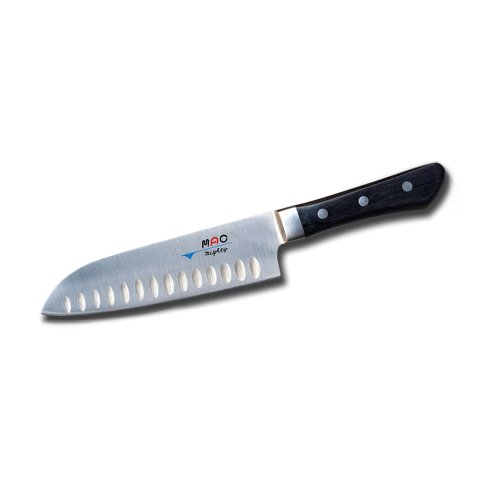 MAC MSK-65 6.5" Santoku Knife
|
8.5/10 | Buy | |
| Editor's Pick |
 Wüsthof Gourmet 5" Hollow Edge Santoku Knife
|
7.8/10 | Buy | |
| Best Value |
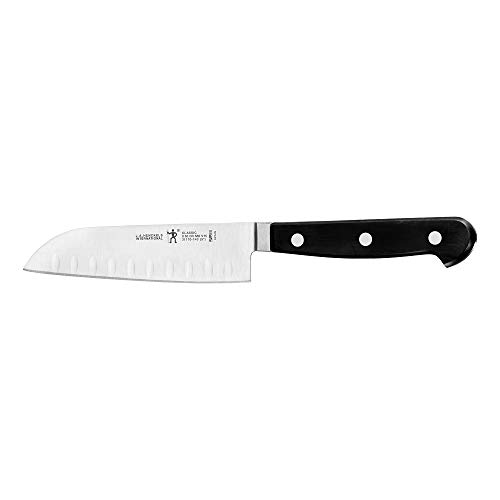 HENCKELS Classic 5-Inch Santoku Knife
|
7.2/10 | Buy | |
| Top Rated |
 HENCKELS 2-Piece Santoku Knife Set, 5" & 7"
|
6.9/10 | Buy | |
 Mercer Culinary M20707 Genesis 7-Inch Santoku Knife
|
6.8/10 | Buy | ||
 Babish 6.5" Santoku Knife High-Carbon German Steel
|
6.5/10 | Buy | ||
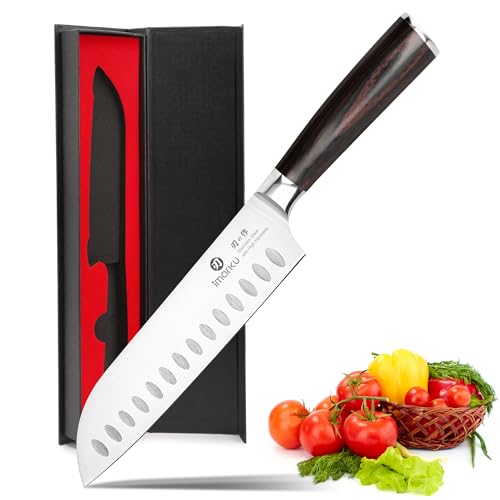 imarku 7-Inch Santoku Knife with Hollow Edge
|
6.3/10 | Buy | ||
 OXO 5.5in Santoku Knife with Locking Sheath
|
6.1/10 | Buy | ||
 HENCKELS 7-Inch Santoku Knife, German-Engineered
|
5.5/10 | Buy |
MAC MSK-65 6.5" Santoku Knife
A Japanese-made santoku with a 2.5mm blade and sub-zero tempered steel designed to hold its edge longer than standard steel. Best suited for home cooks who prioritize edge retention and are willing to hand wash their knives.
Pros
- Sub-zero tempered steel retains edge better than conventional steel
- Razor-sharp edge out of the box
- Made in Japan with quality construction
- Balanced 6.5-inch size suitable for most cutting tasks
- Black Pakka wood handle and brushed stainless steel finish
Cons
- Hand wash only, not dishwasher safe, requires more maintenance
- No verified buyer reviews available to assess real-world durability claims
- Premium pricing typical of professional Japanese santokus
Wüsthof Gourmet 5" Hollow Edge Santoku Knife
German-made santoku with a 5-inch laser-cut blade and hollow edge design that reduces drag when slicing. Built from high carbon stainless steel with a synthetic handle, it trades the heft of traditional chef's knives for precision in vegetable and protein work.
Pros
- Hollow edge technology genuinely minimizes food adhesion during slicing
- Lightweight design reduces fatigue during extended use
- High carbon stainless steel resists corrosion with proper maintenance
- Synthetic handle more durable than wood against daily kitchen wear
- Lifetime warranty backs product durability claims
Cons
- Requires hand washing only, no dishwasher compatibility limits convenience
- No verified buyer reviews available to assess real-world performance consistency
- Hollow edge requires specific sharpening technique, not compatible with all honing methods
HENCKELS Classic 5-Inch Santoku Knife
A lightweight 5-inch santoku with hollow-edge blade designed for precision slicing, mincing, and dicing tasks. The fully forged construction and satin finish aim to retain sharpness with minimal maintenance, making it practical for home cooks seeking a mid-range Japanese-style knife.
Pros
- Lightweight design reduces fatigue during extended prep work
- Fully forged construction provides durability and blade-to-handle stability
- Dishwasher safe with stain and rust-resistant properties
- Hollow edge geometry minimizes drag when cutting vegetables and proteins
Cons
- No verified buyer reviews available to confirm sharpness claims or long-term edge retention
- 5-inch size limits versatility compared to standard 7 to 8-inch santokus for larger tasks
- Satin finish may require hand washing for best results despite dishwasher claim
HENCKELS 2-Piece Santoku Knife Set, 5" & 7"
A German-engineered two-knife santoku set combining a 5-inch and 7-inch blade, both satin-finished for precision cutting tasks like mincing, slicing, and dicing. Forged bolster construction provides durability and balance, with stain and rust-free blades that require minimal maintenance.
Pros
- Two-knife set covers different task sizes without needing additional purchases
- Forged bolster construction provides weight distribution and handling comfort
- Stain and rust-resistant blades with low maintenance requirements
- Satin finish blade resists dulling during normal kitchen use
- Dishwasher safe, eliminating hand-washing concerns
Cons
- No verified buyer reviews available to validate real-world performance claims
- Limited information on blade steel type or edge angle specifications
- Santoku knives have a steeper learning curve compared to standard chef's knives for users unfamiliar with the design
Mercer Culinary M20707 Genesis 7-Inch Santoku Knife
A precision-forged santoku built from high-carbon German steel with a taper-ground edge designed for efficient chopping, mincing, and dicing. The ergonomic handle prioritizes comfort and grip stability, making it suitable for both professional kitchens and home cooks who value durability and edge retention.
Pros
- Precision-forged with high-carbon German steel for reliable edge retention
- Non-slip ergonomic handle maintains grip control in wet conditions
- 7-inch blade length balances maneuverability with cutting surface
- Versatile santoku profile handles multiple cutting techniques effectively
Cons
- Requires hand washing and careful drying; dishwasher use not recommended
- No customer reviews available to verify real-world performance claims
- High-carbon steel requires regular maintenance to prevent rust and discoloration
Babish 6.5" Santoku Knife High-Carbon German Steel
A mid-range santoku built from single-piece high-carbon 1.4116 German steel with a granton edge designed to reduce drag during slicing and dicing. Best suited for home cooks seeking a versatile blade for vegetables, meat, and fish prep work.
Pros
- Forged from single-piece high-carbon 1.4116 German steel for durability
- Granton edge reduces food sticking and drag during use
- Full-tang handle design provides balanced weight distribution and comfort
- 6.5-inch size offers versatility for most kitchen tasks
- Tempered, ground, and polished for sharp cutting performance
Cons
- No verified buyer reviews available to assess real-world performance and longevity
- Maintenance requirements for high-carbon steel not detailed, may require regular honing
- Black ABS handle may show wear marks over extended use compared to premium alternatives
imarku 7-Inch Santoku Knife with Hollow Edge
A Japanese high-carbon stainless steel santoku designed for everyday kitchen prep work, featuring a hollow-scalloped edge to reduce sticking and a hand-polished 15-18 degree blade. The ergonomic Pakkawood handle prioritizes comfort and food safety over extended durability.
Pros
- Hollow edge design effectively prevents ingredients from clinging to the blade
- Japanese high-carbon stainless steel offers good corrosion resistance for daily use
- Pakkawood handle is stable, sanitary, and won't crack like traditional wood
- Lightweight at 0.43 pounds, reducing hand fatigue during extended prep work
- Competitive warranty coverage with 3-month refund and 1-year replacement
Cons
- No verified buyer reviews available to validate real-world performance claims
- Pakkawood handle may require more maintenance than traditional stainless steel or composite alternatives
- Brand packaging randomly varies during current rebranding period, potentially affecting gift presentation
OXO 5.5in Santoku Knife with Locking Sheath
A compact Asian-style santoku knife designed for outdoor and everyday kitchen use, featuring a Japanese stainless steel blade and non-slip grip. The included locking sheath adds portability and blade protection for casual cooks and camp enthusiasts.
Pros
- Sharp Japanese stainless steel blade reduces food sticking during prep
- Locking sheath protects blade edge and enables safe transport
- Non-slip handle maintains grip even with wet hands
- Versatile for slicing, dicing, mincing, and scooping tasks
- Lightweight at 0.33 pounds, easy to handle for extended use
Cons
- No user reviews available yet to verify real-world performance claims
- Hand wash only requirement may be inconvenient for frequent users
- 5.5-inch blade is smaller than traditional chef's knives, limiting versatility for larger cutting jobs
HENCKELS 7-Inch Santoku Knife, German-Engineered
A German-engineered santoku knife designed for precision slicing, dicing, and mincing with a single-piece stamped blade that claims long-lasting sharpness. Lightweight and dishwasher-safe, it appeals to home cooks seeking a durable all-purpose kitchen knife without frequent honing.
Pros
- Single-piece blade construction ensures durability and alignment
- Dishwasher-safe with stain and rust-resistant properties
- Lightweight at 0.4 pounds makes extended use less fatiguing
- Professional satin finish maintains sharpness through normal use
Cons
- No verified customer reviews available to confirm real-world longevity claims
- Limited information on warranty or sharpening support
- Premium positioning may be difficult to justify without user feedback validating the 100+ year heritage claim
Santoku Knives Buying Guide
Choosing the right santoku knife means understanding more than just the price tag. The blade steel, geometry, handle comfort, and intended use all interact to determine whether a knife becomes your daily workhorse or sits unused in a drawer.
This buying guide breaks down the most important criteria so you can match the right knife to your actual cooking habits.
Just as you would assess nonstick cookware sets by their coating durability and heat distribution rather than brand name alone, a santoku knife deserves the same structured scrutiny.
Blade Steel and Edge Retention
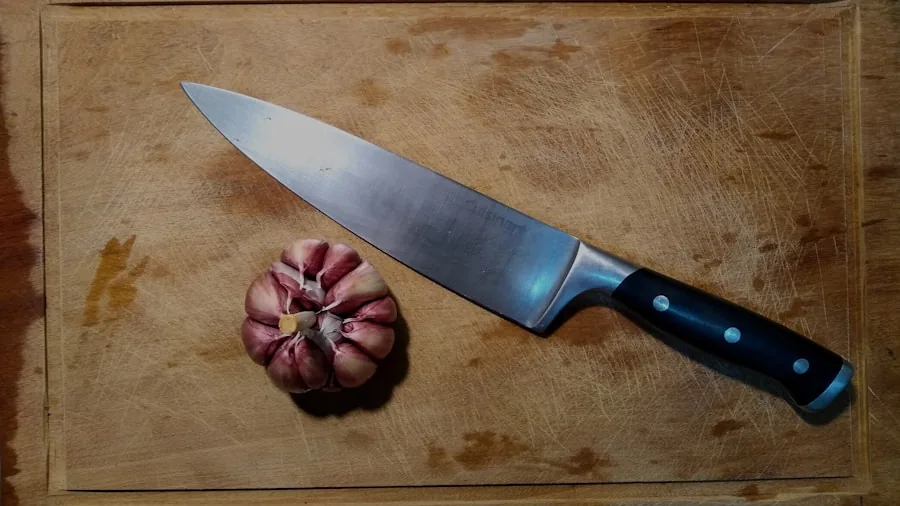
The steel composition of a santoku knife determines how sharp it gets, how long it stays sharp, and how easy it is to re-sharpen.
Japanese knives, including the MAC Knife Professional series, are typically made from harder steel with a higher Rockwell hardness rating (often 58 to 62 HRC).
Harder steel takes a finer, more acute edge and holds it longer between sharpenings, but it can be more brittle and more demanding to sharpen when the time comes.
German-engineered steel, used by brands like Wüsthof and HENCKELS, is generally softer (around 56 to 58 HRC), which means it is tougher and more forgiving against accidental lateral stress, but it may require more frequent honing.
For most home cooks, German-style steel offers a better balance of durability and low maintenance. If you already own a good honing rod and sharpen regularly, Japanese steel is worth the investment.
High-carbon stainless steel, found on budget options like the imarku and Babish knives, offers reasonable corrosion resistance alongside decent sharpness out of the box.
These blades may not retain their edge as long as premium options, but they are accessible entry points for cooks who want to try the santoku format without committing to a high price.
Think of it the same way you might approach stainless steel cookware sets: the alloy grade matters, and you get what you pay for over time.
Blade Length and Geometry
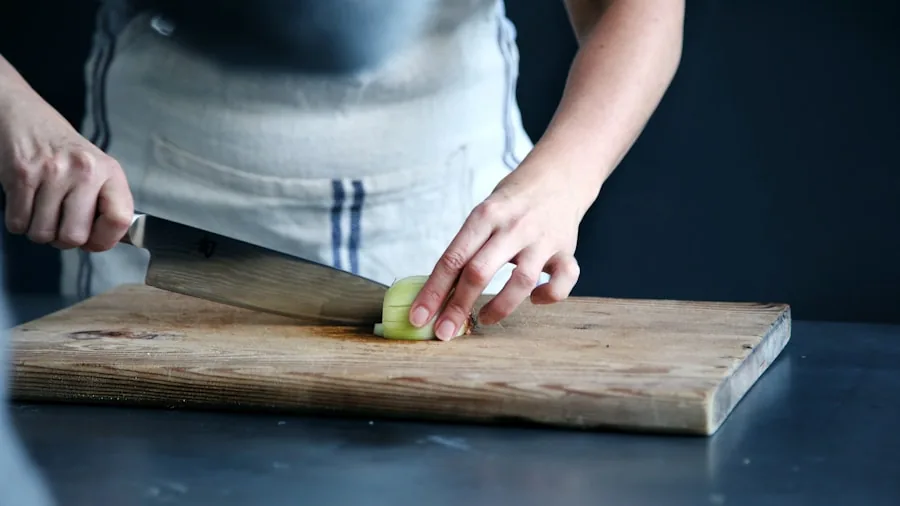
Santoku knives typically range from five to seven inches in blade length. A five-inch blade, such as on the HENCKELS Classic or the Wüsthof Gourmet, is nimble and well suited to smaller hands or tighter cutting boards.
A six-and-a-half to seven-inch blade, like the MAC MSK-65 or the Mercer Culinary Genesis, offers a longer cutting stroke that speeds up work with larger produce and proteins.
The hallmark of santoku geometry is its flatter belly compared to a Western chef’s knife. That flat profile encourages a straight-down chopping motion rather than a rocking motion, which is ideal for precise vegetable cuts.
Many santoku knives also feature a granton or hollow-edge pattern, a series of oval hollows ground into the blade face.
These indentations reduce the surface contact between blade and food, allowing thin slices to release cleanly rather than sticking to the side of the knife.
Handle Design and Ergonomics
A santoku knife can have impeccable steel and still feel miserable to use if the handle does not fit your hand.
The two dominant handle styles are Western (often called bolstered, with a wider guard between blade and grip) and Japanese (wa-style, typically octagonal or D-shaped wood).
Western handles like those on HENCKELS and Wüsthof knives tend to be heavier at the rear and encourage a pinch grip. Japanese wa-handles are lighter and shift balance forward, amplifying blade feedback.
Most home cooks will find a full bolster slightly fatiguing during extended sessions, while a half-bolster or bolster-free design allows the entire blade edge to reach the cutting board without rocking the handle.
The Mercer Culinary Genesis uses a Santoprene-insert Delrin handle that offers a textured, non-slip grip, which is particularly valued in professional kitchen environments.
The OXO santoku takes ergonomics a step further with its trademark soft-grip handle, which is why it earns praise for occasional outdoor or camping use.
Weight balance is another ergonomic consideration. If the knife is too blade-heavy, your wrist fatigues quickly during repetitive chopping. If it’s too handle-heavy, fine control suffers.
Heavier knives from German makers suit cooks who apply more downward force, while lighter Japanese-style knives suit those who rely on technique and blade angle.
Construction Method: Forged vs. Stamped
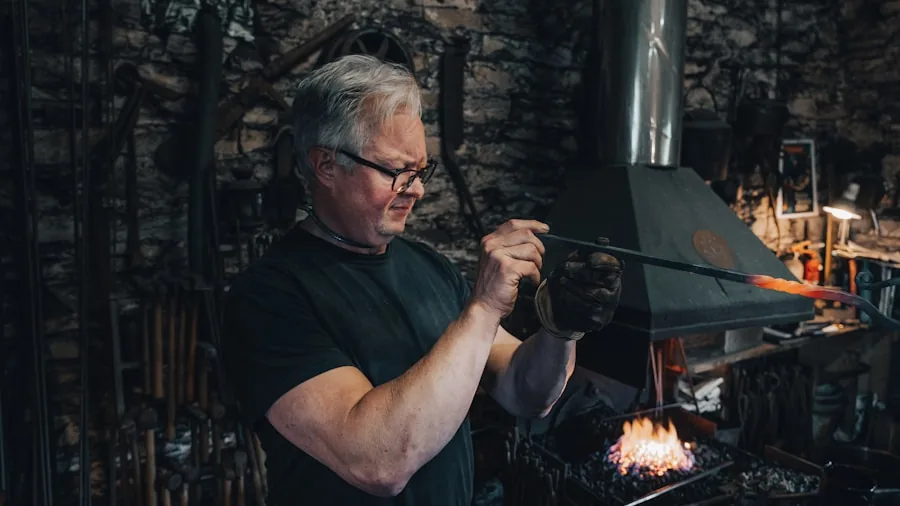
Santoku knives are manufactured either by forging (shaping a single piece of heated steel) or by stamping (cutting blade shapes from a sheet of steel).
Forged blades are thicker at the spine and taper toward the edge, creating a natural distal taper that many cooks associate with superior balance and robustness. The HENCKELS Forged Accent and many Wüsthof knives use this method.
Stamped blades are thinner and lighter, which can actually be advantageous for precise vegetable work.
The MAC Knife Professional is technically a stamped blade, yet its steel hardness and precision grinding give it performance that rivals or exceeds many forged competitors.
The HENCKELS Solution and the Babish knife are also stamped, which contributes to their lower price points without necessarily compromising everyday usability.
For most home cooks, the forged-versus-stamped distinction matters less than the quality of the steel and the precision of the edge grind. A well-stamped knife from a quality manufacturer will outperform a poorly forged knife every time.
Evaluate both construction method and steel grade together rather than treating either as a standalone quality signal.
Maintenance and Care Requirements
Even the finest santoku knife will underperform if neglected.
All knives in this category benefit from hand washing rather than dishwasher cycles, since the high heat, moisture, and harsh detergents of a dishwasher accelerate edge dulling and can warp handles over time.
Budget options like the HENCKELS Solution and the imarku are more forgiving of occasional dishwasher use due to their softer steel and simpler handle materials, but hand washing remains the best practice regardless of price tier.
Honing frequency depends on how hard the steel is. German-steel knives benefit from a quick pass on a honing rod before each use.
Japanese-steel knives like the MAC should be honed less frequently but need a proper whetstone sharpening rather than a simple pull-through sharpener, which can damage harder, thinner edges.
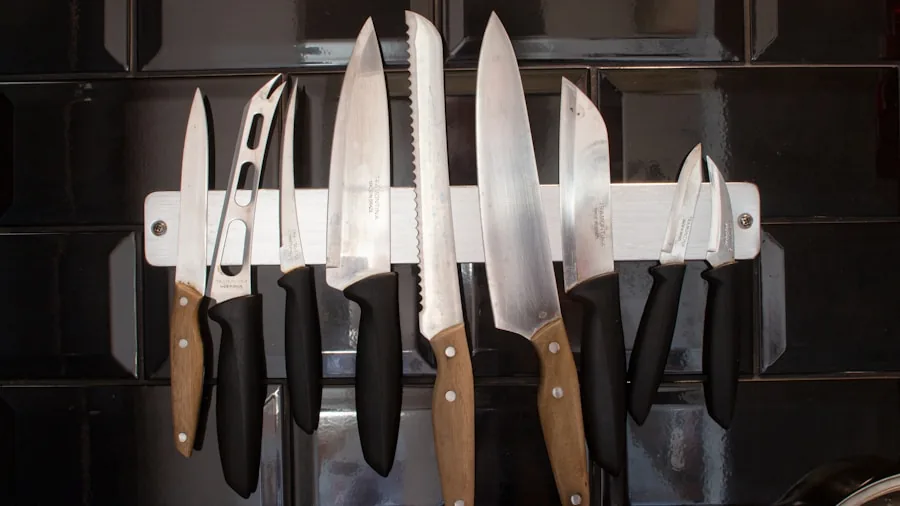
Storage also matters: a magnetic strip or blade guard protects the edge far better than tossing the knife loosely into a drawer.
Value and Set Composition
Some santoku knives are sold as part of a set, which affects the overall value calculation.
The HENCKELS Forged Accent two-piece set and the HENCKELS Solution knife set offer multiple blade sizes in a single purchase, which can be cost-efficient for cooks who need a range of tools.
However, sets should be evaluated on the quality of each individual knife rather than the total piece count.
A two-knife set of excellent blades is more useful than a large set of mediocre ones, a lesson that applies equally when evaluating air fryer toaster ovens sold in bundles with accessories.
For buyers who want one superb single knife, the MAC MSK-65 represents a straightforward premium investment. For buyers on a tight budget who want to cover multiple sizes at once, the HENCKELS Solution set offers the lowest barrier to entry.
Consider your existing knife collection before buying: if you already own a reliable chef’s knife, a compact five-inch santoku like the Wüsthof Gourmet or HENCKELS Classic is a complementary addition rather than a redundant one.
Why You Should Trust Us
ProductFind is an independent review publication. We do not manufacture, sell, or take direction from the brands we evaluate.
Every santoku knife in this article was assessed by our editorial team using a consistent, multi-factor research framework that includes published manufacturer specifications, expert review consensus drawn from multiple credible culinary sources, and verified buyer feedback from confirmed purchasers.
We do not conduct our own product trials; our evaluations are grounded in research, published data, expert review consensus, and verified buyer feedback.
Each product is assigned a PF Score on a scale of 0 to 10.
This score reflects a weighted composite of blade steel quality and edge retention, out-of-box sharpness, ergonomic design, construction method, maintenance requirements, and overall value relative to the competition within the category.
A product that scores well in one area but poorly in another will have those trade-offs reflected in its final PF Score, and we note meaningful weaknesses in our write-ups rather than omitting them.
Transparency matters to us. ProductFind may earn an affiliate commission when you purchase through links in this article. That relationship does not influence which products we include, how we rank them, or the scores we assign.
Placement is determined by PF Score and editorial judgment, not by commission rates or brand relationships. Our goal is to give you the information you need to make a confident, well-informed purchase decision without pressure or bias.
Final Thoughts
After researching the santoku knife category in depth, a few clear winners emerged across different buyer profiles.
Whether you are equipping a first kitchen or upgrading a collection that already includes quality espresso machines and appliances, there is a santoku on this list that fits your needs and budget.
- Best Overall: MAC Knife Professional Series 6.5″ Santoku MSK-65. Made in Japan from high-hardness steel with precision hollow-ground dimples, this knife earns the highest PF Score in our research for its razor-sharp factory edge, exceptional edge retention, and outstanding balance for its weight class. It is the pick most consistently praised by expert reviewers and verified buyers alike.
- Best Mid-Range Pick: Wüsthof Gourmet 5″ Hollow Edge Santoku. A compact, confidence-inspiring option from one of Germany’s most trusted cutlery houses. Its hollow-edge grind reduces food sticking, and the brand’s reputation for consistent quality control is well reflected in buyer feedback across thousands of verified purchases.
- Best Everyday German-Steel Santoku: HENCKELS Classic Hollow Edge Santoku 5″. Backed by over a century of German engineering tradition, this knife delivers reliable sharpness and a comfortable bolstered handle at a fair price for the quality on offer. It is a practical daily driver that holds up well to regular home kitchen use.
- Best Budget Set Value: HENCKELS Forged Accent 2-Pc Santoku Knife Set. For cooks who want two well-made forged blades without a premium outlay, this white-handled set provides a smart entry point into HENCKELS’ forged lineup. Two sizes in one purchase makes it versatile for households that need both a shorter and a longer blade.
- Best for Culinary Professionals and Students: Mercer Culinary Genesis 7″ Santoku. Widely used in culinary school programs and professional kitchens, the Genesis earns its reputation through a durable high-carbon blade, an ergonomic non-slip handle, and a price point that makes it approachable without sacrificing workhorse reliability.
Whatever your budget or cooking style, the santoku knives in this guide represent the best-researched options available in 2026. A sharp, well-balanced santoku makes vegetable prep faster, more precise, and genuinely more enjoyable, and that is a kitchen upgrade that pays dividends every single day.
Frequently Asked Questions
What is a santoku knife best used for?
A santoku knife excels at slicing, dicing, and mincing vegetables, boneless proteins, and fish.
Its flat blade profile encourages a straight-down chopping motion rather than the rocking technique associated with Western chef’s knives, making it particularly efficient for produce-heavy cooking styles.
Many cooks who prepare a lot of Asian-inspired dishes or who do high-volume vegetable work find that a santoku becomes their most-used kitchen blade.
What is the difference between a santoku and a chef’s knife?
Chef’s knives typically range from eight to ten inches with a pronounced curved belly that allows a rocking cut. Santoku knives are shorter (five to seven inches), lighter, and have a flatter blade profile that favors push-cutting.
Santoku knives also often feature a sheepsfoot tip rather than a pointed tip, reducing the risk of accidental punctures during fast cutting sessions. Neither knife is objectively superior; they suit different cutting techniques and hand sizes.
For cooks who find an eight-inch chef’s knife unwieldy or tiring, a seven-inch santoku offers comparable versatility in a more manageable package. The two knives are genuinely complementary rather than redundant, much like how a well-chosen air fryer complements rather than replaces a conventional oven.
Are hollow-edge (granton) santoku knives worth it?
The granton edge, the series of oval hollows ground into the blade face, creates small air pockets between blade and food as you cut.
This noticeably reduces the tendency of thin-sliced ingredients like potatoes, cucumbers, and cheese to stick to the blade. For cooks who frequently prepare thin, delicate slices, a hollow-edge santoku is genuinely useful rather than merely cosmetic.
That said, the granton pattern does not affect how sharp the knife is or how well it holds an edge. It is a surface feature, not a steel quality indicator.
Several top picks in this guide, including the MAC MSK-65, HENCKELS Classic, and Wüsthof Gourmet, all feature hollow edges, which is one reason verified buyers consistently mention clean, non-stick slicing as a standout quality.
How often should I sharpen a santoku knife?
For home cooks using a German-steel santoku (like those from HENCKELS or Wüsthof), a light honing on a honing rod before each use will maintain the edge, with a full sharpening needed every few months depending on use frequency.
Japanese high-hardness blades like the MAC MSK-65 hold their edge longer between sharpenings but require a whetstone rather than a pull-through sharpener when they do need attention, since the harder steel is more brittle and prone to micro-chipping under aggressive sharpening tools.
Storage also affects longevity. A magnetic knife strip or a blade-protecting knife guard will keep your edge keen far longer than storing the knife loose in a drawer.
Think of knife maintenance the way you would consider regular upkeep for any quality kitchen investment, including toaster ovens or other appliances where simple care habits extend the product’s lifespan significantly.
Can a santoku knife replace a chef’s knife?
For many home cooks, yes. If you primarily cook vegetables, fish, and boneless cuts, a seven-inch santoku handles nearly everything a chef’s knife does.
The one area where a longer chef’s knife holds a clear advantage is breaking down whole chickens or working with larger, harder produce like butternut squash, where the extra length and weight of an eight-inch or ten-inch blade provides more leverage.
If you cook a variety of proteins and whole ingredients, keeping both styles in your knife roll is the most practical approach.
Is a more expensive santoku knife always better?
Not always. A higher price typically reflects harder steel, more precise hand-finishing, better handle materials, and stronger quality control, all of which translate to real performance and durability advantages.
However, budget options like the imarku and Babish knives provide adequate sharpness and usability for light to moderate home cooking use, particularly for buyers who are new to santoku knives and not yet ready to invest in premium Japanese steel.
The sweet spot for most home cooks sits in the mid-range, where brands like Wüsthof, HENCKELS, and Mercer Culinary deliver genuinely excellent performance without the premium associated with top-tier Japanese blades.
If you cook daily and value a knife that lasts a decade with proper care, investing in a higher-PF-Score option pays off over time.
The same principle applies to any durable kitchen purchase, whether you are selecting home espresso machines or a quality cutting board to pair with your new santoku.
About the author
Tammy is a reviewer and writer for ProductFind who specializes in Kitchen Tools & Gadgets. Tammy evaluates products through independent research: specifications, expert review consensus, and verified buyer feedback, and rates each one on the PF Score. Tammy focuses on helping readers pick the right kitchen tools & gadget for their needs and budget.