The 12 Best Kitchen Timers
Timing is everything in cooking. We researched top kitchen timers across mechanical and digital styles, from budget single-channel picks to four-channel units with loud alarms and magnetic backs.
 By Tammy Stevens
Updated July 23, 2026
By Tammy Stevens
Updated July 23, 2026

A reliable kitchen timer is one of those deceptively simple tools that quietly makes every cooking session more successful.
Whether you’re roasting a chicken, proofing bread dough, or managing multiple pots on the stove at once, the right timer keeps you focused and prevents the kind of costly mistakes that come from relying on memory alone.
The market has expanded well beyond the classic dial-style countdown device, offering everything from minimalist mechanical timers to multi-channel digital units with loud alarms, magnetic backs, and adjustable volume.
With so many options at wildly different price points, narrowing down the field takes real research.
At ProductFind, we assessed each model in this guide using our standard research process: cross-referencing published specifications, synthesizing expert review consensus from across the culinary and consumer-electronics space, and incorporating verified buyer feedback from thousands of real-world kitchens.
The result is a curated shortlist of kitchen timers worth your attention, drawn from brands including OXO, YOOYIST, TempPro, VOCOO, AIMILAR, and more.
Whether you need a simple budget pick for the occasional boiled egg or a multi-channel unit built for a busy home cook juggling several dishes, the picks below cover every realistic need.
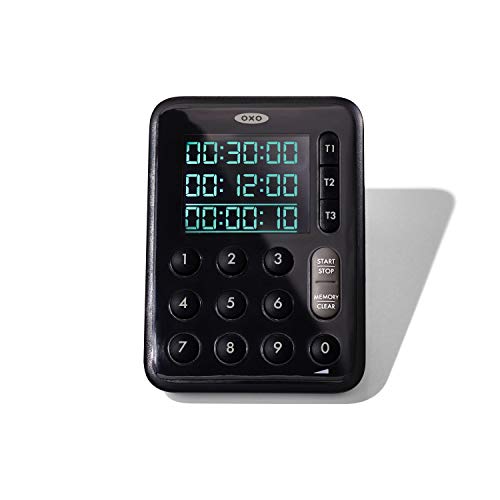
OXO Good Grips Digital Triple Timer
A three-timer kitchen device designed to track multiple cooking tasks simultaneously with a large backlit screen and full keypad controls. The angled design and sturdy base support one-handed operation, making it practical for busy kitchens.
Pros
- Tracks three separate timers at once, ideal for multi-dish cooking
- Large, inverse backlit display remains readable from various angles
- Sturdy base and angled design enable reliable one-handed operation
- Adjustable volume accommodates different kitchen environments
Cons
- No verified buyer reviews available to confirm real-world reliability or durability
- Requires AAA batteries with no indication of battery life or rechargeable option
- Limited information on screen clarity performance in bright natural light
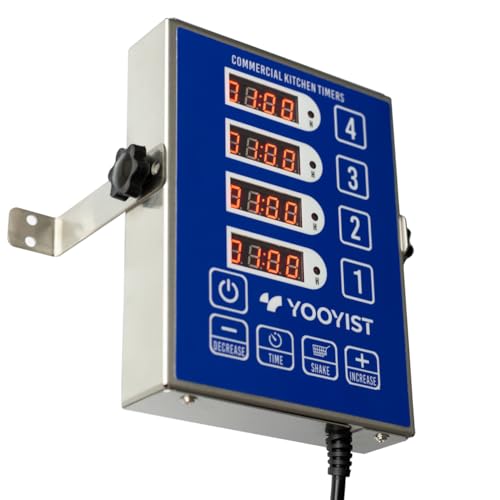
YOOYIST 4-Channel Commercial Kitchen Timer
A heavy-duty stainless steel timer built for restaurant kitchens that tracks four dishes simultaneously with an ultra-loud alarm designed to cut through kitchen noise. Wall-mountable with oversized LED display and plug-in power, it's built for high-volume operations where timing accuracy directly impacts service quality.
Pros
- Four independent timers eliminate juggling multiple tasks and reduce missed cues in busy kitchens
- Durable stainless steel withstands heat, spills, and continuous use typical of commercial environments
- Loud alarm cuts through kitchen noise to prevent overcooked food and service delays
- Large LED digits and wall-mount capability improve visibility across kitchen stations
Cons
- No customer reviews available to validate real-world durability or reliability claims
- AC-only power requirement means limited placement flexibility and requires proximity to outlets
- 4.5 rating appears unverified with zero actual buyer feedback

TPNEG 4-Channel Digital Kitchen Timer
A compact multi-timer that handles four independent cooking tasks simultaneously with loud and silent modes. Magnetic back and retractable stand offer flexible placement for kitchens, classrooms, or senior care settings.
Pros
- Handles four independent timers simultaneously, ideal for complex meal prep
- Flexible mounting with strong magnets and retractable stand for fridge, counter, or desk use
- Silent mode with visual flash alerts only, useful in noise-sensitive environments
- Simple interface with quick-set preset buttons for common cooking times
- Long battery life with power-save toggle for extended storage
Cons
- No batteries included; requires two AAA batteries sold separately
- No customer reviews available to assess real-world durability or usability feedback
- Compact size may make buttons and display difficult for users with limited dexterity or vision

AIMILAR Magnetic Kitchen Timer, 99-Hour Countdown
A compact magnetic kitchen timer with direct number keypad entry, supporting up to 99 hours of countdown timing. Features a loud three-stage alarm, flashing light, mute option, and multiple mounting options, making it suitable for cooking, classroom use, or general timekeeping.
Pros
- Keypad entry is faster than rotating dials for precise timing
- Multi-mount options (magnetic, stand, hook) fit various environments
- Mute feature makes it practical for classrooms and offices
- Extended 99-hour range covers extended cooking or monitoring tasks
- Includes memory recall to repeat previous timer settings
Cons
- No customer reviews available to verify real-world durability or reliability
- Small compact size may make the keypad cramped for users with larger hands
- Limited color options (Purple or Red) may not suit all kitchen aesthetics

TempPro TM02 Dual Kitchen Timer with Stainless Steel Design
A dual-timer kitchen clock that runs up to 24 hours with adjustable alarm volume, silent mode, and magnetic placement options. Built with stainless steel construction rather than plastic, it doubles as a clock and calendar when not timing.
Pros
- Dual countdown timers allow tracking separate cooking events simultaneously
- Stainless steel design more durable and visually refined than typical plastic timers
- Flexible mounting with both magnet and stand accommodates kitchen and fridge placement
- Extended timer range up to nearly 24 hours suits cooking, workouts, and classroom use
- Adjustable alarm volume with silent mode option respects different environment needs
Cons
- No verified buyer reviews available to assess real-world reliability and user satisfaction
- Product branding transitioning from ThermoPro to TempPro may create confusion or inconsistent packaging
- Limited information on display visibility in bright daylight despite LCD backlit feature

VOCOO Digital Kitchen Timer with Magnetic Back
A compact digital countdown timer with a smooth twist dial, adjustable volume levels, and strong magnetic mounting for hands-free use in kitchens or study spaces. The 3-inch LED display offers good visibility, though it has no verified buyer feedback yet to confirm real-world reliability.
Pros
- Responsive twist control eliminates frustration with button mashing
- Flexible volume options suit busy kitchens or quiet spaces equally
- Powerful magnetic mount keeps timer secured during multitasking
- Compact, modern design works as both functional tool and desk decor
- Auto power-saving mode helps conserve battery between uses
Cons
- No verified customer reviews available to validate durability or performance claims
- Battery life duration not specified in product data
- Limited to 99:55 maximum countdown time, which may not suit longer cooking tasks
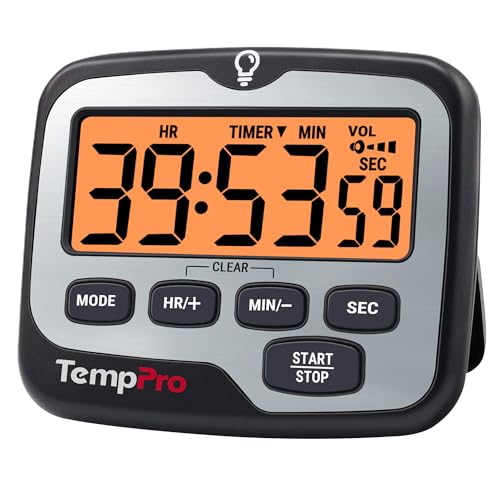
TempPro TM01 Digital Kitchen Timer
A compact digital timer offering both count-up and countdown modes up to 99 hours, with adjustable alarm volumes and touch backlight for visibility. Works as a standalone kitchen tool or classroom timer, though it has no verified buyer feedback yet to validate real-world performance.
Pros
- Flexible timing modes suit multiple use cases from meal prep to classroom management
- Four volume settings accommodate different environments and noise preferences
- Touch backlight and oversized digits aid readability in low-light conditions
- Portable size with integrated clock function adds practical value
- Includes batteries and warranty coverage out of the box
Cons
- Zero verified customer reviews limit insights into long-term durability and real-world usability
- Brand transition from ThermoPro to TempPro may create packaging or inconsistency concerns for some buyers
- Compact size could make physical buttons difficult for users with limited dexterity
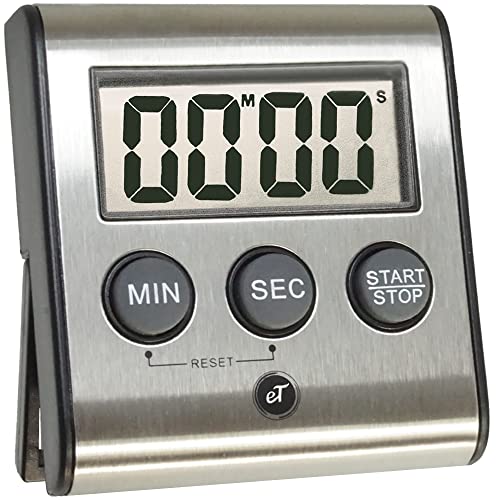
eTradewinds eT-23 Digital Kitchen Timer with Auto Memory
A stainless steel kitchen timer with strong magnetic grip, loud 80dB alarm, and auto-memory function that retains your last time setting. Built for durability with anti-wobble stabilizers, it works well for cooking, studying, or any timed task where reliability matters.
Pros
- Strong magnetic grip with anti-scratch foam backing prevents sliding or damaging appliances
- Auto-memory feature eliminates repetitive time entry for daily tasks
- Loud, pleasant beep cuts through kitchen noise and reaches other rooms
- Stable countertop use with fold-out kickstand and corner anchors
- Lifetime warranty on component failure from USA-based company
Cons
- No existing verified buyer reviews available to confirm real-world performance
- Requires AAA battery with auto shut-off after 3 minutes idle time
- Small size (2.5 x 0.75 x 2.75 inches) may be less visible than larger timers

Allbean Magnetic Kitchen Timer with LED Display
A compact digital timer with dual magnets for hands-free mounting on metal surfaces, featuring preset buttons for common cooking intervals and adjustable volume. Designed for straightforward kitchen use without unnecessary complexity.
Pros
- Strong magnetic design with non-slip pads offers reliable hands-free mounting
- Quick-access preset buttons for common cooking times reduce setup friction
- Adjustable volume accommodates different kitchen noise levels
- Lightweight and portable for kitchen, classroom, or outdoor grilling use
Cons
- No verified customer reviews available to confirm real-world reliability or durability
- Limited feature set compared to smart timers or models with additional presets
- Display size and brightness details not specified in product information

Antonki 2-Pack Digital Kitchen Timer with Magnetic Base
A dual-pack countdown and count-up timer with loud and silent modes, magnetic mounting, and a large easy-to-read display. Designed for cooking, classroom use, and time management with kids, though limited to under 100 minutes.
Pros
- Loud alarm beeps are audible in other rooms, making it reliable for cooking safety
- Silent mode with visual flash is ideal for classrooms and study environments
- Strong magnet and durable kickstand provide stable, portable placement anywhere
- Simple button interface with clear markings suitable for kids and seniors
- Memory function and fast-forward long-press setting save time on frequent use
Cons
- Maximum time is 99 minutes 59 seconds, limiting use for longer cooking tasks
- No customer reviews provided to verify real-world durability and reliability claims
- Lightweight design may not be as durable as heavier commercial kitchen timers

ALBAYRAK Mechanical Kitchen Timer, 85dB Alarm, Stainless Steel
A no-battery mechanical timer built from 304 stainless steel with a magnetic back for kitchen convenience. The 85dB alarm carries up to 10 meters, making it reliable for cooking, baking, and productivity tasks across any room.
Pros
- Durable stainless steel body withstands moisture and kitchen wear
- Magnetic mounting eliminates need for counter space or special placement
- Reliable mechanical operation requires no battery replacement
- Loud alarm ensures you won't miss timer alerts even from another room
- Lightweight and portable at 0.2 pounds
Cons
- No customer reviews available yet to verify real-world performance and durability claims
- Mechanical dial timers may be less precise than digital alternatives for exact timing
- Small size (2.6 x 1.6 x 2.6 inches) may make dial difficult to read for users with vision issues

Colortrak 60-Minute Wind Up Timer
A mechanical countdown timer designed for salon color processing and chemical services that requires no batteries or electrical outlet. Its simple two-step operation and compact design make it practical for professional and household use, though the 60-minute maximum capacity limits its versatility.
Pros
- Battery-free operation eliminates concerns about drain and chemical exposure risk
- Mechanical reliability with no electronic components to fail
- Discreet, space-efficient design suitable for professional salon settings
- Simple manual controls with clear timing markings
Cons
- Limited to 60-minute maximum timing, insufficient for longer processes
- No user reviews available to verify durability or performance consistency
- Manual wind-up mechanism requires physical effort and may wear over time
Kitchen Timers Buying Guide
Choosing the right kitchen timer comes down to matching the device’s feature set to how you actually cook. A baker who runs long fermentation cycles has completely different needs from a short-order home cook juggling four burners.
The sections below break down the most important factors to weigh before you commit to a purchase.
Pairing a great timer with equally reliable tools, such as instant-read thermometers and accurate kitchen scales, turns a well-equipped kitchen into a genuinely efficient one.
Mechanical vs. Digital: Which Type Fits Your Kitchen?

The oldest and simplest kitchen timers are purely mechanical: you twist a dial to set the countdown and a bell rings when time is up. No batteries, no charging, no software.
This is genuinely useful in situations where a power outage or dead battery could ruin a delicate bake.
Mechanical options like the ALBAYRAK stainless-steel unit and the Colortrak 60-minute wind-up timer excel here, delivering dependable performance at a budget-friendly price point.
Digital timers, by contrast, offer far greater precision. You can set a countdown to the exact second, program multiple simultaneous channels, and dial in an alarm volume that’s loud enough to cut through exhaust fans and background noise.
For most active home cooks, a digital unit is the more practical everyday tool. The trade-off is that you’ll need to keep batteries on hand, and some lower-cost models have displays that are hard to read in bright ambient light.
Look for LCD or LED displays with backlight options if your kitchen gets significant natural sunlight.
Hybrid consideration: some cooks keep one of each. A mechanical timer handles the simple “pasta is boiling” tasks while a multi-channel digital unit manages the main and side dishes simultaneously. If storage space and budget allow, this combination is genuinely worth considering.
Single-Channel vs. Multi-Channel Timers

Single-channel timers track one countdown at a time. They’re compact, affordable, and perfectly adequate for simple cooking tasks.
If your cooking style is mostly linear (one dish at a time), a single-channel unit from brands like VOCOO or Antonki will serve you well without adding unnecessary complexity to a busy countertop.
Multi-channel timers change the game for cooks who routinely manage several elements at once.
A four-channel unit like the YOOYIST commercial-grade timer or the TPNEG four-channel model lets you track a roast, roasted vegetables, a sauce reduction, and a boiling pot of rice all at the same time, with distinct alarms that tell you exactly which task is calling for attention.
Restaurant kitchens rely on this functionality for good reason: it eliminates the mental load of tracking multiple deadlines simultaneously.
For the OXO Good Grips Digital Triple Timer, three channels hit a sweet spot for most home cooks. Three simultaneous countdowns cover the vast majority of home cooking scenarios without the interface complexity that can accompany four-channel units.
Consider how many burners or oven trays you regularly run in parallel; that number is a reliable guide to how many channels you actually need.
Alarm Volume and Adjustability
Alarm volume is often underestimated until the moment you miss a timer because the hood fan drowned it out.
High-volume alarms matter most in open-plan kitchens where living and cooking areas share a large space, or in any home with background television, children, or music playing during meal prep.
Several models in this guide, including the AIMILAR and VOCOO timers, specifically highlight loud alarm output as a design priority, with decibel levels verified by multiple buyer reports.
Adjustable volume is equally important in the opposite scenario: early mornings, nap times, or small apartments where a blaring alarm would disturb everyone nearby.
The TPNEG four-channel timer includes both loud and silent modes, making it a flexible option for households with mixed needs. The TempPro TM02 similarly offers adjustable alarm volume alongside its dual-timer display.
When comparing options, check whether volume adjustment is a simple toggle or a multi-level dial; the latter gives you more granular control.
Display Clarity and Ease of Use

A timer you can read at a glance from across the kitchen is worth far more than one with a cramped or dim display.
LED displays tend to be brighter and more readable at distance; LCD displays are typically more battery-efficient. For seniors or anyone with reduced vision, large-digit displays are a significant usability factor, not merely a cosmetic preference.
The VOCOO timer specifically markets its large LED display as a core feature, and verified buyer reviews consistently confirm that the digits are legible even from several feet away.
Interface design is just as important as the display itself. Timers with direct numerical keypads, like the AIMILAR model with its dedicated number pad, let you punch in a time with no mode-scrolling required.
Timers that rely entirely on up-down increment buttons can be frustrating when you need to set 47 minutes quickly. If speed and simplicity of entry matter to you, look closely at input method before purchasing.
The AIMILAR’s direct-keypad design is one of the reasons it earns strong usability marks in expert consensus reviews.
Backlit displays add meaningful value for dimly lit kitchens or late-night baking sessions. The TempPro TM01 includes a touch-activated backlight, and buyer feedback consistently notes this as a practical feature rather than a gimmick.
A useful pairing: once your timer alerts you, tools like a sturdy pair of kitchen tongs or a quality silicone spatula let you respond quickly and safely.
Mounting and Placement Options
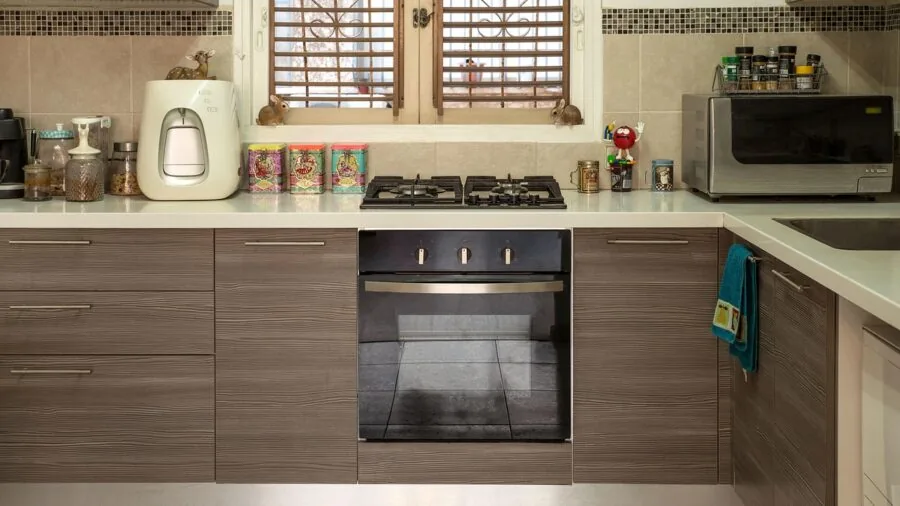
Where a timer lives in your kitchen is a practical decision that affects how useful it actually is day-to-day.
Magnetic backs allow timers to attach directly to a refrigerator, oven door, or other metal surface, keeping the unit at eye level and out of the way of prep surfaces.
Most of the digital models in this guide include a magnetic back as a standard feature, including the VOCOO, AIMILAR, Antonki, and Allbean units.
Stand-alone base designs, like the OXO Good Grips Triple Timer or the TempPro models, are built to sit stably on a countertop.
These tend to have a larger footprint but benefit from a more deliberate, upright display angle designed for countertop viewing. Some users prefer not to attach anything to their appliances, making a freestanding design the clear preference.
Consider your kitchen layout: a magnetic timer is ideal when counter space is at a premium, while a countertop unit suits kitchens with a dedicated gadget zone.
Battery Life, Power Source, and Longevity

Most digital kitchen timers run on standard AAA or AA batteries, and battery life is rarely a concern with typical cooking use: even budget models tend to last many months between changes.
Where it matters more is in professional or high-frequency home use, where a timer might be running nearly continuously.
Look for models that specify battery type and include batteries in the box (the Antonki 2-pack and AIMILAR both include batteries), since not having to source batteries on day one is a minor but appreciated convenience.
Mechanical timers sidestep the battery question entirely. The Colortrak wind-up timer and the ALBAYRAK mechanical unit require no power source whatsoever, making them inherently reliable in any scenario.
The trade-off is precision: spring-driven mechanisms can drift slightly over longer intervals, which is usually inconsequential for general cooking but worth noting if accuracy to the minute matters for a specific recipe.
Mechanical timers also have a finite spring life, though with normal use, most will outlast several digital counterparts.
Why You Should Trust Us
ProductFind is an independent review platform. We do not manufacture, sell, or have commercial relationships with any of the brands featured in this guide.
Every product on this page was evaluated using our consistent PF Score methodology (rated on a scale of 0 to 10), which synthesizes published specifications, expert review consensus drawn from culinary and consumer-electronics sources, and verified buyer feedback aggregated from confirmed purchasers.
We do not conduct our own product trials; our evaluations are grounded in research, published data, expert review consensus, and verified buyer feedback.
This approach lets us assess a broad field of products with consistent criteria rather than limiting our scope to the small subset we could personally evaluate in any given period.
When expert consensus and buyer experience align, that convergence produces a more reliable signal than any single perspective alone.
ProductFind may earn a commission when you purchase through links on this page. That affiliate relationship has no bearing on which products are included, how they are ranked, or what PF Score they receive.
Scores and rankings are determined solely by our research criteria. Products with lower affiliate commission rates appear in this guide if the research supports their inclusion, and products with higher rates are excluded if the evidence does not support them.
Final Thoughts
The kitchen timer market covers a wide range of use cases, from a no-frills mechanical countdown for casual cooks to a four-channel professional unit for anyone who routinely runs a full stove.
After evaluating twelve models across both categories, a few clear standouts emerge.
Pairing any of these picks with well-chosen prep tools, including a reliable cutting board, a sharp chef’s knife, and a good set of mixing bowls, rounds out a kitchen that’s genuinely set up for efficient cooking.
- Best Overall: OXO Good Grips Digital Triple Kitchen Timer earns the top spot with the highest PF Score in this group, combining a three-channel countdown system, intuitive controls, and OXO’s well-established build quality into one polished package that suits the widest range of home cooks.
- Best Multi-Channel Pick: YOOYIST 4-Channel Commercial Kitchen Timer is the choice for serious home cooks and anyone who routinely manages four simultaneous cooking tasks, with stainless-steel construction and a commercial-grade feature set that justifies its higher price tier.
- Best Four-Channel Value: TPNEG 4-Channel Digital Kitchen Timer delivers multi-channel functionality alongside selectable loud and silent modes at a mid-range price, making it one of the most flexible options in the guide for households with mixed noise-sensitivity needs.
- Best for Direct-Input Speed: AIMILAR Magnetic Digital Kitchen Timer stands out for its direct numerical keypad, letting you punch in any countdown in seconds without scrolling through increments, a genuinely useful feature for fast-paced cooking sessions.
- Best Budget Pair: Antonki 2-Pack Digital Timer offers two magnetic countdown timers at a combined price that undercuts most single-unit competitors, making it a practical choice for families, classrooms, or anyone who wants a backup unit in a different room.
Whatever your cooking style, there’s a timer in this guide sized and priced for your needs. For readers building out a broader kitchen toolkit, a quality pepper mill, reliable measuring cups, and a well-made whisk are natural companions to a well-timed kitchen routine.
Frequently Asked Questions
What is the difference between a countdown timer and a count-up timer?
A countdown timer starts at a set duration and counts down to zero, alerting you when time is up.
A count-up timer starts at zero and runs forward, useful for tracking how long something has been cooking rather than alerting you at a fixed endpoint.
Many digital models in this guide, including the TempPro TM01 and the TPNEG four-channel timer, support both modes, giving you flexibility depending on the task. For most cooking scenarios, countdown mode is what you’ll use the majority of the time.
Are kitchen timers better than using a smartphone?
Smartphones are convenient but come with real drawbacks in a kitchen context.
A phone’s screen dims or locks quickly, its alarm can be mistaken for a notification, and it occupies valuable counter space while also being vulnerable to steam, splashes, and grease.
A dedicated kitchen timer with a magnetic back stays mounted at eye level, has a purpose-built alarm you can hear clearly, and doesn’t tempt you to scroll social media between stirs.
For cooks who are serious about timing precision, a standalone timer is the more focused and durable tool.
How many channels do I actually need in a kitchen timer?
Think about the maximum number of cooking tasks you typically manage in parallel.
If you regularly have a main dish in the oven, a side on the stove, and a bread dough proofing on the counter, three channels is the practical minimum.
A four-channel unit like the YOOYIST or TPNEG adds one more buffer for unexpected additions to the meal. Single-channel units are genuinely sufficient for simpler cooking styles, and their lower price point makes them a smart choice for light users.
Overbuying on channels you’ll never use adds interface complexity without real benefit.
Can kitchen timers be used outside the kitchen?
Absolutely. Several models in this guide are explicitly designed for multi-purpose use. The Antonki 2-pack is marketed toward classrooms, exercise sessions, and children’s activities as much as cooking.
The Colortrak mechanical timer is used in hair salons for chemical processing and tanning sessions. The Allbean rotating timer includes Pomodoro-style presets (5, 15, and 25 minutes) that are directly modeled on productivity and study techniques.
A kitchen timer’s core function, tracking elapsed time with a clear alarm, is useful anywhere that kind of structured time management matters.
What should I look for in a kitchen timer if I’m buying for a senior?
Prioritize large, high-contrast digits that are easy to read without leaning close; LED displays with large numerals, like the VOCOO model, work well here. Simple controls with clearly labeled buttons reduce the learning curve significantly.
A loud, distinctive alarm is important for anyone with reduced hearing, and adjustable volume gives caregivers flexibility. Magnetic backs that keep the timer at a consistent, easy-to-see position on the refrigerator are also a practical advantage.
Avoid models that rely heavily on multi-step menu navigation to set a basic countdown.
Do I need to spend a lot to get a reliable kitchen timer?
No. Some of the most dependable options in this guide sit firmly in the budget range. Mechanical timers require no batteries and have very few failure points, making them inherently long-lasting at minimal cost.
Budget digital timers like the Antonki 2-pack cover the basic countdown function reliably for everyday cooking.
Spending more gets you multi-channel functionality, adjustable alarm volume, a direct numerical keypad, and a more durable build, all genuinely valuable upgrades for frequent cooks. But for lighter use, a budget pick will serve you well for years.
For readers also building out their baking toolkit, pastry boards, rolling pins, and cookie cutters pair naturally with a well-chosen timer for any baking session.
About the author
Tammy is a reviewer and writer for ProductFind who specializes in Kitchen Tools & Gadgets. Tammy evaluates products through independent research: specifications, expert review consensus, and verified buyer feedback, and rates each one on the PF Score. Tammy focuses on helping readers pick the right kitchen tools & gadget for their needs and budget.