The 11 Best Chef Knives
Sharp knives make every meal faster and safer to prepare. We researched blade steel, edge retention, balance, and value across top brands to find the chef knives worth buying.
 By Tammy Stevens
Updated July 23, 2026
By Tammy Stevens
Updated July 23, 2026
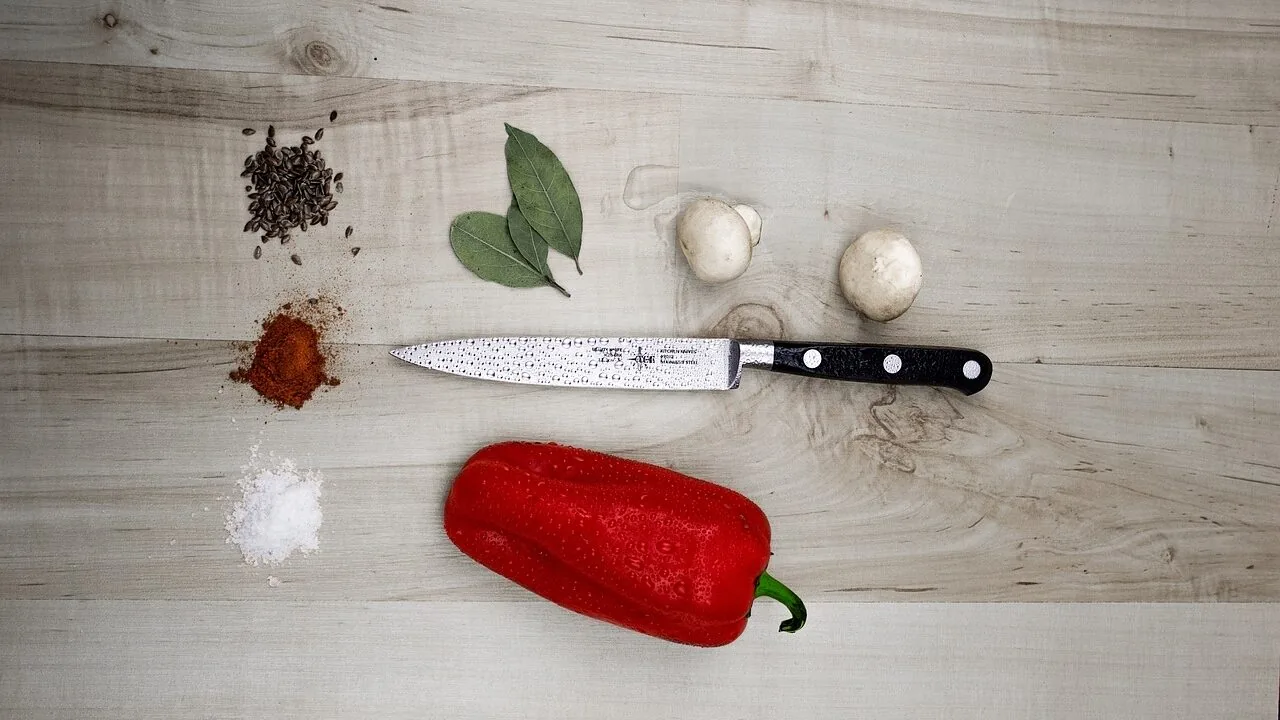
A great chef’s knife is the single most important tool in any kitchen.
Whether you’re mincing garlic, breaking down a whole chicken, or slicing through a dense butternut squash, a well-designed 8-inch chef’s knife handles it all with far less effort than most cooks expect.
The market, however, is flooded with options ranging from budget-friendly workhorses to premium Damascus steel showpieces, and the differences in steel quality, edge geometry, and handle ergonomics are real enough to matter every day you cook.
Pairing a reliable chef’s knife with quality cookware sets is one of the highest-return investments a home cook can make.
To cut through the noise, ProductFind’s editorial team researched specifications, analyzed expert review consensus across multiple publications, and examined verified buyer feedback on each model in this guide.
We evaluated blades from brands including Victorinox, Wüsthof, Henckels, imarku, SHAN ZU, HOSHANHO, Brewin, and Mercer Culinary, covering price points from budget-accessible to premium-set territory. Every pick below reflects that synthesis. Scroll down for our ranked top picks.
| Award | Product | PF Score About PF ScoreThe PF Score is our own rating from 0 to 10, based on performance, design and build, ease of use, and value. It reflects independent research and is never influenced by manufacturers, retailers, or affiliate commissions. Learn more › | Price | |
|---|---|---|---|---|
| Best Overall |
 Victorinox Fibrox Pro 8-Inch Chef's Knife
|
8.6/10 | Buy | |
| Editor's Pick |
 Wüsthof Gourmet 4-Piece Chef's Knife Set
|
7.8/10 | Buy | |
| Best Value |
 imarku 8.5 Inch Chef Knife, 10Cr15MoV Steel
|
7.1/10 | Buy | |
| Top Rated |
 Henckels Statement 15-Piece Knife Block Set
|
7.2/10 | Buy | |
 SHAN ZU 8-Inch Damascus Chef Knife
|
6.7/10 | Buy | ||
 Brewin Chefilosophi 5-Piece Japanese Chef Knife Set
|
6.5/10 | Buy | ||
 HOSHANHO 8-Inch Japanese High Carbon Steel Chef's Knife
|
6.4/10 | Buy | ||
 Atumuryou 8-Inch Damascus Chef Knife with VG10 Steel
|
6.3/10 | Buy | ||
 Mercer Culinary M22608 8-Inch Chef's Knife
|
6.2/10 | Buy | ||
 imarku 8-Inch Gyutou Chef Knife
|
6.1/10 | Buy | ||
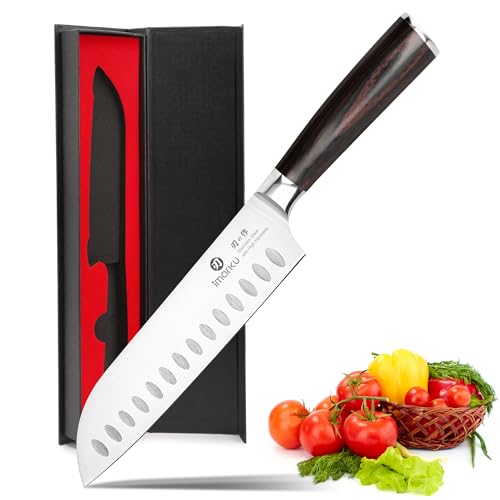 imarku 7-Inch Santoku Knife with Hollow Edge
|
6.3/10 | Buy |
Victorinox Fibrox Pro 8-Inch Chef's Knife
Swiss-made chef's knife with a tapered stainless steel blade and ergonomic TPE handle designed for both home cooks and professionals. Balanced for precision work across chopping, slicing, and dicing tasks, with dishwasher-safe convenience.
Pros
- Ergonomic TPE handle provides non-slip grip even when wet
- Tapered stainless steel blade sharpened and laser-tested for efficient cutting
- Dishwasher safe for easy cleanup
- Lightweight and well-balanced for extended use
- Backed by Victorinox lifetime warranty against material and workmanship defects
Cons
- No customer reviews available to assess real-world durability or long-term performance
- Requires separate purchase of compatible sharpeners for blade maintenance
- Rating of 4.8 is based on zero verified purchases, limiting reliability of quality assessment
Wüsthof Gourmet 4-Piece Chef's Knife Set
German-made stamped steel knife set featuring an 8-inch chef's knife, paring knife, utility knife, and honing steel with synthetic handles. Built for durability and easy maintenance, backed by Wüsthof's two-century heritage and lifetime warranty.
Pros
- Complete beginner-friendly set with essential knife sizes
- Synthetic handles resist fading, discoloration, and impact
- High carbon stainless steel maintains sharpness with proper care
- Lifetime warranty provides long-term value assurance
- Established German craftsmanship and quality standards
Cons
- Hand wash only, not dishwasher safe, requiring regular maintenance
- No customer reviews available yet to assess real-world performance
- Stamped construction, not forged, may appeal less to knife enthusiasts
imarku 8.5 Inch Chef Knife, 10Cr15MoV Steel
A mid-range Japanese-style chef knife built from 10Cr15MoV stainless steel with triple-layer composite construction and hand-polished 12-degree edge. The ergonomic Pakkawood handle and full tang design target home cooks and culinary enthusiasts seeking reliable daily-use performance without premium pricing.
Pros
- Triple-layer composite blade reduces chipping risk while maintaining edge retention
- Ergonomic Pakkawood handle designed for comfort during extended use
- Full tang construction provides balanced weight distribution and stability
- Versatile for slicing, dicing, and mincing across proteins and produce
- Hand-polished 12-degree edge achieves sharp cuts with precise control
Cons
- No verified buyer feedback available to assess real-world durability claims
- Requires hand washing and immediate drying, no dishwasher convenience
- 10Cr15MoV steel is a mid-tier material compared to higher-end chef knives
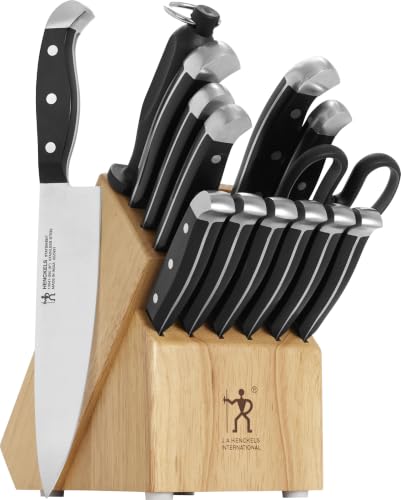
Henckels Statement 15-Piece Knife Block Set
German-engineered 15-piece knife set featuring a chef's knife, santoku, bread knife, utility knives, and steak knife set with professional honing steel and hardwood block. Single-piece precision-stamped blades promise durability and edge retention with minimal maintenance.
Pros
- Comprehensive set covers most kitchen cutting tasks without additional purchases
- Single-piece blade construction supports durability claims
- Includes professional honing steel and shears, reducing need for separate tools
- Dishwasher safe design simplifies cleanup
- German manufacturing reputation suggests quality materials and precision
Cons
- No verified buyer reviews available to confirm sharpness and edge retention claims
- Set size and weight may require significant counter or storage space
- Limited information on blade steel type or edge angle specifications
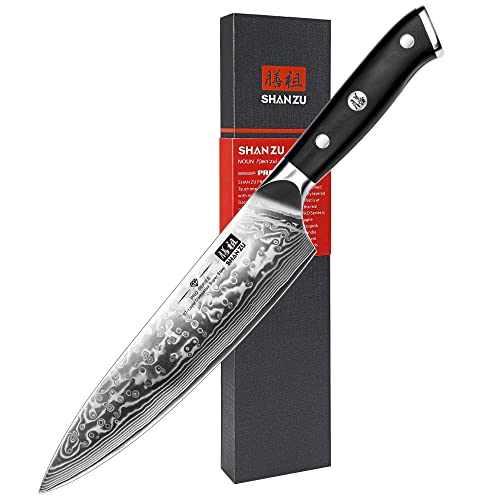
SHAN ZU 8-Inch Damascus Chef Knife
A 67-layer Damascus chef knife with 10Cr15Mov Japanese steel core rated 62 HRC for hardness and rust resistance. Features an ergonomic G10 handle and true Damascus pattern formed through traditional forging, not laser etching. Best suited for home cooks seeking a durable utility knife at a mid-range price point.
Pros
- Authentic Damascus layering process creates visible, functional blade pattern
- High hardness rating and multi-layer construction suggest good edge retention and longevity
- G10 handle is durable, low-maintenance alternative to wood with solid ergonomic design
- Balanced weight and dimensions designed for professional kitchen work
Cons
- No verified buyer reviews available to confirm real-world performance and durability claims
- Requires proper maintenance and care; Damascus steel knives demand hand washing and regular honing
- 2.2mm blade thickness may feel heavy for some users compared to lighter chef knives
Brewin Chefilosophi 5-Piece Japanese Chef Knife Set
A five-piece stainless steel knife set featuring two 8-inch chef knives, a santoku, utility knife, and paring knife with red pakkawood handles. Built from 56+ Rockwell hardness German stainless steel, it targets home cooks seeking a complete kitchen knife solution with balanced ergonomic design.
Pros
- Comprehensive set includes two 8-inch knives, santoku, utility, and paring knife for varied prep work
- High hardness stainless steel (56+ Rockwell) designed for durability and edge retention
- Balanced handles with natural pakkawood texture and reinforced construction for comfortable grip
- Comes in gift packaging, suitable for gifting
Cons
- No verified buyer reviews available to confirm real-world performance and durability claims
- Limited information on maintenance requirements or sharpening recommendations for the specific steel grade
- Set-based approach may include knives some home cooks don't regularly use
HOSHANHO 8-Inch Japanese High Carbon Steel Chef's Knife
An 8-inch chef's knife made from Japanese high carbon steel (10Cr15CoMoV) with a 60 HRC hardness rating, designed for everyday chopping, slicing, and dicing tasks. Features a matte blade finish, ergonomic wood handle with sloped bolster for pinch grip support, and comes pre-sharpened to 13 degrees per side.
Pros
- High carbon steel construction with 60 HRC hardness offers rust resistance and edge retention suitable for daily kitchen work
- Ergonomic wood handle with distinctive sloped bolster encourages proper pinch grip technique and reduces wrist strain
- Matte blade finish combines aesthetic appeal with durability against corrosion and moisture
- Hand-sharpened factory edge at 13 degrees per side ready for immediate use on vegetables, fruits, and meats
- Includes gift box packaging, practical for gifting
Cons
- No verified buyer reviews available to assess real-world performance and durability claims
- 4.5-star rating appears to be based on zero reviews, limiting confidence in the product's actual user satisfaction
- High carbon steel requires regular maintenance and hand washing to prevent rust and maintain edge quality
Atumuryou 8-Inch Damascus Chef Knife with VG10 Steel
A Japanese-style chef knife featuring a VG-10 steel core (62 HRC) wrapped in 67-layer Damascus cladding, designed for professional sharpness and durability. The ergonomic resin-wood handle and hand-sharpened edge appeal to home cooks and kitchen enthusiasts seeking a premium cutting tool.
Pros
- VG-10 steel core delivers high hardness (62 HRC) and stain resistance
- 67-layer Damascus pattern adds visual appeal while protecting against rust
- Hand-sharpened using traditional Japanese techniques for immediate usability
- Ergonomic, slip-resistant handle reduces fatigue during extended prep work
- Comes in gift box, suitable for culinary enthusiasts
Cons
- No verified customer reviews available to confirm real-world durability claims
- Damascus knives typically require regular honing and careful maintenance to preserve edge
- No information on blade flexibility or balance point for different cutting tasks
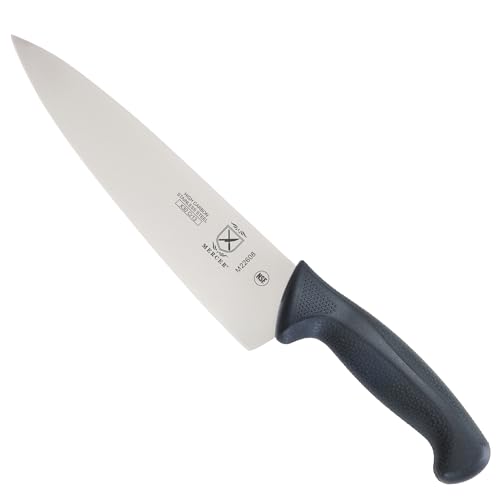
Mercer Culinary M22608 8-Inch Chef's Knife
A one-piece high-carbon Japanese steel chef's knife built for everyday kitchen tasks like chopping, mincing, and dicing. The ergonomic black handle features textured grip points for comfort and safety, though it requires hand washing and careful maintenance to preserve its edge.
Pros
- High-carbon Japanese steel holds an edge well and is easy to sharpen
- Ergonomic handle with non-slip textured grip reduces hand fatigue
- Full tang construction provides superior balance and durability
- Suitable for a wide range of cutting tasks from herbs to vegetables
Cons
- Requires hand washing only, no dishwasher use, limiting convenience
- No verified buyer reviews available to assess real-world performance and durability claims
- Manual edge maintenance needed to preserve sharpness over time
imarku 8-Inch Gyutou Chef Knife
A high-carbon stainless steel Japanese-style chef knife designed for multipurpose kitchen tasks from slicing to deboning. The 56-58 HRC hardness rating and ergonomic Pakka wood handle make it a solid mid-range option for home cooks seeking durability and comfort.
Pros
- High carbon content delivers superior hardness compared to standard stainless steel knives in its class
- Corrosion-resistant composition maintains appearance and functionality over extended use
- Ergonomic handle design reduces fatigue during prolonged cutting sessions
- Versatile gyutou profile handles diverse kitchen tasks effectively
- Backed by lifetime warranty and generous 3-month refund guarantee
Cons
- No verified customer reviews available to assess real-world performance and edge retention claims
- Logo may differ from product images due to ongoing brand upgrade, though quality is stated as consistent
- High-carbon stainless steel typically requires more maintenance than standard stainless to prevent spotting
imarku 7-Inch Santoku Knife with Hollow Edge
A Japanese high-carbon stainless steel santoku designed for everyday kitchen prep work, featuring a hollow-scalloped edge to reduce sticking and a hand-polished 15-18 degree blade. The ergonomic Pakkawood handle prioritizes comfort and food safety over extended durability.
Pros
- Hollow edge design effectively prevents ingredients from clinging to the blade
- Japanese high-carbon stainless steel offers good corrosion resistance for daily use
- Pakkawood handle is stable, sanitary, and won't crack like traditional wood
- Lightweight at 0.43 pounds, reducing hand fatigue during extended prep work
- Competitive warranty coverage with 3-month refund and 1-year replacement
Cons
- No verified buyer reviews available to validate real-world performance claims
- Pakkawood handle may require more maintenance than traditional stainless steel or composite alternatives
- Brand packaging randomly varies during current rebranding period, potentially affecting gift presentation
Chef Knives Buying Guide
Choosing a chef’s knife is more nuanced than picking the sharpest-looking blade on the shelf.
The right knife depends on your grip style, the types of ingredients you cut most often, how much maintenance you’re willing to do, and whether you want a single go-to blade or a coordinated set.
The five criteria below cover everything you need to make a confident decision.
Blade Steel and Edge Retention
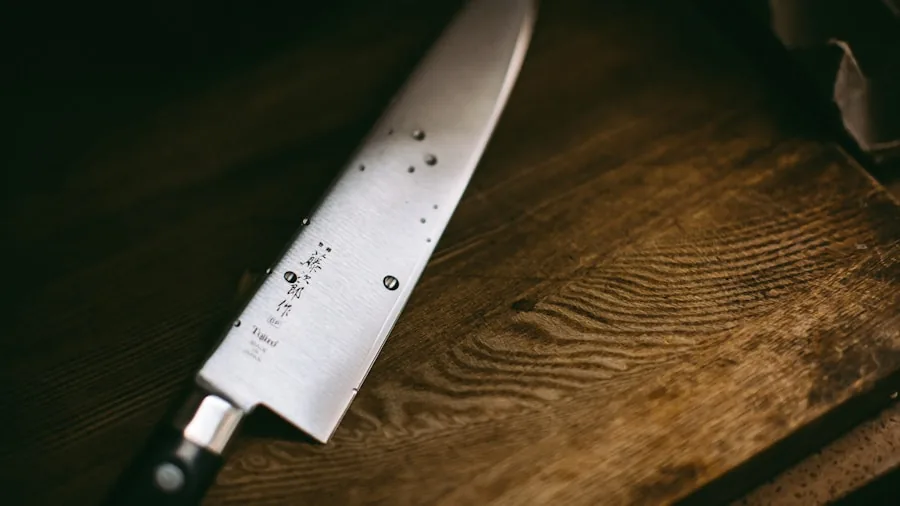
Blade steel is the foundation of a chef’s knife’s long-term performance. German high-carbon stainless steel, used by brands like Wüsthof and Henckels, is typically hardened to around 56 to 58 on the Rockwell scale (HRC).
It is slightly softer, which makes it more resistant to chipping and easier to hone back to a sharp edge with a honing rod.
Japanese-style steels, such as VG10 or the 10Cr15MoV alloy found in some imarku models, generally reach 60 HRC or above.
That extra hardness translates to a keener cutting edge that lasts longer between sharpenings, but the blade is more brittle and less forgiving if it meets bones or hard surfaces.
Damascus-patterned blades, like those from SHAN ZU and ATUMURYOU, layer multiple types of steel around a hard core.
The visual pattern is real, but it is primarily decorative; what matters is the core steel’s hardness and the quality of the heat treatment.
When comparing blades, look for specific steel grades in the product specifications rather than marketing descriptors alone.
A knife that holds its edge through weeks of daily prep will save you far more time and frustration than one that needs frequent sharpening.
For most home cooks, German-style steel between 56 and 58 HRC offers the best balance of sharpness, durability, and ease of maintenance.
If you sharpen regularly and want a finer edge, a Japanese-style blade at 60 HRC or above is worth the extra care.
Think of this the same way you’d weigh the tradeoffs when choosing between materials in a good set of stainless steel cookware: durability and upkeep go hand in hand.
Sharpness Out of the Box
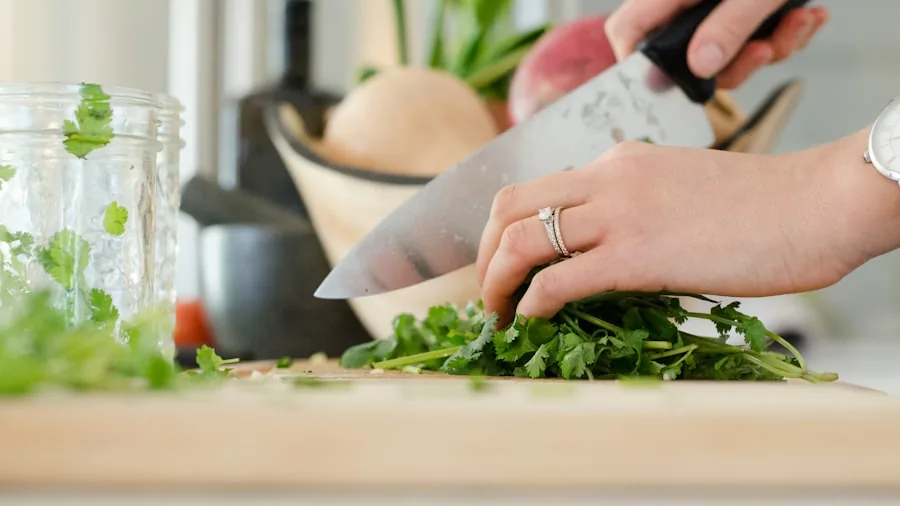
A knife that arrives with a hair-splitting edge signals careful factory finishing and good quality control.
Verified buyer feedback across the products in this guide consistently identifies out-of-box sharpness as a proxy for overall build quality, and it is one of the strongest signals that a manufacturer has taken edge geometry seriously from the start.
The Victorinox Fibrox Pro is frequently cited in expert review consensus as one of the sharpest knives available at its price point straight from the box.
Budget models like the Mercer Culinary Millennia and imarku offerings also ship reasonably sharp, though they may benefit from a few passes on a honing rod before first use.
Premium sets like the Wüsthof Gourmet 4-Piece invest in precision edge angles (Wüsthof typically uses a 14-degree per side angle versus a more common 20-degree German bevel), which contributes to noticeably cleaner cuts on soft produce like tomatoes and herbs.
When reading buyer reviews, filter specifically for mentions of the knife’s performance after the first few weeks of use, not just the first unboxing.
A knife that starts sharp but dulls within a month of regular cooking suggests either a soft steel or poor heat treatment, regardless of how impressive the factory edge was.
Balance, Weight, and Ergonomics
A chef’s knife spends more continuous time in your hand than almost any other kitchen tool. Balance point, handle shape, and overall weight all determine whether a 30-minute prep session leaves your wrist comfortable or fatigued.
Most Western-style 8-inch chef’s knives weigh between 170 and 250 grams. Japanese-influenced blades tend to be lighter, which suits cooks who use a pinch grip and prefer speed over heft.
The handle material matters too. Fibrox (the textured polypropylene used by Victorinox) is dishwasher-safe, grippy when wet, and hygienic, making it a favourite in professional kitchens for practical reasons.
Pakkawood handles, found on several imarku and Brewin models in this guide, offer a warmer aesthetic and a comfortable contoured shape but require hand-washing and occasional oiling to prevent cracking over time.
Traditional Japanese handles in wood or resin, like those on HOSHANHO’s offering, are lightweight and well-balanced but may feel unfamiliar to cooks used to Western bolster-style grips.
If you have larger hands or cook in high volumes, a full bolster (the metal collar between blade and handle) adds weight forward and improves stability during rocking cuts.
If you prefer a lighter knife for rapid chopping, look for a half-bolster or no bolster at all. Try to hold a knife or read detailed ergonomic descriptions before committing, especially for sets where you cannot return individual pieces.
Set Contents and Block Design
A knife set can be excellent value, but only if you’ll actually use every piece. The Henckels Statement 15-piece set and the Wüsthof Gourmet 4-piece set represent two different philosophies.
Large block sets with 12 to 15 pieces typically include chef’s knife, bread knife, carving knife, utility knife, paring knife, kitchen shears, honing rod, and a full block.
That makes sense for cooks who want a complete kitchen setup in a single purchase. Smaller curated sets focus on the two or three knives that do 80% of the work: chef’s knife, paring knife, and sometimes a serrated slicer.
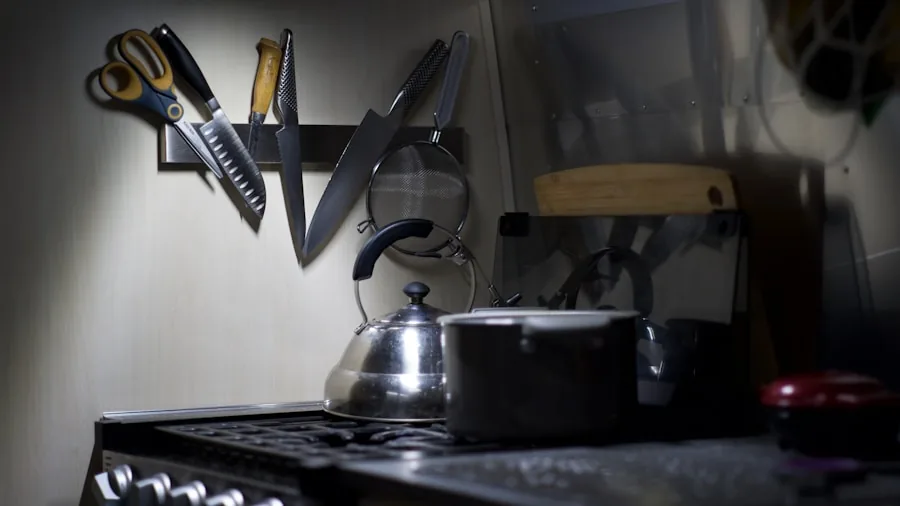
Block design affects both safety and counter space. Wooden blocks with clearly labeled slots help protect edges between uses and keep knives accessible.
Magnetic strips and in-drawer organizers are alternatives if counter space is limited, though they are typically sold separately. The Brewin CHEFILOSOPHI 5-piece set is a good example of a focused set with elegant storage included at a mid-range price.
Before buying a set, count how many knives you realistically reach for each week. Most home cooks rely on a chef’s knife, a paring knife, and a serrated bread knife for the vast majority of tasks.
A Santoku knife like the imarku 7-inch model in this guide is a strong supplement for thin-slicing tasks, but it is not a replacement for a chef’s knife’s rocking motion.
Buying a set with many redundant pieces usually means paying for knives that will sit unused in the block.
Value and Long-Term Durability

Price is not a reliable proxy for quality in the chef’s knife category. The Victorinox Fibrox Pro, priced in the budget-to-mid range, outperforms many knives that cost two or three times as much across multiple expert review comparisons.
It earns its recommendation not because it is cheap but because its steel, edge geometry, and handle design are genuinely well-executed for everyday use.
Durability comes down to three factors: steel quality, handle attachment (riveted handles tend to last longer than glued ones on heavily used knives), and your maintenance habits.
Even the best blade degrades quickly if stored loose in a drawer, washed in a dishwasher (unless the manufacturer explicitly supports it, as Victorinox does), or never honed.
A honing rod realigns the edge without removing metal and should be used every few sessions. Professional sharpening once or twice a year keeps most blades in excellent condition indefinitely.
Consider long-term value the same way you would with any kitchen investment. A well-maintained German or Japanese chef’s knife can last decades.
A cheap, poorly-hardened blade that ships sharp but dulls within months will cost more over time in replacements and sharpening services.
Spending a little more upfront on a reputable brand generally pays off over years of daily cooking, just as investing in solid espresso machines or quality cookware rewards consistent daily use.
Maintenance and Care Requirements
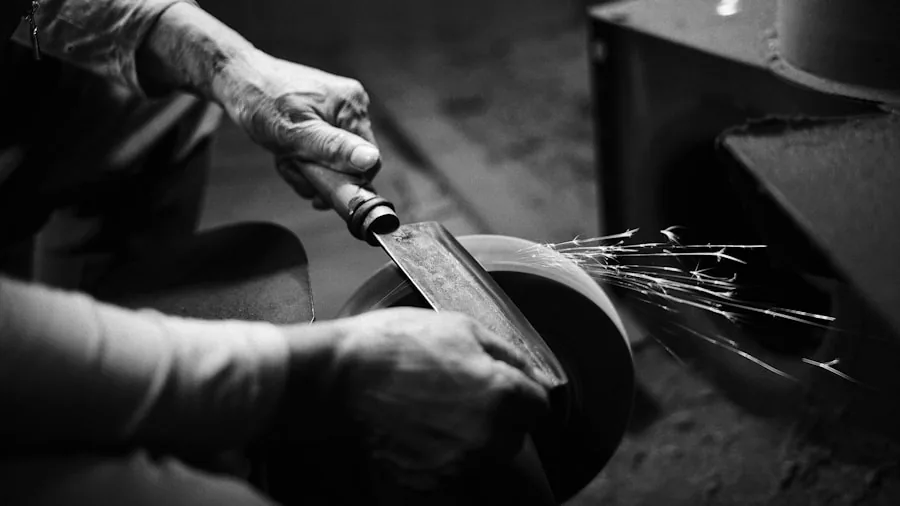
A knife you maintain is a knife that lasts. High-hardness Japanese-style blades (60+ HRC) require a finer-grit whetstone and more careful honing angle than softer German-style blades.
If you are not confident in freehand sharpening, a guided sharpening system or a pull-through sharpener designed for the correct bevel angle is a worthwhile accessory.
Many budget knives in this guide, including the Mercer Culinary Millennia, are designed to be easy to sharpen at home precisely because their steel is not overly hard.
Handle material also dictates care. Pakkawood and natural wood handles should never soak in water or go in a dishwasher.
Fibrox handles on Victorinox knives are an exception and are explicitly rated dishwasher-safe, which is a meaningful practical advantage in busy households.
Stainless bolsters and rivets resist rust well, but carbon-heavy blade steels can develop surface patina or light rust spots if left wet. Dry your knife immediately after washing, regardless of what the packaging claims.
A cutting board matters more than most cooks realize. Wood or plastic boards protect edges; glass, ceramic, or stone surfaces destroy them rapidly.
If you’re upgrading your knife setup, your cutting board and storage solution deserve the same attention as the blade itself.
Rounding out your kitchen with well-chosen tools, from knives to air fryer toaster ovens and beyond, makes the whole cooking experience more enjoyable and efficient.
Why You Should Trust Us
ProductFind is an independent editorial review site. We do not conduct our own product trials; our evaluations are grounded in research, published data, expert review consensus, and verified buyer feedback.
Every product in this guide was assessed against a consistent set of criteria covering blade steel and hardness, out-of-box sharpness, ergonomics and balance, set contents and storage, long-term durability, and overall value at its price point.
Each product receives a PF Score on a 0 to 10 scale. The PF Score synthesizes all evaluated criteria into a single comparable rating, weighted to reflect what matters most to the majority of buyers in this category.
A knife that scores highly on steel quality and ergonomics but ships with a mediocre edge will score lower than one that excels across all dimensions.
Scores reflect the product’s overall merit relative to others at its price tier, not absolute perfection.
Transparency note: ProductFind may earn an affiliate commission when you purchase through links in this guide. That relationship has no influence on our rankings, PF Scores, or editorial selections.
Products are recommended based on their assessed quality and suitability for buyers’ needs, not on commission rates.
Our goal is to give you the clearest, most honest picture of each product so you can make the right choice for your kitchen.
Final Thoughts
After researching specifications, synthesizing expert review consensus, and examining verified buyer feedback across all eleven products in this guide, a few clear winners emerge for different types of buyers.
The chef’s knife category rewards thoughtful matching of blade style to cooking habits, so there is genuinely no single right answer for everyone. That said, some products stand out decisively within their respective niches.
- Best Overall: Victorinox Fibrox Pro 8-Inch Chef’s Knife. This knife earns the top position with the highest PF Score in the guide, backed by consistent expert recognition and overwhelmingly positive verified buyer feedback. Its edge geometry, grip-friendly Fibrox handle, and dishwasher-safe construction make it an exceptional everyday performer at a mid-range price.
- Best Premium Set: Wüsthof Gourmet 4-Piece Chef’s Knife Set. For cooks who want a curated collection from a heritage German brand, this set delivers precision-ground edges, full-tang construction, and long-term reliability backed by one of the most respected names in professional cutlery.
- Best Large Block Set: Henckels Statement 15-Piece Knife Block Set. Buyers who want a complete kitchen cutlery solution in a single purchase will find this set covers every task with German-engineered blades and a full block, at a price that represents strong value for the scope of what’s included.
- Best Mid-Range Upgrade: imarku 8.5-Inch Pro Japanese Chef Knife. This model steps up from entry-level imarku offerings with a triple-layer composite blade in 10Cr15MoV stainless and a contoured Pakkawood handle, making it a compelling choice for cooks ready to invest in a more refined Japanese-influenced blade without committing to a full premium set.
- Best Budget Pick: Mercer Culinary M22608 Millennia 8-Inch Chef’s Knife. At its entry-level price, the Mercer Millennia is a practical, no-frills workhorse with a comfortable handle and a blade that holds up well under regular use, making it ideal for students, first-time buyers, or anyone who wants a reliable backup knife without significant outlay.
Whatever your budget or cooking style, the right chef’s knife is one you’ll reach for every day.
If you’re building out a complete kitchen, consider pairing your new knife with well-reviewed stainless steel cookware for a setup that handles everything from weeknight dinners to ambitious weekend projects.
Frequently Asked Questions
What Size Chef’s Knife Is Best for Most Home Cooks?
An 8-inch chef’s knife is the near-universal recommendation from culinary professionals and cooking educators alike, and it is the most common size across the products in this guide.
It is long enough to slice through large vegetables and proteins in a single stroke, yet short enough to maneuver comfortably on a standard home cutting board.
Cooks with smaller hands sometimes prefer a 6-inch model, while those doing high-volume prep may appreciate a 10-inch blade. For the overwhelming majority of home kitchens, though, 8 inches is the sweet spot.
What Is the Difference Between a German and a Japanese Chef’s Knife?
German chef’s knives (like those from Wüsthof and Henckels) use softer, more flexible steel hardened to around 56 to 58 HRC, with a thicker spine and a more curved belly that suits a rocking cut.
They are more forgiving, easier to hone at home, and better suited to heavy-duty tasks.
Japanese-style knives (including the Gyuto, which is the Japanese interpretation of a Western chef’s knife) use harder, thinner steel, often 60 HRC or above, with a flatter profile better suited to push-cutting.
They hold a finer edge longer but require more careful maintenance and are more susceptible to chipping if used on bones or hard vegetables carelessly.
Many of the products in this guide, including offerings from imarku and HOSHANHO, blend Japanese blade steel with Western-style ergonomics, giving buyers a middle-ground option that is sharper than a traditional German knife while remaining accessible in terms of upkeep.
How Often Should I Sharpen My Chef’s Knife?
For most home cooks cooking four to seven days a week, full sharpening on a whetstone or by a professional is needed once or twice per year.
Honing, which realigns the edge without removing steel, should happen much more frequently, ideally every two to four cooking sessions. A honing rod takes about 30 seconds and noticeably improves cutting performance between sharpenings.
Signs that a knife needs actual sharpening rather than honing include visible edge roll or the need to apply significant pressure to slice a ripe tomato.
Is a Santoku Knife a Good Substitute for a Chef’s Knife?
A Santoku, like the imarku 7-inch Santoku in this guide, excels at thin-slicing, dicing, and mincing with a push-cut technique, and its flat profile is well-suited to users who prefer that style.
It is not a direct substitute for a chef’s knife, however. The chef’s knife’s curved belly enables the rocking motion that speeds up herb mincing and many other common tasks.
Most cooks who own both reach for the chef’s knife more often. The Santoku is best viewed as a complement to a chef’s knife rather than a replacement.
Should I Buy a Knife Set or Individual Knives?
A set makes sense if you are outfitting a kitchen from scratch and want coordinated blades from a single manufacturer in a block.
Sets like the Henckels Statement 15-piece and the Wüsthof Gourmet 4-piece offer genuine value compared to buying each piece individually. The caveat is that large sets often include knives you will rarely use.
If you already own some pieces, or if you cook a specific style that only demands two or three blade types, buying individual knives strategically will get you higher quality per piece for the same budget.
Start with an 8-inch chef’s knife, add a paring knife, then a serrated bread knife, and you will cover 95% of kitchen tasks. You can always add a Santoku, a boning knife, or a carving knife later as your cooking expands.
Does a Damascus Blade Actually Perform Better?
Damascus-style blades, as seen on the SHAN ZU and ATUMURYOU models in this guide, are made by layering multiple types of steel and then acid-etching or polishing to reveal the distinctive wavy pattern.
The visual effect is striking, but performance depends almost entirely on the core steel rather than the pattern itself. A Damascus blade with a high-quality VG10 or similar core will perform excellently.
A Damascus blade with a mediocre core wrapped in decorative layers is primarily a cosmetic product. When evaluating Damascus knives, focus on the specified core steel hardness and the brand’s track record in expert reviews, not the visual pattern alone.
Aesthetics and genuine cutting performance are two separate things in this category.
About the author
Tammy is a reviewer and writer for ProductFind who specializes in Kitchen Tools & Gadgets. Tammy evaluates products through independent research: specifications, expert review consensus, and verified buyer feedback, and rates each one on the PF Score. Tammy focuses on helping readers pick the right kitchen tools & gadget for their needs and budget.