The 10 Best HDMI Cables
Not all HDMI cables deliver what they promise. We researched specs, certifications, and buyer feedback to find the top picks for 4K, 8K, and gaming setups.
 By Zoey Hoffman
Updated July 23, 2026
By Zoey Hoffman
Updated July 23, 2026
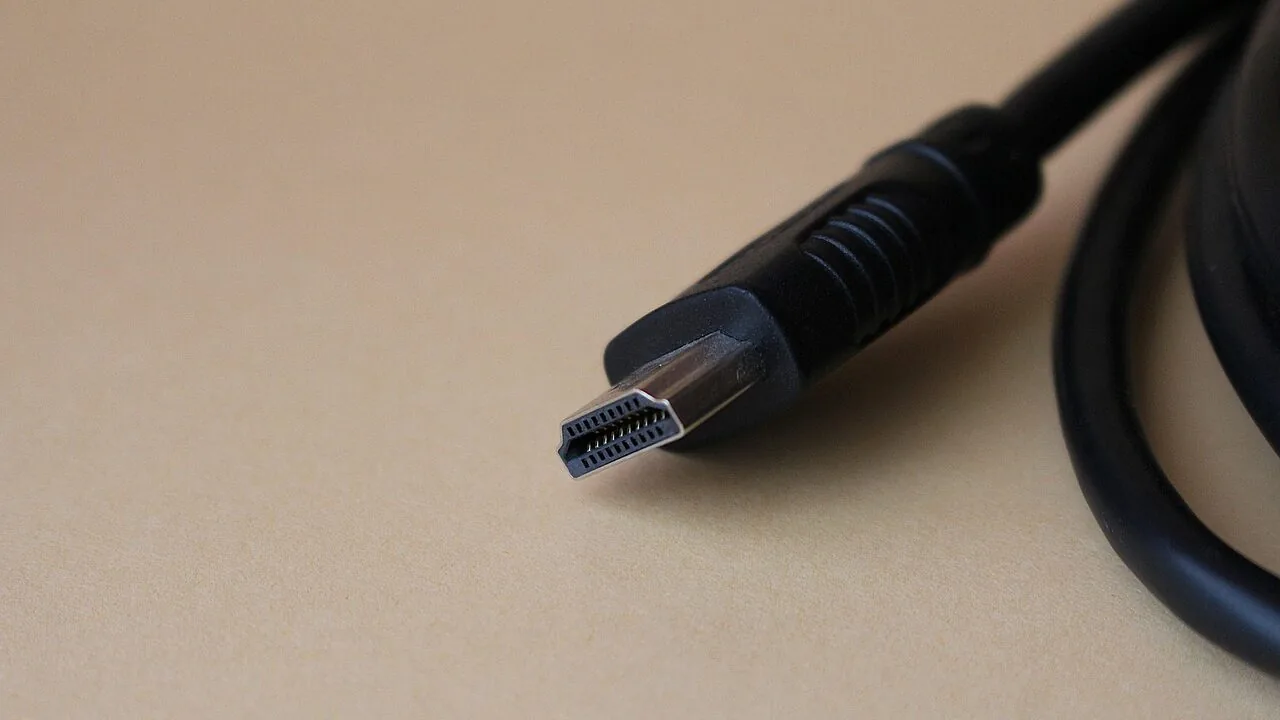
HDMI cables are one of those purchases that can feel deceptively simple, yet the sheer number of standards, speed ratings, and certification labels on store shelves makes the decision genuinely confusing.
Whether you’re setting up a new 4K TV, connecting a PS5 or Xbox Series X, or building a clean home theater, having the right cable matters more than most people realize.
A mismatched or substandard cable can cap your resolution, drop your refresh rate, or prevent features like eARC and VRR from working at all.
Pair that with the fact that premium-priced cables often deliver no real-world advantage over well-built budget options, and you have a category worth researching carefully before you spend.
At ProductFind, we analyzed the HDMI cable market by synthesizing published specifications, expert review consensus across the industry, and verified buyer feedback from thousands of confirmed purchases.
Our research covers bandwidth ratings, build quality, certification status, and real-world compatibility with today’s displays and source devices.
If you’re pairing any of these cables with a new screen, our guides to 4K TVs and QLED TVs can help you round out your setup.
The picks below represent the strongest options across budget, performance, and use-case categories, ranked by PF Score for your convenience.
| Award | Product | PF Score About PF ScoreThe PF Score is our own rating from 0 to 10, based on performance, design and build, ease of use, and value. It reflects independent research and is never influenced by manufacturers, retailers, or affiliate commissions. Learn more › | Price | |
|---|---|---|---|---|
| Best Overall |
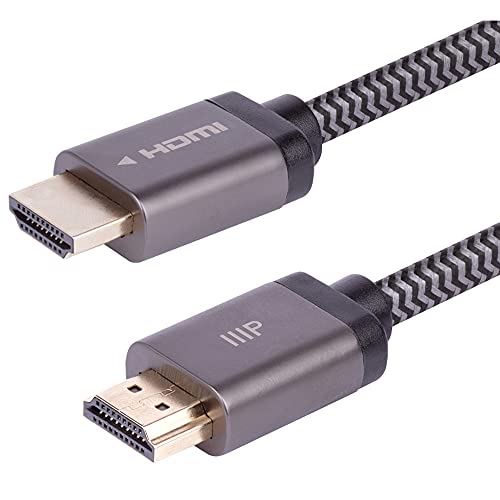 Monoprice 8K Ultra High Speed HDMI 2.1 Cable, 6ft
|
8.4/10 | Buy | |
| Editor's Pick |
 Anker HDMI 2.1 Cable 8K@60Hz, 6.6ft
|
8.1/10 | Buy | |
| Best Value |
 UGREEN 8K HDMI 2.1 Cable 6.6FT
|
7.9/10 | Buy | |
| Top Rated |
 Monster 8K HDMI Cable 4 FT, 48 Gbps
|
7.1/10 | Buy | |
 CABNEER 8K HDMI 2.1 Cable 10ft 2-Pack
|
6.9/10 | Buy | ||
 Monster M3000 8K HDMI Cable 4.9 ft
|
6.8/10 | Buy | ||
 Highwings 15 FT HDMI 2.1 Cable 8K
|
6.5/10 | Buy | ||
 Maximm HDMI 2.0 3ft 10-Pack Braided Cable
|
6.2/10 | Buy | ||
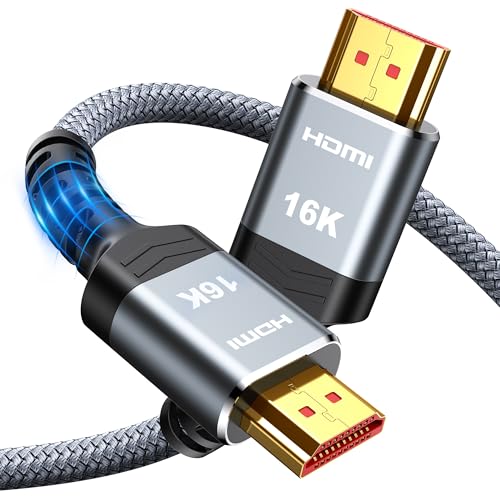 Highwings 16K HDMI 2.2 Cable 6.6ft, 96Gbps
|
5.1/10 | Buy | ||
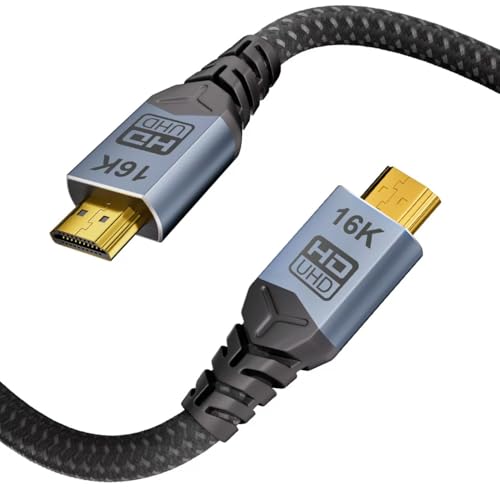 CABLAPTOP 16K HDMI 2.2 Cable, 3.3FT, 96Gbps
|
5.0/10 | Buy |
Monoprice 8K Ultra High Speed HDMI 2.1 Cable, 6ft
A certified HDMI 2.1 cable delivering the full 48Gbps bandwidth needed for 8K@60Hz and 4K@120Hz playback, plus support for advanced audio formats like Dolby Atmos. Built with braided shielding and CL2 in-wall rating, it's designed for next-gen consoles and home theater setups.
Pros
- Meets full HDMI 2.1 certification with 48Gbps capacity
- Handles next-gen console gaming at high frame rates and resolutions
- In-wall rated design allows clean wall-mounted TV setups
- Braided shielding adds durability compared to standard cables
Cons
- No verified user reviews available yet to validate real-world performance
- 6ft length may not suit all installation distances
- Premium pricing typical of certified 8K cables limits budget appeal
Anker HDMI 2.1 Cable 8K@60Hz, 6.6ft
Ultra High Speed HDMI 2.1 cable certified by HDMI Forum, delivering 48 Gbps bandwidth for 8K@60Hz and 4K@120Hz on next-gen consoles and 8K displays. Durable construction with carbon steel connectors and braided nylon jacket rated for 10,000 plug cycles.
Pros
- Official HDMI Forum certification ensures compatibility and electromagnetic shielding
- Future-proof 48 Gbps bandwidth handles current and next-generation high-resolution gaming and streaming
- Premium materials and construction designed for long-term reliability
- Compatible with major gaming platforms and 8K displays
Cons
- No verified customer reviews available yet to assess real-world durability claims
- 6.6ft length may be limiting for some setups requiring longer cable runs
- Premium pricing typical for certified Ultra High Speed cables
UGREEN 8K HDMI 2.1 Cable 6.6FT
A certified HDMI 2.1 cable delivering 48Gbps bandwidth for 8K@60Hz and 4K@240Hz video with aluminum construction and nylon braiding for durability. Built for high-end home theater setups and gaming consoles that demand uncompressed 4K-8K signal transmission.
Pros
- Certified HDMI 2.1 standard ensures compatibility with next-gen 8K displays and gaming devices
- 48Gbps bandwidth handles uncompressed 8K video and high refresh 4K without signal degradation
- Robust aluminum and nylon construction withstands frequent bending while maintaining flexibility
- eARC support enables direct full-resolution audio delivery to soundbars and AV receivers
- Broad device compatibility spanning consoles, Apple devices, streaming sticks, and professional displays
Cons
- No verified buyer reviews available to assess real-world reliability or common issues
- 6.6FT length may be limiting for larger home theater installations requiring longer cable runs
- Premium pricing typical of certified HDMI 2.1 cables compared to standard HDMI options
Monster 8K HDMI Cable 4 FT, 48 Gbps
A premium 4-foot HDMI cable engineered for next-gen gaming and home theater setups, delivering 48 Gbps bandwidth with support for 120Hz refresh rates, Dynamic HDR, and eARC audio. Gold-plated connectors and V-Grip design provide reliable connections for PS5, Xbox Series X, and high-end displays.
Pros
- 48 Gbps bandwidth supports 8K video and 120Hz gaming on compatible devices
- eARC support simplifies audio setup between TV and soundbar with single cable
- 24K gold-plated connectors and V-Grip design ensure secure, durable connections
- Compact 4-foot length ideal for short-distance connections between consoles and displays
- Supports Dynamic HDR and up to 10K resolution for future-proofing
Cons
- No verified buyer reviews available to validate real-world performance claims
- 4-foot length limits flexibility for room layouts requiring longer cable runs
- Premium positioning may not be necessary for standard 4K 60Hz setups
CABNEER 8K HDMI 2.1 Cable 10ft 2-Pack
HDMI 2.1 cable rated for 8K@60Hz and 4K@120Hz with 48Gbps bandwidth, featuring braided nylon construction and gold-plated connectors. Designed for gamers and home theater setups needing high-speed, reliable video transmission across multiple devices.
Pros
- Supports latest HDMI 2.1 standards with 8K@60Hz and 4K@120Hz capability
- Backward compatible with HDMI 2.0 and earlier versions for broad device support
- 24K gold-plated connectors and multi-layer shielding reduce interference and improve signal stability
- Braided nylon design with reinforced connectors resists damage from daily use
- Includes gaming-focused features like VRR, ALLM, and eARC for lower latency and enhanced audio
Cons
- No verified buyer reviews available to validate real-world performance
- Limited information on actual cable flex durability or how braiding holds up over time
- Highest-spec features like 8K@60Hz require compatible source and display devices, which remain uncommon
Monster M3000 8K HDMI Cable 4.9 ft
Premium HDMI cable rated for 8K 60Hz performance with 48 Gbps bandwidth, supporting HDR, 7.1 audio, and ARC/eARC for modern home theater and gaming setups. Braided construction with gold-plated connectors provides durability for long-term use.
Pros
- Supports cutting-edge 8K resolution at 60Hz with robust 48 Gbps bandwidth
- ARC/eARC eliminates need for separate audio cables to soundbars
- Durable braided design with flexible jacket withstands repeated bending
- Works across gaming consoles, streaming devices, and PC monitors
- Gold-plated connectors reduce oxidation and signal loss
Cons
- No customer reviews available to validate real-world performance claims
- 4.9 ft length may be limiting for larger room installations or wall runs
- Premium positioning may not justify cost for users with non-8K displays
Highwings 15 FT HDMI 2.1 Cable 8K
This 15-foot HDMI 2.1 cable supports 8K@60Hz and 4K@120Hz with 48Gbps bandwidth, featuring eARC, VRR for gaming, and backward compatibility across devices. Built with copper construction for durability, though it carries a 4.5-star rating with no verified buyer reviews yet.
Pros
- Supports next-gen resolutions (8K and high refresh 4K) for future-proofing
- Advanced gaming features including VRR and superior eARC audio
- Broad device compatibility from gaming consoles to projectors
- Copper construction designed for minimal signal loss and durability
- Lifetime support commitment from manufacturer
Cons
- No verified buyer reviews available to assess real-world reliability at 15 feet
- Long cable runs (15 feet) may benefit from active amplification depending on display, not mentioned in specs
- Premium positioning suggests higher cost relative to standard HDMI 2.0 cables
Maximm HDMI 2.0 3ft 10-Pack Braided Cable
A practical 10-pack of HDMI 2.0 braided cables rated 4.8 stars, supporting 4K@60Hz with triple shielding and gold-plated connectors. Includes accessories like a right-angle adapter, cable ties, and clips, making it a convenient bulk solution for home theater or multi-device setups.
Pros
- 10-pack bundle with useful accessories (right-angle adapter, 150 cable ties, 50 clips) reduces total cost per cable
- HDMI 2.0 certified with 18Gbps bandwidth supports 4K@60Hz, HDR, and ARC for modern displays and gaming consoles
- Triple-shielded design with nylon braid, copper conductors, and gold-plated connectors minimizes signal interference
- Backward compatible with older HDMI standards (1.4, 1.3, 1.2) and works across TV, monitor, PS5, Xbox, and PC
- UL listed with 1-year limited warranty provides baseline safety assurance
Cons
- No verified customer reviews available to assess real-world durability or performance from actual users
- 3-foot length may be too short for distant wall-mounted setups without additional cable runs
- Limited warranty coverage suggests mid-tier build quality compared to extended lifetime warranties on premium cables
Highwings 16K HDMI 2.2 Cable 6.6ft, 96Gbps
This future-proofed HDMI cable supports 16K resolution and 96Gbps bandwidth, making it suitable for high-end gaming, 8K content, and home theater setups. It includes eARC, Ethernet channel, and gold-plated connectors for reliable connectivity across compatible devices.
Pros
- Exceptionally high bandwidth (96Gbps) future-proofs investment for emerging 16K and 12K content standards
- Gaming-focused features like VRR and ALLM reduce latency and screen tearing on compatible consoles
- eARC simplifies soundbar and AV receiver integration without additional cables
- Durable construction with braided nylon jacket and corrosion-resistant gold connectors resists wear
- Wide device compatibility across smart TVs, gaming PCs, projectors, and streaming devices
Cons
- No verified customer reviews available to confirm real-world performance claims
- Premium positioning suggests higher cost compared to standard HDMI 2.1 cables with similar current-generation capability
- Many claimed 16K and 12K features lack widespread content and device support today, making actual benefit uncertain
CABLAPTOP 16K HDMI 2.2 Cable, 3.3FT, 96Gbps
A premium HDMI 2.2 cable built for next-generation displays and gaming consoles, supporting up to 16K resolution at 60Hz with 96Gbps bandwidth. Features braided construction, eARC audio support, and gaming-specific tech like VRR and ALLM, though it carries no verified user feedback yet.
Pros
- Comprehensive format support from 4K to 16K covers current and future display standards
- Gaming-optimized features like VRR and ALLM minimize latency and screen artifacts
- Robust build with triple shielding and braided jacket rated for 45,000+ bends
- Full backward compatibility with older HDMI standards and devices
- Supports advanced audio formats including lossless Dolby Atmos via eARC
Cons
- No verified customer reviews available to assess real-world reliability or performance
- Premium specification claims cannot be independently validated without professional testing
- Limited availability of 16K and 8K sources means forward compatibility may be theoretical for most users
HDMI Cables Buying Guide
Choosing the right HDMI cable comes down to matching the cable’s capabilities to your actual hardware, not simply buying the most expensive option on the shelf. The sections below walk through every criterion that genuinely affects performance and long-term satisfaction.
HDMI Version and Bandwidth

The version number printed on a cable’s packaging tells you its maximum data throughput. HDMI 2.0 cables support up to 18 Gbps, which is enough for 4K at 60 Hz with HDR.
HDMI 2.1 cables push that ceiling to 48 Gbps, enabling 4K at 120 Hz, 8K at 60 Hz, and headroom for Variable Refresh Rate and eARC audio.
If you own a PS5, Xbox Series X, or a high-refresh-rate gaming monitor, HDMI 2.1 is not optional; it is the baseline you need.
HDMI 2.2 cables have begun appearing on the market with claimed bandwidth of 96 Gbps, targeting resolutions beyond 8K and refresh rates up to 4K at 480 Hz.
However, the ecosystem of displays and source devices that can actually use HDMI 2.2 is still extremely limited at the time of writing. For most buyers in 2026, a well-built HDMI 2.1 cable at 48 Gbps remains the practical sweet spot.
One critical nuance: bandwidth ratings are only meaningful when the cable has been properly certified.
A cable can claim “48 Gbps” on its box and still fail to deliver at high resolutions if it has not passed the HDMI Forum’s Ultra High Speed Cable certification.
Always look for certified options, especially when spending money on a longer or more specialized cable.
Certification and Labeling

The HDMI Forum issues official certification tiers: Standard, High Speed, Premium High Speed (18 Gbps), and Ultra High Speed (48 Gbps).
Cables that carry the Ultra High Speed certification have been independently verified to meet their stated specifications, which is a meaningful quality signal.
Monoprice and Anker, both represented in our picks, are brands that consistently submit products for this certification process.
Be cautious of cables that claim high bandwidth numbers but carry no visible certification badge. Verified buyer feedback across multiple retail platforms frequently highlights cases where uncertified cables fail to maintain stable 4K at 120 Hz signals, particularly over longer runs.
If your setup is straightforward and your cable run is short, a non-certified cable from a reputable brand can still work well. But for wall installations or runs above 10 feet, certification gives you meaningful peace of mind.
Cable Length and Signal Integrity
HDMI is a passive digital signal, and signal quality degrades over distance. For runs up to about 10 feet, almost any quality cable will perform reliably at full 48 Gbps.
Between 10 and 25 feet, you should prioritize cables with thick, well-shielded conductors and braided jackets, as these help resist interference and maintain consistent signal integrity.
The Highwings 15-foot cable in our list is an example of a longer option that targets this use case.
For runs beyond 25 feet, passive HDMI cables become increasingly unreliable at high bandwidths. Fiber optic HDMI cables are a better solution at those distances, though they come at a higher price point and are not part of this particular roundup.
If you are planning a permanent wall installation, also check that your cable carries a CL2 or CL3 in-wall rating, which indicates it meets fire safety codes for use inside walls.
Connector Build Quality and Durability
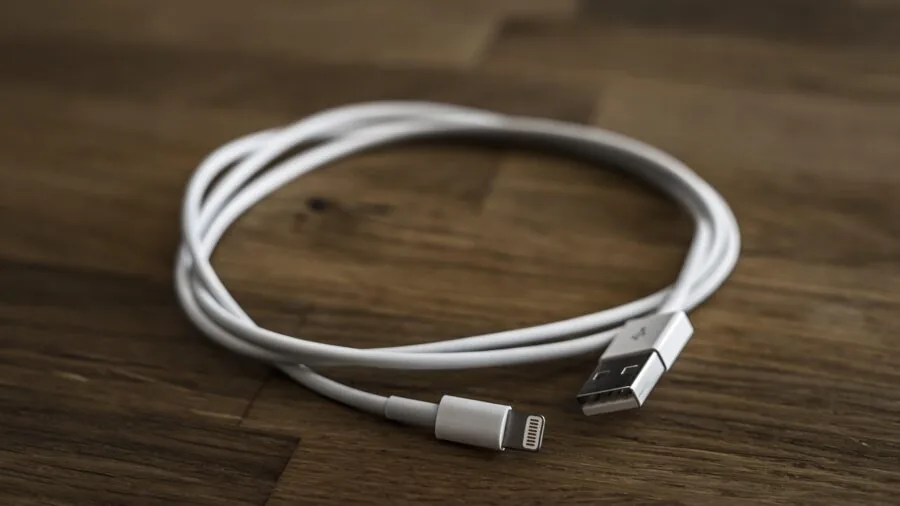
Gold-plated connectors appear on virtually every cable in this price range, and they do serve a purpose: gold resists oxidation better than bare copper, which matters for connections that are made and broken repeatedly over years.
However, the thickness of the plating and the precision of the connector housing are equally important. Poorly manufactured connectors can introduce micro-interruptions in the signal path, especially in setups where cables are frequently plugged and unplugged.
Braided nylon jackets have become standard on mid-range and premium cables in this category. They resist kinking, reduce wear at the cable’s bend points, and generally extend the usable life of the cable compared to plain PVC sleeves.
Verified buyer feedback consistently identifies jacket durability as one of the top factors in long-term satisfaction, particularly for cables used behind entertainment consoles or in tight routing environments near a subwoofer or speaker setup.
Feature Support: eARC, VRR, ALLM, and HDR

Modern AV setups rely on HDMI for more than just video. eARC (Enhanced Audio Return Channel) allows a TV to send high-quality audio, including Dolby Atmos and DTS:X, back to a soundbar or AV receiver over the same cable used for video. eARC requires an HDMI 2.1 cable with sufficient bandwidth; older HDMI 2.0 cables support only the original ARC standard, which is limited to compressed audio formats.
VRR (Variable Refresh Rate) and ALLM (Auto Low Latency Mode) are gaming-focused features that require HDMI 2.1 bandwidth and compatible hardware on both ends of the cable.
HDR10, HDR10+, and Dolby Vision all travel over the HDMI data channel alongside the video signal, so they are supported by any cable that meets the resolution and refresh rate requirements of your setup.
There is no separate “HDR cable” you need to buy.
Value and Price-to-Performance

One of the clearest findings from expert review consensus in this category is that cable price has almost no relationship to picture quality.
Once a cable meets the bandwidth requirements of your setup, every dollar above that threshold goes toward build materials, branding, and packaging, not better pixels on your screen.
The Monoprice and Anker cables in our picks are consistent examples of this principle: both deliver certified 48 Gbps performance at budget-friendly prices that undercut Monster’s offerings by a significant margin.
Multi-packs like the Maximm 10-pack and the CABNEER 2-pack can offer strong value per cable if you need to outfit multiple rooms or devices at once.
Evaluate price-per-foot when comparing options, and factor in whether a cable’s certification status justifies any premium over a comparable non-certified alternative. For most home setups, spending more than a modest amount per cable produces no measurable benefit.
Why You Should Trust Us
ProductFind is an independent review publication. We do not conduct our own product trials; our evaluations are grounded in research, published data, expert review consensus, and verified buyer feedback.
Every product in this roundup was assessed against a consistent set of criteria covering bandwidth certification, build quality, feature support, value, and real-world user satisfaction.
Each product receives a PF Score on a scale of 0 to 10, reflecting how it performs across those criteria relative to the rest of the category.
Our editorial decisions, scores, and rankings are made independently.
ProductFind may earn a commission if you purchase through links in this article, but that affiliate relationship has no influence whatsoever on which products are included, how they are ranked, or what scores they receive.
We include products because they earned their place on merit, and we note weaknesses as candidly as we note strengths. Our goal is to save you research time and help you spend your money wisely.
Final Thoughts
After thorough research across specifications, certification data, expert review consensus, and verified buyer feedback, a few clear standouts emerge from this field.
Whether you need a single certified cable for a gaming setup or a bulk pack for a multi-room installation, the options below represent the strongest choices in their respective roles.
- Best Overall: Monoprice 8K Certified Ultra High Speed HDMI Cable earns the top spot with the highest PF Score in this roundup, combining HDMI Forum certification, 48 Gbps throughput, CL2 in-wall rating, and a braided build at a budget-friendly price that is hard to beat in this category.
- Best for Everyday 4K and 8K Use: Anker HDMI 2.1 Cable 8K is a consistently recommended pick by expert reviewers and a top choice for buyers who want a reliable, well-built 48 Gbps cable from a brand with strong quality control and broad verified buyer satisfaction.
- Best Budget Pick: UGREEN 8K HDMI 2.1 Cable delivers certified Ultra High Speed performance at one of the lowest price points in the roundup, making it an outstanding option for cost-conscious buyers who refuse to sacrifice bandwidth capability.
- Best for Console Gaming: Monster 8K HDMI Cable 4 FT targets PS5 and Xbox Series X users with 48 Gbps throughput, eARC support, and a premium build that appeals to gamers who want a more refined cable without moving into the ultra-premium price tier.
- Best Multi-Pack Value: Maximm HDMI Cable 3ft 10 Pack is the practical choice for outfitting multiple devices or rooms at once, offering gold-plated connectors and solid 4K performance across a full set of cables at a competitive per-cable cost.
For buyers building out a broader home entertainment system, pairing quality HDMI cables with well-matched speaker stands can make a meaningful difference to both audio and visual presentation.
The cables reviewed here cover the full spectrum from no-frills essentials to feature-rich options, and every one of them represents better value than the generic no-name cables still sold at inflated prices in big-box retail stores.
Frequently Asked Questions
Do I really need an HDMI 2.1 cable for a 4K TV?
It depends on your use case. If you are streaming 4K content at 60 Hz, an HDMI 2.0 cable at 18 Gbps is technically sufficient.
However, if you own a PS5, Xbox Series X, or a gaming monitor capable of 4K at 120 Hz, you need an HDMI 2.1 cable rated for 48 Gbps.
Since HDMI 2.1 cables are widely available at very accessible prices in 2026, most buyers are better off purchasing 2.1 upfront to future-proof their setup.
Are expensive HDMI cables actually better?
In the vast majority of cases, no. Expert review consensus on this question has been consistent for years: once a cable meets the bandwidth specification for your setup, higher prices do not translate to better picture or sound quality.
You are paying for packaging, branding, and sometimes superior build materials for longevity, not for a superior signal. Monoprice and Anker are the canonical examples of brands that match or exceed the real-world performance of cables costing several times more.
What does HDMI certification actually mean?
HDMI Forum certification means a cable has been independently verified to meet the bandwidth it claims. An “Ultra High Speed” certified cable has passed evaluation to confirm it reliably sustains 48 Gbps across the full cable length.
Without certification, a cable can legally claim high bandwidth figures on its packaging without having been verified to deliver them. Certification matters most for longer cable runs and high-demand applications like 4K at 120 Hz gaming.
How long of an HDMI cable can I use before signal quality drops?
For passive HDMI cables, most expert sources agree that runs up to about 10 feet are reliable at full HDMI 2.1 bandwidth.
Runs between 10 and 25 feet can still work well with a high-quality, well-shielded cable, but signal integrity becomes more dependent on cable construction.
Beyond 25 feet, passive cables at 48 Gbps become increasingly risky; active or fiber optic HDMI cables are the more reliable solution for those distances.
Is HDMI 2.2 worth buying right now?
For almost all buyers in 2026, no. HDMI 2.2 targets 96 Gbps bandwidth for resolutions and refresh rates far beyond what current consumer displays support.
The ecosystem of compatible devices is minimal, and the cables themselves often carry a price premium over well-certified HDMI 2.1 options.
Unless you are purchasing a display or source device that explicitly requires HDMI 2.2, a certified 48 Gbps HDMI 2.1 cable covers every real-world use case available today.
Can I use the same HDMI cable for my TV and my gaming console?
Yes, with the right cable. A single HDMI 2.1 cable can handle 4K HDR streaming on your TV and 4K at 120 Hz gaming on a PS5 or Xbox Series X without any compromise.
The cable does not need to be swapped between uses; HDMI is backward compatible, so the same cable works across devices regardless of which resolution or refresh rate each device outputs.
Just make sure the cable is plugged into the correct port on your TV, as some TVs only have one or two HDMI 2.1-capable ports rather than all four.
About the author
Zoey is a reviewer and writer for ProductFind who specializes in TVs & Home Entertainment. Zoey evaluates products through independent research: specifications, expert review consensus, and verified buyer feedback, and rates each one on the PF Score. Zoey focuses on helping readers pick the right tvs & home entertainment for their needs and budget.