The 8 Best Air Purifiers
Cleaner indoor air starts with choosing the right purifier for your space. We cover true HEPA filtration, CADR ratings, smart sensors, and noise levels to help you find the best fit.
 By Constance Jenkins
Updated July 23, 2026
By Constance Jenkins
Updated July 23, 2026
Indoor air quality matters more than most people realize. Whether you live with pets, deal with seasonal allergies, or simply want cleaner air in your home, a capable air purifier can make a measurable difference.
Options from brands like Levoit, Blueair, Winix, and KNKA now cover everything from compact bedroom models to large-room workhorses, with features like true HEPA filtration, smart Wi-Fi controls, and real-time air quality sensors making the choice both more powerful and more confusing than ever.
At ProductFind, we cut through the noise by researching specifications, analyzing expert review consensus across multiple publications, and weighing verified buyer feedback to surface the picks that genuinely deliver.
Every model in this roundup has been assessed against a consistent set of criteria including filtration performance, room coverage, noise levels, smart features, and long-term filter costs.
Read on to see our top-ranked air purifiers for every room size and budget.
| Award | Product | PF Score About PF ScoreThe PF Score is our own rating from 0 to 10, based on performance, design and build, ease of use, and value. It reflects independent research and is never influenced by manufacturers, retailers, or affiliate commissions. Learn more › | Price | |
|---|---|---|---|---|
| Best Overall |
 Blueair Blue Pure 311i Max Smart Air Purifier
|
8.4/10 | Buy | |
| Editor's Pick |
 Levoit Vital 200S-P Air Purifier for Large Rooms
|
8.4/10 | Buy | |
| Best Value |
 Winix 5510 Air Purifier with App Control
|
8.3/10 | Buy | |
| Top Rated |
 Blueair Blue Pure 511i Max Smart Air Purifier
|
7.5/10 | Buy | |
 Levoit Vital 100S-P Air Purifier for Large Rooms
|
7.9/10 | Buy | ||
 Winix 9800 4-Stage True HEPA Air Purifier with WiFi
|
7.8/10 | Buy | ||
 Levoit Core 300-P Air Purifier, 1073 sq ft
|
7.8/10 | Buy | ||
 KNKA APH4000 HEPA Air Purifier for Large Rooms
|
6.8/10 | Buy |
Blueair Blue Pure 311i Max Smart Air Purifier
A mid-size smart air purifier with HEPASilent filtration that captures 99.97% of particles down to 0.1 microns, covering up to 2,107 sq ft per hour. Combines quiet operation (23-50 dB), app-based controls with auto mode, and a compact Scandinavian design ideal for bedrooms and pet-friendly homes.
Pros
- Effective particle capture verified by HEPASilent technology covering particles as small as 0.1 microns
- Smart app integration enables remote monitoring and scheduling without manual adjustment
- Certified quiet performance makes it suitable for sleep environments and noise-sensitive spaces
- Fast air cycling handles medium-to-large rooms efficiently
- Modern design minimizes visual footprint in living spaces
Cons
- No customer reviews available to assess real-world durability or filter replacement costs
- Limited to medium rooms, requiring larger models for open-concept or extra-large spaces
- WiFi functionality requires compatible app ecosystem and stable connectivity
Levoit Vital 200S-P Air Purifier for Large Rooms
AHAM-certified air purifier designed for spaces up to 1875 sq ft, with strong CADR ratings for smoke, dust, and pollen removal. The dual-inlet design and allergen-focused filtration make it suitable for pet owners and allergy sufferers in open-concept homes.
Pros
- AHAM certification provides third-party validation of air cleaning performance and safety
- Generously sized coverage area suits large living spaces and open-concept layouts
- U-shaped dual inlet design minimizes clogging from pet hair
- Specifically engineered for allergen reduction including pollen, dander, and dust
Cons
- No customer reviews available to assess real-world performance consistency
- Limited information on noise levels and energy consumption details
- Filter replacement costs and maintenance schedule not specified in product data
Winix 5510 Air Purifier with App Control
The Winix 5510 covers up to 1,881 sq ft per hour with True HEPA filtration that captures 99.99% of airborne allergens down to 0.01 microns. It combines automated air quality sensing, smart app control, and a quiet operation mode, making it suitable for large rooms where pet dander, smoke, and odors are concerns.
Pros
- High CADR and coverage area suitable for large rooms and quick air cycling
- Multi-stage filtration (pre-filter, True HEPA, carbon) addresses allergens and odors comprehensively
- Built-in air quality sensor with auto-adjusting fan speed reduces manual intervention
- Smart app capability and sleep mode automation add convenience
- AHAM Verified and UL Certified for reliability
Cons
- No verified buyer reviews available yet to confirm real-world performance and durability
- Relatively large footprint (11 x 15.9 x 25.2 inches) may limit placement flexibility
- Filter replacement costs and frequency not specified in available data
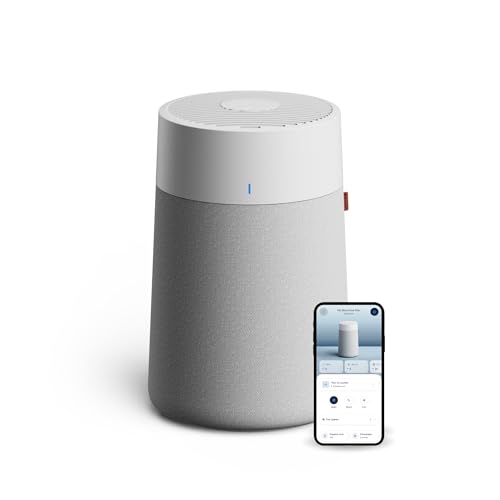
Blueair Blue Pure 511i Max Smart Air Purifier
A compact, quiet air purifier designed for bedrooms and small rooms up to 1,138 sq ft, using HEPASilent dual filtration to capture 99.97% of particles down to 0.1 microns. App-enabled auto mode adjusts fan speed based on real-time air quality, making it practical for allergy and pet owners seeking low-noise operation.
Pros
- Exceptionally quiet operation at 19 dB makes it ideal for bedrooms and nurseries without sleep disruption
- Smart features like app control and auto mode provide convenience without manual intervention
- HEPASilent dual filtration captures ultrafine particles down to 0.1 microns, addressing allergens and pet dander effectively
- Compact footprint with 360-degree intake fits small spaces while maintaining air circulation efficiency
- Clears 237 sq ft of air in 12.5 minutes for rapid room refresh
Cons
- No verified buyer reviews available yet to confirm real-world performance and durability
- Relatively small coverage area means it may struggle in larger open-concept spaces despite the 1,138 sq ft rating
- Initial setup and app connectivity required for smart features may add complexity for non-tech-savvy users
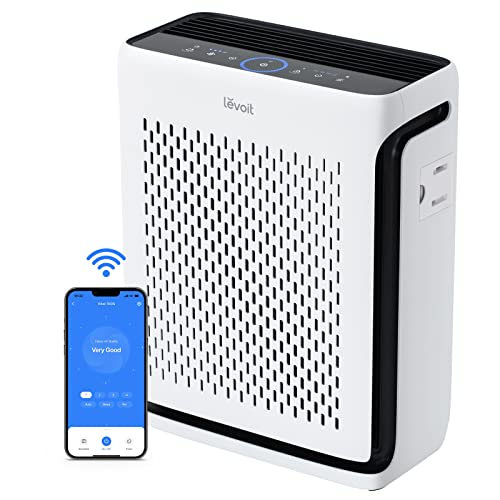
Levoit Vital 100S-P Air Purifier for Large Rooms
AHAM VERIFIDE certified air purifier covering up to 1,073 sq ft with 99.97% filtration efficiency for pet hair, dust, and pollen. Features Smart WiFi control, Sleep Mode as quiet as 25dB, and a washable pre-filter for cost-effective maintenance.
Pros
- AHAM certified performance provides third-party verification of air cleaning effectiveness
- Exceptional coverage for large open-concept spaces without sacrificing quiet operation
- Pet-focused design with dedicated mode and wide inlet optimized for fur and dander
- Washable pre-filter reduces replacement costs compared to fully disposable systems
- Smart home integration allows remote control and scheduling through mobile app
Cons
- No verified user reviews available to assess real-world durability and long-term performance
- Replacement filter ecosystem requires using official Levoit filters, limiting third-party alternatives
- Sleep Mode quietness at 25dB is a performance trade-off, not suitable for maximum air cleaning speed
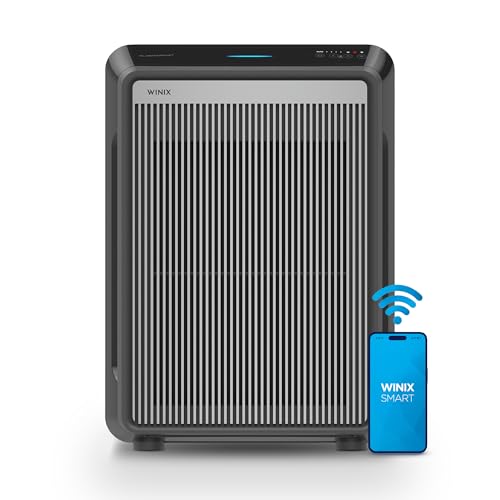
Winix 9800 4-Stage True HEPA Air Purifier with WiFi
A mid-range air purifier covering up to 500 sq ft with AHAM verification, combining True HEPA filtration with PlasmaWave technology and smart home control via WiFi app. Best suited for allergy sufferers and pet owners seeking automated air quality management without premium pricing.
Pros
- Verified AHAM performance at 500 sq ft with documented coverage rates at different time intervals
- Smart WiFi integration with app control and real-time air quality monitoring
- Quiet operation on low settings makes it suitable for bedrooms and continuous use
- Washable pre-filter reduces ongoing replacement costs compared to all-disposable systems
- Automated features like Smart Sensors and light-activated Sleep Mode minimize manual adjustments
Cons
- No verified customer reviews available to assess real-world durability or filter longevity costs
- Activated carbon filter will require periodic replacement to maintain odor reduction effectiveness
- Large 19-pound unit with 23-inch height may be difficult to position or relocate frequently
Levoit Core 300-P Air Purifier, 1073 sq ft
AHAM verified air purifier with a 56W motor and 143 CFM CADR designed for large rooms up to 1,073 square feet. Operates at 24dB in Sleep Mode and includes a 3-in-1 HEPA filter that captures 99.97% of fine particles, making it suitable for homes with pets and allergies.
Pros
- AHAM VERIFIDE certification with independently verified CADR ratings for smoke, dust, and pollen
- Covers large spaces efficiently, refreshing a 1,073 sq ft room once per hour
- Near-silent operation at 24dB in Sleep Mode with optional display light-off feature
- 99.97% filtration efficiency for particles 0.1 to 0.3 micrometers, including pet dander and allergens
- Multiple filter options available, including Pet Allergy, Toxin Absorber, and Smoke Remover variants
Cons
- Limited to 120V US-only operation, not suitable for international use
- Product carries 4.7 rating with zero verified reviews, making long-term reliability difficult to assess
- Requires genuine Levoit replacement filters for optimal performance, as off-brand alternatives may reduce efficiency
KNKA APH4000 HEPA Air Purifier for Large Rooms
AHAM-certified purifier covering up to 1,695 sq ft with dual intake design and 3-in-1 filtration. Features Pet Mode, Sleep Mode at 22-24 dB, real-time AQI display, and washable pre-filter for practical maintenance.
Pros
- AHAM certification provides third-party verification of purification rates
- Dual filter cartridges and washable pre-filter lower long-term maintenance costs
- Real-time AQI display with color-coded lights shows air quality instantly
- Sleep Mode at 22-24 dB enables quiet overnight operation
- Pet Mode specifically engineered to tackle pet-related allergens and odors
Cons
- At 1,695 sq ft coverage, efficiency drops to 45%, requiring longer purification time in very large spaces
- No customer reviews available yet to validate real-world performance claims
- Filters require replacement every 3-6 months, requiring purchase of genuine KNKA replacement cartridges
Air Purifiers Buying Guide
Choosing the right air purifier comes down to matching the unit’s real-world capabilities to your specific space and concerns.
A model that excels in a small bedroom may struggle to keep up in an open-plan living area, and a unit without activated carbon filtration will do little to combat cooking odors or smoke.
The subsections below walk through the criteria that matter most, so you can prioritize confidently rather than simply buying the most expensive option on the shelf.
Filtration Technology and Particle Capture

True HEPA filtration is the non-negotiable baseline for any air purifier worth buying.
Certified true HEPA filters capture at least 99.97 percent of airborne particles down to 0.3 microns, which covers the vast majority of allergens including pollen, pet dander, mold spores, and fine dust.
Be cautious of marketing terms like “HEPA-type” or “HEPA-like,” which describe filters that may perform significantly below that threshold.
Multi-stage filtration systems add meaningfully to performance. A washable pre-filter extends the life of the main HEPA filter by capturing larger particles first, while an activated carbon layer adsorbs volatile organic compounds (VOCs), cooking smells, pet odors, and smoke.
If odor control is a priority in your home, treat a dedicated carbon stage as a requirement rather than a nice-to-have.
Some units also incorporate ionizers or plasma-wave technology as an additional stage, though the benefits of these extras are more debated among experts.
Filter replacement costs are an ongoing expense that many buyers overlook. A unit with a lower upfront price but expensive proprietary filters can cost significantly more over a two-to-three-year period than a slightly pricier model with affordable, widely available replacements.
Always factor annual filter spend into your total cost of ownership before committing.
Room Coverage and CADR Ratings

Clean Air Delivery Rate (CADR) is the standardized metric that tells you how quickly a purifier can clean a given volume of air.
Published by AHAM (Association of Home Appliance Manufacturers) for smoke, dust, and pollen separately, higher CADR numbers mean faster, more thorough air changes per hour.
As a practical rule, look for a unit rated to cover at least the square footage of your room, and ideally one sized for a larger space if you want the unit to run quietly at lower fan speeds.
AHAM VERIFIDE certification, which several of the models in this roundup carry, means the manufacturer’s room-size and CADR claims have been independently verified rather than self-reported.
This certification adds a meaningful layer of credibility, particularly when comparing coverage figures across brands. If a product lacks any third-party verification, treat its stated square footage as an optimistic upper bound.
For open-plan spaces, consider placing multiple smaller units rather than relying on a single large model positioned in one corner. Air purifiers clean the air closest to their intake most effectively, so strategic placement matters as much as raw capacity.
Smart Features and Air Quality Sensors
Built-in air quality sensors add real practical value by letting the unit respond automatically to changing conditions.
A PM2.5 sensor can detect fine particulate spikes from cooking, candles, or outdoor pollution events and ramp up fan speed accordingly, then dial back down once the air clears.
This auto mode functionality means cleaner air with less manual intervention and generally lower noise levels during normal use.
Wi-Fi connectivity and companion app support allow you to monitor air quality remotely, set schedules, and receive filter replacement reminders.
For households that use smart light switches, smart plugs, and other connected devices, an app-enabled purifier integrates naturally into an existing home automation routine. That said, smart features are a bonus, not a substitute for strong filtration performance.
A purifier with excellent HEPA filtration and no Wi-Fi will always outperform a poorly filtering unit with a polished app.
Check whether the companion app requires account creation and what data it collects. A small number of buyers in verified reviews flag privacy concerns around always-on air quality monitoring devices, which is worth weighing if data minimalism matters to you.
If app connectivity is appealing but security is a concern, pairing the unit with a smart plug on a schedule can replicate basic automation without a persistent cloud connection.
Noise Levels and Sleep Mode

Noise is one of the most practical considerations for any air purifier destined for a bedroom or home office. At maximum fan speed, many units exceed 50 decibels, which is comparable to a normal conversation and disruptive for sleep.
Look for a sleep or quiet mode that drops the unit to 25 to 35 decibels at its lowest setting.
Several models in this roundup explicitly highlight sleep mode as a feature, which generally means both reduced fan speed and dimmed or disabled indicator lights.
HEPASilent technology, proprietary to Blueair, combines electrostatic and mechanical filtration to move more air at lower motor speeds, resulting in quieter operation at equivalent airflow rates compared to conventional HEPA-only designs.
Verified buyer reviews consistently praise Blueair units for near-silent operation at lower settings, making them a strong choice for light sleepers or anyone working in a quiet environment.
Design, Footprint, and Ease of Use
Tower-style and cylindrical purifiers with 360-degree intake generally offer more efficient air circulation in open spaces, while flat-panel units with a rear intake work better against walls in tighter rooms. Measure your available floor space before buying.
A unit that looks compact in product photos can feel oversized in a small bedroom once it arrives.
Filter access and replacement ease vary significantly between models. Front-loading filter designs that require no tools and take under a minute to swap are meaningfully more convenient than units requiring disassembly.
Washable pre-filters, which several models here include, reduce ongoing costs and are worth prioritizing if you want to minimize maintenance friction.
A clear filter life indicator, whether a physical light or an in-app notification, helps ensure you replace filters on time rather than running a spent filter that provides diminishing returns.
Pet Owners and Allergy Sufferers: What to Prioritize

For households with cats or dogs, a unit with a dedicated pet mode or a pre-filter optimized for pet hair and dander is worth the investment.
Pet dander particles are small enough to pass through low-grade filters but are reliably captured by certified true HEPA media.
A washable pre-filter is especially valuable in pet households because fur accumulates quickly and would otherwise shorten HEPA filter life considerably.
Allergy and asthma sufferers should prioritize units with the highest verified CADR ratings for their room size, since more air changes per hour mean lower sustained allergen concentrations.
Positioning matters too: placing the unit near the primary source of allergens, such as a pet’s sleeping area or a window that admits outdoor pollen, yields faster improvement than centralizing it in the room.
If you track health metrics alongside air quality, pairing your purifier with a capable fitness tracker can help you correlate air quality improvements with sleep or respiratory comfort over time.
Why You Should Trust Us
ProductFind is an independent review publication. We do not accept payment from brands for placement, and no manufacturer has editorial input into our rankings or recommendations.
Every product in this roundup was assessed using the same consistent framework: we analyze published specifications, evaluate expert review consensus drawn from multiple credible publications, and weigh verified buyer feedback to build a complete picture of real-world performance.
Each model is scored using our proprietary PF Score on a 0 to 10 scale, reflecting overall value across filtration quality, room coverage, noise, smart features, design, and ongoing filter costs.
We do not conduct our own product trials; our evaluations are grounded in research, published data, expert review consensus, and verified buyer feedback.
This approach allows us to compare far more products with far greater consistency than any single-reviewer operation relying solely on personal experience with individual units.
ProductFind may earn a commission when you purchase through links on this page. That affiliate relationship has no bearing on which products appear in our roundups, how they are ranked, or the scores they receive.
Our recommendations are determined solely by the quality of each product against our evaluation criteria, not by commission rates or brand relationships.
Final Thoughts
The air purifier market has matured considerably, and the models in this roundup represent the strongest options across different room sizes, budgets, and use cases available in 2026.
Whether you need a compact unit for a single bedroom or a smart large-room purifier capable of handling a whole living area, there is a well-reviewed option here to match.
Below are our standout picks by category, each linked to the full product listing for deeper detail.
- Best Overall: BLUEAIR Blue Pure 311i Max earns the top spot with a leading PF Score among all models reviewed, combining HEPASilent filtration, wide room coverage, whisper-quiet operation, and reliable smart Wi-Fi auto mode in a single well-built package.
- Best for Large Rooms: LEVOIT Vital 200S-P matches the top PF Score in the group and stands out for its verified coverage of large living spaces, smart sensor integration, and polished app experience at a mid-range price point.
- Best Smart Upgrade: WINIX 5510 brings app support, a high-deodorization carbon filter, true HEPA capture, and auto mode together in a package that earns strong marks from verified buyers for consistent performance in large rooms.
- Best Compact Pick: BLUEAIR Blue Pure 511i Max is the go-to for smaller rooms and bedrooms, offering Blueair’s famously quiet HEPASilent technology and smart auto mode in a smaller footprint with excellent coverage per square foot.
- Best Budget-Friendly Option: LEVOIT Core300-P offers AHAM-verified HEPA filtration and a sleep-friendly design at an accessible price, making it the most approachable entry point in this roundup for buyers prioritizing value over smart features.
If you are building out a smarter, healthier home environment, pairing a strong air purifier with other connected devices can compound the benefits.
A well-chosen set of smart light bulbs on a circadian schedule, for instance, complements the kind of sleep-friendly environment a good air purifier helps create.
However you configure your setup, cleaner indoor air is one of the more impactful upgrades you can make to daily comfort and long-term wellbeing.
Frequently Asked Questions
What does true HEPA mean, and does it matter?
True HEPA is a specific filtration standard requiring that the filter capture at least 99.97 percent of particles at 0.3 microns, the most penetrating particle size.
It matters because lower-grade filters marketed with HEPA-adjacent language may only capture 85 to 95 percent of particles at that size, leaving a meaningful fraction of allergens and fine particulates in the air.
For allergy sufferers, asthma patients, or anyone with respiratory sensitivities, true HEPA certification is worth treating as a baseline requirement rather than a premium feature.
How do I know what room size an air purifier can actually handle?
Look for AHAM VERIFIDE certification, which means the manufacturer’s room-size and CADR claims have been independently verified. Self-reported coverage figures from brands without third-party verification should be treated skeptically.
As a conservative rule, choose a unit rated for a larger room than the one you’re placing it in; this gives you headroom to run the unit at quieter, lower fan speeds while still achieving effective air changes per hour.
Several models in this roundup carry AHAM VERIFIDE status, which is specifically noted in their product listings.
How often do air purifier filters need to be replaced?
Most HEPA filters in residential air purifiers need replacement every six to twelve months under typical use conditions, though households with pets, heavy smokers, or high outdoor pollution exposure will exhaust filters faster.
Washable pre-filters, which several models here include, should be rinsed every two to four weeks to prevent the main HEPA filter from loading up prematurely.
Always follow the manufacturer’s specific guidance and use the built-in filter life indicator when available rather than guessing by appearance alone, since a visually dirty filter is not always past its useful life and a clean-looking one may be.
Are air purifiers effective against smoke and cooking odors?
True HEPA filters capture fine smoke particles effectively, but the gaseous compounds responsible for odors require a separate activated carbon stage to be adsorbed.
A purifier with only a HEPA filter will reduce visible smoke and particulate matter but will not meaningfully address lingering cooking smells, VOCs from cleaning products, or tobacco odors.
If odor control is a primary concern, prioritize models with a substantial activated carbon layer rather than a thin carbon-coated pre-filter, which has limited adsorption capacity.
The Winix 5510 in this roundup is specifically noted for its high-deodorization carbon filter, making it a strong candidate for kitchens or smoking households.
Do I need a separate purifier for each room?
In practical terms, yes, if you want consistent air quality throughout your home.
Air purifiers clean the air in the immediate vicinity of their intake and output; running a single unit in a living room does little for a closed bedroom down the hall.
The most cost-effective approach for multi-room households is to use a large-room model in the main living area and a compact unit in the bedroom, particularly during sleep hours when consistent low-allergen air has the most impact on rest quality.
Tracking sleep quality improvements alongside air quality changes is easier with a dedicated smartwatch that monitors sleep stages and respiratory metrics overnight.
What is the difference between an air purifier and an air fryer in terms of home air quality?
They serve entirely different purposes, but they interact in an interesting way. Air fryers are cooking appliances that use rapid hot air circulation to crisp food, and they can generate fine particulate matter and cooking odors in the kitchen.
An air purifier positioned in or near the kitchen with a strong activated carbon filter can help clear those cooking byproducts faster than ventilation alone.
So while the two devices are unrelated in function, they can complement each other usefully in a kitchen-adjacent living space.
About the author
Constance is a reviewer and writer for ProductFind who specializes in Heating, Cooling & Air Quality. Constance evaluates products through independent research: specifications, expert review consensus, and verified buyer feedback, and rates each one on the PF Score. Constance focuses on helping readers pick the right heating, cooling & air quality for their needs and budget.