The 8 Best Camping Generators
Gas inverter or silent battery station? Power output, noise limits, and portability all shape the right call. Here are eight well-researched picks for every type of camper.
 By Vernon Jackson
Updated July 23, 2026
By Vernon Jackson
Updated July 23, 2026
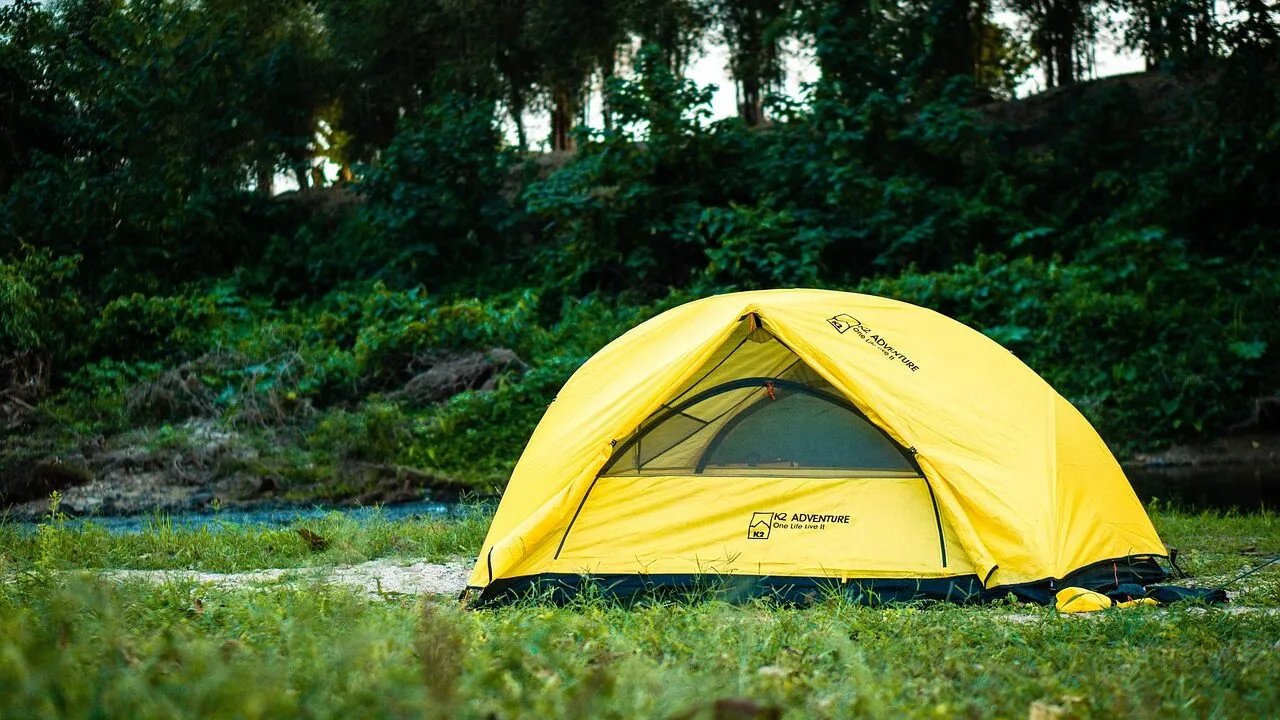
Whether you’re powering a coffee maker at a remote campsite, keeping a CPAP machine running through the night in your RV, or simply making sure your devices stay charged on a multi-day backpacking trip, having the right portable generator changes the entire experience.
The camping generator market has expanded dramatically, splitting into two distinct categories: gas-powered inverter generators that deliver sustained, campground-compatible output, and lithium battery power stations that run silently and pair with solar panels for fuel-free use.
Each type suits a different kind of camper, and choosing the wrong one means hauling extra weight, dealing with noise complaints, or running out of juice before breakfast.
This guide covers eight carefully evaluated options spanning both categories, from compact solar-ready battery stations ideal for solo travelers to high-wattage open-frame inverter generators capable of running RV appliances.
ProductFind selected these picks through systematic research: we analyzed published specifications, aggregated expert review consensus across the category, and weighed verified buyer feedback to surface the options that consistently deliver on their promises.
Read on for the full breakdown, starting with our top picks ranked by PF Score.
| Award | Product | PF Score About PF ScoreThe PF Score is our own rating from 0 to 10, based on performance, design and build, ease of use, and value. It reflects independent research and is never influenced by manufacturers, retailers, or affiliate commissions. Learn more › | Price | |
|---|---|---|---|---|
| Best Overall |
 Jackery Explorer 1000 v2 1070Wh Portable Power Station
|
8.7/10 | Buy | |
| Editor's Pick |
 PowerSmart 3600W Portable Inverter Generator
|
7.8/10 | Buy | |
| Best Value |
 PowerSmart 2500W Portable Inverter Generator
|
7.5/10 | Buy | |
| Top Rated |
 Oxseryn 4400W Inverter Generator, 56 lbs
|
7.3/10 | Buy | |
 Oxseryn 4400W Inverter Generator, 30A RV Ready
|
7.2/10 | Buy | ||
 AIVOLT 1600W Inverter Generator, 28lbs
|
7.1/10 | Buy | ||
 ZeroKor 300W Portable Power Station with 60W Solar Panel
|
6.8/10 | Buy | ||
 Jackery Explorer 300 Portable Power Station
|
7.8/10 | Buy |
Jackery Explorer 1000 v2 1070Wh Portable Power Station
A mid-range portable power station with 1500W AC output and LiFePO4 battery designed for camping, RVs, and emergency backup. Fast charging to full capacity in 1.7 hours (or 1 hour with app override) and app-controlled charging modes make it versatile, though it requires Jackery solar panels for solar compatibility.
Pros
- Durable LiFePO4 battery with exceptional cycle life and 10-year warranty potential
- Compact and lightweight design with foldable handle suits outdoor adventures and travel
- ChargeShield 2.0 technology optimizes charging speed and battery longevity
- App-controlled charging modes provide flexibility for different use scenarios
- Multiple simultaneous charging options with USB-C fast charging up to 100W
Cons
- Solar panel compatibility limited to Jackery brand panels only, reducing third-party options
- One-hour emergency charging requires manual activation via app each charging cycle
- No reviews available to verify real-world performance and long-term reliability claims
PowerSmart 3600W Portable Inverter Generator
A mid-range portable generator delivering 3600 peak watts with clean power output suitable for camping and home backup. Runs quietly at 59 dB and includes multiple outlet types, though the 1.3-gallon tank limits extended runtime to around 8 hours at partial load.
Pros
- Clean, stable power suitable for phones, tablets, and laptops
- Compact and portable at 50.7 pounds for outdoor use
- Multiple outlet configurations cover RV, household, and USB charging needs
- Low noise level makes it suitable for campgrounds with noise restrictions
Cons
- Small 1.3-gallon fuel tank requires frequent refueling for extended trips
- Parallel kit sold separately, adding cost to double output capability
- No customer reviews available to verify real-world performance claims
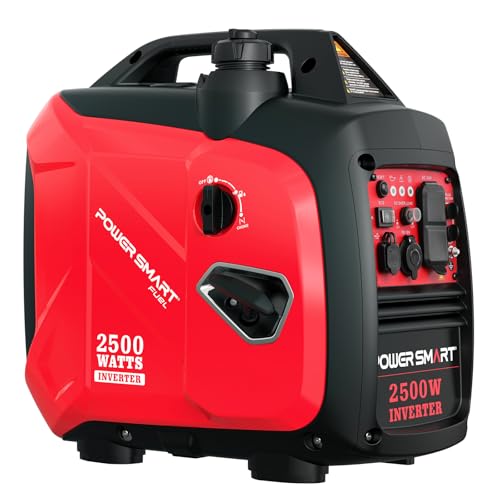
PowerSmart 2500W Portable Inverter Generator
A compact gas-powered generator delivering 2500 peak watts with clean power output suitable for sensitive electronics. Rated 4.6 stars and designed for camping trips with up to 8 hours runtime and notably quiet operation at 52 dBA.
Pros
- Clean power output (THD under 3%) safe for phones, tablets, and laptops
- Exceptional quiet operation compared to standard portable generators
- Extended runtime capability supports overnight camping without refueling
- Versatile outlet configuration covers household, automotive, and USB devices
- Comprehensive warranty and dedicated customer support included
Cons
- 42-pound weight may be cumbersome for extended manual transport
- 1.06-gallon tank capacity requires refueling for loads above 25%
- No verified buyer reviews available to assess real-world reliability claims
Oxseryn 4400W Inverter Generator, 56 lbs
A portable gas-powered inverter generator delivering 4400 peak watts and 3400 running watts with multiple outlet types for RV and home backup use. Weighs only 56 pounds and runs up to 14 hours on ECO mode, making it convenient for occasional users seeking lightweight portability.
Pros
- Compact and lightweight at 56 lbs, practical for RV camping and transport between locations
- Long runtime potential with ECO mode (up to 14 hours at quarter load) reduces refueling frequency
- Versatile outlet configuration accommodates RVs, AC appliances, and DC devices from one unit
- Noise level under 72 dB keeps disruption manageable for campgrounds and residential settings
- Fuel gauge visibility allows quick assessment of remaining capacity without opening tank
Cons
- No verified buyer reviews available to confirm real-world performance and reliability claims
- 3400 running watts limits simultaneous operation of high-demand appliances like air conditioning units
- New units may emit noticeable fuel smell initially, requiring airing out before use
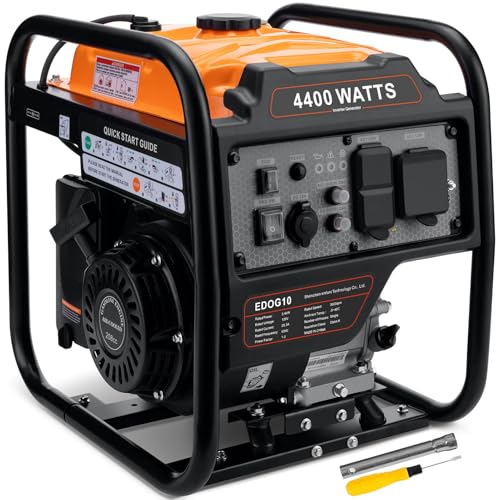
Oxseryn 4400W Inverter Generator, 30A RV Ready
A portable gas generator delivering 4400 peak watts with dual 120V outlets, 30A RV port, and 14-hour runtime at quarter load. Designed for emergency home backup and RV use, it combines inverter technology with a lightweight 57-pound frame for easier transport.
Pros
- Multiple outlet types (RV 30A, dual 120V AC, 12V DC) cover diverse power needs
- Strong runtime of 14 hours at partial load reduces refueling frequency
- Inverter technology protects sensitive electronics from power fluctuations
- Portable design at 57 pounds makes it feasible for RVs and emergency relocation
- EPA compliant and includes safety features like low oil shutdown
Cons
- No verified buyer reviews available to confirm real-world reliability and performance consistency
- New unit may emit slight gasoline odor due to factory testing, requiring initial ventilation
- 2-gallon fuel tank is modest and requires frequent refilling under sustained higher loads
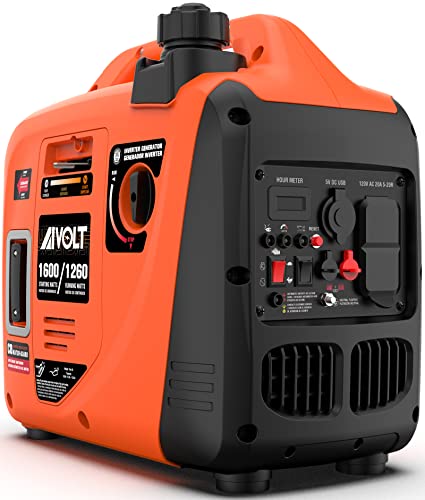
AIVOLT 1600W Inverter Generator, 28lbs
A lightweight, ultra-quiet inverter generator delivering 1600 starting watts with clean power output (THD <3%) suitable for camping, RVs, and home backup. Runtime reaches 8 hours on eco mode, though the 1260 running watts limit simultaneous device capacity.
Pros
- Exceptional portability and quiet performance ideal for camping and residential neighborhoods
- Clean inverter power protects phones, laptops, and small appliances from voltage fluctuations
- Comprehensive safety features including CO detection and overload protection
- Dual USB charging ports alongside standard 120V outlets for versatile device compatibility
- Parallel connection capability allows output expansion with additional units
Cons
- 1260 running watts limits ability to power high-demand appliances simultaneously
- Engine oil not included, requiring separate purchase for initial setup
- No reviews available yet, limiting real-world reliability feedback from verified buyers
ZeroKor 300W Portable Power Station with 60W Solar Panel
A compact power station pairing a 280Wh battery with an included 60W foldable solar panel, designed for camping and off-grid use. Offers multiple charging ports (AC, USB, DC) and supports up to 300W devices, though performance depends on disciplined charging habits and avoiding high-draw appliances.
Pros
- Includes 60W solar panel in the box, eliminating extra purchase for basic solar charging
- Supports simultaneous multi-device charging across different port types
- Built-in MPPT controller and comprehensive safety protections (overload, overheating, short circuit)
- Foldable design makes it portable for camping, van life, and emergency backup
- High monocrystalline efficiency handles low-light charging better than budget polycrystalline alternatives
Cons
- 300W power limit excludes common high-draw devices like hair dryers, coffee makers, and water pumps
- Requires disciplined charge maintenance (60-80% battery range recommended) to avoid triggering protection mode during extended storage
- Solar panel junction box is not waterproof and must be kept dry, limiting outdoor durability
Jackery Explorer 300 Portable Power Station
A lightweight 292Wh portable power station weighing just 7.1 lbs, the Explorer 300 combines LiFePO4 durability with versatile connectivity for outdoor use. Its fast solar charging capability and multi-device output make it practical for camping, travel, and emergency backup, though capacity limits sustained high-power demands.
Pros
- 17% lighter than industry average while maintaining robust capacity
- Premium LiFePO4 chemistry ensures extended lifespan and reliability
- Diverse port selection handles laptops, drones, cameras, and CPAP devices
- Fast solar charging with optional Jackery panel compatibility
Cons
- 292Wh capacity may be insufficient for extended high-power device use
- Solar panels sold separately, increasing total system cost
- No reviews available yet to validate real-world performance claims
Camping Generators Buying Guide
Buying a camping generator is a more nuanced decision than most product categories.
The right choice depends on your campsite type, the appliances you need to run, how far you carry your gear, and whether your campground enforces quiet hours or restricts gas-powered equipment.
The sections below walk through every criterion that separates a great pick from an expensive regret.
If you’re also planning out the rest of your campsite setup, pairing your generator with a solid shelter makes a real difference, our roundup of family tents for every campsite and group size is a useful companion read.
Power Output and Wattage Requirements

Wattage is the first number to nail down before anything else. Every appliance you plan to run has two figures: starting (surge) watts and running (continuous) watts. An RV air conditioner typically requires 2,000 to 3,500 starting watts and around 1,500 running watts.
A coffee maker pulls roughly 1,000 watts. A CPAP machine without a heated humidifier draws as little as 30 to 60 watts.
Add up the running watts of everything you expect to use simultaneously, then verify the generator’s starting watt capacity is high enough to handle the biggest motor in your setup.
Battery power stations like the Jackery Explorer 1000 v2 are rated by watt-hours (Wh), which tells you total energy stored rather than instantaneous output. A 1,000Wh station running a 100-watt load will last roughly 8 to 10 hours in ideal conditions.
Gas inverter generators are rated by peak and running watts and can run as long as fuel lasts. If you need to sustain high-wattage loads over multiple days, gas wins on endurance.
If your needs are modest and silence matters, a battery station is hard to beat.
Matching wattage realistically to your needs also protects your electronics. Inverter technology, found in both gas inverter generators and quality battery stations, produces clean sine wave power with low total harmonic distortion (THD), generally under 3 percent.
This is safe for sensitive devices like laptops, CPAP machines, and camera gear.
Conventional open-frame generators without inverter circuitry produce dirtier power and should not be used with electronics unless you add a separate power conditioner.
Noise Level and Campground Compatibility

Noise is a genuine concern at developed campgrounds, many of which enforce generator-free quiet hours between 8 PM and 8 AM.
Even outside those windows, an excessively loud generator makes you the least popular person in the loop. Decibel ratings on gas inverter generators are typically measured at a specific distance (often 23 feet or 7 meters) at partial load.
The PowerSmart 3600W and AIVOLT 1600W both advertise noise levels in the 52 to 58 dB range at partial load, which is roughly equivalent to normal conversation.
Open-frame models like the Oxseryn 4400W units are louder under heavy load but benefit from ECO mode, which reduces engine speed and noise when demand is low.
Battery power stations produce zero operational noise, making them ideal for tent campers sharing a site with neighbors. They also produce no exhaust, so they can be used inside a tent vestibule or vehicle without carbon monoxide risk.
For campers who split time between sites with and without power, a battery station handles quiet hours with no compromises.
If you do choose a gas inverter generator, position it at least 20 feet from sleeping areas and direct the exhaust away from tents and neighboring sites.
Fuel Type and Runtime
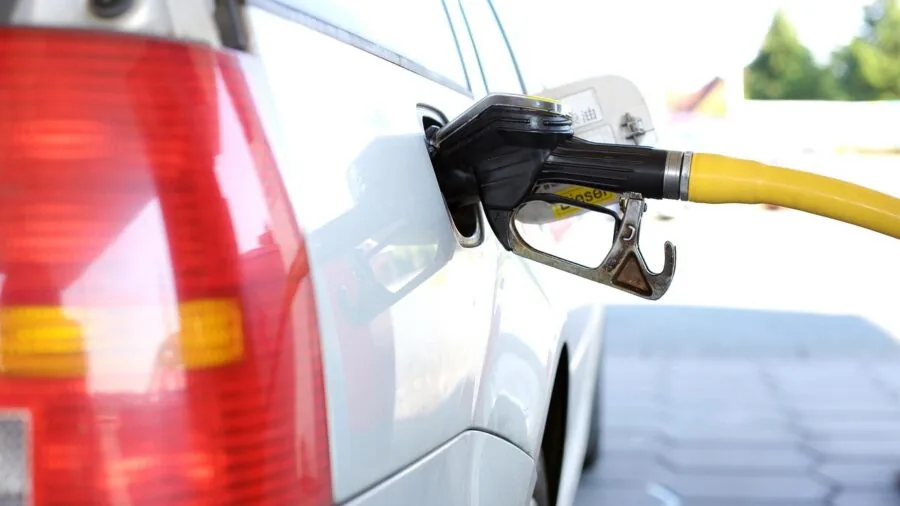
Gas-powered generators in this roundup run on regular unleaded gasoline, which is widely available and inexpensive.
Runtime per tank depends heavily on load. At 25 percent load, most inverter generators in the 2,500 to 3,600W class run 8 to 12 hours per tank. At full load, that drops significantly.
ECO mode, featured on the Oxseryn models and the PowerSmart 3600W, automatically reduces engine RPM when load is low, extending runtime and reducing fuel consumption. For extended trips, gas generators are the pragmatic choice if you can resupply fuel.
Battery stations depend on either shore power (AC outlet) or solar panels for recharging. The Jackery Explorer 1000 v2 supports up to 1 hour fast charging via AC and is compatible with Jackery’s SolarSaga panels.
The ZeroKor 300W kit bundles a 60W foldable solar panel, making it a genuine off-grid solution for campers who want to avoid carrying fuel altogether.
Solar recharge times depend heavily on panel efficiency, sunlight hours, and weather, so always factor in realistic worst-case conditions when planning a solar-only trip.
Dual-fuel capability (gasoline and propane) is a feature some generators offer but none of the eight models in this roundup include it. If dual-fuel flexibility matters to you, that is worth researching as a separate filter.
The models here cover the full spectrum from pure battery to pure gas, so the choice comes down to your fuel access and runtime needs.
Weight, Portability, and Form Factor

Weight matters more for camping than almost any other use case.
The Jackery Explorer 300 weighs under 8 pounds and fits under a car seat. The ZeroKor 300W kit adds a solar panel but still totals well under 15 pounds.
At the other end, the Oxseryn 4400W open-frame generators weigh in the 70-pound range and require two people or a cart to move.
The PowerSmart 3600W sits in between at around 51 pounds, manageable for one person with its built-in handle but not something you’d carry more than a short distance from the car.
Form factor also affects storage. Open-frame generators are bulkier than enclosed inverter models but sometimes weigh less for their wattage because they use less enclosure material.
Enclosed inverter generators are easier to transport in a car trunk without worrying about fuel spillage or fuel smell contaminating gear.
Battery stations are the cleanest option physically, no fuel, no oil, no exhaust, and most include carry handles or even wheels on larger units.
For backpackers and ultralight campers, the math is straightforward: a battery station is the only realistic option.
For car campers with an RV or truck bed, weight is almost irrelevant and wattage becomes the primary driver. Backpacking tent setups pair naturally with compact battery stations, while car camping rigs can accommodate larger gas inverter units without issue.
Outlets, Connectivity, and RV Compatibility
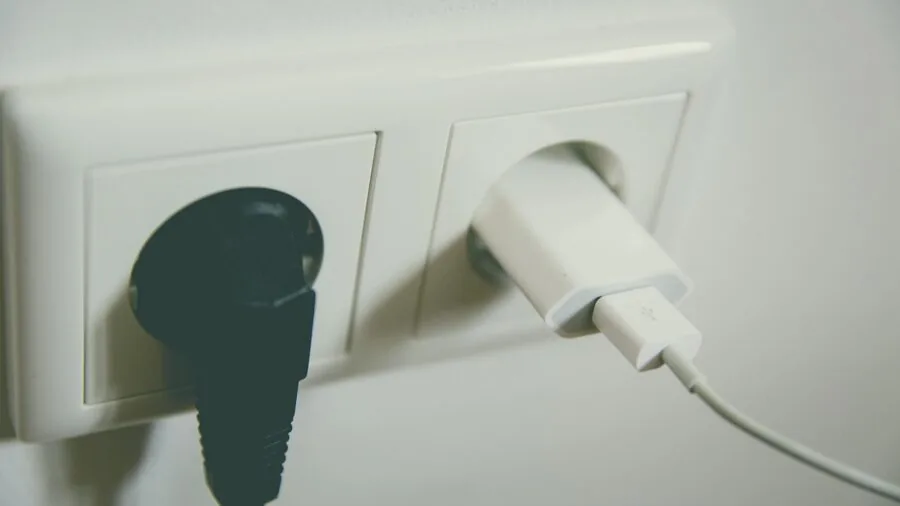
The type and number of outlets determines which devices you can run simultaneously.
Most gas inverter generators in this range offer two standard 120V AC outlets, a 12V DC outlet, and USB-A ports.
The PowerSmart 3600W includes a 30-amp RV outlet (TT-30R), which is the standard connector for most Class A and Class C RVs, eliminating the need for an adapter.
The Oxseryn models also include RV-ready 30A outlets, making them direct plugs for most travel trailers and fifth wheels.
Battery power stations pack more port variety per pound. The Jackery Explorer 1000 v2 offers AC outlets, USB-A, USB-C (up to 100W on its dedicated port), and a car port.
USB-C Power Delivery charging is particularly useful for modern laptops, tablets, and phones that charge fastest through USB-C.
The ZeroKor and Jackery Explorer 300 both include pure sine wave AC output, meaning they are safe for all sensitive electronics despite their compact size.
Safety Features and Compliance Standards

For gas-powered generators, EPA compliance is a regulatory requirement for sale in all 50 U.S. states. The PowerSmart 2500W is explicitly 2026 EPA compliant.
CARB compliance adds a stricter California Air Resources Board certification, important for buyers in California and a handful of other states that follow CARB standards. Always verify compliance status before purchase if you are in a CARB-regulated state.
Carbon monoxide safety is the most serious concern with gas generators. Never run a gas generator indoors, in a garage, inside a tent, or within 20 feet of any occupied structure.
Some modern generators include automatic CO shutoff sensors that cut the engine if dangerous CO levels are detected nearby.
The models in this roundup do not universally include integrated CO detection, so external CO detectors are a strongly recommended safety addition for any campsite using a gas generator.
For campers who want to avoid the CO risk entirely, battery stations are the inherently safer choice.
Battery station safety relies on battery management systems (BMS) that protect against overcharge, over-discharge, short circuits, and temperature extremes.
LiFePO4 (lithium iron phosphate) chemistry, used in the Jackery Explorer 1000 v2 and Explorer 300, is substantially more thermally stable than standard lithium-ion, with a significantly lower risk of thermal runaway.
This chemistry also supports more charge cycles, typically 2,000 to 3,000 full cycles versus 500 to 800 for standard lithium-ion.
Why You Should Trust Us
ProductFind is an independent review publication.
We do not conduct our own product trials; our evaluations are grounded in research, published data, expert review consensus, and verified buyer feedback.
Every product in this roundup was assessed against a consistent set of criteria covering power output, noise level, portability, fuel efficiency, outlet configuration, safety compliance, and long-term reliability signals drawn from verified purchaser reviews across multiple platforms.
Each product receives a PF Score on a scale of 0 to 10. The score reflects a weighted composite of all evaluated criteria, calibrated to the specific demands of the camping generator category.
Products that score higher deliver a meaningfully better balance of output, usability, and reliability for the intended use case.
A product can score well on raw wattage but poorly on noise or portability, and the PF Score reflects that tradeoff transparently.
ProductFind may earn an affiliate commission when you purchase through links in this article. That relationship does not influence rankings, scores, or which products appear in our roundups.
Our editorial choices are based on research quality and product merit, not commission rates. We recommend only what the evidence supports.
Final Thoughts
The eight generators in this roundup cover every realistic camping scenario, from ultralight off-grid solo trips to full RV hookup alternatives for extended stays. Here is how each top pick earned its category, based on PF Scores and the research behind them:
- Best Overall: Jackery Explorer 1000 v2 Portable Power Station earns the top PF Score in this roundup. Its combination of LiFePO4 battery chemistry, 1-hour fast charging, 1,500W AC output, and USB-C 100W delivery makes it the most versatile and dependable pick for the widest range of campers, from weekend car campers to RV travelers who want a fuel-free overnight solution.
- Best High-Wattage Gas Inverter Generator: PowerSmart 3600W Portable Inverter Generator ties for the second-highest PF Score and is the strongest gas-powered option here, with a 30-amp RV outlet, quiet inverter technology, and enough continuous output to handle most RV air conditioner and appliance combinations.
- Best Gas Generator for Moderate Loads: PowerSmart 2500W Portable Inverter Generator is the right call for campers who need gas-powered output but do not require RV-level wattage. Its 2026 EPA compliance and compact 80cc engine make it a practical, campground-legal choice at a mid-range price point.
- Best Budget Battery Station with Solar: ZeroKor 300W Portable Solar Generator Kit bundles a foldable 60W solar panel with a pure sine wave power station at one of the lowest price points in this roundup, making it the most accessible entry point for campers exploring solar-powered setups for the first time.
- Best Compact Battery Station: Jackery Explorer 300 Portable Power Station is the lightest and most packable option with genuine AC output. Its LiFePO4 chemistry and Jackery’s reputation for reliability make it the preferred pick for solo campers and minimalist car campers who want dependable overnight charging without fuel or noise.
If you are still building out your camping kit, shelters suited to every camping style are a natural next step once power is sorted.
Choosing the right generator before you finalize your camp setup helps you plan exactly how much power you need for lighting, cooking, and sleep equipment without overbuying or underestimating.
Frequently Asked Questions
What size generator do I need for camping?
The right size depends entirely on what you plan to power. For basic device charging, phones, laptops, a small fan, a battery station in the 300Wh to 500Wh range handles most overnight needs.
For a full RV setup including air conditioning, you need at least 3,000 starting watts from a gas generator with a 30-amp RV outlet.
Add up the running watts of every device you expect to use at the same time, then add a 20 percent buffer to avoid running the generator at sustained maximum load.
Are battery power stations better than gas generators for camping?
Neither is universally better. Battery stations win on silence, portability, clean power output, and zero emissions, making them the preferred choice for tent campers, campgrounds with noise restrictions, and anyone who wants a fuel-free setup.
Gas generators win on sustained runtime, raw wattage, and the ability to refuel from any gas station, making them essential for RV users, extended trips, or powering high-draw appliances. Many experienced campers own one of each for different scenarios.
How loud is a camping generator?
Inverter generators typically produce 52 to 60 dB at partial load measured at 23 feet, roughly equivalent to a normal conversation or a quiet office. Open-frame generators without inverter technology are noticeably louder, often 65 to 75 dB at similar load.
Battery power stations produce zero operational noise. If your campground enforces generator-free quiet hours, plan to use a battery station or stop your gas generator before quiet hours begin.
Positioning the generator farther from sleeping areas and facing the exhaust away from campsites also reduces perceived noise significantly.
Can I use a camping generator to power a CPAP machine?
Yes, and it is one of the most common use cases for portable power stations at campsites.
A CPAP machine without a heated humidifier typically draws 30 to 60 watts, meaning even a 300Wh battery station can power it for 5 or more nights on a single charge. With a heated humidifier, consumption climbs to 120 to 200 watts.
Always verify your specific CPAP’s wattage requirements and confirm the generator or battery station produces pure sine wave output, as some CPAP machines are sensitive to modified sine wave power.
All battery stations in this roundup produce pure sine wave AC.
Is it safe to run a gas generator inside a tent or RV?
No. Running a gas generator indoors, inside a tent, in an enclosed vehicle, or within 20 feet of any occupied structure is dangerous and can be fatal.
Gas generators produce carbon monoxide, a colorless and odorless gas that accumulates rapidly in enclosed spaces. Always operate gas generators outdoors with adequate ventilation and direct the exhaust away from living areas.
A battery-based power station is the only generator type safe for use inside an enclosed camping space, since it produces no exhaust or combustion gases.
For campers who need power overnight inside their setup, a battery station is the correct tool.
How do I charge a battery power station while camping off-grid?
The most common off-grid method is solar panel charging. Foldable solar panels connect directly to compatible battery stations via DC input, converting sunlight into stored energy throughout the day.
The ZeroKor 300W kit includes a bundled 60W panel, while the Jackery Explorer 1000 v2 and Explorer 300 are both compatible with Jackery’s SolarSaga panel lineup.
You can also charge most battery stations via a 12V car outlet while driving between sites, a useful top-up method on travel days.
Realistic solar charging times depend on panel wattage, sun hours, and angle of incidence, plan for 6 to 10 hours of good sunlight to fully charge a 1,000Wh station from a 100W panel array.
About the author
Vernon is a reviewer and writer for ProductFind who specializes in Camping & Hiking. Vernon evaluates products through independent research: specifications, expert review consensus, and verified buyer feedback, and rates each one on the PF Score. Vernon focuses on helping readers pick the right camping & hiking for their needs and budget.