The 9 Best Digital Pianos
Weighted keys, polyphony, and sound quality vary widely across digital pianos. Our research-backed picks from Yamaha, Roland, Donner, and Alesis cover every skill level.
 By Alexis Watson
Updated July 23, 2026
By Alexis Watson
Updated July 23, 2026
A good digital piano can transform how you learn, practice, and perform.
Whether you’re a first-time player looking for your first instrument, a parent setting up a practice space for a child, or an intermediate musician wanting a more expressive home setup, the sheer number of available models makes the decision genuinely overwhelming.
Key action feel, sound engine quality, polyphony, speaker power, build quality, and connectivity all vary dramatically across price points, and picking the wrong instrument can stall your progress or leave you frustrated with a tool that doesn’t match how you actually play.
At ProductFind, we cut through that confusion by researching the field systematically. Our team analyzed published specifications, synthesized expert review consensus from the piano and music-educator community, and examined verified buyer feedback across thousands of confirmed purchases.
The result is a ranked shortlist covering options from Alesis, Yamaha, Donner, and Roland, spanning entry-level instruments to serious home consoles, so you can find the right match for your skill level and budget.
Scroll down to see our top picks, then read the buying guide below for practical advice on what to prioritize.
| Award | Product | PF Score About PF ScoreThe PF Score is our own rating from 0 to 10, based on performance, design and build, ease of use, and value. It reflects independent research and is never influenced by manufacturers, retailers, or affiliate commissions. Learn more › | Price | |
|---|---|---|---|---|
| Best Overall |
 Yamaha P71 88-Key Weighted Digital Piano
|
8.4/10 | Buy | |
| Editor's Pick |
 Yamaha DGX-670B 88-Key Weighted Digital Piano
|
8.1/10 | Buy | |
| Best Value |
 Donner DDP-200 88-Key Weighted Digital Piano
|
7.8/10 | Buy | |
| Top Rated |
 Donner DEP-20 88-Key Weighted Digital Piano
|
7.6/10 | Buy | |
 Donner DDP-400 88-Key Weighted Digital Piano
|
7.5/10 | Buy | ||
 Roland F107 88-Key Digital Piano
|
7.3/10 | Buy | ||
 Alesis Recital 88-Key Semi-Weighted Digital Piano
|
7.2/10 | Buy | ||
 Roland RP107 Digital Piano
|
7.0/10 | Buy | ||
 Alesis 88-Key Recital Play Keyboard
|
6.8/10 | Buy |
Yamaha P71 88-Key Weighted Digital Piano
A full-size digital piano with weighted keys that simulate acoustic piano touch and 10 voices including a Yamaha grand piano sound. Straightforward controls and dual-voice layering make it accessible for beginners and intermediate players seeking an affordable entry point.
Pros
- Weighted keys provide authentic piano playing experience with dynamic touch sensitivity
- Deep bass and full dynamic range from built-in sounds
- Dual voice layering opens creative possibilities without complexity
- Sustain pedal included, saving extra cost
- Lightweight and portable for a full-size 88-key model
Cons
- No customer reviews available to verify real-world performance and reliability
- Limited to 10 voices compared to higher-end models with larger sound libraries
- Streamlined functionality may feel restrictive for advanced players seeking deep customization
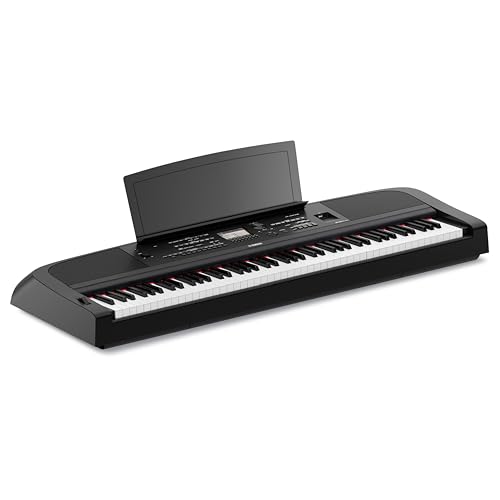
Yamaha DGX-670B 88-Key Weighted Digital Piano
The Yamaha DGX-670B offers a weighted keyboard action that mimics acoustic piano feel with 630 instrument voices and 263 accompaniment styles for varied playing. Built-in learning features and vocal effects make it accessible for beginners and hobbyists, though the stand and bench are sold separately.
Pros
- Authentic weighted keyboard action that responds to playing dynamics
- Extensive sound library with 630 voices covers multiple musical genres
- Built-in learning tools with score display help beginners progress
- Vocal effects feature allows singing integration into performances
- Automatic accompaniment adapts to your playing velocity and intensity
Cons
- Stand and bench sold separately, increasing total setup cost
- No user reviews available to verify real-world reliability and durability
- Weight of 67.65 pounds makes relocation less convenient for casual users
Donner DDP-200 88-Key Weighted Digital Piano
The DDP-200 pairs graded hammer action with an upgraded speaker system designed to deliver grand piano tone in a compact upright format. Best suited for intermediate to advanced players seeking realistic weighted action and professional sound in a home setting.
Pros
- Weighted 88-key action with dual sensors provides authentic piano feel for technique development
- Three-dimensional sound output from innovative speaker placement without requiring large footprint
- LCD screen eliminates guesswork about active settings and effects
- Magnetic music stand design keeps score organized while protecting keys when closed
- Bluetooth MIDI support expands connectivity to DAWs and music apps
Cons
- No verified buyer reviews available to assess real-world reliability and durability
- Limited sound engine details provided; comparison to specific acoustic piano models unclear
- Specifications lack information on power consumption, weight, and pedal resistance quality
Donner DEP-20 88-Key Weighted Digital Piano
A full-sized beginner piano with 88 hammer-action keys and 238 tones, designed for learning and home practice. Includes built-in stand, dual-keyboard mode, and basic recording capabilities via MIDI and MP3 player.
Pros
- Full-sized 88-key weighted keyboard matches acoustic piano dimensions and touch
- Extensive sound library with 238 tones covers multiple instruments beyond piano
- Complete package with stand and pedals reduces additional purchase needs
- Dual-keyboard mode allows creative sound layering for beginners exploring composition
- Built-in recording and MIDI connectivity for practice feedback and arrangement work
Cons
- No verified buyer reviews available yet to assess real-world durability or user experience
- Relatively heavy at 54.5 pounds, limiting portability despite marketed convenience
- Backlit LCD screen is basic compared to modern digital piano interfaces with larger displays
Donner DDP-400 88-Key Weighted Digital Piano
A full-sized digital piano with hammer-action weighted keys and extended speaker cabinet designed to replicate acoustic piano touch and tone. Includes 138 sounds, 100 rhythms, and connectivity for app-based learning, making it suitable for practice and performance.
Pros
- Weighted keys with double-contact design provide authentic piano response across full 88-key range
- Built-in speaker system delivers fuller acoustic tone than many digital pianos at this tier
- Extensive sound library and rhythm accompaniment options for learning multiple genres
- Bluetooth and USB MIDI support enables integration with learning apps and DAWs
Cons
- No verified buyer reviews available to confirm real-world durability and reliability
- Substantial footprint and weight (49.54 kg) requires dedicated space and may limit portability
- Does not specify key action specifications beyond weighted design, limiting comparison to competing models
Roland F107 88-Key Digital Piano
A compact, modern digital piano that delivers professional-grade sound and touch through Roland's SuperNATURAL technology and PHA-4 keyboard action, ideal for beginners and intermediate players seeking affordable home performance. Bluetooth connectivity and dual headphone jacks add practical flexibility for learning and practice.
Pros
- Class-leading sound engine and keyboard action match higher-end Roland models at entry-level pricing
- Stylish, space-saving design fits modern living spaces without sacrificing 88-key full range
- Bluetooth and dual headphone jacks enable flexible practice with songs, apps, and teaching partners
- 256-note polyphony prevents note dropout during intricate passages
- Includes companion app for lesson guidance and parameter control
Cons
- No user reviews available to verify real-world durability or long-term reliability
- Limited onboard sounds and effects compared to higher-tier Roland models
- Requires separate stand or furniture; piano itself weighs 119 pounds and may need assembly
Alesis Recital 88-Key Semi-Weighted Digital Piano
The Recital delivers full-sized keys and multiple voices in a portable package, making it accessible for beginners and casual players. Built-in learning modes and included lesson subscriptions provide structured practice, though limited voice selection and entry-level sound character suit hobbyists rather than serious pianists.
Pros
- Full 88-key layout with semi-weighted action suits classical training and transitional learning
- Multiple play modes (split, layer, lesson) expand creative possibilities for intermediate exploration
- Bundled lesson subscriptions provide structured guidance without additional cost
- Portable with battery option and 15.6-pound weight for smaller spaces
- Built-in reverb and chorus effects add dimension to basic voices
Cons
- Limited to 5 voices with modest sound quality compared to mid-range weighted pianos
- No pedal included despite sustain input, requiring separate purchase
- 128-note polyphony may cap complex arrangements or simultaneous voice layering
Roland RP107 Digital Piano
An affordable upright-style digital piano designed for beginners and families seeking authentic piano feel without premium pricing. The RP107 combines Roland's SuperNATURAL sound engine with traditional aesthetics in a compact footprint, making it practical for home settings.
Pros
- Authentic keyboard action from higher-end Roland pianos at an accessible price point
- Traditional upright styling blends into home decor while maintaining compact dimensions
- Bluetooth and companion Roland Piano App provide modern learning and playback options
- Dual headphone jacks and Twin Piano mode support collaborative practice
Cons
- No customer reviews available to verify real-world performance and durability claims
- Weighs 132 pounds, requiring careful placement and not easily portable
- Limited information on warranty, service, or long-term maintenance costs
Alesis 88-Key Recital Play Keyboard
A full-size 88-key keyboard with 480 sounds and built-in learning features, designed for beginners wanting an affordable introduction to piano. Includes stand, pedal, headphones, and premium lesson software from Skoove.
Pros
- Full 88-key setup mimics acoustic piano layout, building proper technique
- Comprehensive starter bundle eliminates need for separate purchases
- Educational modes (Split, Lesson, Record) make learning interactive
- Dual power options (batteries plus AC adapter) provide flexibility
- Built-in metronome and transpose feature support practice variety
Cons
- No customer reviews available to verify real-world reliability
- Requires 6 AA batteries (sold separately) for portable use
- Relatively light weight (12.1 lbs) may lack stability on budget stand
Digital Pianos Buying Guide
Shopping for a digital piano involves more trade-offs than most buyers expect. Price alone is a poor guide because a well-designed mid-range instrument will often feel and sound more satisfying than a pricier model with gimmicky features you’ll never use.
The six criteria below are the ones that genuinely separate a frustrating experience from one that keeps you motivated to sit down and play every day.
If you enjoy other stringed instruments alongside piano, our coverage of acoustic guitars and electric guitars may also be useful once your music room starts growing.
Key Action and Touch Sensitivity
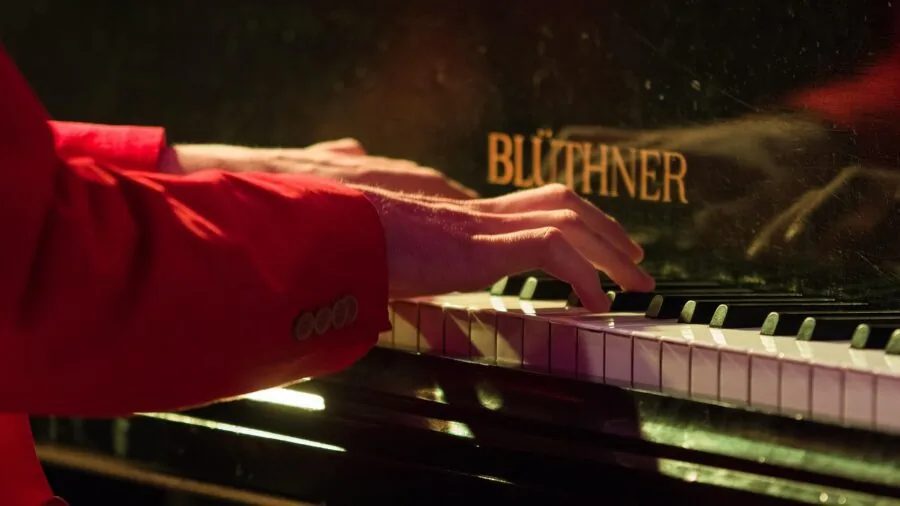
Key action is the single most important specification on any digital piano, because it determines how the instrument responds to your touch and whether the technique you develop will transfer to an acoustic piano.
At the entry level you’ll encounter semi-weighted keys, which use a spring mechanism to provide light resistance.
These are acceptable for complete beginners or for players who primarily want synthesizer-style access, but they do not replicate the feel of a real piano hammer mechanism.
Graded Hammer Standard (GHS) and similar weighted-action systems add genuine mechanical weight, with heavier resistance in the lower registers and lighter in the upper registers, mirroring a real acoustic piano.
Graded Hammer Action (GHA) and heavier systems, often found on console-style instruments, refine this further. If you or your child intends to eventually sit at an acoustic instrument, weighted keys are not optional.
Semi-weighted keys are a reasonable compromise only for players on the tightest budgets who plan to upgrade.
Touch sensitivity, sometimes labelled velocity sensitivity, controls how the volume and timbre of a note respond to how hard you press a key. Most digital pianos offer fixed, soft, medium, and hard sensitivity settings.
For serious practice, you want a model with at least three sensitivity levels and a natural-feeling velocity curve, because correct dynamic control is a foundational piano technique.
Sound Engine Quality and Polyphony
Sound quality in digital pianos is generated by a sample-based engine, a physical modelling engine, or a hybrid of both.
Sample-based engines record individual notes on high-quality acoustic or concert grand pianos at multiple velocity layers and play back the closest sample when you press a key.
The number of sample layers directly affects realism, particularly during soft playing or when you gradually increase note velocity. A thin sample library sounds convincing at a single volume but artificial as you push into expressive playing.
Polyphony refers to the number of notes a digital piano can produce simultaneously. This matters more than beginners expect. When you hold the sustain pedal, the previous notes continue to ring while you play new ones.
A model with 32-note polyphony will start cutting off earlier notes during even moderately complex passages. For daily practice and anything beyond beginner-level repertoire, 64-note polyphony is the practical minimum, and 128 or 192 notes is strongly preferable.
All the instruments in our shortlist meet at least a functional polyphony threshold; the better models reach 128 or higher.
Beyond the main piano voice, the number of built-in voices (strings, organ, harpsichord, and so on) matters primarily to players who want creative flexibility or who accompany vocalists and other instruments.
Beginners should not let a large voice count distract them from evaluating key action and sound quality first.
Speaker System and Acoustic Projection
Built-in speakers matter enormously for home practice because most players do not want to connect external monitors every time they sit down.
Speaker power is measured in watts, and the number of speaker drivers and their placement in the cabinet both affect the perceived volume and stereo spread.
A stereo pair of small drivers in a slim-case instrument will rarely project the same richness as a four-speaker array built into a dedicated console cabinet.
That said, wattage figures are not directly comparable across brands because cabinet resonance, driver quality, and digital signal processing all contribute to the final sound.
The practical evaluation is whether the instrument fills your practice room at a comfortable volume without distorting.
Models with a total combined output around 20 to 40 watts are adequate for most living rooms and practice spaces; lower-wattage units are better suited to small rooms or headphone practice.
Every model in our list includes a headphone output, which is important for late-night practice or when living with others.
When shopping for a headphone-compatible instrument, also check whether the onboard speaker system disables automatically when headphones are plugged in, a feature that most mid-range instruments handle correctly but which cheaper designs occasionally get wrong.
Portability and Form Factor
Digital pianos broadly divide into three form factors.
Slab-style portable units are rectangular instruments without legs or built-in stands; they can be placed on any flat surface or an aftermarket X-stand and transported to gigs or lessons.
Console-style instruments include a dedicated furniture stand and look like a traditional upright piano in your room. Stage pianos are professional-grade slabs built for live performance with extensive connectivity but fewer built-in speakers.
For a permanent home setup, a console design adds visual warmth and removes the need to buy a separate stand. However, consoles are significantly heavier and harder to move.
Portable slab instruments are the better choice if you anticipate moving the piano between rooms, taking it to lessons, or if you rent your home and want flexibility.
The instruments from Donner in our list that include a furniture stand bundle offer a middle ground at a competitive price, making them popular with buyers who want a dedicated home setup without spending at the full console tier.
Pedals and Expression Controls

A sustain pedal is non-negotiable for piano practice. The sustain pedal, also called the damper pedal, is used constantly in virtually all piano repertoire from beginner onward.
Most entry-level digital pianos include a single sustain pedal jack and ship with a basic footswitch-style pedal.
This is functional for beginners but has a significant limitation: real acoustic pianos respond to how far down you press the sustain pedal, a feature called half-damper or continuous damper control. Most entry-level pedals only register on or off.
Mid-range and console-style instruments typically include a triple-pedal unit replicating the sustain, sostenuto, and soft pedals found on an acoustic piano.
The sostenuto pedal is used occasionally in classical repertoire; the soft pedal (una corda) changes the tonal character of notes. Players with classical ambitions should prioritize a triple-pedal unit and, ideally, a unit that supports half-damper response.
Check whether the triple-pedal unit is included in the purchase price or sold separately, as this is an area where bundle pricing can be misleading.
Connectivity and Learning Features
Modern digital pianos increasingly include Bluetooth MIDI, which allows the instrument to connect wirelessly to tablet apps and learning platforms without a cable.
This is a genuinely useful feature for players who use apps like Simply Piano, Flowkey, or Playground Sessions, because it eliminates a physical setup step and reduces clutter.
USB-to-host connectivity, which allows a wired connection to a computer for recording via a DAW, is standard on most instruments above the entry level.
If you plan to record your playing, confirm that USB audio output is supported, not just USB MIDI.
Built-in learning features such as split mode, which divides the keyboard into two identical ranges so a teacher and student can play side by side, and layer mode, which overlays two voices simultaneously, add creative and pedagogical value.
Lesson modes, built-in metronomes, and recording functions vary considerably across models. Beginner buyers in particular should look for a model with at least a split function and a built-in metronome, as these two features alone meaningfully support structured practice.
Bluetooth audio streaming, which allows you to play music from your phone through the piano’s speakers as accompaniment, is a separate feature from Bluetooth MIDI and is found on higher-end models in our list.
It’s a quality-of-life addition rather than a core requirement, but players who like to play along with recordings will find it surprisingly useful over time.
Why You Should Trust Us
ProductFind is an independent review publication. We have no ownership relationship with any instrument brand, retailer, or music-education platform, and our editorial team operates separately from our commercial partnerships.
Every instrument in this guide was evaluated against a consistent set of criteria covering key action quality, sound engine design, polyphony, speaker system output, build quality, connectivity, and value for the intended player level.
Each product receives a PF Score on a scale of 0 to 10, reflecting its overall performance relative to the other instruments in the category.
We do not conduct our own product trials; our evaluations are grounded in research, published data, expert review consensus, and verified buyer feedback.
Our source base for this category included published specifications from manufacturer product pages, consensus findings from professional music educators and instrument reviewers, and long-form feedback from verified buyers across major retail platforms.
Where expert reviewers disagreed significantly, we weighted consensus findings and noted the specific points of divergence rather than defaulting to a single source.
ProductFind may earn a commission if you purchase through a link on this page. That affiliate relationship does not influence which products appear in our list, how they are ranked, or what PF Score they receive.
Our rankings reflect the quality of each instrument relative to our evaluation criteria, nothing else.
Final Thoughts
The digital piano market in 2026 covers an impressive range of quality and capability, and the instruments in this list represent the strongest options across the most common buyer situations. Below are our editorial designations based on PF Score and category fit.
- Best Overall: Yamaha P71 88-Key Weighted Action Digital Piano earns the top position with the highest PF Score in our evaluation. Its Graded Hammer Standard action, clean acoustic piano sound engine, and slim portable form factor make it the most well-rounded choice across skill levels. The Amazon-exclusive packaging keeps the price in an accessible range without sacrificing the core qualities that matter most for serious practice.
- Best Feature-Rich Upgrade: Yamaha DGX-670B 88-Key Weighted Digital Piano earns its place as the go-to recommendation for players ready to invest more. With a much larger voice library, Bluetooth audio streaming, and accompaniment styles, it functions as both a practice instrument and a creative platform for songwriting and accompaniment.
- Best Mid-Range Console: Donner DDP-200 Upright Digital Piano offers graded hammer action, a triple-pedal unit, and an LCD screen in an upright console form factor at a price well below comparable branded alternatives. Its PF Score reflects strong value for buyers who want a permanent home setup without moving into the premium price tier.
- Best Budget Pick with Full Keys: Alesis Recital 88-Key Digital Piano is the most affordable 88-key instrument in our list and a practical starting point for absolute beginners. Semi-weighted keys and a built-in lesson mode lower the barrier to entry, and split and layer modes add more functionality than most entry-level competitors include at a similar price.
- Best for Players Who Want Everything Included: Donner DEP-20 Beginner Digital Piano bundles a furniture stand and three-pedal unit with a fully weighted 88-key instrument, removing the need for separate accessory purchases and making it an efficient choice for families setting up a dedicated practice space from scratch.
Whichever instrument you choose from this list, the most important factor is consistent practice. A mid-range instrument played daily will develop your skills far faster than a premium instrument that sits untouched.
Match your choice to your realistic practice habits, your room size, and your musical goals, and you will find an instrument here that serves you well for years.
Frequently Asked Questions
Do I really need 88 keys as a beginner?
For most beginners, 88 keys is the right choice from the start. While early beginner pieces rarely use the extreme high and low registers, you will encounter them within the first year of structured lessons.
More importantly, developing proper hand positioning and an intuitive sense of the keyboard layout requires the full 88-note range.
Instruments with fewer keys are better suited to producers and synthesizer players who specifically need a compact MIDI controller rather than a practice piano.
What is the difference between weighted and semi-weighted keys?
Semi-weighted keys use a spring mechanism that provides consistent light resistance across the keyboard.
Weighted keys use a hammer mechanism that replicates the feel of an acoustic piano action, including heavier resistance in the bass register and lighter resistance in the treble register.
For players who intend to develop real piano technique or who plan to play on acoustic pianos at any point, weighted keys are strongly preferable.
Semi-weighted instruments are a practical entry point only for players with very limited budgets or those approaching piano primarily as a MIDI input device.
Can a digital piano replace an acoustic piano for serious practice?
For the vast majority of players up to an advanced amateur level, a quality digital piano with a graded hammer-weighted action is a fully effective practice instrument.
Digital pianos require no tuning, tolerate climate changes, work silently through headphones for late-night practice, and occupy a fraction of the space of an upright acoustic.
Professional-level classical pianists preparing for conservatory auditions or concert performance will eventually benefit from significant time on acoustic instruments, but even professional teachers often recommend digital pianos for daily home practice alongside periodic sessions on an acoustic.
Is Bluetooth MIDI worth paying extra for?
If you plan to use a piano-learning app on a tablet or smartphone, Bluetooth MIDI is a meaningful convenience.
Apps that listen to your playing and guide your progress in real time work seamlessly over Bluetooth without requiring a USB cable and adapter.
If you have no interest in app-based learning and primarily want the instrument for acoustic piano practice or basic home entertainment, Bluetooth MIDI is a nice-to-have rather than a necessity.
USB-to-host connectivity is the more universally useful port to prioritize if you plan to connect to a computer for recording.
How long do digital pianos typically last?
A well-built digital piano from an established brand will typically last ten years or more under regular home use.
The components most likely to degrade over time are the key contacts, which can develop inconsistent velocity response after many years of heavy use, and the internal speakers, which can suffer from prolonged high-volume use.
Mid-range instruments from Yamaha and Roland in particular have strong reputations for long-term reliability based on owner feedback collected across music communities.
Budget-tier instruments carry more variability, but even many entry-level models from Alesis and Donner have accumulated positive long-term feedback from buyers who maintain them with reasonable care.
Should I buy a portable slab or a console-style digital piano?
The right form factor depends on how you plan to use the instrument. A portable slab is ideal if you want the flexibility to move it between rooms, take it to lessons, or store it away when not in use.
A console-style instrument with a built-in furniture stand is better if you want a permanent, visually integrated home setup that looks and feels more like a traditional piano.
Console designs also tend to have better built-in speaker systems because the cabinet adds acoustic resonance.
If you enjoy other home workout or hobby equipment and are thinking carefully about room layout, consider how the instrument will share space with other gear, whether that’s a weight bench in a multipurpose room or a dedicated music corner.
About the author
Alexis is a reviewer and writer for ProductFind who specializes in Musical Instruments & Accessories. Alexis evaluates products through independent research: specifications, expert review consensus, and verified buyer feedback, and rates each one on the PF Score. Alexis focuses on helping readers pick the right musical instruments & accessorie for their needs and budget.