The 12 Best Flutes
From first-year band students to advancing players, finding a flute that matches your level matters more than most buyers expect. Here are the picks worth considering.
 By Alexis Watson
Updated July 23, 2026
By Alexis Watson
Updated July 23, 2026
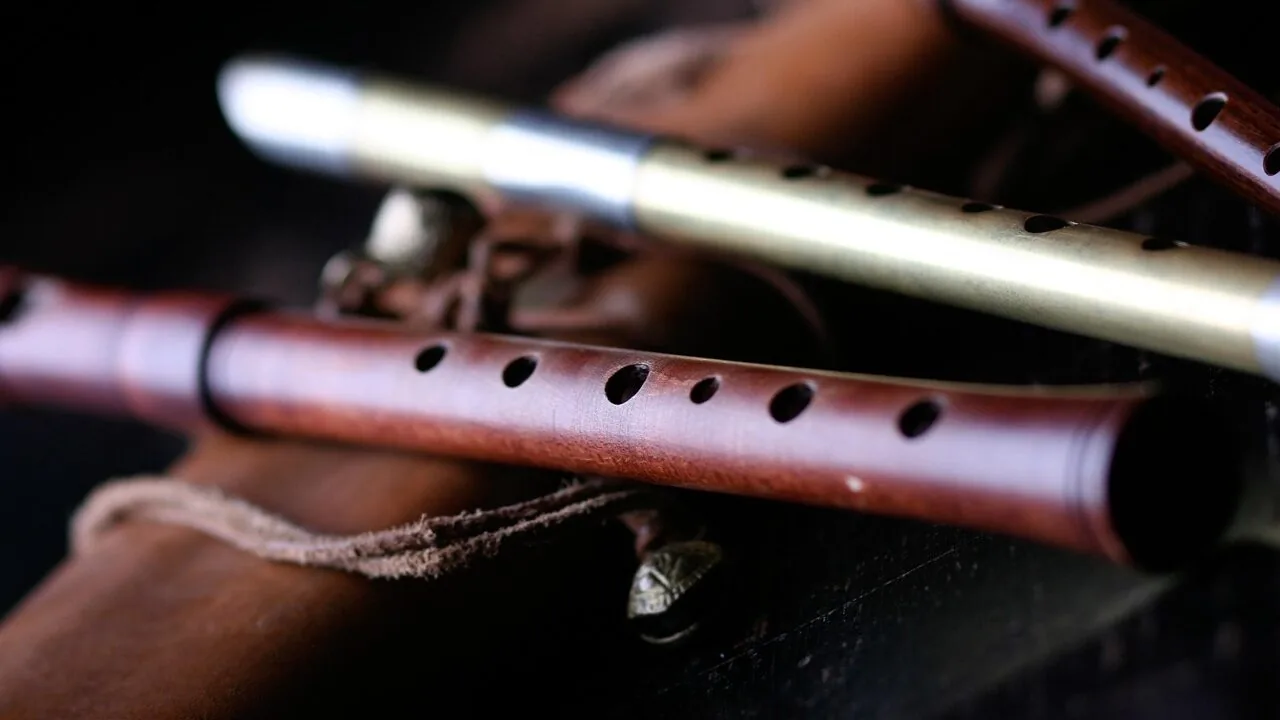
The flute is one of the most expressive instruments in any ensemble, and choosing the right one can shape a player’s progress for years.
Whether you’re setting up a first-time student, stepping into intermediate repertoire, or searching for a professional-grade instrument that holds its own on stage, the options span an enormous range of construction quality, key configurations, and price points.
Getting this decision wrong means fighting an instrument that’s hard to play in tune, slow to respond, or built so poorly it needs repairs before the first recital.
At ProductFind, we compiled this guide through comprehensive research: analyzing published manufacturer specifications, synthesizing consensus across professional music educator reviews, and examining verified buyer feedback from working players and parents.
Every model here earned a PF Score on our 0-to-10 scale.
Our top picks cover beginner, intermediate, and specialty instruments from trusted names including Pearl, Yamaha, Gemeinhardt, Henri Selmer, Jean Paul USA, Cecilio, and BAHAMUT, so you can find the right flute for your level and budget without second-guessing the shortlist.
| Award | Product | PF Score About PF ScoreThe PF Score is our own rating from 0 to 10, based on performance, design and build, ease of use, and value. It reflects independent research and is never influenced by manufacturers, retailers, or affiliate commissions. Learn more › | Price | |
|---|---|---|---|---|
| Best Overall |
 Pearl 505RBE1RB Quantz Series Flute
|
8.7/10 | Buy | |
| Editor's Pick |
 Selmer SFL411BEO Intermediate Flute with Silver Keys
|
8.5/10 | Buy | |
| Best Value |
 Yamaha YFL-222 Intermediate Student Flute
|
8.4/10 | Buy | |
| Top Rated |
 Gemeinhardt Model 3OB Open Hole Flute
|
8.3/10 | Buy | |
 Gemeinhardt 2SP Silver Plated Flute
|
7.9/10 | Buy | ||
 Gemeinhardt 2SP Plateau Flute with Straight Headjoint
|
7.8/10 | Buy | ||
 Gemeinhardt 1SP Student Flute
|
7.5/10 | Buy | ||
 Jean Paul FL-430 Intermediate Open-Hole Flute
|
7.2/10 | Buy | ||
 Kmise Closed Hole C Flute 16-Key Nickel Plated
|
6.3/10 | Buy | ||
 BAHAMUT 17-Key Silver-Plated C Foot Flute
|
6.1/10 | Buy | ||
 Cecilio Closed Hole C Flute, 16-Key Student Set
|
5.8/10 | Buy | ||
 BáFlute Native American Drone Flute, 432Hz
|
3.2/10 | Buy |
Pearl 505RBE1RB Quantz Series Flute
A student-level flute from Pearl's Quantz Series, built in Taiwan with a B-footjoint and French-style case included. Designed for beginners and intermediate players seeking a reliable, affordable instrument.
Pros
- Comes with protective French-style case and cover, reducing additional cost
- B-footjoint design offers flexibility for players exploring extended range
- Pearl brand carries reputation for instrument quality and consistency
Cons
- No user reviews available to assess real-world performance and durability
- Limited information on tonal characteristics or comparison to competing student models
- Specifications lack detail on materials, key system type, or pad quality
Selmer SFL411BEO Intermediate Flute with Silver Keys
An intermediate-level concert flute featuring a silver-plated headjoint and nickel silver body, designed for advancing players seeking professional tonal qualities. The offset G key system and split E mechanism support technical passages, making it suitable for serious students and semi-professional musicians.
Pros
- Sterling silver lip plate provides superior embouchure response compared to standard plating
- Offset G key reduces hand fatigue during extended practice and performance
- Split E mechanism helps stabilize challenging high notes
- Solid intermediate construction suitable for advancing players
Cons
- No verified buyer reviews available to assess real-world durability and consistency
- Intermediate tier positions it above student models, potentially limiting initial value for casual players
- Requires regular maintenance and professional servicing typical of silver-plated instruments
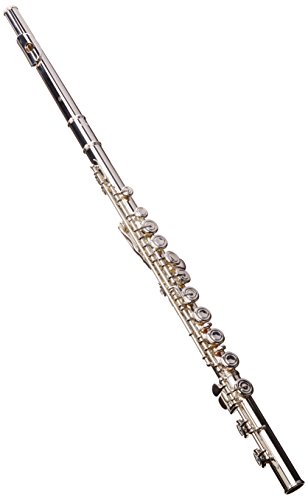
Yamaha YFL-222 Intermediate Student Flute
A nickel silver intermediate flute designed for advancing students, built with silver-plated keys and an offset G key system for comfort and intonation. Well-suited for players transitioning from beginner to intermediate levels.
Pros
- Nickel silver body provides durability and reliable tone quality
- Offset G key system reduces hand strain during extended play
- Silver-plated keys resist corrosion and maintain finish longer
- Complete assembly includes headjoint and footjoint for immediate use
- Established Yamaha brand reputation for student instrument quality
Cons
- No verified buyer reviews available to assess real-world performance and reliability
- Limited information on included accessories or maintenance kit
- Intermediate-level pricing may exceed budget for casual hobbyists
Gemeinhardt Model 3OB Open Hole Flute
An intermediate-level flute featuring open holes, offset G key, and silver-plated construction designed for students progressing beyond beginner models. The French-style key mechanism and B-foot configuration provide flexibility for developing players.
Pros
- Open hole design supports advanced fingering techniques and tone control
- Offset G key reduces hand strain for players with smaller hands
- Silver-plated body offers durability and consistent tone quality
- B-foot option expands lower register range
- Intermediate-level specifications suit advancing student musicians
Cons
- No verified buyer reviews available to assess real-world durability or performance consistency
- Open holes require regular maintenance and proper pad management
- Mid-range feature set may eventually require upgrade for advanced players
Gemeinhardt 2SP Silver Plated Flute
The Gemeinhardt 2SP is a silver-plated student flute that combines affordability with solid build quality. It comes complete with a case and features closed-hole keys, making it suitable for beginners and intermediate players starting their flute journey.
Pros
- Full silver-plated construction on head joint, body, and foot joint for consistent tone and durability
- Includes protective case for transport and storage
- Closed-hole keys reduce learning curve for beginners
- Gemeinhardt reputation as established flute manufacturer
- Compact dimensions and lightweight at 2.5 pounds for easy handling
Cons
- No verified buyer reviews available to assess real-world performance and longevity
- Silver-plated construction requires regular maintenance and cleaning to prevent tarnishing
- Student-level flute may not satisfy advancing players seeking professional-grade tone quality
Gemeinhardt 2SP Plateau Flute with Straight Headjoint
A beginner-friendly flute favored by educators and dealers, featuring a plateau model with offset G key and triple-coated silver plating. Designed as a reliable instrument with stainless steel springs and rigorous quality control testing.
Pros
- Widely recommended by music educators, indicating proven pedagogical value
- Robust construction with stainless steel springs and professional padding
- Exceptional quality control standards including specialized bench testing
- Plateau closed-hole design reduces finger pressure and improves comfort
Cons
- No verified buyer reviews available to assess real-world student experience
- Limited information on tone quality or comparative performance details
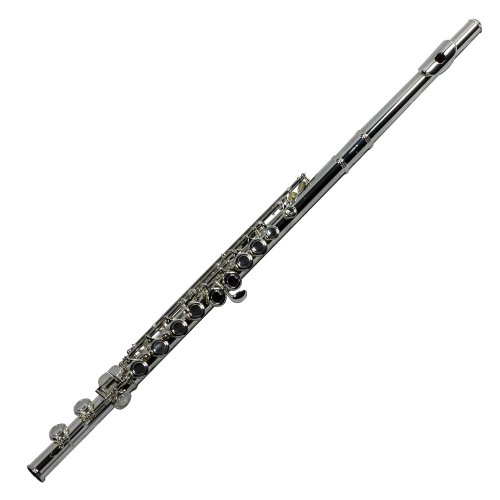
Gemeinhardt 1SP Student Flute
A nickel silver flute designed for student musicians, featuring offset G keys and closed-hole plateaus for easier playability. The silver-plated finish and quality construction support accurate intonation, making it a solid entry-level choice for beginners.
Pros
- Offset G key reduces hand strain for new players
- Plateau closed-hole keys simplify finger transitions
- Nickel silver headjoint provides good tonal response
- Durable silver-plated finish resists tarnishing
- Compact and lightweight at 2.69 pounds
Cons
- No verified buyer reviews available to confirm real-world performance
- Student-grade construction may require more frequent maintenance than professional models
- Limited tonal range compared to intermediate or advanced flutes
Jean Paul FL-430 Intermediate Open-Hole Flute
An intermediate flute designed for players advancing beyond beginner level, featuring open-hole keys with removable plugs for flexible skill progression. Pre-setup by certified technicians and engineered for consistent intonation across the range.
Pros
- Removable plugs on open holes allow gradual transition as player advances
- Factory setup by certified technicians eliminates initial adjustment hassles
- Ergonomic offset G key and split E mechanism reduce hand strain
- Consistent intonation design supports developing musicians
Cons
- No verified buyer reviews available to assess real-world durability or long-term performance
- Open-hole design requires more maintenance and pad care than closed-hole models
- Limited feedback on whether intonation consistency holds up during extended use
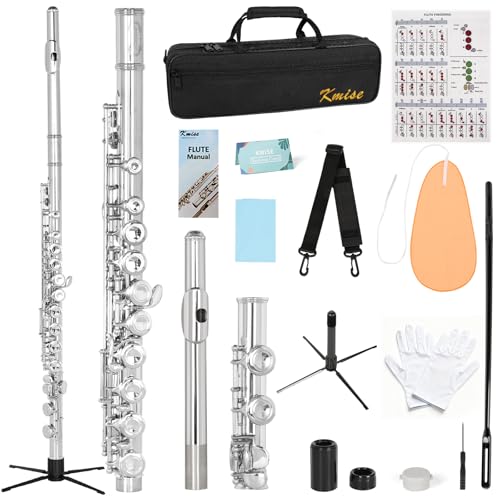
Kmise Closed Hole C Flute 16-Key Nickel Plated
A closed-hole C flute designed for beginners with offset G key and split E mechanism to ease high note fingering. The set includes case, stand, cleaning kit, and beginner's guide, making it a complete starter package with warm, mellow tone.
Pros
- Closed-hole design reduces common beginner mistakes and air leakage
- Ergonomic key layout with offset G and split E makes high notes more accessible
- Warm tone that builds confidence and forgiving of imperfect technique
- Complete package eliminates need to buy accessories separately
- Lightweight at 0.93 pounds reduces hand fatigue during practice
Cons
- No verified buyer reviews available to assess real-world durability and performance
- Limited information on material composition beyond nickel plating
- Warm tone may not suit players seeking brighter, more projection-heavy sound
BAHAMUT 17-Key Silver-Plated C Foot Flute
This professional-grade flute features a 17-key system with offset G and split E mechanism, designed for expanded tonal control and nuanced musical expression. Silver-plated cupronickel construction delivers bright, balanced tones suitable for advanced players seeking technical versatility.
Pros
- 17-key design allows exploration of glissando and partial multiphonics for advanced technique
- Offset G and split E features improve ergonomics and reduce pitch instability in upper register
- Durable cupronickel material with silver plating balances brightness and tone complexity
- Comprehensive accessories included for maintenance and performance
Cons
- No verified buyer reviews available to assess real-world durability and playability
- Professional-level feature set may be unnecessary for beginner or intermediate players
- Silver-plated finish requires regular maintenance to prevent tarnishing
Cecilio Closed Hole C Flute, 16-Key Student Set
A nickel-plated beginner flute with closed holes, offset G key, and split E mechanism, packaged with case, cleaning kit, and instruction guide. Positioned as an affordable entry point for students versus rental programs.
Pros
- Full accessory bundle reduces additional purchasing needs for beginners
- Closed hole configuration supports progression to intermediate playing
- High-quality double bladder pads noted in construction
- Includes instructional materials covering holding technique and maintenance
Cons
- No verified buyer reviews available to assess real-world durability or sound quality
- Limited information on tonal characteristics or comparison to higher-end student models
- Product weight indicates standard student instrument, may have heavier feel than some alternatives
BáFlute Native American Drone Flute, 432Hz
A dual-chamber flute tuned to 432Hz with traditional six-hole melody side and steady drone chamber, designed for meditation and reflection. Medium-large handcrafted instrument with removable block for easy maintenance and recessed finger holes for comfortable play.
Pros
- Unique dual-chamber design provides built-in harmony without additional fingering
- Removable block allows easy maintenance without strings or bindings
- Recessed finger holes offer tactile guidance for proper hand seal
- Medium-large size balances comfort and presence for various hand sizes
Cons
- No verified buyer reviews available to confirm real-world performance and durability
- 432Hz tuning benefits are largely anecdotal with limited scientific consensus
- 3D printed construction durability and longevity unclear compared to traditional materials
Flutes Buying Guide
Buying a flute involves more trade-offs than most beginners expect. Body material, key configuration, headjoint style, and the level of mechanism refinement all interact to affect playability and tone.
Use the criteria below to match a flute to the player’s current level, physical comfort, and long-term goals. If you’re also exploring other melodic instruments, our guides to acoustic guitars and electric guitars cover comparable considerations for stringed instruments.
Player Level and Instrument Grade

Flutes are broadly grouped into student, intermediate, and professional grades, and that classification matters more here than in almost any other instrument category.
A student flute is optimized for durability, easy tone production, and forgiveness on intonation, making it ideal for players in their first two or three years.
Intermediate models introduce refinements like open-hole keys, a B-foot joint, and better headjoint tolerances that reward a player whose embouchure is already developing. Professional instruments are hand-assembled with tighter manufacturing specs and premium silver content throughout.
Resist the temptation to buy ahead of the player’s level. An open-hole instrument requires a more precise hand position than a beginner has usually built, and the added difficulty can slow progress rather than accelerate it.
Most private instructors recommend staying with a closed-hole, C-foot student model for the first one to two years, then reassessing at an annual lesson check-in before upgrading.
Budget is a real constraint at every level.
Entry-level instruments from brands like Cecilio and Kmise sit at the low end of the price spectrum and serve very casual beginners, but professional educators consistently note that their mechanism tolerances and pad quality fall below what dedicated students need past the first year.
Mid-range models from Gemeinhardt, Jean Paul USA, and Yamaha represent the sweet spot where build quality meaningfully affects a student’s ability to develop correct technique.
Closed Hole vs. Open Hole Keys

Closed-hole keys (also called plateau keys) cover the tone holes completely, requiring no specific finger placement beyond pressing the key down.
Open-hole keys have a ring in the center of five keys, and the player’s fingertips must seal those rings precisely to avoid air leaks.
Open-hole models produce a slightly more resonant tone and allow extended techniques used in contemporary and world music, but they demand proper hand position from the start.
Most music educators agree that beginners should start on closed-hole instruments. Players who begin on open-hole models often develop compensatory hand positions to cover the rings, which can create ingrained technical problems that take years to correct.
The transition from closed to open hole is straightforward once the hand is properly trained, so there is no meaningful long-term disadvantage to starting with plateau keys.
Intermediate and advanced players generally prefer open-hole instruments for the tonal and expressive advantages.
Models like the Gemeinhardt 3OB and the Pearl 505RBE1RB are built around open-hole configurations and pair them with other mechanism upgrades that make the investment worthwhile at that level of play.
Headjoint Material and Tone Quality
The headjoint is the most acoustically significant single component of a flute. It is where the player’s breath is transformed into sound, and even a modest quality headjoint on an otherwise adequate body can lift a flute’s responsiveness noticeably.
Student flutes typically feature nickel-silver bodies and headjoints with silver plating. That plating affects the surface quality the air stream interacts with, and silver-plated instruments generally offer warmer, more projecting tone than bare nickel.
Intermediate and professional models move toward sterling silver headjoints or bodies with higher silver content, which deepens resonance and improves response in the low register.
The cut of the embouchure hole and the riser height are equally important, and these are refined through hand-finishing on higher-grade instruments.
When comparing two flutes at similar prices, a better headjoint is almost always the more impactful upgrade over a more elaborately appointed body.
Foot Joint Options: C Foot vs. B Foot

Standard student flutes terminate in a C-foot joint, which gives the instrument its lowest note as middle C. A B-foot joint adds one additional key, extending the range down a half-step to B3.
That extra note appears in advanced orchestral and solo repertoire, and many intermediate players begin requesting it as their repertoire expands. The B-foot joint also slightly changes the instrument’s weight distribution and can subtly affect tone in the upper register.
For players in their first two years, the B-foot adds unnecessary complexity with no practical benefit, since virtually all beginner and early intermediate music stays within the C-foot range.
Once a player is working through grade 4 or 5 repertoire and considering a dedicated intermediate instrument, choosing a model with a B-foot becomes sensible forward planning rather than premature spending.
Mechanism Quality and Key Action

Key action refers to how responsive, consistent, and quiet the keys feel under the fingers.
Well-regulated key action means pads close evenly without leaks, springs return keys to position crisply without sticking or rattling, and the overall feel is smooth across all fingers.
Budget instruments often leave the factory with inconsistent regulation, meaning one or two keys may seal imperfectly from the start. This creates intonation problems and air resistance that a beginner may incorrectly attribute to their own technique.
Expert flute technicians who review student instruments consistently note that models from Gemeinhardt and Yamaha arrive with superior out-of-box regulation compared to budget brands at similar price points.
That consistency is a meaningful advantage for the first year of lessons, where the student needs to trust that the instrument is responding predictably.
Verified buyer feedback across multiple platforms mirrors this finding, with parents of students frequently noting that better-regulated instruments reduced frustration and improved lesson retention early on.
Over time, all flutes require periodic pad replacement and regulation. Choosing a brand with an established repair network and available parts is a practical consideration that budget brands cannot always match.
If you maintain your instruments and other household tools with the same care, the same principle applies whether you’re looking at a musical instrument or a quality set of hex keys for mechanical adjustments.
Specialty and Alternative Flutes

Concert flutes in the key of C dominate the student and orchestral market, but the category also includes instruments built for specialized contexts.
Native American style drone flutes, like the BAFlute double-chamber model in our lineup, serve a completely different musical tradition and are not interchangeable with concert flutes for classical or band settings.
They are played by breath pressure and covered holes rather than keys, and they are valued for meditation, folk music, and sonic exploration rather than technical development in Western music theory.
If your goal is participation in a school band, orchestra, or private classical study, a C concert flute from a reputable manufacturer is the right choice.
Specialty instruments are genuinely interesting on their own terms, but mixing categories when shopping leads to a mismatch between expectations and performance. Always confirm the instrument’s key, tuning standard, and intended musical context before purchasing.
Why You Should Trust Us
ProductFind is an independent review publication.
Every flute in this guide was scored using our PF Score system, a 0-to-10 rating scale applied consistently across a standardized set of criteria: mechanism quality and regulation, material construction and finish, intonation characteristics, value relative to player level, and long-term reliability based on owner reports.
We do not conduct our own product trials; our evaluations are grounded in research, published data, expert review consensus, and verified buyer feedback.
Our research process draws on manufacturer specification sheets, consensus assessments from professional flute educators and music educators publishing in specialist forums and publications, and aggregated verified buyer feedback from confirmed purchasers across multiple retail platforms.
When expert opinion and buyer experience converge, we treat that alignment as strong evidence. When they diverge, we document the gap and weight the findings accordingly in the PF Score. No product earns a high score through marketing materials alone.
ProductFind may earn a commission if you purchase through a link in this article. That affiliate relationship has no influence on rankings, PF Scores, or the selection of products.
Our editorial decisions are made independently, and no manufacturer pays for placement. Recommendations reflect quality as we assess it, not commission rates.
Final Thoughts
The flutes in this guide span every practical need, from a first band instrument to a capable intermediate model ready for competitive auditions. Here are the standout picks by category:
- Best Overall: Pearl 505RBE1RB Quantz Series Flute earns the top PF Score in this lineup through a combination of professional-grade headjoint construction, open-hole configuration, and a track record of consistent intonation that satisfies advancing students and adult players who want room to grow.
- Best for Intermediate Players: Selmer SFL411BEO Intermediate Flute delivers Henri Selmer’s reputation for refined mechanism quality and silver-plated keys at a price point that makes sense for players ready to move past student-grade instruments.
- Best Student Flute: Yamaha YFL-222 Intermediate Flute stands out for superior out-of-box regulation and consistent intonation across the full range, making it the most educator-recommended starting point for serious students who intend to stay with the instrument.
- Best Budget Entry Point: Gemeinhardt 1SP Student Flute offers a reliable closed-hole closed-hole design at an accessible price, backed by Gemeinhardt’s established repair network, making it a dependable first instrument for students whose commitment level is still being established.
- Best for Exploration and Unique Sound: BAFlute Native American Style Drone Flute is not a concert flute substitute, but for players curious about folk traditions, meditative music, or non-Western tonality, it offers a genuinely distinct sonic experience at a very accessible price.
Whichever model fits your situation, prioritize mechanism quality and player-level match over cosmetic features. A well-regulated instrument at the right level will always outperform a flashier model that fights the player.
If your musical interests extend beyond the flute, our coverage of acoustic guitars for every budget and electric guitars for every player applies the same research-driven approach to other popular instruments.
Frequently Asked Questions
What is the best flute for a complete beginner?
For most beginners, a closed-hole C concert flute from a brand with a reputation for consistent factory regulation is the right starting point.
Gemeinhardt and Yamaha are the most frequently recommended brands by private instructors and school band directors, because their student models arrive with reliable pad seating and predictable key action.
A beginner does not need open holes, a B-foot, or sterling silver components, and adding those features introduces unnecessary difficulty without meaningful sonic benefit at that stage.
How long does a student flute typically last before needing an upgrade?
A well-maintained student flute from a quality brand can serve a player comfortably for two to four years of serious study.
The practical trigger for an upgrade is usually a change in repertoire demands rather than a failure of the instrument itself.
When a student’s teacher begins assigning music that calls for extended low-register passages, more nuanced dynamic range, or open-hole techniques, that is the signal to evaluate intermediate options.
Routine pad replacement and regulation can extend a quality student instrument’s useful life significantly.
Should I buy open hole or closed hole to start?
Closed hole (plateau) keys are strongly preferred for beginners by the large majority of professional flute educators.
Open-hole keys require precise finger placement that takes time to develop, and forcing that placement prematurely can ingrain compensatory hand positions that are difficult to correct later.
The tonal and technical advantages of open-hole instruments are real, but they are only accessible to a player whose hand position is already stable. Most teachers recommend transitioning to open hole at the intermediate level rather than starting there.
Are budget flutes from lesser-known brands worth buying?
Budget instruments from brands like Cecilio and Kmise can serve very casual beginners or players who need an instrument for a short-term project and are not planning sustained study.
However, expert review consensus consistently identifies pad quality and mechanism regulation as the weakest points on budget models, and those are exactly the factors that affect how easy or difficult it is to produce a clean tone and play in tune.
For students enrolled in lessons and aiming for band participation, spending more on a reputable brand is almost always worthwhile and reduces the likelihood of having to replace the instrument within the first year.
What is the difference between a student and an intermediate flute?
Student flutes are designed for durability and ease of tone production, typically featuring closed-hole keys, a C-foot joint, and silver-plated nickel construction.
Intermediate flutes add refinements such as open-hole keys, a B-foot joint, higher silver content in the headjoint or body, and tighter mechanism tolerances that reward a more developed embouchure and hand position.
The tonal difference between a good student model and a quality intermediate instrument is audible but subtle to untrained ears. The playability difference, particularly in the low register and at soft dynamics, is more immediately noticeable to the player.
How should I maintain a flute to keep it in good condition?
After every playing session, use a cleaning rod wrapped in a soft cloth to swab moisture from the body and headjoint. Avoid touching the pads directly with your fingers, as skin oils accelerate pad deterioration.
Store the flute in its case rather than on a stand when not in use. Have the instrument professionally serviced every one to two years to check pad seating, key regulation, and spring tension.
Players who clean consistently and store carefully can often extend pad life well beyond the typical replacement interval, which reduces the overall cost of ownership over the instrument’s life.
About the author
Alexis is a reviewer and writer for ProductFind who specializes in Musical Instruments & Accessories. Alexis evaluates products through independent research: specifications, expert review consensus, and verified buyer feedback, and rates each one on the PF Score. Alexis focuses on helping readers pick the right musical instruments & accessorie for their needs and budget.