The 9 Best Instrument Cables
Signal quality starts with the cable. We researched capacitance ratings, shielding specs, and buyer feedback to find the most reliable instrument cables for practice, gigging, and studio use.
 By Alexis Watson
Updated July 23, 2026
By Alexis Watson
Updated July 23, 2026
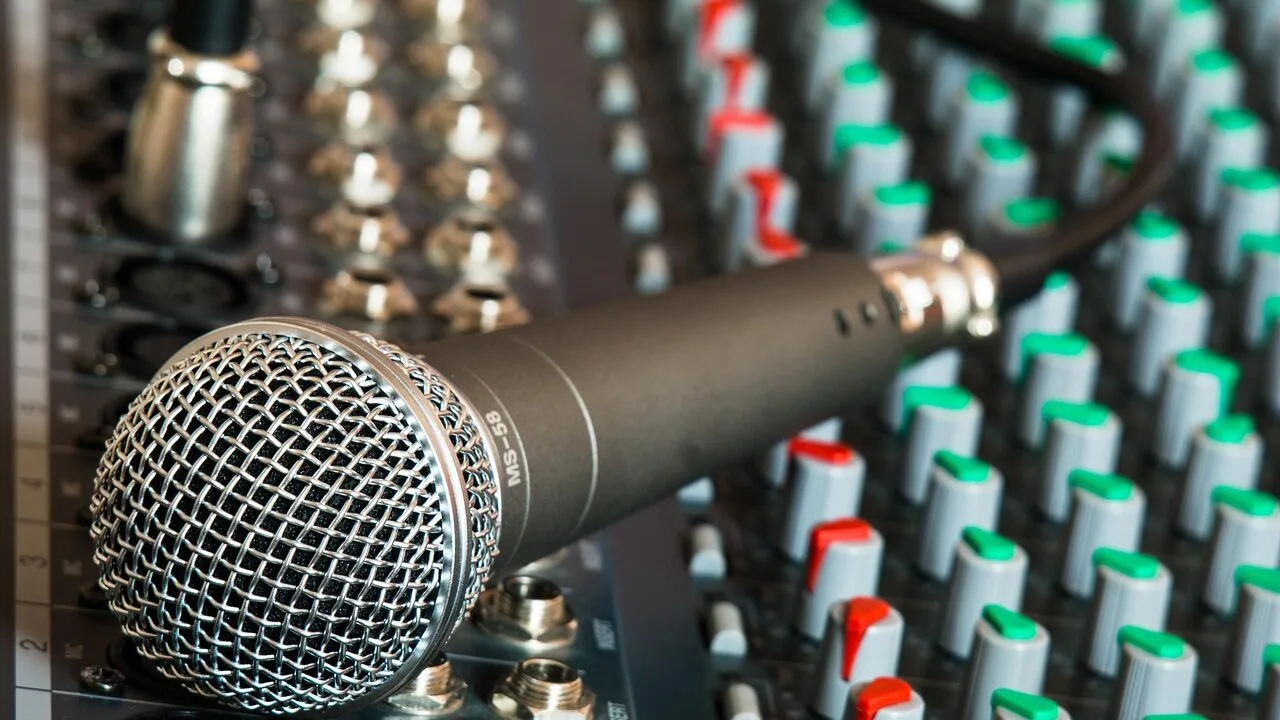
A great instrument cable is one of the most overlooked upgrades a guitarist, bassist, or keyboardist can make.
While players often obsess over pickups, pedals, and amplifiers, the cable carrying the signal between all of those components quietly determines whether your tone arrives clean and full or degraded by noise, interference, and capacitance loss.
Whether you play at home, record in a studio, or gig on weekends, the right cable keeps your sound honest from the moment it leaves your instrument to the moment it hits the amp.
Pairing quality cables with a well-chosen instrument, like one of the top options from our electric guitars roundup, makes a noticeable difference in how your rig performs end to end.
This guide covers nine instrument cables across a range of price points and use cases, from budget-friendly packs for beginners to braided, low-capacitance professional leads from brands like Fender, Ernie Ball, and Worlds Best Cables.
ProductFind assembled these picks through comprehensive research: manufacturer specifications, expert review consensus from professional audio sources, and verified buyer feedback from confirmed purchasers. Our top picks are listed directly below, ranked by PF Score.
| Award | Product | PF Score About PF ScoreThe PF Score is our own rating from 0 to 10, based on performance, design and build, ease of use, and value. It reflects independent research and is never influenced by manufacturers, retailers, or affiliate commissions. Learn more › | Price | |
|---|---|---|---|---|
| Best Overall |
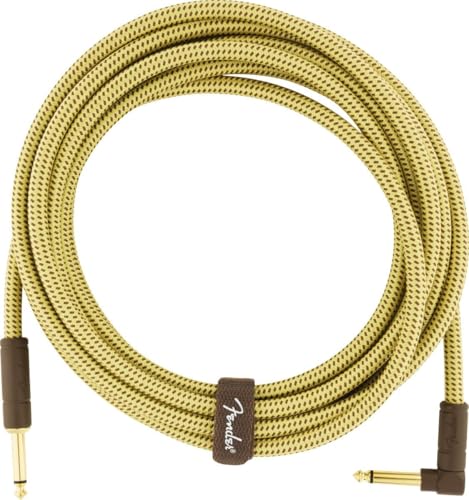 Fender Deluxe 15ft Instrument Cable
|
8.7/10 | Buy | |
| Editor's Pick |
 Ernie Ball Braided Instrument Cable 10ft
|
8.5/10 | Buy | |
| Best Value |
 Worlds Best Cables WBC-PRO 10ft Guitar Cable 20AWG
|
7.9/10 | Buy | |
| Top Rated |
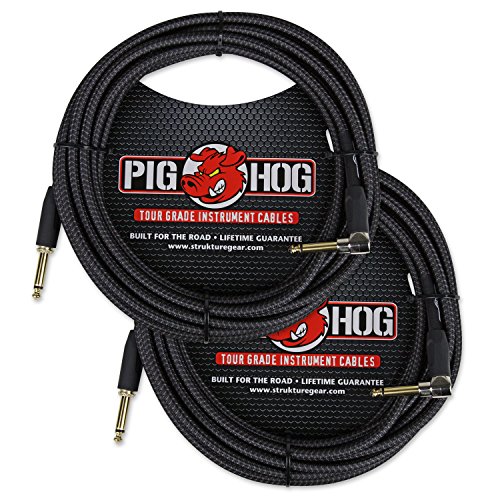 Pig Hog PCH20BKR 20ft Instrument Cable 2-Pack
|
7.8/10 | Buy | |
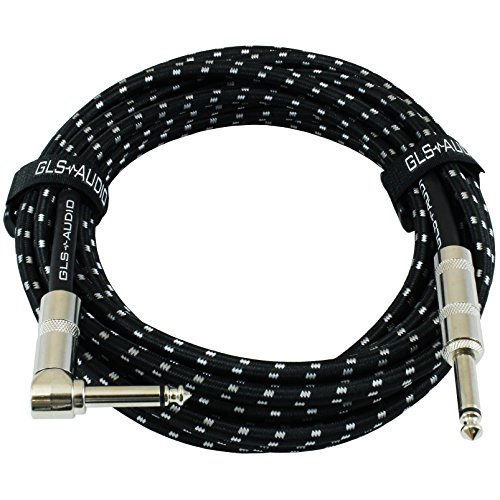 GLS Audio 20ft Instrument Cable
|
7.2/10 | Buy | ||
 AA Audio 10ft Guitar Cable 2-Pack, 20AWG OFC
|
7.1/10 | Buy | ||
 Gearlux 25-Foot Instrument Cable 2-Pack
|
6.8/10 | Buy | ||
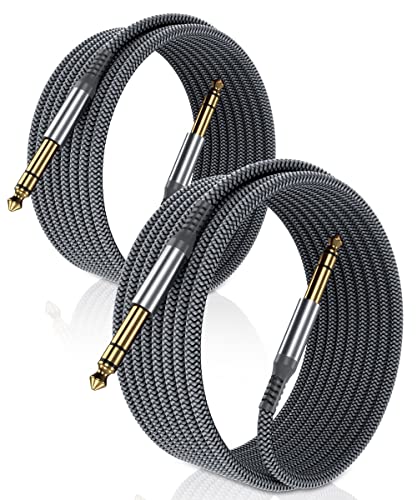 Elebase 1/4 Inch TRS Guitar Cable 10ft 2-Pack
|
6.5/10 | Buy | ||
 Sovvid 10FT Instrument Cable 2-Pack Right Angle
|
6.2/10 | Buy |
Fender Deluxe 15ft Instrument Cable
Fender's Deluxe series cable combines premium materials with practical design, featuring 95% oxygen-free braided shielding and 24K gold-plated connectors for clear signal transmission. Built for musicians who prioritize durability and audio quality over budget constraints.
Pros
- Gold-plated connectors won't tarnish or degrade audio quality over time
- Oxygen-free braided shielding delivers transparent sound
- Durable tweed jacket designed to resist kinks and damage
- Molded connector ends provide strain relief for longevity
Cons
- No verified buyer reviews available to confirm real-world durability claims
- Premium pricing typical of Fender brand, not ideal for budget-conscious buyers
- 15ft fixed length may be limiting for some studio or live setups
Ernie Ball Braided Instrument Cable 10ft
A durable instrument cable built with oxygen-free copper and dual shielding for reliable signal transmission. The braided jacket resists tangling and offers flexibility suitable for both studio and stage use.
Pros
- Oxygen-free copper construction resists corrosion and maintains signal integrity
- Dual shielding and dual conductors provide durability and clear tone
- Braided exterior jacket prevents tangling and flexes without kinking
- Roadworthy construction designed for professional use
- Limited lifetime warranty provides long-term coverage
Cons
- No verified buyer reviews available to assess real-world performance and longevity
- Fixed 10ft length limits flexibility for different setup configurations
- Braided jacket may be less compact for transport compared to standard cables
Worlds Best Cables WBC-PRO 10ft Guitar Cable 20AWG
A low-capacitance instrument cable built with 98% shielded braided copper, gold-plated Amphenol connectors, and proprietary silver solder construction. Designed for studio and stage use where noise rejection matters, though no verified buyer feedback exists yet to confirm real-world performance claims.
Pros
- High-spec shielding and OFC copper core meet pro-audio standards
- Gold-plated connectors and custom silver solder exceed typical cable construction
- Ultra-flexible jacket designed for frequent cable movement without degradation
- Slimline connector design reduces crowding on audio equipment
Cons
- No verified buyer reviews to validate manufacturer claims about tone and noise cancellation
- 4.6-star rating with zero reviews provides no real-world performance evidence
- Premium positioning relative to industry-standard alternatives lacks independent verification
Pig Hog PCH20BKR 20ft Instrument Cable 2-Pack
A two-pack bundle of 20-foot woven instrument cables with gold-plated connectors, one straight and one right-angle. Designed for reliable stage and studio use with durable construction and a 4.9 rating.
Pros
- High-quality woven outer covering for durability and reduced noise
- Gold-plated 1/4" connectors resist corrosion and ensure solid connections
- Two cables per pack offer good value for musicians needing backup or multi-instrument setups
- 20-foot length suits both stage and studio applications
- Right-angle connector option reduces strain on input jacks
Cons
- No verified buyer reviews available to confirm real-world durability claims
- Right-angle design may limit flexibility in tight spaces compared to straight connectors
- Limited information on cable shielding specifications or frequency response details
GLS Audio 20ft Instrument Cable
A straightforward instrument cable built with oxygen-free copper and double-shielded construction for low-noise performance. The braided tweed jacket adds durability and flexibility, making it suitable for bass and electric guitar players who need reliable signal transfer without tangling hassles.
Pros
- Oxygen-free copper construction for signal integrity
- Double insulator shields reduce interference and noise
- Braided tweed jacket resists tangling and coils neatly
- Low capacitance design minimizes signal loss
- Standard 1/4 inch connectors work with most amplifiers
Cons
- No verified buyer reviews available to confirm real-world durability claims
- 20ft length may be excessive for home practice setups
- Unclear connector angle quality without customer feedback
AA Audio 10ft Guitar Cable 2-Pack, 20AWG OFC
Dual-layer shielded instrument cable built with Kevlar reinforcement and 20AWG oxygen-free copper for reduced signal loss. The 2-pack format and nylon braiding make it practical for gigging musicians and studio setups seeking durable, noise-free connections.
Pros
- Substantial gauge upgrade (20AWG vs typical 22AWG) reduces signal degradation over cable runs
- Kevlar reinforcement and nylon braiding provide genuine durability for frequent transport and stage use
- Dual-layer shielding architecture addresses noise concerns common in single-shielded designs
- Heat-shrink protected connections reduce internal corrosion risk
- Two-pack format provides spare cable and better value per unit
Cons
- 4.8-star rating with zero verified reviews limits real-world performance validation
- Heavy braiding and reinforcement may add modest weight compared to standard cables
- 10ft length suits most applications but less flexible than adjustable or alternative lengths
Gearlux 25-Foot Instrument Cable 2-Pack
Two 25-foot instrument cables with oxygen-free copper conductors and standard 1/4-inch straight connectors, designed for studio and stage use. Built with flexible jackets to reduce tangling and strain during transport and setup.
Pros
- Two 25-foot cables provide flexibility for multiple rigs or backups
- Oxygen-free copper (OFC) reduces noise and interference for cleaner signal
- Universal 1/4-inch connectors compatible with most guitar and bass gear
- Flexible jacket design improves portability and reduces strain on connectors
Cons
- No verified buyer reviews available to confirm real-world durability or performance claims
- 25 feet may be longer than needed for some studio setups or shorter performance spaces
- Straight-to-straight configuration lacks versatility compared to angled options
Elebase 1/4 Inch TRS Guitar Cable 10ft 2-Pack
A dual-pack instrument cable with reinforced aluminum construction and nylon braiding designed for guitars, basses, and keyboards. Built with premium copper conductors and gold-plated TRS connectors for signal integrity, plus a 12-month warranty backing the purchase.
Pros
- Robust build quality with reinforced connectors and braided jacket designed to withstand repeated use
- Two cables per package offers good value for multi-instrument setups
- Gold-plated TRS connectors and two-layer shielding support clean signal transmission
- Comes with Velcro strap for organized cable storage and transport
- Wide compatibility with any 6.35mm jack instrument: guitar, bass, keyboard, and amplifiers
Cons
- No verified buyer reviews available to assess real-world durability claims
- 10-foot length may be excessive for bedroom setups, with no shorter alternatives listed
- Limited technical detail on shielding specifications or signal-to-noise ratio performance
Sovvid 10FT Instrument Cable 2-Pack Right Angle
A dual-pack guitar cable with straight-to-right angle connectors designed to reduce socket strain on instruments. Built with OFC copper conductors and braided shielding for noise rejection, suited for guitars, bass, keyboards, and other 6.35mm devices.
Pros
- Right angle design protects guitar jack connectors from accidental unplugging and stress
- OFC copper shielding and TPE insulation provide effective noise rejection for cleaner audio
- Durable nylon jacket with high bend-life rating resists fraying and tangling
- Compatible with most standard 6.35mm musical instrument connectors
- Two cables included, offering value for setups needing multiple connections
Cons
- No verified buyer reviews available to confirm real-world durability claims
- Right angle design may limit flexibility in tight spaces or specific cable routing setups
- Weight and stiffness of braided jacket could impact portability for gigging musicians
Instrument Cables Buying Guide
Choosing the right instrument cable comes down to understanding a handful of technical and practical factors that have a real impact on your sound and reliability.
The options in this list span entry-level to professional grade, and the right pick depends on how you play, where you play, and how long you expect the cable to last.
This guide breaks down the criteria that matter most so you can match a cable to your actual needs rather than guessing by brand name alone.
Capacitance and Signal Clarity
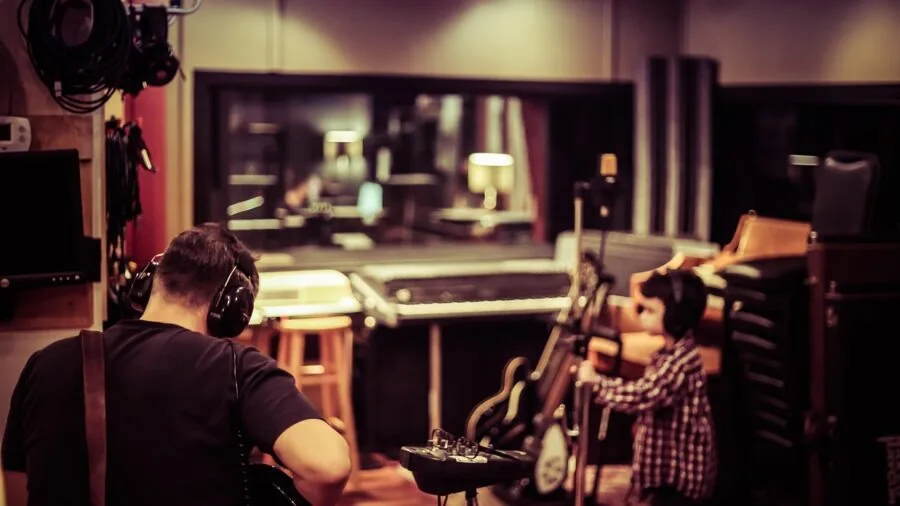
Capacitance is the single most important electrical specification in an instrument cable, and it is the one most often ignored on spec sheets. Every cable acts as a tiny capacitor between the signal conductor and the shield.
The higher the capacitance per foot, the more high-frequency content is bled off before it reaches your amplifier.
For a passive guitar or bass with single-coil pickups, this can make the difference between a bright, articulate tone and a muddy, rolled-off signal.
Look for cables that publish their capacitance rating in picofarads per foot (pF/ft). Anything under 30 pF/ft is considered low-capacitance and generally tone-friendly.
The Worlds Best Cables WBC-PRO-Guitar is notable here, specifying 18 pF/ft, which is genuinely low and suitable for players who want maximum treble preservation.
Cables that omit this spec entirely often have capacitance values above 40 pF/ft, which adds an audible softness that some players like but others find limiting.
Active pickups and buffered pedals are less sensitive to capacitance because the signal is already buffered at a low impedance. But for passive instruments running straight into an amp, a low-capacitance cable is a genuine tonal upgrade worth paying for.
Shielding Type and Noise Rejection
Shielding is what stands between your signal and the electromagnetic interference generated by stage lighting, power transformers, HVAC systems, and the wiring in the walls of older venues.
There are two primary shielding configurations used in instrument cables: spiral (serve) shields and braided shields. Spiral shields flex more easily and hold up better under constant coiling and uncoiling, making them the practical choice for most gigging musicians.
Braided shields offer better physical coverage and lower resistance, which is why they appear in studio-grade cables.
Dual-shielding, where a cable uses both a spiral outer shield and a conductive PVC inner layer, provides superior noise rejection in electrically noisy environments.
The AA Audio Accessory Kevlar-reinforced cable, for example, uses a dual-shield design that helps reject interference even in challenging stage setups.
The Ernie Ball Braided cable uses 99.95% oxygen-free copper in its shield, which keeps DC resistance low and shielding effectiveness high over the cable’s life.
For home practice and controlled studio environments, standard single-spiral shielding is adequate. For live performance in large venues or outdoors, a higher-coverage shield is worth prioritizing.
A quiet cable can also reduce hiss when recording directly into an audio interface, so studio players benefit from this specification as much as live performers.
Connector Quality and Plug Configuration
The plug is the point of failure for most instrument cables. A well-soldered, robustly strain-relieved connector will outlast the cable jacket in most cases.
Cheaper cables often use machine-crimped connectors without proper strain relief, and the first sign of failure is usually an intermittent crackling sound when the cable is moved.
Look for connectors with a visible boot or spring guard at the entry point, which absorbs the mechanical stress of bending.
Connector material also matters for corrosion resistance. Gold-plated contacts, as found on the Worlds Best Cables model using Amphenol QM2R-AU and QM2P-AU connectors, resist oxidation better than bare nickel over years of use.
The Fender Deluxe Series uses Fender’s own custom strain relief design, which has earned consistent praise from verified buyers for holding up through regular use without developing crackling or intermittent signal loss.
Plug configuration is a practical consideration separate from quality. Straight-to-straight cables work well on guitars and amps where the jack faces outward.
Right-angle plugs on the instrument end are essential for guitars with strap-end or side-facing jacks, and they reduce leverage stress on the jack.
Several cables in this list offer straight-to-angle configurations, which covers most use cases for electric guitarists and bassists.
Cable Jacket and Physical Durability
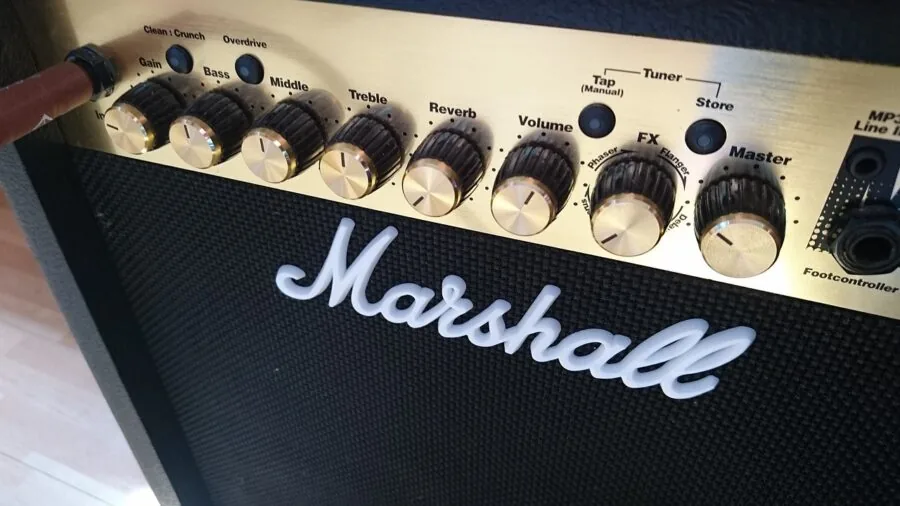
The outer jacket of an instrument cable determines how it handles being coiled, stepped on, packed into a gig bag, and exposed to temperature changes.
Standard PVC jackets are flexible and quiet underfoot, meaning they do not generate as much handling noise when moved during a performance.
Woven or braided jackets, like the tweed finish on the GLS Audio and Fender Deluxe models, offer additional abrasion resistance and a premium feel, though they can be slightly stiffer in cold environments.
Nylon braided exteriors, such as those on the Pig Hog Black Woven and AA Audio Accessory cables, provide a middle ground: more durable than plain PVC but more flexible than tight-woven tweed.
Kevlar reinforcement, as marketed by AA Audio Accessory, adds tensile strength that prevents core damage if the cable is pulled under tension, which can happen when a performer accidentally steps on a cable during a set.
Heat-shrink protection at the cable-to-plug junction is a small but important construction detail. It prevents the jacket from separating from the connector body over time, which is one of the most common failure modes in cheaper cables.
Cables that advertise heat-shrink reinforcement at both ends are built to last noticeably longer than those without it.
If you also play acoustic guitar with an onboard pickup system, these same durability considerations apply when choosing a cable for your acoustic rig.
Length and Capacitance Trade-Offs
Cable length directly multiplies capacitance. A cable rated at 30 pF/ft becomes a 300 pF load at 10 feet and a 600 pF load at 20 feet. That accumulated capacitance is enough to audibly roll off high frequencies in a passive instrument signal.
This is why professional and studio players typically use the shortest cable that fits their setup, and why pedalboard cables are usually kept as short as possible.
For home practice and studio recording, a 10-foot cable is usually sufficient and keeps capacitance manageable. For live performance on a stage where you move around, 15 to 20 feet is the practical range.
At 25 feet, you are adding meaningful capacitance unless the cable has a particularly low pF/ft rating.
The Gearlux two-pack at 25 feet each is a cost-effective solution for players who need longer cables and are less concerned about the last bit of high-frequency response, such as when running through a high-gain amp that already has a compressed, mid-forward sound.
A simple strategy is to use a buffered tuner or buffer pedal at the front of your signal chain when running longer cable runs.
The buffer lowers the output impedance of the signal, making the downstream capacitance of the cable largely inaudible. This lets you use more affordable longer cables without a tonal penalty.
Value Per Cable vs. Multi-Packs
Multi-packs offer significantly better per-cable cost, which matters when you need cables for a full pedalboard, multiple instrument inputs in a studio, or simply want a backup on stage.
The Gearlux two-pack and Pig Hog two-pack are both structured around this value logic, bringing the per-cable cost down substantially compared to single-cable purchases.
The Sovvid and Elebase two-packs push further into budget territory, making them reasonable starter options for beginners building their first practice rig.
The trade-off with budget multi-packs is usually in connector quality and shielding consistency. Budget cables in two-packs often pass basic noise-rejection requirements for home practice but may develop intermittent crackling or increased handling noise faster under regular gigging conditions.
If you play live frequently, investing in one or two higher-quality individual cables is more cost-effective over two to three years than cycling through budget two-packs.
For beginners taking lessons or building a home studio, the budget two-packs in this list represent a sensible entry point.
For serious gigging players, a single well-built cable from Fender or Ernie Ball is the better long-term value even when the upfront price per cable is higher.
Similarly, if you are also setting up a practice or home studio space, having reliable audio connections matters as much as investing in the right instruments and gear.
Why You Should Trust Us
ProductFind is an independent review publication. We do not sell the products we cover, and we are not affiliated with any manufacturer or retailer in any way that influences our rankings or recommendations.
Every product in this guide was evaluated using a consistent, research-based methodology designed to surface the most accurate and useful information for buyers.
Each instrument cable in this list was assessed against a structured set of criteria: published electrical specifications including capacitance and shielding coverage, conductor material and gauge, connector construction quality, jacket durability, and corroborating data from expert review consensus and verified buyer feedback across confirmed purchasers.
We do not conduct our own product trials; our evaluations are grounded in research, published data, expert review consensus, and verified buyer feedback.
Every pick is scored using our PF Score system on a scale of 0 to 10, which weights criteria consistently so that products are compared on equal footing regardless of price tier or brand recognition.
ProductFind may earn a commission if you purchase through links in this article. That affiliate relationship has no effect on which products are selected, how they are ranked, or what PF Score they receive.
Our recommendations are editorially independent and reflect the findings of our research process, not commercial relationships. If a product scores poorly against our criteria, it does not appear in our picks regardless of any commercial considerations.
Final Thoughts
The best instrument cable for you depends on where you play, what you play, and how much you expect your gear to take on.
The nine cables in this guide cover the full range from affordable practice essentials to professional-grade leads built for studio or touring use.
Below are the standout picks from this list, each earning a specific recognition based on where it excels.
- Best Overall: Fender Deluxe Series Instrument Cable, Straight/Angle, Tweed, 15ft earns the top spot with the highest PF Score in this group, backed by Fender’s custom strain relief design, consistent verified buyer satisfaction, and a construction quality that holds up through regular gigging. It is the cable most players can buy with confidence regardless of experience level.
- Best for Braided Durability: Ernie Ball Braided Instrument Cable, Straight/Angle, 10ft uses 99.95% oxygen-free copper and a woven exterior jacket that resists abrasion and maintains flexibility over time. It is a strong choice for players who put cables through heavy use on stage or in rehearsal.
- Best for Low-Capacitance Tone Preservation: Worlds Best Cables WBC-PRO-Guitar, 10ft stands out with its published 18 pF/ft capacitance rating and Amphenol gold-plated connectors. It is the pick for players who run passive instruments directly into amps and want to preserve as much high-frequency content as possible.
- Best Value Two-Pack: Pig Hog PCH20BKR Black Woven Instrument Cable, 20ft Right Angle, 2 Pack offers a well-built woven cable in a two-pack format that brings per-cable cost down without sacrificing the build quality needed for regular rehearsal and live use.
- Best Budget Pick: Sovvid 10FT 2 Pack Instrument Cable is the most affordable option in this list and a practical starting point for beginners who need reliable cables for home practice without a significant upfront investment.
Whatever cable you choose, pairing it with quality gear on both ends of the signal chain makes the biggest difference.
If you are still shopping for an instrument to go with your new cable, our acoustic guitar picks and electric guitar guide cover the options across every budget and playing style.
Frequently Asked Questions
What is the difference between a TS and TRS instrument cable?
A TS (tip-sleeve) cable carries an unbalanced mono signal, which is the standard for passive electric guitars and basses connecting to amplifiers.
A TRS (tip-ring-sleeve) cable carries either a balanced mono signal or a stereo signal, and is more commonly used with keyboards, audio interfaces, and some active instruments. For most guitar-to-amp connections, a standard TS cable is the correct choice.
Using a TRS cable in a standard TS application will generally work without harm, but the ring connection will be unused.
Does cable length really affect tone?
Yes, but the degree of impact depends on the instrument and the cable’s capacitance per foot. Longer cables accumulate more total capacitance, which filters out high frequencies before they reach the amplifier.
For passive instruments like a standard electric guitar running straight into an amp with no buffer, the difference between a 10-foot and a 25-foot cable can be audible as a subtle high-frequency roll-off.
Active instruments or setups that use a buffered pedal at the front of the chain are much less sensitive to cable length because the buffer lowers output impedance and reduces capacitance sensitivity.
How should I store and coil my instrument cables to make them last longer?
The over-under coiling technique is widely recommended by audio professionals because it follows the natural twist of the cable rather than fighting it.
Standard coiling in one direction creates internal stress in the cable core over time, which can damage the center conductor or the shield.
The over-under method alternates the direction of each loop, allowing the cable to lie flat and uncoil without kinking.
Avoid wrapping cables tightly around your arm or hand, as this creates tight bends at the plug junction where failure most commonly begins.
Hanging cables on a hook rather than leaving them bundled on the floor also helps them retain their flexibility and shape.
Are braided cables worth the extra cost over standard PVC cables?
For players who use their cables regularly in live or rehearsal settings, braided cables typically justify their cost through longer lifespan and better abrasion resistance.
The woven exterior protects against friction damage when cables are dragged across stages or packed repeatedly into bags.
Braided jackets also tend to reduce handling noise, which is the crackling or thumping sound a cable can pick up when it is moved during a performance.
For home practice players who rarely stress their cables, a standard PVC jacket is adequate and the savings can go toward other gear upgrades.
Can I use an instrument cable for a speaker connection between an amp head and cabinet?
No. Instrument cables are high-impedance signal cables designed for very low power levels. Speaker cables carry high-current, low-impedance signals between an amplifier head and a speaker cabinet.
Using an instrument cable as a speaker cable can cause the cable to overheat, damage the amplifier’s output stage, and create a fire or safety hazard.
Always use a dedicated speaker cable, which is typically an unshielded two-conductor cable, for any connection between a power amplifier and a speaker cabinet.
The connectors may look identical from the outside, so it is important to label cables clearly if you own both types.
What should I look for in a cable if I play in noisy live environments?
In electrically noisy venues, shielding quality becomes the most important factor. Look for cables that specify high shield coverage, ideally 95% or above, or that use a dual-shield design combining a spiral shield with a conductive inner layer.
Oxygen-free copper in the shield lowers resistance and maintains shielding performance over time better than standard copper.
Connectors with solid contact quality also help, since a corroded or loose connector is a point of noise entry that bypasses even excellent shielding.
Keeping cable runs as short as practical also reduces the antenna surface area that picks up interference.
About the author
Alexis is a reviewer and writer for ProductFind who specializes in Musical Instruments & Accessories. Alexis evaluates products through independent research: specifications, expert review consensus, and verified buyer feedback, and rates each one on the PF Score. Alexis focuses on helping readers pick the right musical instruments & accessorie for their needs and budget.