The 10 Best Trekking Poles
Weight, material, and grip comfort separate a great trekking pole from a frustrating one. Here are the top picks across every budget for hikers who want real trail support.
 By Vernon Jackson
Updated July 23, 2026
By Vernon Jackson
Updated July 23, 2026

A reliable pair of trekking poles can completely transform how you move through the mountains.
They take load off your knees on steep descents, give you a third and fourth point of contact on slippery terrain, improve your cadence on long climbs, and make river crossings significantly safer.
Whether you are a weekend day-hiker, a thru-hiker logging hundreds of miles, or an older hiker who needs extra balance support, the right poles make a measurable difference in comfort and confidence on the trail.
The market, however, is crowded with options ranging from budget aluminum sticks to high-end carbon fiber systems, and sorting through the noise takes real work.
This guide cuts through the clutter by combining published specifications, verified buyer feedback, and expert review consensus across dozens of sources into clear, actionable recommendations.
We evaluated every pole on this list using our structured research methodology and assigned each a PF Score on our 0 to 10 scale, so you can see at a glance how they compare.
Whether you need an ultralight carbon setup for fast-and-light adventures or a durable, affordable aluminum pair for occasional use, the picks below cover every realistic budget and hiking style. Scroll down to see our ranked top picks.
| Award | Product | PF Score About PF ScoreThe PF Score is our own rating from 0 to 10, based on performance, design and build, ease of use, and value. It reflects independent research and is never influenced by manufacturers, retailers, or affiliate commissions. Learn more › | Price | |
|---|---|---|---|---|
| Best Overall |
 Black Diamond Alpine Carbon Cork Trekking Poles
|
8.7/10 | Buy | |
| Editor's Pick |
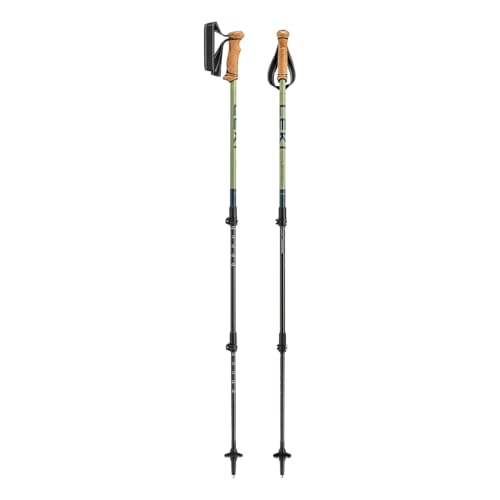 LEKI Legacy Lite 100-135cm Trekking Poles
|
8.6/10 | Buy | |
| Best Value |
 TREKOLOGY Trek-Z Collapsible Trekking Poles 100-120cm
|
8.2/10 | Buy | |
| Top Rated |
 WindQuester Strider X Carbon Fiber Trekking Poles
|
7.6/10 | Buy | |
 Foxelli Carbon Fiber Trekking Poles, 7.6 oz
|
7.4/10 | Buy | ||
 Hiker Hunger Outfitters Carbon Fiber Trekking Poles
|
7.2/10 | Buy | ||
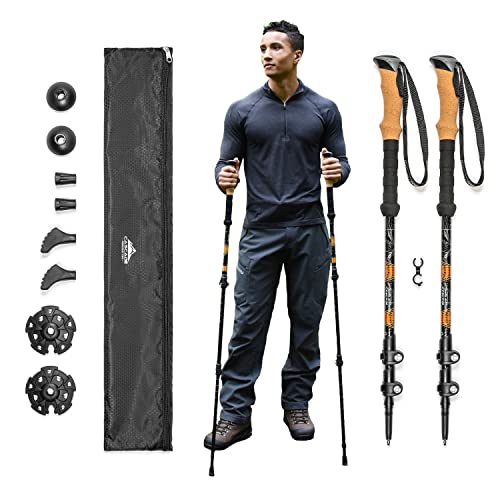 Cascade Mountain Tech Trekking Poles, 26-54 inch
|
7.1/10 | Buy | ||
 KINGGEAR 7075 Aluminum Trekking Poles, 25.5-54 Inches
|
6.8/10 | Buy | ||
 Hiker Hunger Outfitters Foldable Trekking Poles 100-120cm
|
2.1/10 | Buy | ||
 Primos Trigger Stick Gen3 33-65 inch Monopod
|
2.1/10 | Buy |
Black Diamond Alpine Carbon Cork Trekking Poles
Lightweight carbon fiber trekking poles with cork grips and FlickLock adjustment system, designed for backpacking and alpine terrain. All-season ready with swappable tips and baskets for varied conditions.
Pros
- Durable carbon fiber construction balances strength with minimal weight
- Cork grips provide genuine comfort and grip in wet or cold conditions
- Interchangeable baskets and tips handle multiple terrain types without swapping poles
- FlickLock system adjusts quickly and securely mid-hike
- Soft wrist straps reduce strain during long descents
Cons
- No verified buyer reviews available to assess real-world durability or fit consistency
- Premium price point positions these at the higher end of the market
- One-size-fits-all approach may not suit all user heights without maximum extension
LEKI Legacy Lite 100-135cm Trekking Poles
Lightweight aluminum trekking poles with adjustable length from 100-135cm and a compact pack size of 25.9 inches. The EVOCON Cor-Tec grip molds to your hand over time, making them practical for daily hikes and weekend backpacking trips.
Pros
- Lightweight design at 8.9oz makes them easy to carry on long trails
- Wide adjustable range (100-135cm) suits different user heights and terrain
- Speed Lock Plus allows compact packing to 25.9 inches
- Adaptive grip technology improves comfort with extended use
- Includes swappable baskets for different trail conditions
Cons
- No verified user reviews available to assess real-world durability and performance feedback
- Compact pack size comes at a modest weight increase, which may matter for ultralight backpacking
- Speed Lock Plus system adds complexity compared to simpler fixed-length poles
TREKOLOGY Trek-Z Collapsible Trekking Poles 100-120cm
Lightweight aluminum trekking poles with adjustable flip-lock system and EVA foam grips, designed for hikers of all ages and fitness levels. The tri-fold compact design (15 inches collapsed) suits backpacking and travel, though they come with no verified buyer feedback yet.
Pros
- Exceptionally lightweight at 10.4 oz, minimizing arm fatigue during all-day hikes
- Flip-lock adjustment system with 20cm range accommodates diverse heights and trail angles
- Compact 15-inch folded length fits checked luggage and backpack compartments easily
- EVA foam grips maintain grip quality in muddy, wet, or sweaty conditions
- Aircraft-grade aluminum handles rough terrain and steep inclines without flex
Cons
- No verified customer reviews available to assess real-world durability or performance consistency
- Not TSA-approved for carry-on luggage, requiring checked baggage for air travel
- Flip-lock system durability under repeated daily folding cycles not yet independently verified
WindQuester Strider X Carbon Fiber Trekking Poles
Lightweight carbon fiber trekking poles with adjustable telescopic design spanning 39 to 53 inches, suited for hikers of varying heights and terrain types. Features quick lock adjustment, ergonomic EVA grips, and all-terrain tips for stability on mixed surfaces.
Pros
- Lightweight carbon fiber design minimizes fatigue on long hikes
- Quick lock mechanism enables rapid length adjustments between terrain types
- Comprehensive tip and basket system handles dirt, rock, snow, and ice
- Breathable wrist straps and sweat-resistant grip materials
- Telescopic range accommodates a wide range of user heights
Cons
- No verified buyer reviews available to assess real-world durability claims
- Quick lock system durability and long-term reliability unconfirmed by user feedback
- Carbon fiber construction may require careful handling to prevent damage
Foxelli Carbon Fiber Trekking Poles, 7.6 oz
Ultralight carbon fiber poles weighing just 7.6 ounces per pole, designed for hikers who prioritize reducing fatigue over long distances. Features natural cork grips, flip-lock adjustments from 24 to 54 inches, and terrain-specific accessories including tungsten tips and interchangeable baskets.
Pros
- Exceptional weight-to-strength ratio makes extended hiking more comfortable
- Comprehensive grip system with cork, foam extensions, and padded straps reduces wrist strain
- Flip-locks engineered for reliability without unexpected collapse
- Versatile interchangeable baskets handle rocky, muddy, and snowy conditions
- Compact collapsed size and included carry case enable easy travel storage
Cons
- No verified buyer reviews available to assess real-world durability or long-term performance
- Replacement tips sold separately adds ongoing maintenance cost
- Natural cork grip may require periodic conditioning or cleaning with heavy use
Hiker Hunger Outfitters Carbon Fiber Trekking Poles
Lightweight carbon fiber construction at 7.6 oz per pole with adjustable flip locks and dual grip system for stability on varied terrain. Best suited for backpackers and day hikers prioritizing weight reduction without sacrificing durability.
Pros
- Exceptionally light at 7.6 oz encourages longer hikes with less fatigue
- Metal flip locks provide more secure locking compared to twist or folding alternatives
- Versatile length range accommodates women, men, and children
- Cork and foam dual grip system addresses comfort across different use cases
Cons
- No verified buyer reviews available to validate real-world durability claims
- Rating of 4.3 stars appears to lack review volume for confidence
- Carbon fiber construction may require care to avoid damage versus aluminum alternatives
Cascade Mountain Tech Trekking Poles, 26-54 inch
Aircraft-grade aluminum poles with quick-lock adjustment from 26 to 54 inches, designed for variable terrain with cork grip and extended EVA down grip. Comes with tungsten carbide tips and interchangeable baskets for different seasons, making them versatile for day hikes and multi-day treks.
Pros
- Expandable 26-54 inch range accommodates users of different heights and trail angles
- Cork grip with extended EVA down grip addresses comfort on both flat and steep sections
- Complete accessory kit with tungsten carbide tips, snow baskets, mud baskets, and covers included
- Lightweight at 0.63 pounds per pole making them practical for backpacking
- Durable aircraft-grade aluminum construction rated for all-weather use
Cons
- No verified buyer reviews available to confirm real-world durability and comfort claims
- Single size with one-size-fits-all approach may not optimize comfort for very tall or short users
- Quick-lock mechanism longevity under repeated adjustments not documented in available data
KINGGEAR 7075 Aluminum Trekking Poles, 25.5-54 Inches
Lightweight aviation-grade aluminum trekking poles with quick-flip adjustment, cork grip, and a full accessory kit for varied terrain. Backed by lifetime guarantee and trusted by over 400,000 hikers since 1999.
Pros
- Superior material composition, 7075 aluminum balances durability and weight better than typical alternatives
- Extensive accessory bundle covers multiple terrain types without separate purchases
- Ergonomic design with sweat-wicking cork and adjustable wristband minimizes slipping and chafing
- Wide height range accommodates users of different sizes and family hiking
- Lifetime guarantee provides long-term confidence in product durability
Cons
- No verified buyer reviews available yet to validate real-world durability claims
- Quick-flip lock mechanism longevity unconfirmed by independent user feedback
- Accessory compatibility and actual performance across different terrains not substantiated by customer experiences
Hiker Hunger Outfitters Foldable Trekking Poles 100-120cm
Aircraft aluminum trekking poles that collapse to 15 inches and weigh under 11 oz, making them ideal for backpackers prioritizing packability. Cork and EVA grips with metal locks provide secure adjustability across a 20cm range, suited for hikers 5'9" and shorter.
Pros
- Ultralight construction at 9.95-10.7 oz keeps pack weight minimal
- Compact 15-inch folded length fits easily into any backpack
- Aircraft-grade aluminum provides strength without added weight
- Metal flip locks and reinforced joints ensure durability on rough terrain
- 20cm adjustment range (100-120cm) accommodates most users in the specified height range
Cons
- No verified customer reviews available to assess real-world durability and performance feedback
- Fixed height range limits compatibility, requiring separate purchase for taller users (5'9" and above)
- Choice between Cork or EVA grips with extensions means personal preference fit cannot be tested before purchase
Primos Trigger Stick Gen3 33-65 inch Monopod
Adjustable monopod designed for hunters, extending from 33 to 65 inches with a lightweight build at 1.25 pounds. Offers shooting stability in a compact camo finish, though limited user reviews are currently available.
Pros
- Versatile height adjustment accommodates different shooting positions
- Lightweight construction minimizes fatigue during extended use
- Camo pattern blends into outdoor environments
Cons
- No verified buyer reviews available to assess real-world performance
- Limited information on stability or build quality durability
- Monopod design less stable than bipod alternatives for certain shooting scenarios
Trekking Poles Buying Guide
Picking the right trekking poles is less about chasing the most expensive option and more about matching the pole’s design to the way you actually hike.
The sections below walk through the criteria that matter most, so you can zero in on the pair that fits your needs, your terrain, and your budget.
If you are also putting together a broader kit for the trail, pairing great poles with a solid shelter setup matters just as much, and our guide to backpacking tents for every trail and budget is a natural next step.
Shaft Material: Aluminum vs. Carbon Fiber
The shaft material is the single most consequential choice you will make. Aluminum poles, typically made from aircraft-grade 6061 or stronger 7075 alloy, are highly durable and resistant to sudden impact.
If you plant a pole on a rock and put your weight on it sideways, aluminum will bend rather than snap, which gives you a chance to straighten it and keep hiking.
That resilience makes aluminum the practical choice for most recreational hikers, beginners, and anyone hiking rough, rocky terrain where a snap could leave you stranded.
Carbon fiber poles are significantly lighter, often shaving 30 to 50 percent of the weight compared to equivalent aluminum models. That difference is genuinely noticeable over a long day of hiking, especially when you are swinging the poles thousands of times.
The trade-off is brittleness: carbon can fracture suddenly under lateral stress, particularly in cold temperatures or when torqued at an angle.
Carbon makes the most sense for experienced hikers who prioritize speed and weight, and who know how to use poles correctly to minimize sideways loading.
The Black Diamond Alpine Carbon Cork and the LEKI Legacy Lite both represent the premium end of the carbon category on this list.
Locking Mechanism: Twist Lock vs. Flip Lock vs. Folding

How a pole adjusts and locks in place affects both usability and long-term reliability.
Twist locks (internal expander systems) were once the industry standard but have largely been displaced because they tend to slip under load as they wear out, especially in wet or muddy conditions.
Most modern poles have moved to external flip locks (also called lever locks or clip locks), which allow fast, tool-free adjustment and hold reliably even after heavy use.
You can also visually confirm that a flip lock is engaged, which reduces guesswork on the trail.
Folding poles, like the TREKOLOGY Trek-Z, use a different approach entirely. Instead of telescoping sections, they collapse via a pre-segmented cord system, folding into a compact bundle that fits inside or outside a pack.
They are faster to deploy and stow than telescoping poles and are popular with trail runners and backpackers who only want poles for certain sections.
The downside is that folding poles offer less adjustability in height, and the cord can wear over time with heavy use. For most general-purpose hikers, a quality flip-lock telescoping pole offers the best balance of adjustability and reliability.
Grip Material and Wrist Strap Design
Cork grips are the gold standard for most hikers. Cork naturally molds to the shape of your hand over time, wicks moisture away rather than absorbing it, and stays comfortable in a wide range of temperatures.
On a hot day, a cork grip will not become slippery with sweat the way foam or rubber can.
Both the Black Diamond Alpine Carbon Cork and the Hiker Hunger Outfitters carbon poles feature cork grips, which partly explains their strong scores among hikers who prioritize long-day comfort.
EVA foam grips are softer out of the box and work well in cold conditions because they provide some insulation.
They are common on mid-range poles and often appear as extended grip zones below the main handle, allowing you to choke down on the pole when traversing steep side slopes without re-adjusting the length.
Rubber grips hold up well mechanically but tend to cause hand fatigue and sweating on longer outings. The wrist strap matters too: look for straps that are padded, adjustable, and easy to release quickly in a fall.
Loose or poorly designed straps can become a safety hazard on technical terrain.
Adjustable Height Range and Packability
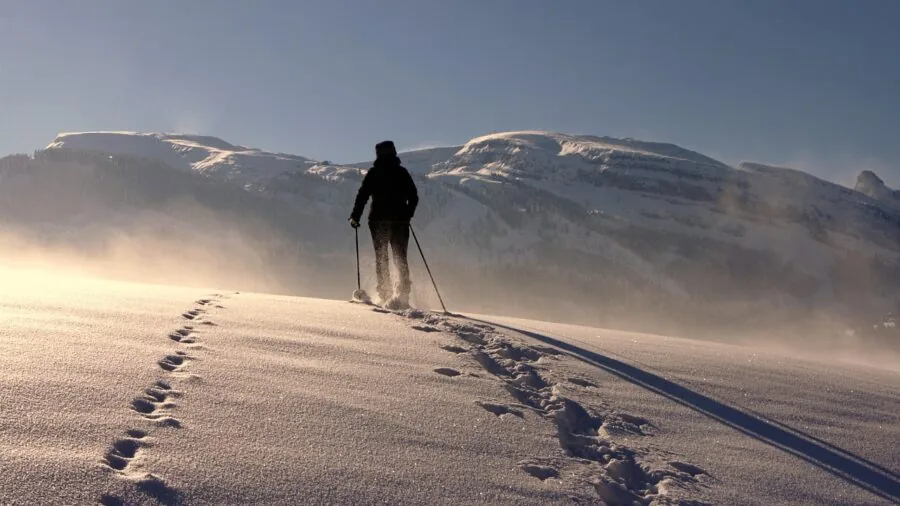
Proper pole length depends on your height and the terrain. On flat ground, your elbow should form roughly a 90-degree angle when the pole tip touches the ground. On uphills, shortening the poles a few centimeters gives you more push.
On descents, lengthening them adds stability. A good telescoping pole should cover at least a 25 to 30 cm adjustment range, and the Cascade Mountain Tech poles extend up to 54 inches, making them suitable for taller hikers.
Always confirm the maximum and minimum lengths fit your body before buying.
Packability matters most for travel and fastpacking. If you are flying to a trailhead, checking in poles as baggage or fitting them inside a duffel is far easier with a three-section folding pole than with a full-length telescoping pair.
The WindQuester Strider X and the TREKOLOGY Trek-Z both collapse to compact lengths suited for travel.
For car-camping trips or day hikes where you drive to the trailhead, packability is less critical, and a standard two-section or three-section telescoping pole will serve you well at a lower price.
Tip and Basket System

The tip of a trekking pole is the part that actually touches the ground, so its design has an outsized effect on traction and durability.
Carbide steel tips provide excellent grip on rock, hardpack, and ice, and they hold their point far longer than softer steel alternatives.
Most quality poles use replaceable carbide tips, which is worth confirming before you buy since tips do wear down with heavy use on hard surfaces.
Rubber tip protectors are useful for hiking on pavement or hardwood floors and also keep the tips from damaging gear when poles are packed away.
Baskets are the small disc-shaped pieces above the tip that prevent the pole from sinking too deeply into soft surfaces. Most poles come with small trekking baskets that work well on dirt trails and loose soil.
If you plan to use your poles in snow or deep mud, look for a pole that includes large powder baskets or sells them separately.
Broad baskets are essential for winter hiking; without them, the pole can sink past your wrist depth on every plant, wasting energy and reducing effectiveness.
Checking that your chosen pole supports interchangeable baskets is a small detail that pays off in versatility across seasons.
Value and Long-Term Cost of Ownership
The upfront price of a trekking pole tells only part of the story.
A budget aluminum pole that bends and cannot be straightened, or a cheap locking mechanism that slips on a steep descent, ends up costing more in frustration and replacement than a moderately priced pole that lasts for years.
The Cascade Mountain Tech pair represents the most accessible price point on this list and punches above its weight for casual hikers, while the KINGGEAR 7075 aluminum poles offer a step up in alloy quality at a still-affordable price.
At the premium end, the Black Diamond Alpine Carbon Cork and LEKI Legacy Lite command higher prices that are justified for frequent hikers by their lower weight, superior ergonomics, and proven durability over thousands of miles.
Think about how many days per year you realistically hike and what terrain you cover.
A serious hiker who logs 50-plus days annually will recoup the premium cost in comfort and longevity; an occasional hiker who goes out a few times a season is better served by a mid-range option.
Pairing your poles with the rest of a well-thought-out kit, including quality camping tents built for groups, makes every outing more enjoyable from start to finish.
Why You Should Trust Us
ProductFind is an independent review platform with no commercial relationship with any brand on this list. Every product you see here was selected, evaluated, and ranked without input from manufacturers, PR agencies, or advertising partners.
Our goal is straightforward: give you the clearest, most honest picture of how a product performs before you spend your money.
Each trekking pole in this guide was assigned a PF Score on our 0 to 10 scale using a consistent set of criteria applied equally across all models.
Those criteria include shaft material quality and construction, locking mechanism reliability, grip comfort, weight, adjustability range, basket and tip system, and overall value.
We do not conduct our own product trials; our evaluations are grounded in research, published data, expert review consensus, and verified buyer feedback.
Sources include manufacturer-published specifications, aggregated purchaser reviews from verified buyers, and commentary from outdoor gear professionals whose assessments appear in published editorial formats.
ProductFind may earn an affiliate commission when you purchase through links on this page. That relationship does not influence our rankings, scores, or editorial selections in any way.
Products are ranked by PF Score, not by commission rate or brand relationships. We include products with low PF Scores on this list precisely to give you a complete picture, even when that picture is unflattering to a product.
Final Thoughts
After evaluating every model in this category, a few standouts deserve a named designation based on their specific strengths and their position in our PF Score rankings. Here is how we would categorize the top performers for different kinds of hikers.
- Best Overall: BLACK DIAMOND Alpine Carbon Cork Trekking Poles earn the top spot with the highest PF Score on this list. Their combination of carbon fiber construction, genuine cork grips, and Black Diamond’s proven reputation among serious hikers makes them the most well-rounded poles we evaluated. They represent a premium investment that experienced hikers will justify on their first long outing.
- Best Mid-Range Value: LEKI Legacy Lite Trekking Poles earn a near-top PF Score and deliver a compelling mix of lightweight performance, dependable construction, and LEKI’s reputation for quality locking systems. For hikers who want most of the benefits of a premium pole without paying top-tier prices, these are the smart choice.
- Best for Beginners and Occasional Hikers: TREKOLOGY Trek-Z Collapsible Trekking Poles score highest in the budget-to-mid tier and stand out for their packability, ease of use, and comfort. They are an excellent entry point for seniors, casual day-hikers, and anyone trying trekking poles for the first time.
- Best Carbon Upgrade for Frequent Hikers: WindQuester Strider X Carbon Fiber Trekking Poles offer a strong PF Score in the upper-mid range and deliver genuine carbon fiber performance at a price well below the premium tier. Hikers who log regular miles and want the weight savings of carbon without the flagship price will find these a rewarding step up.
- Best Budget Aluminum Option: Cascade Mountain Tech Trekking Poles are the most accessible pick on the list in terms of price and deliver solid fundamental performance for casual use. If you are new to trekking poles or need a backup pair, these represent excellent value for infrequent outings.
Whatever your hiking style, the right trekking poles will pay for themselves in reduced fatigue and better trail confidence.
Use the PF Scores and buying guide above to match the right pair to your needs, and remember that even the best poles work best as part of a complete, well-considered kit for the outdoors.
Frequently Asked Questions
Do I really need trekking poles, or are they just an accessory?
For many hikers, poles go from optional to essential after the first long descent on tired legs.
Research published by outdoor medicine specialists consistently shows that trekking poles reduce compressive force on the knee joint during downhill hiking by a meaningful margin, which is significant for anyone with knee concerns or hiking multi-day trips.
They also improve balance on uneven terrain, make stream crossings safer, and can double as tent poles for ultralight shelters.
Casual day-hikers on gentle trails may not need them, but anyone tackling elevation gain, technical terrain, or multi-day routes will typically find them well worth carrying.
How do I set the correct pole height?
The standard starting point is to adjust the pole so that your elbow forms a 90-degree angle when you grip the handle and the tip touches flat ground beside your foot.
From that baseline, shorten the poles by about 5 to 10 cm when ascending steep terrain to get more upward push, and lengthen them by a similar amount when descending to extend your reach and take load off your knees.
Hikers who use an extended grip zone grip lower on the shaft on side-slopes instead of re-adjusting the locks, which saves time on traversing terrain. Most flip-lock poles have marked length gradations on the shaft to make repeatable adjustments easy.
Are carbon fiber poles worth the extra cost over aluminum?
For frequent hikers who prioritize weight savings and comfort over long miles, yes.
Carbon fiber poles can be noticeably lighter than comparable aluminum models, and that difference compounds over a full hiking day when you are planting poles thousands of times.
The meaningful trade-off is durability: carbon can fracture suddenly under lateral impact in ways that aluminum will not.
For hikers who go out several times a month and know how to use poles without torquing them sideways, carbon is a genuine upgrade.
For occasional hikers or anyone who is hard on gear, a quality aluminum pole like the Foxelli or Cascade Mountain Tech option delivers excellent performance at a fraction of the cost and with greater resilience.
What is the difference between a collapsible pole and a folding pole?
Collapsible (telescoping) poles use overlapping sections that slide and lock into each other, typically secured by flip locks or twist locks. They offer a wide range of height adjustment and are the most common type for general hiking.
Folding poles use pre-segmented sections held together by an internal bungee cord that folds accordion-style into a compact bundle.
Folding poles deploy and stow much faster and pack down smaller, making them popular with trail runners and fastpackers, but they typically offer less height adjustability and the cord system can wear over time.
The TREKOLOGY Trek-Z uses this folding system and excels for hikers who need compact packability above all else.
Can I use trekking poles in winter and on snow?
Yes, and many hikers find poles even more valuable in winter conditions. The key upgrade for snow use is switching to larger powder or snow baskets, which prevent the tip from sinking too deeply into soft snow.
Most poles on this list support interchangeable baskets, so confirm compatibility before buying if winter hiking is part of your plans. In icy conditions, the carbide steel tips on quality poles provide meaningful grip on hardpack and ice.
Note that carbon fiber can become more brittle in very cold temperatures, so some winter hikers prefer aluminum poles for reliability in sub-freezing conditions.
A four-season tent and layered clothing round out a winter hiking setup alongside a capable pair of poles.
How do I maintain and extend the life of my trekking poles?
After each outing, rinse off mud and grit with fresh water, paying particular attention to the locking mechanisms and the sections that telescope inside each other. Grit left in the mechanism accelerates wear and can cause slippage.
Allow the poles to dry fully before storing them, as trapped moisture can cause corrosion in aluminum poles and weaken bonding in carbon sections over time.
Inspect the tips periodically and replace them when the carbide point wears down, since a blunt tip significantly reduces traction.
Flip locks can be cleaned with a damp cloth; if they start to slip, the locking screw can usually be tightened slightly. Replace worn straps and baskets as needed, as most manufacturers sell spare parts at reasonable cost.
About the author
Vernon is a reviewer and writer for ProductFind who specializes in Camping & Hiking. Vernon evaluates products through independent research: specifications, expert review consensus, and verified buyer feedback, and rates each one on the PF Score. Vernon focuses on helping readers pick the right camping & hiking for their needs and budget.