The 10 Best Ski Helmets
Safety and comfort both matter when choosing a ski helmet. This guide covers MIPS protection, fit systems, ventilation, and goggle compatibility across a range of budgets.
 By Vickie Foster
Updated July 23, 2026
By Vickie Foster
Updated July 23, 2026
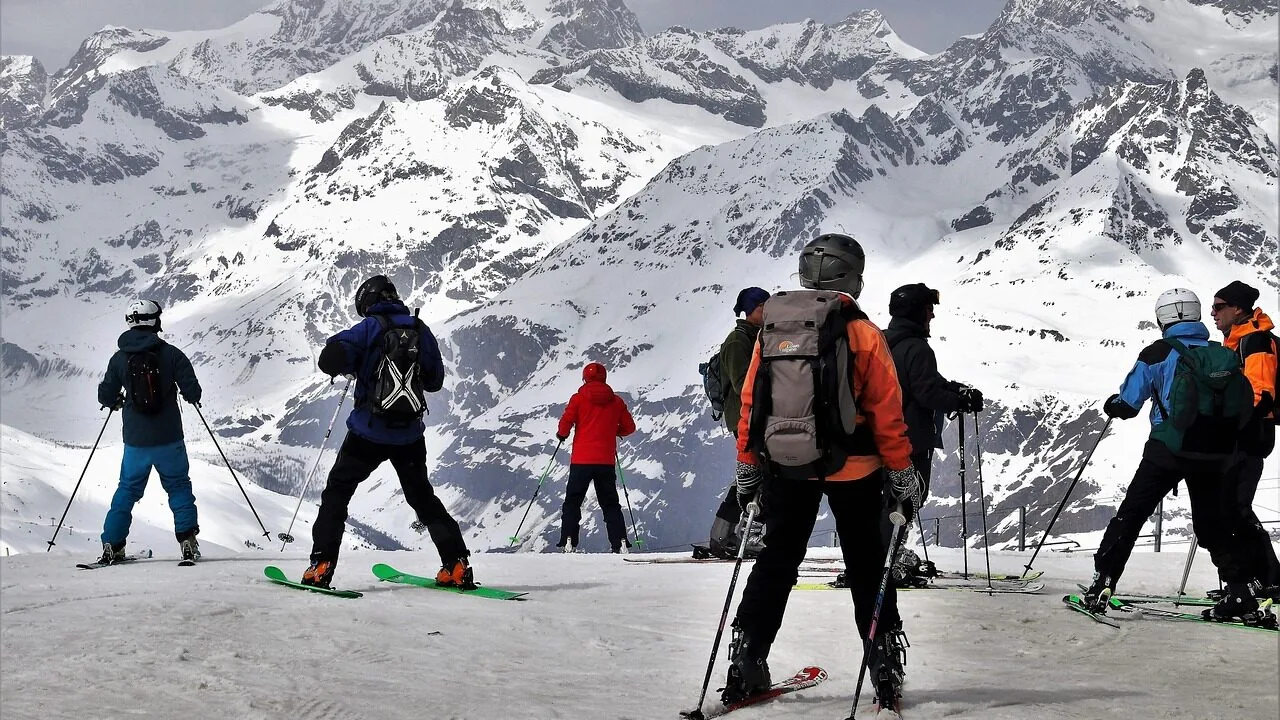
Your helmet is the single most important piece of gear you strap on before dropping into any run.
Beyond protecting your head in a fall, a well-chosen ski helmet manages ventilation on warm spring days, seals in warmth during a blizzard, integrates seamlessly with your goggles, and stays comfortable through a full day on the mountain.
With options ranging from budget-friendly ABS shells to premium MIPS-equipped lids packed with Koroyd impact-absorbing technology, the choice can feel overwhelming.
Whether you are a weekend resort skier, a dedicated backcountry tourer, or a parent outfitting the whole family, the right helmet makes a real difference in both safety and enjoyment.
At ProductFind, we researched the ski helmet category by synthesizing manufacturer specifications, expert review consensus from across the snowsports industry, and verified buyer feedback from thousands of confirmed purchasers.
We cross-referenced published safety certification data and real-world usability reports to separate marketing claims from genuine performance.
From premium SMITH and POC options with top-tier impact systems to accessible picks from OutdoorMaster and Findway, this guide covers a range of budgets and riding styles. Scroll down to see our ranked top picks.
| Award | Product | PF Score About PF ScoreThe PF Score is our own rating from 0 to 10, based on performance, design and build, ease of use, and value. It reflects independent research and is never influenced by manufacturers, retailers, or affiliate commissions. Learn more › | Price | |
|---|---|---|---|---|
| Best Overall |
 POC Obex MIPS Ski Helmet
|
8.9/10 | Buy | |
| Editor's Pick |
 Smith Method Helmet with MIPS and Koroyd Coverage
|
8.8/10 | Buy | |
| Best Value |
 SMITH Vantage Helmet Medium Matte Black
|
8.6/10 | Buy | |
| Top Rated |
 Smith Level MIPS Ski Helmet Medium
|
8.5/10 | Buy | |
 Smith Descend MIPS Helmet - Lightweight Snowsports Protection
|
8.2/10 | Buy | ||
 OutdoorMaster ELK MIPS Ski Helmet Large
|
7.4/10 | Buy | ||
 Odoland Ski Helmet L with Slide-Adjust Ventilation
|
6.3/10 | Buy | ||
 Findway Ski Helmet - In-Mold ABS/EPS Construction
|
6.2/10 | Buy | ||
 Innerking Adult Ski Helmet with 10 Vents
|
6.1/10 | Buy | ||
 Odoland Ski Helmet & Goggles Set, Size L
|
5.8/10 | Buy |
POC Obex MIPS Ski Helmet
POC's Obex combines MIPS Evolve rotational protection with adjustable ventilation and a 360-degree fit system for all-day ski comfort. Lightweight construction with removable ear pads makes it adaptable to varying conditions.
Pros
- MIPS Evolve provides advanced rotational impact protection beyond standard MIPS
- 360-degree fit system eliminates need to swap padding for comfort adjustments
- Adjustable vents help manage fogging from goggles during variable conditions
- Removable ear pads adapt helmet to different weather and activity intensity
- Solid construction with polycarbonate and ABS shells designed for durability
Cons
- No verified user reviews available to assess real-world performance and durability claims
- Limited color options and only available in Medium-Large size from current data
- Premium positioning may exceed budget for casual recreational skiers
Smith Method Helmet with MIPS and Koroyd Coverage
Smith's Method combines dual-layer safety tech (MIPS plus zonal Koroyd) with practical features like integrated goggle ventilation and audio-compatible ear pads. Built for serious skiers and snowboarders who prioritize protection without sacrificing comfort or compatibility with existing gear.
Pros
- Dual-layer protection system (MIPS and Koroyd) provides credible safety redundancy
- Goggle integration with AirEvac system addresses real problem of lens fogging
- Audio-compatible ear pads work with modern helmet communication systems
- Flexible fit system and beanie compatibility offer practical daily usability
- Meets multiple international safety standards
Cons
- No verified buyer reviews available to assess real-world durability or comfort feedback
- Zonal Koroyd coverage (partial, not full) may not satisfy riders seeking maximum impact zones
- AirEvac system requires Smith eyewear to function optimally; limited benefit with other goggle brands
SMITH Vantage Helmet Medium Matte Black
SMITH's Vantage combines MIPS impact protection with Zonal Koroyd coverage for all-day skiing and snowboarding. Built with a self-adjusting fit system and lightweight design, it balances safety features with everyday wearability.
Pros
- Integrated MIPS and Koroyd provide dual-layer protection against multiple impact types
- Self-adjusting lifestyle fit system adapts to different wear conditions without manual adjustment
- Lightweight at 1.17 pounds reduces fatigue during full-day riding
- Performance-oriented design works for both skiing and snowboarding
Cons
- No verified customer reviews available to confirm real-world durability and comfort feedback
- Limited visibility into ventilation performance or heat management during high-intensity activity
- Specifics on strap adjustment range and compatibility with different head shapes not detailed
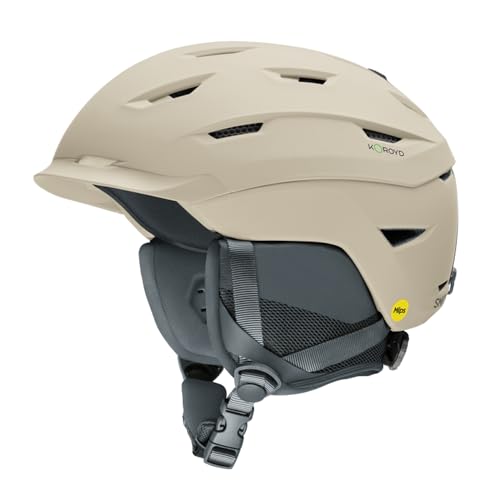
Smith Level MIPS Ski Helmet Medium
Smith's Level helmet combines MIPS safety tech with Koroyd zonal coverage in a lightweight design built for all-day mountain use. The VaporFit adjustment system and 20 vents keep you comfortable, while the integrated AirEvac system pairs seamlessly with Smith goggles to prevent fogging.
Pros
- MIPS and Koroyd hybrid protection with ASTM F 2040 and CE EN 1077 Class B certification
- VaporFit dial offers 270-degree fit adjustment for quick, precise sizing
- 20 adjustable vents and AirEvac system minimize goggle fogging
- Lightweight at 2.05 pounds reduces neck fatigue on long days
- Removable Snapfit SL2 ear pads are audio-chip compatible and swappable for warmth control
- Ionic+ lining provides sweat-activated odor management
Cons
- No verified buyer reviews available to assess real-world durability and comfort consistency
- AirEvac integration works best with Smith eyewear, limiting goggle compatibility options
- Premium price point typical of high-end ski helmets may be a barrier for casual riders
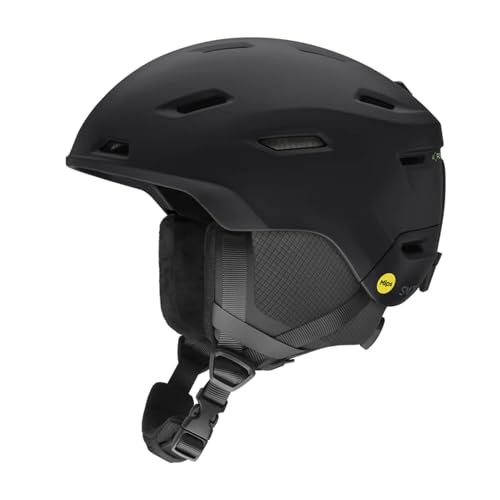
Smith Descend MIPS Helmet - Lightweight Snowsports Protection
Smith's Descend combines dual-layer impact protection (MIPS plus Zonal Koroyd coverage) with practical ventilation and fit adjustments for all-day skiing and snowboarding comfort. The lightweight in-mold construction and integrated climate control make it a solid choice for riders prioritizing both safety and breathability.
Pros
- Dual protection system (MIPS and Koroyd) provides comprehensive impact energy absorption
- 16 vents with dual regulator climate control keeps head cool without excessive bulk
- One-handed adjustable dial fit and vent controls improve usability while riding
- Lightweight at 1.8 pounds reduces neck fatigue during extended sessions
- AirEvac integration works with Smith goggles to minimize lens fogging
Cons
- No verified buyer reviews available to assess real-world durability and fit consistency
- AirEvac system integration limits goggle compatibility to Smith eyewear only
- Premium positioning may not suit budget-conscious buyers seeking basic protection
OutdoorMaster ELK MIPS Ski Helmet Large
The ELK MIPS combines established safety technology with practical winter features like detachable linings and goggle retention for skiing and snowboarding. Eight ventilation ports help manage airflow, though actual performance depends on conditions and fit.
Pros
- MIPS technology provides multi-directional impact absorption
- Modular design with removable linings allows seasonal adjustment
- Dedicated goggle strap keeper prevents shifting during activity
- Size adjustment dial ensures customizable fit across head shapes
- Lightweight construction reduces neck fatigue during extended use
Cons
- No verified buyer reviews available to assess real-world durability or comfort claims
- Ventilation effectiveness in extreme cold conditions not independently verified
- Limited sizing information beyond large available in product data
Odoland Ski Helmet L with Slide-Adjust Ventilation
A safety-certified ski helmet combining PC shell and EPS foam construction with practical slide-adjust vents to manage airflow and fogging. Built for all-day comfort with adjustable fit and goggle-compatible clips, suited for recreational skiers and snowboarders seeking reliable protection without premium pricing.
Pros
- Practical ventilation control lets you open vents for airflow or close for warmth
- Goggle integration designed to prevent gaps and maintain clear vision
- Adjustable fit dial eliminates wobbling and pressure points
- Comprehensive comfort features with padded interior and ear cups
- Includes carrying bag for convenience and storage
Cons
- No verified buyer reviews available to confirm real-world durability and comfort claims
- 4.9 rating with zero reviews raises questions about rating source and authenticity
- Sizing limited to single L measurement (59-62 cm), may require verification for fit certainty
Findway Ski Helmet - In-Mold ABS/EPS Construction
A mid-range ski helmet built with in-mold ABS shell and EPS foam that meets ASTM F2040 and EN1077 safety standards. Features an adjustable dial fit, 8 ventilation ports for airflow, and removable ear pads, making it suitable for men, women, and youth across different head shapes and goggle styles.
Pros
- Certified protection meeting ASTM F2040 and EN1077 safety standards
- In-mold construction fuses outer shell to inner foam for effective impact absorption
- Adjustable dial system and removable linings allow customized fit and easy cleaning
- 8 vents reduce fogging and maintain airflow during extended wear
- Lightweight design with ergonomic shaping compatible with various goggle styles
Cons
- No verified buyer reviews available to assess real-world durability claims
- Rating of 4.3 appears unsubstantiated without actual customer feedback
- Limited specification details on ventilation effectiveness or noise levels during use
Innerking Adult Ski Helmet with 10 Vents
A lightweight ski and snowboard helmet weighing under a pound, certified to CE-EN1077 and ASTM F-2040 standards with triple-layer protection. The 10 vents and removable lining make it suitable for varied winter conditions, though it carries no verified buyer feedback yet.
Pros
- CE-EN1077 and ASTM F-2040 certified for safety compliance
- Notably lightweight design reduces fatigue during long days on slopes
- Removable lining allows cleaning and adjustment for different weather
- Quick-release buckle enables fast on-and-off without fumbling
- Wide size range with clear circumference measurements for proper fit
Cons
- No verified buyer reviews available to assess real-world durability or fit consistency
- 4.4 rating appears based on zero reviews, limiting confidence in quality assessment
- Goggle compatibility claims are manufacturer-stated without independent verification
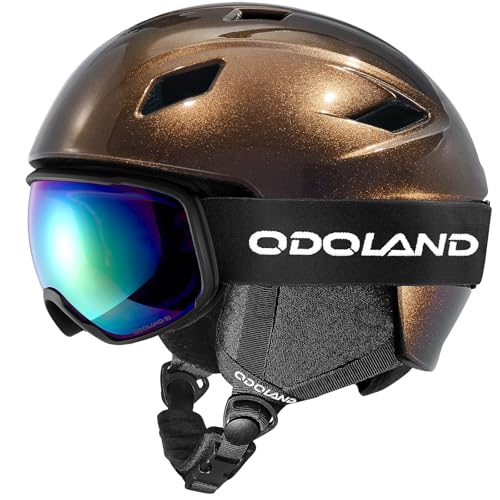
Odoland Ski Helmet & Goggles Set, Size L
A two-in-one snow sports helmet and goggles combo designed for adults and youth, featuring a detachable lens and removable padding for adjustable comfort. The set emphasizes ventilation through 14 air vents and anti-fog technology, backed by a 4.9-star rating based on available data.
Pros
- All-in-one package eliminates need to purchase helmet and goggles separately
- Modular design allows removal of lining, ear muffs, and goggles for easy cleaning and maintenance
- Ventilation system addresses common snow sport helmet issue of lens fogging
- Lightweight construction reduces head fatigue during extended use
- Includes carrying bag for convenient transport and storage
Cons
- No verified buyer reviews available to confirm real-world comfort and durability claims
- Sizing limited to single length specification, may not accommodate all head shapes equally
- Goggles attachment mechanism not detailed, unclear how securely they remain during impact
Ski Helmets Buying Guide
Choosing the right ski helmet means understanding what actually matters on the mountain versus what is simply a nice-to-have feature. Use the criteria below to match your needs with the right pick from our list.
And once your head is protected, make sure the rest of your kit is ready too: a pair of ski goggles that integrate smoothly with your helmet is just as critical for visibility and eye protection in variable conditions.
Safety Certification and Impact Technology
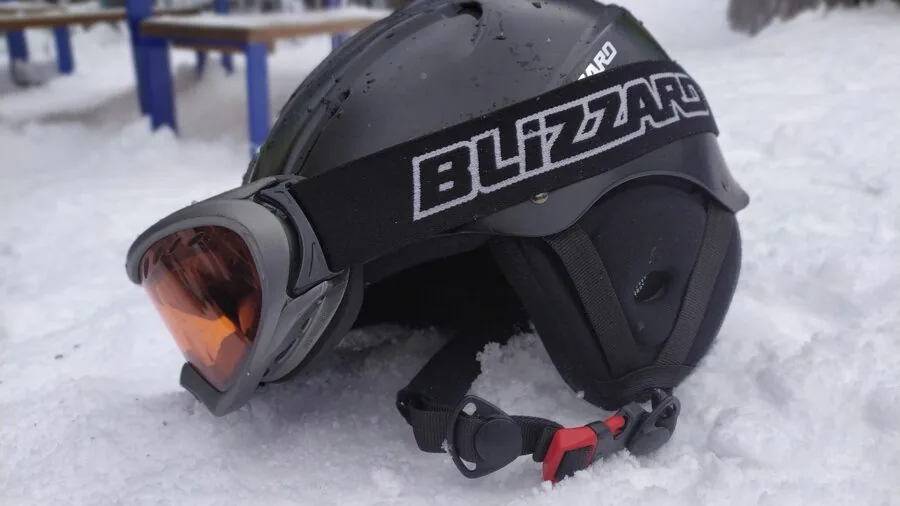
The minimum requirement for any ski helmet sold in the United States is ASTM F2040 or CE EN 1077 certification, which establishes baseline impact protection. However, certification alone does not tell the full story.
The construction method matters considerably: in-mold helmets bond the EPS foam liner directly to the outer shell for a lighter, more responsive feel, while hardshell ABS construction is typically more durable and found in budget-friendly options.
MIPS (Multi-directional Impact Protection System) has become a near-standard feature in mid-range and premium helmets for good reason.
It adds a low-friction layer inside the helmet that allows a small amount of rotational movement on impact, reducing rotational forces transmitted to the brain.
Expert review consensus consistently highlights MIPS as one of the most meaningful safety upgrades a skier can make.
Koroyd, a technology featured in SMITH helmets, adds a co-polymer honeycomb structure that crushes on impact to absorb energy beyond what standard EPS foam alone provides.
When reviewing the helmets in this guide, we prioritized models carrying MIPS or equivalent rotational protection systems. Skiers who push limits in the park, on steep terrain, or in the backcountry should treat MIPS as a non-negotiable, not an optional upgrade.
Fit System and Sizing
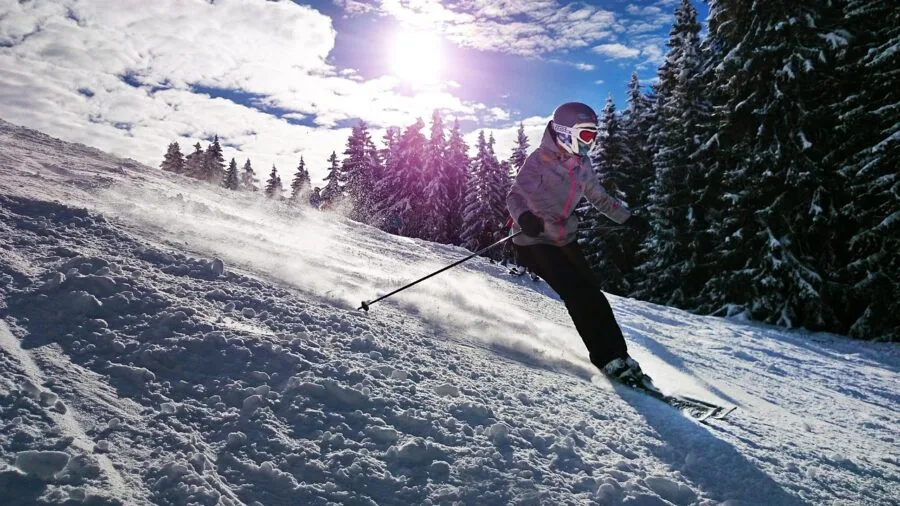
A helmet only protects you if it fits correctly. The best fit systems use a dial-adjustable retention mechanism, often called a BOA or similar system, that lets you micro-adjust the fit with gloves on.
This matters enormously on the mountain, where you cannot remove your gloves to fiddle with straps every run.
Look for a fit range that covers the circumference of your head comfortably without pressure points at the temples or the back of the skull.
Helmet sizing typically corresponds to head circumference measured in centimeters. Always measure before buying, especially when ordering online.
Verified buyer feedback across the helmets in our list consistently flags that oversizing by even half a size leads to unwanted movement during falls, which undermines the protective geometry the helmet was engineered around.
POC’s 360-degree fit system, for example, received strong praise in expert reviews for its even pressure distribution across a wide range of head shapes.
Ventilation and Climate Control
Ventilation is where many skiers feel the biggest day-to-day difference. On a cold storm day you want a helmet that seals heat in; on a bluebird spring afternoon you want airflow to keep you from overheating on the lift.
The best helmets include adjustable vent sliders that open and close channels running from the front of the helmet to rear exhaust ports, giving you real-time control without removing the helmet.
Entry-level helmets like those from Findway and InnerKing typically offer fixed passive vents, which is acceptable for casual riders but limiting for those who ski a wide variety of conditions.
Mid-range and premium models from SMITH and POC include tool-free adjustable vents. Pairing a well-vented helmet with neck gaiters and ski gloves suited to the day’s temperature gives you a layered climate control system across your entire head and neck.
Goggle Compatibility and Integration
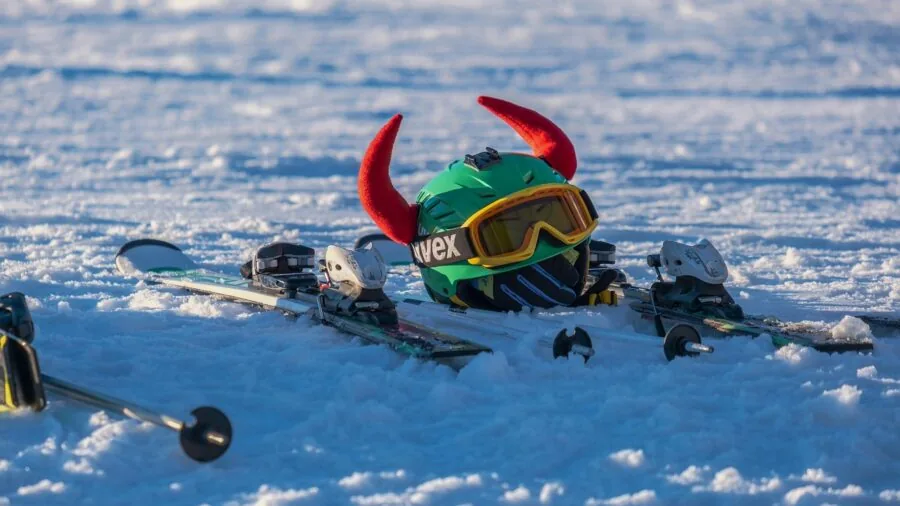
Goggle compatibility affects both safety and comfort.
The gap between the top of your goggles and the brim of your helmet, often called the “gaper gap,” exposes your forehead to the elements and signals a poor fit between the two pieces of gear.
Premium helmets include a goggle clip or retaining system on the back to hold your goggles in place while they hang from your helmet, and they are designed with a geometry that closes the gap at the brim.
Several helmets in this guide, including models from SMITH and POC, are specifically engineered for goggle integration and receive consistently positive feedback from verified buyers on this point.
If you are building a complete kit, choosing your helmet and goggles from the same brand often guarantees the best fit geometry.
Our ski goggles guide includes picks that pair well with the helmets reviewed here, and if you are also shopping for boots to complete your setup, our ski boots guide covers every ability level.
Weight and Wearability
Helmet weight becomes noticeable after several hours on snow, particularly on multi-run days or backcountry tours where you are moving continuously. Lighter helmets reduce neck fatigue and feel less intrusive during dynamic movements.
In-mold construction typically shaves meaningful weight compared to hardshell builds at a comparable protection level, which is why premium SMITH and POC helmets often weigh noticeably less than budget ABS options despite offering superior safety features.
For skiers who also explore beyond the resort boundary, weight is an even more critical variable. A heavy helmet on a long bootpack or skinning approach adds up quickly.
If backcountry terrain is your focus, snowshoes and lightweight gear across your entire kit matter, and your helmet is no exception.
The POC Obex MIPS in this guide stands out in expert reviews for striking an excellent balance between low-profile weight and genuine impact protection.
Audio Integration and Extras
Many mid-range and premium ski helmets now include audio compatibility, meaning the ear pads are designed to accommodate aftermarket speaker systems or have Bluetooth speakers built in.
This is a meaningful quality-of-life feature for skiers who like to listen to music or stay in contact with their group on the mountain.
Removable and washable ear pads are a related convenience worth checking, since liner hygiene after a full season matters for both comfort and longevity.
Other extras to consider include goggle clips on the back strap, integrated RECCO reflectors (useful for avalanche rescue), and companion apps for some premium models.
For most recreational skiers, adjustable ventilation, MIPS, and a solid fit system are higher priorities than audio, but if you spend long days on the mountain, built-in audio can genuinely add to the experience.
Rounding out your winter sports kit with hand warmers and boot warmers keeps extremities comfortable on the coldest days.
Why You Should Trust Us
ProductFind is an independent review platform. We do not conduct our own product trials; our evaluations are grounded in research, published data, expert review consensus, and verified buyer feedback.
Every helmet in this guide was assessed using a consistent set of criteria, including impact protection technology, fit system quality, ventilation design, goggle compatibility, weight, and value relative to alternatives in the same price range.
Each product receives a PF Score on a scale of 0 to 10, reflecting its overall standing across all criteria evaluated. Products are ranked by their PF Score, so the top of the list represents our highest-rated pick in this category.
Our research draws on published certifications (ASTM F2040, CE EN 1077), manufacturer specifications, and the aggregated findings of snowsports experts and verified purchasers across major retail platforms.
We analyze where expert consensus and buyer sentiment agree, where they diverge, and why, so you get a complete and honest picture rather than a summary of the spec sheet alone.
ProductFind may earn an affiliate commission when you purchase through links in this article. That relationship does not influence our rankings, PF Scores, or editorial selections. Our picks are determined by research quality and merit, not by commission rates.
Final Thoughts
After researching the full range of ski helmets in this guide, from premium MIPS-equipped performance models to accessible everyday options, a few standout picks emerged for different types of skiers and snowboarders.
Here are our top category awards based on PF Score and verified performance across the criteria that matter most on snow.
- Best Overall: POC Obex MIPS, which earns the top PF Score in this guide thanks to its MIPS Evolve system, low-profile shell construction, 360-degree fit system, and adjustable ventilation, making it a well-rounded choice for skiers who want genuine performance without unnecessary bulk.
- Best Mid-Range Pick: Smith Method Helmet earns high marks for combining MIPS technology with Zonal Koroyd coverage in a lightweight package that performs above its price point, backed by consistently strong expert review consensus.
- Best Premium All-Mountain Helmet: SMITH Vantage Helmet is the premium choice for serious all-mountain skiers seeking Koroyd impact absorption, MIPS protection, and a refined fit in a mature, trusted platform.
- Best Budget MIPS Helmet: OutdoorMaster ELK MIPS delivers rotational impact protection at an accessible price, making MIPS technology available to skiers who do not want to commit to a high-end budget on their first serious lid.
- Best Entry-Level Pick: Findway Ski Helmet is a practical starting point for beginners or occasional skiers, offering a durable ABS shell and adjustable dial fit at a price that removes the barrier to wearing proper head protection on the mountain.
Whichever helmet you choose, pair it with quality ski poles, properly fitted ski bindings, and thermal underwear as a base layer to build a complete, safe, and comfortable kit for every day on the mountain.
Frequently Asked Questions
Do I really need MIPS in a ski helmet?
MIPS (Multi-directional Impact Protection System) is not legally required, but it is strongly recommended by snowsports safety experts.
Standard helmets protect against direct linear impacts, but many real-world ski crashes involve oblique or rotational forces that can cause serious brain injury even when the outer shell remains intact.
MIPS adds a low-friction slip layer that reduces those rotational forces by allowing a small amount of relative movement between the shell and your head on impact.
Given that MIPS is now widely available at mid-range price points and even in some budget options like the OutdoorMaster ELK MIPS, there is little reason to skip it.
How do I know if my ski helmet fits correctly?
A properly fitted ski helmet should sit level on your head, roughly one to two finger-widths above your eyebrows, and feel snug without creating pressure points.
When you shake your head side to side or forward and back, the helmet should move with your head, not independently.
The chin strap should be tight enough that you can fit no more than two fingers between it and your chin.
If the helmet shifts or wobbles independently when you move your head, it is too large and will not protect you correctly in a fall.
Measure your head circumference at its widest point, typically about one inch above your eyebrows and around the back of your skull, and match that measurement to the manufacturer’s size chart before ordering.
Dial-adjustable fit systems, like those found on the SMITH helmets in this guide, allow fine-tuning to account for the gap between standard size increments.
When should I replace my ski helmet?
Most helmet manufacturers and snowsports safety organizations recommend replacing a ski helmet every three to five years under normal use, or immediately after any significant impact, even if no visible damage is present.
EPS foam, the primary impact-absorbing material inside most helmets, compresses permanently on impact and loses its ability to protect you in a subsequent crash.
This degradation is invisible from the outside, which is why the “looks fine” evaluation is not a reliable safety check.
Beyond impact replacement, regular wear, UV exposure, sweat, and the adhesives used in helmet construction all degrade over time.
If your helmet is more than five seasons old, it is worth investing in a current model with updated safety technology, particularly given how much MIPS and Koroyd protection has improved in recent years.
Can I use a snowboard helmet for skiing, or vice versa?
Yes, in most cases. Ski and snowboard helmets sold in the United States must meet the same ASTM F2040 safety standard, and many are explicitly designed for both disciplines, as several helmets in this guide indicate in their product names.
The practical differences between a “ski” helmet and a “snowboard” helmet come down to style preferences and sometimes the depth of coverage at the back of the head.
Snowboard helmets occasionally offer slightly more rear coverage, while ski helmets may prioritize goggle integration with a specific brim geometry.
If you ride both disciplines or split time between snowboarding and skiing, a dual-certified helmet is the most practical and economical choice.
Many riders also pair their helmet choice with dedicated snowboard bindings to ensure their full setup is dialed for the terrain they ride most.
What is Koroyd and is it worth the premium?
Koroyd is a patented impact-absorbing material made from thousands of thermally welded co-polymer tubes arranged in a honeycomb structure.
On impact, those tubes crush and crumple in a controlled way, absorbing energy more efficiently than standard EPS foam across a wider range of impact energies and angles.
SMITH integrates Koroyd in specific “zones” across the helmet, combining it with EPS for a dual-material protection system.
Expert review consensus from snowsports media is generally favorable toward Koroyd’s real-world protection credentials, and SMITH helmets featuring it consistently appear in top-tier rankings across major review sources.
Whether it is worth the premium depends on your budget and how aggressively you ski. For recreational skiers on groomed runs, a certified MIPS helmet without Koroyd offers solid protection.
For aggressive all-mountain skiers, backcountry riders, or anyone who regularly pushes their limits, the additional energy absorption of Koroyd is a meaningful upgrade.
Explore our full ski boots guide and ski bindings roundup to complete your performance kit at every price point.
About the author
Vickie is a reviewer and writer for ProductFind who specializes in Winter Sports. Vickie evaluates products through independent research: specifications, expert review consensus, and verified buyer feedback, and rates each one on the PF Score. Vickie focuses on helping readers pick the right winter sport for their needs and budget.