The 12 Best Power Supplies
Wattage is just the starting point. Efficiency tier, connector standards, and capacitor quality determine how well a power supply protects your components over time. Here are twelve well-researched picks.
 By Megan Daniels
Updated July 23, 2026
By Megan Daniels
Updated July 23, 2026
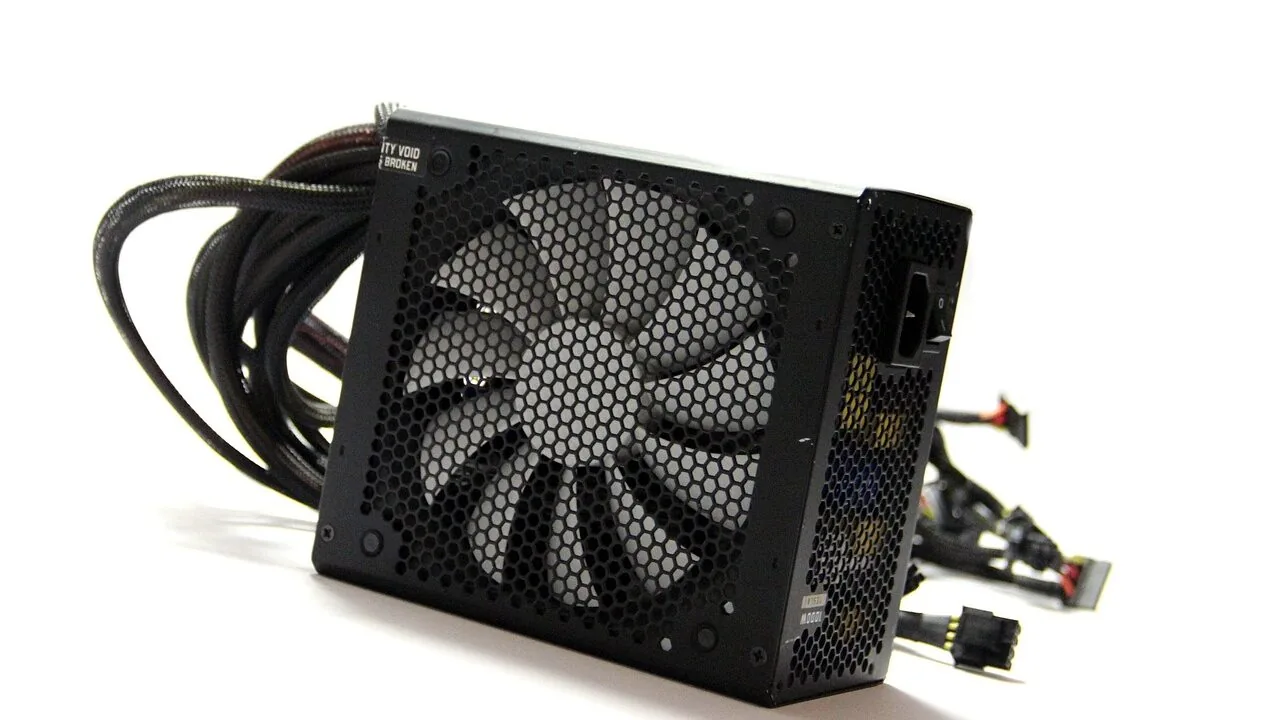
Your power supply is the single component every other part of your PC depends on, yet it remains one of the most overlooked purchase decisions in any build.
A cheap or undersized unit can deliver unstable voltages, throttle your GPU under load, or fail outright and take expensive components down with it.
Choosing a quality PSU means choosing reliability, efficiency, and long-term peace of mind for everything from a mid-range gaming rig to a high-end workstation pushing next-generation graphics cards.
This guide covers twelve power supplies across a wide wattage range and price spectrum, from an accessible 600W option for straightforward builds to flagship 1000W Platinum units with GaN MOSFET technology and intelligent voltage stabilization.
ProductFind evaluates each model through comprehensive research: manufacturer specifications, expert review consensus from the enthusiast community, verified buyer feedback, and publicly available efficiency and ripple data from sources such as Cybenetics and Aris MPE.
Whether you are outfitting a budget build, a compact system, or a premium gaming PC, the ranked picks below are a strong starting point for pairing with a solid PC case and capable cooling.
| Award | Product | PF Score About PF ScoreThe PF Score is our own rating from 0 to 10, based on performance, design and build, ease of use, and value. It reflects independent research and is never influenced by manufacturers, retailers, or affiliate commissions. Learn more › | Price | |
|---|---|---|---|---|
| Best Overall |
 ASUS ROG Strix 1000W Platinum Modular PSU
|
9.3/10 | Buy | |
| Editor's Pick |
 MSI MAG A750GL 750W Fully Modular Power Supply
|
9.1/10 | Buy | |
| Best Value |
 Corsair RM1000x 1000W Modular Power Supply
|
9.0/10 | Buy | |
| Top Rated |
 Corsair RM750e 750W Fully Modular PSU
|
8.7/10 | Buy | |
 be quiet! Pure Power 13 M 750W Gold PSU
|
8.6/10 | Buy | ||
 ASUS TUF Gaming 1000W Gold Power Supply
|
8.5/10 | Buy | ||
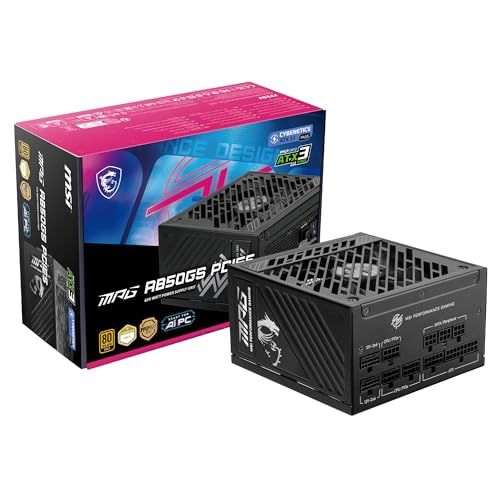 MSI MPG A850GS PCIe 5 850W Gold PSU
|
8.4/10 | Buy | ||
 be quiet! Power Zone 2 1000W ATX 3.1 PSU
|
8.3/10 | Buy | ||
 Lian Li EDGE1000W Fully Modular ATX 3.1 Power Supply
|
8.2/10 | Buy | ||
 Rosewill VMG 750W 80+ Gold Modular PSU
|
7.9/10 | Buy | ||
 Montech Century II 850W Gold Power Supply
|
7.8/10 | Buy | ||
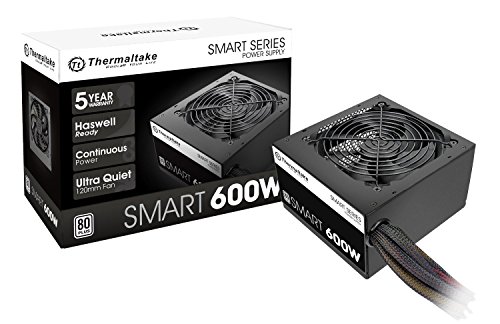 Thermaltake Smart 600W 80 Plus Power Supply
|
6.5/10 | Buy |
ASUS ROG Strix 1000W Platinum Modular PSU
A premium 1000W power supply built for high-end gaming and workstation builds, featuring GaN MOSFET technology for efficiency and ASUS's GPU-First voltage stabilization for enhanced graphics card performance. Fully modular design with dual ball bearing fan and 10-year warranty appeal to enthusiasts seeking reliability.
Pros
- GaN MOSFET technology delivers up to 30% superior power efficiency with cooler internal operation
- GPU-First intelligent voltage stabilizer enhances voltage delivery to graphics cards by up to 45%
- Fully modular cables reduce clutter and improve airflow in case builds
- Dual ball bearing fan rated to last twice as long as traditional sleeve bearing designs
- 0dB fan mode enables silent operation during light gaming loads
- 80 Plus Platinum and Cybenetics Lambda A+ certifications confirm high efficiency ratings
Cons
- No customer reviews available yet to verify real-world performance and reliability claims
- Premium positioning likely carries significant price premium over standard 1000W alternatives
- GaN MOSFET and advanced voltage sensing add complexity that may not benefit all build types equally
MSI MAG A750GL 750W Fully Modular Power Supply
MSI's 750W fully modular unit targets gamers upgrading to PCIe 5.1 graphics cards and ATX 3.1 systems. It combines 80+ Gold efficiency with a decade-long warranty and compact dimensions, though zero verified buyer feedback limits real-world validation.
Pros
- Future-proofed for ATX 3.1 and PCIe 5.1 standards with native dual-color 12V-2x6 cable support
- Fully modular design enables cleaner cable management compared to semi-modular units
- 80+ Gold certification balances efficiency and cost-effectiveness for gaming builds
- Compact dimensions fit well in smaller or mid-tower cases
- Industry-leading 10-year warranty provides long-term confidence
Cons
- No verified buyer reviews available, making it difficult to assess real-world reliability and noise levels
- 750W capacity may be tight for extreme overclocking or dual-GPU setups despite high-end components
- Premium pricing for PCIe 5.1 readiness may exceed budget constraints for many builders
Corsair RM1000x 1000W Modular Power Supply
A premium fully modular 1000W PSU built for modern high-end systems, with native 12V-2x6 connectors for next-gen graphics cards and ATX 3.1 compliance. Cybenetics Gold efficiency keeps noise and heat down, though the premium positioning makes it a significant investment.
Pros
- Native 12V-2x6 connector ensures direct GPU compatibility without adapters
- Fully modular design lets you connect only needed cables, improving cable management
- 91% Cybenetics Gold efficiency reduces power waste and operational noise
- ATX 3.1 and PCIe 5.1 ready for next-generation hardware
- Flexible embossed cables with low-profile combs simplify installation
Cons
- No verified user reviews available to assess real-world reliability and longevity
- Premium-tier pricing typical for 1000W modular units may exceed budget constraints
- 1000W capacity targets high-end builds, making it overkill for mid-range systems
Corsair RM750e 750W Fully Modular PSU
A fully modular 750W power supply built to ATX 3.1 and PCIe 5.1 standards, designed for modern high-performance builds. The 120mm fan and 105°C-rated capacitors prioritize stable operation and low noise under load.
Pros
- Full modularity lets you connect only needed cables for cleaner builds
- Future-proofed with ATX 3.1 and PCIe 5.1 compliance
- Quiet operation thanks to optimized fan curve and bearing design
- High-quality capacitors rated for demanding sustained use
Cons
- No verified buyer reviews available to confirm real-world reliability claims
- 750W capacity may be tight for extreme high-end graphics card combinations
- Premium pricing typical for modular Gold-rated units at this wattage
be quiet! Pure Power 13 M 750W Gold PSU
A 750W power supply built for silent operation and next-gen GPU support, featuring 80 Plus Gold efficiency, semi-passive cooling, and native ATX 3.1 compatibility. Well-suited for gamers and builders prioritizing quiet systems without sacrificing performance headroom.
Pros
- Excellent efficiency rating reduces heat, noise, and electricity costs
- Future-proof connectivity supports current and next-gen high-end GPUs
- Semi-passive cooling keeps the system silent during light to moderate tasks
- Modular cables simplify cable management and case airflow
Cons
- No verified buyer reviews available to assess real-world reliability or user experience
- 750W capacity may require careful power planning for extreme overclocking scenarios
- Premium positioning suggests higher cost compared to non-modular alternatives
ASUS TUF Gaming 1000W Gold Power Supply
A 1000W fully modular power supply built with military-grade components and 80+ Gold efficiency, designed for high-end gaming PCs and workstations. ATX 3.0 compatible with a bundled 16-pin PCIe cable supporting up to 600W for next-gen graphics cards.
Pros
- Dual ball bearing fan rated to last twice as long as sleeve bearing designs
- ATX 3.0 compliance with included 16-pin PCIe cable for modern graphics cards
- Military-grade component certification ensures reliability
- PCB coating adds protection against environmental hazards
- 10-year warranty demonstrates confidence in product longevity
Cons
- No verified customer reviews available yet, limiting real-world feedback
- Premium positioning may be overkill for mid-range gaming builds
- 1000W capacity targets high-end systems, not budget-conscious builders
MSI MPG A850GS PCIe 5 850W Gold PSU
A fully modular 850W power supply built for next-generation systems with ATX 3.1 and PCIe 5.1 support. Features 80+ Gold efficiency, Japanese capacitors, and comprehensive protection circuits suitable for high-end gaming and workstation builds.
Pros
- Full modularity simplifies cable routing and improves airflow in cases
- Future-proofed for next-gen GPU and CPU power standards
- High-quality Japanese capacitors support long-term stability
- Comprehensive protection suite handles overcurrent, overvoltage, and thermal issues
- 10-year warranty demonstrates manufacturer confidence
Cons
- No user reviews available yet to validate real-world performance and noise levels
- 850W capacity may be insufficient for extreme enthusiast builds with dual high-end GPUs
- Semi-digital control lacks the full automation of fully digital designs
be quiet! Power Zone 2 1000W ATX 3.1 PSU
A platinum-rated 1000W power supply built for silence and next-gen GPU support. The semi-passive cooling design keeps noise minimal during light loads, while the included 12V-2x6 connector prepares your system for PCIe 5.1 graphics cards.
Pros
- Excellent efficiency ratings reduce heat output and system noise
- True zero RPM mode delivers genuine silence under light loads
- Future-proofed with PCIe 5.1 support and included 90-degree angled connector
- Single massive 12V rail handles power demands from next-gen components reliably
- Thoughtful design touches like printed cable labels and mesh front panel
Cons
- Premium pricing typical for high-efficiency, feature-rich units
- No existing user reviews available to validate real-world performance claims
- Requires 2-5 minute cooldown period after fan shutdown to prevent rapid cycling
Lian Li EDGE1000W Fully Modular ATX 3.1 Power Supply
A 1000W fully modular PSU built for next-gen GPUs with ATX 3.1 compliance and 12V-2x6 connectors for RTX 50/40 series cards. Gold efficiency certification and integrated USB/Fan Hub module make it suited for high-end gaming and workstation builds seeking both power delivery and system management in one unit.
Pros
- Future-proofed with ATX 3.1 support and dual 12VHPWR connectors for next-gen high-power GPUs
- Integrated Hub Module eliminates need for separate Fan/RGB controllers, supporting up to eight downstream connections
- Gold-rated efficiency and Cybenetics certification ensure stable power delivery with minimal noise
- Fully modular cables reduce cable clutter and improve airflow in builds
- Magnetic dust filter design simplifies cleaning and maintenance
Cons
- No verified buyer reviews available to assess real-world reliability and long-term performance
- Premium positioning may not suit budget-conscious builders seeking standard 1000W units
- Integrated Hub Module adds complexity and potential points of failure compared to traditional PSUs
Rosewill VMG 750W 80+ Gold Modular PSU
A compact 750W power supply built for next-gen GPUs with PCIe 5.1 support and ATX 3.0/3.1 compatibility. Its 35% smaller chassis, full modularity, and 80+ Gold efficiency make it suited for small-form-factor builds that demand modern GPU power delivery.
Pros
- Excellent compatibility with RTX 40-series and future high-power GPUs via dedicated PCIe 5.1 cable
- Compact footprint enables builds in small-form-factor cases without sacrificing wattage
- Full modularity simplifies cable routing in tight spaces
- 80+ Gold certification ensures efficient power conversion over time
- Comprehensive protection features guard against electrical anomalies
Cons
- No verified buyer reviews available to assess real-world reliability or noise performance
- 750W may prove limiting for dual-GPU setups or extreme overclocking scenarios
- Premium positioning likely reflects higher cost compared to standard 750W units
Montech Century II 850W Gold Power Supply
A fully modular 850W power supply built for modern gaming setups, offering 80 Plus Gold efficiency and support for the latest ATX 3.1 and PCIe 5.1 standards. Japanese capacitors and a 135mm silent fan with zero RPM mode keep it reliable and quiet under typical loads.
Pros
- Future-proof connectivity with ATX 3.1 and PCIe 5.1 support
- Solid efficiency credentials with 80 Plus Gold rating
- Quiet operation via zero RPM fan mode at lower loads
- Extensive protection features across all critical systems
- Full modularity reduces clutter in build cases
Cons
- No independent verified reviews available yet to assess real-world performance
- 850W capacity may be overkill for mid-range gaming builds
- Premium positioning may not justify cost against established competitors
Thermaltake Smart 600W 80 Plus Power Supply
A budget-friendly 600W power supply built to ATX 12V 2.31 standards with 80 Plus certification for reliable efficiency. Equipped with active PFC, multiple protection layers, and a solid 5-year warranty, it suits builders looking for a straightforward PSU without premium features.
Pros
- Meets Intel ATX 12V 2.31 and EPS 12V 2.92 compliance standards
- 80 Plus certification ensures 80% efficiency under typical loads
- Multiple safety protections including over-power, over-voltage, and short-circuit safeguards
- 100,000 hour MTBF rating indicates long-term reliability
- Supports dual PCI-E 6+2-pin connectors for modern graphics cards
Cons
- No reviews available to validate real-world performance and user satisfaction
- 600W capacity limits flexibility for future high-end GPU upgrades
- No modular cable design mentioned, potentially limiting cable management options
Power Supplies Buying Guide
Selecting the right power supply involves more than matching a wattage number to your component list. Efficiency ratings, rail architecture, modular cabling, connector standards, and build quality all affect how well a PSU performs over years of use.
The sections below walk through the criteria that matter most, drawn from expert consensus and the real-world patterns that separate reliable units from disappointments.
Pair these insights with decisions about your CPU cooling solution and RAM configuration for a balanced build.
Wattage: How Much Power Do You Actually Need?

Overcalculating wattage is one of the most common PSU mistakes. A unit running at 40 to 60 percent of its rated capacity operates more efficiently, runs cooler, and lasts longer than one near its ceiling.
Use a reputable PC build power calculator, factor in your CPU TDP, GPU TDP at peak boost, and add a 20 to 25 percent headroom buffer.
For a mainstream gaming build with a high-end discrete GPU, 750W to 850W is a practical sweet spot in 2026.
High-end builds using flagship GPUs like the RTX 5090 or Radeon RX 9070 XT should target 1000W or above, especially if paired with a power-hungry CPU running performance cores at high all-core frequencies.
Budget and mid-range builds with integrated or entry-level discrete graphics can comfortably use a quality 600W to 650W unit.
Avoid the temptation to buy the cheapest 1000W PSU on the shelf: a well-built 750W unit at a reputable efficiency tier outperforms a cheap 1000W model in both stability and longevity.
Efficiency Ratings: 80 Plus Tiers and Cybenetics

The 80 Plus certification program rates PSUs at Bronze, Silver, Gold, Platinum, and Titanium tiers, confirming at minimum 80 percent energy conversion efficiency at typical load levels.
A Gold-rated unit wastes roughly 10 percent of drawn power as heat, while a Platinum unit shrinks that waste to around 8 percent, and Titanium reaches approximately 6 percent.
Over years of operation, the electricity savings from a higher efficiency tier can offset a price premium, and less heat generated means quieter fan operation and longer component lifespan.
Cybenetics is an independent certification body that provides more granular efficiency and noise ratings than 80 Plus alone.
Look for units carrying Cybenetics Gold or Platinum efficiency marks alongside the traditional 80 Plus badge, as the combination signals that efficiency claims have been independently verified at multiple load points.
Several models in this roundup carry both certifications, giving a clearer picture of real-world performance than either mark alone.
This matters especially when building near the efficiency sweet spot, the same range where decisions about display output hardware also drive power draw upward.
Modular vs. Non-Modular Cabling
Fully modular power supplies allow you to attach only the cables your build requires, which dramatically simplifies cable management, improves airflow inside the case, and makes future upgrades cleaner.
Semi-modular designs keep the motherboard and CPU power cables permanently attached while making GPU and peripheral cables removable, offering a middle ground at a slightly lower price.
Fixed-cable (non-modular) units include every cable hardwired, which suits very simple or budget builds where cable management is less critical.
For mid-range and premium builds, fully modular is almost always worth the added cost. The ability to route clean, purpose-built cable runs through grommets improves both aesthetics and thermals in a well-designed case with good cable management routing.
Pay attention to cable quality too: flat, individually sleeved cables are more pliable and easier to route than traditional ribbon bundles, and some premium units now ship with braided cable kits as standard.
ATX 3.1 and PCIe 5.1 Connector Support
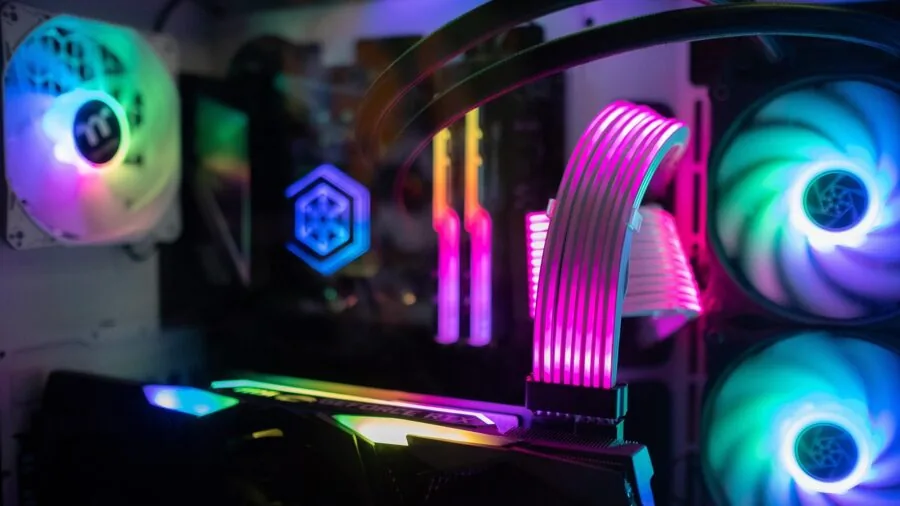
ATX 3.1 is the current revision of the PC power supply specification, introducing tighter transient load requirements that better accommodate the sudden power spikes modern GPUs demand during rendering and gaming.
PCIe 5.1 compliance ensures the unit can handle the 12V-2×6 connector natively, replacing the older 12VHPWR connector with an improved latch design that reduces the risk of thermal incidents from improperly seated cables.
If your build includes a current-generation GPU or you plan to upgrade within the next few years, prioritizing a PSU that is fully ATX 3.1 and PCIe 5.1 ready is a sound decision.
Older ATX 2.x and even early ATX 3.0 units can still power modern systems via adapters, but native support eliminates compatibility risk.
The majority of the units in this guide are natively ATX 3.1 and PCIe 5.1 compliant, which reflects the direction the industry has moved for new builds in 2026. Pairing a modern PSU with quality DDR5 memory rounds out a future-proofed platform.
Capacitor Quality and Long-Term Reliability

The electrolytic capacitors inside a power supply degrade over time, and their quality largely determines how long a unit maintains clean power delivery. Japanese-sourced capacitors rated to 105 degrees Celsius are the industry benchmark for reliability in quality PSUs.
Many budget units use lower-rated capacitors that age faster in warm environments, leading to increased ripple on the output rails over time. Reputable manufacturers and enthusiast-oriented reviewers regularly note capacitor provenance when evaluating units.
Server-grade capacitors, another designation used by some manufacturers, typically meet or exceed the 105-degree Japanese standard and can offer extended operating life in demanding conditions.
When evaluating a PSU, cross-referencing expert review consensus for capacitor origin and ripple suppression data gives a more complete reliability picture than marketing claims alone.
A long manufacturer warranty, ranging from five to ten years or beyond, is also a meaningful proxy for how confident a brand is in its component sourcing.
Fan Quality, Noise, and Zero RPM Modes

PSU noise comes almost entirely from the cooling fan, and fan quality varies considerably across price points. Fluid dynamic bearing (FDB) fans and dual ball bearing designs outlast cheaper sleeve-bearing fans and maintain quieter operation across temperature ranges.
Axial-tech fan designs, used by some premium manufacturers, optimize blade shape for airflow efficiency at low RPMs.
Cybenetics also issues noise certifications (Lambda ratings), and units achieving Lambda A or A+ designations are independently confirmed as among the quietest in their class.
Zero RPM or semi-passive fan modes let the PSU operate silently under light-to-moderate load by disabling the fan entirely until a thermal threshold is crossed. This is particularly valuable for quiet desktop or home office builds where ambient noise matters.
Some units allow you to toggle zero RPM mode on or off depending on your preference for silence versus more aggressive cooling.
Noise-conscious builders who also care about quiet setups often pair a low-noise PSU with a carefully chosen liquid CPU cooler to minimize overall system acoustic output.
Why You Should Trust Us
ProductFind is an independent review publication.
Every power supply in this guide was assessed using a consistent, structured research methodology covering manufacturer specifications, Cybenetics and 80 Plus certification data, expert review consensus from the hardware enthusiast community, and verified buyer feedback from confirmed purchasers.
Each unit receives a PF Score on a 0 to 10 scale, reflecting how it performs relative to its competition across efficiency, build quality, connector standards, noise profile, cable system, and warranty terms.
We do not conduct our own product trials; our evaluations are grounded in research, published data, expert review consensus, and verified buyer feedback.
ProductFind may earn a commission when you purchase through links on this page. That affiliate relationship has no influence on which products are included, how they are ranked, or the PF Score assigned.
Our recommendations reflect the strength of the research, not commercial considerations.
We cover a wide range of PC components beyond power supplies, including guides to PC cases, liquid CPU coolers, and desktop RAM kits, all evaluated under the same independent framework.
Final Thoughts
After evaluating all twelve models, the range in this guide covers nearly every realistic PC build scenario in 2026, from straightforward budget systems to ultra-high-end workstations. Here are the standout picks by category, each grounded in the PF Score earned through research:
- Best Overall: ASUS ROG Strix 1000W Platinum earns the top PF Score in this roundup thanks to its GaN MOSFET architecture, GPU-First intelligent voltage stabilization, ATX 3.1 compliance, Cybenetics Lambda A+ noise rating, and a ten-year warranty that signals genuine manufacturer confidence. It is the benchmark by which every other unit here is measured.
- Best Value at 750W: MSI MAG A750GL PCIE5 delivers native PCIe 5.1 and ATX 3.1 compliance in a compact, fully modular design at a mid-range price, making it a compelling choice for most gaming builds that do not need four-digit wattage.
- Best for High-Wattage Builds on a Budget: CORSAIR RM1000x ATX 3.1 brings Cybenetics Gold efficiency and a native 12V-2×6 connector to the 1000W tier at a price well below the premium competition, earning a strong PF Score for anyone scaling up to a flagship GPU.
- Best Premium Mid-Range Pick: CORSAIR RM750e ATX 3.1 stands out for its 105-degree-rated capacitors, Cybenetics Gold efficiency, Modern Standby Mode support, and fully modular build at a competitive price point, placing it near the top of the 750W tier.
- Best Budget Entry Point: Thermaltake Smart 600W is the most accessible option in this guide. It suits straightforward builds without discrete GPU demands, offering 80 Plus certification and proven Thermaltake reliability at a price that keeps total build costs in check.
If you are still deciding on other components, a capable PSU works best alongside a well-chosen case with strong airflow. Our guide to PC cases worth building in can help you find a chassis that complements your power supply choice.
For a complete picture of your build, also consider how your choice of CPU cooler and monitor factor into total system power draw.
Frequently Asked Questions
How Much Wattage Do I Need for a Gaming PC?
For a mainstream gaming build with a mid-to-high-end GPU, 750W to 850W is the practical sweet spot. Builds featuring flagship graphics cards like the RTX 5090 paired with a high-core-count CPU should target 1000W or more.
Always add at least 20 percent headroom above your calculated peak draw to keep the unit running efficiently and extend its operating life.
Is 80 Plus Gold Good Enough, or Should I Go Platinum?
For most builds, 80 Plus Gold is an excellent and cost-effective choice. Gold-certified units hit around 90 percent efficiency at typical load, which is more than adequate.
Platinum and Titanium efficiency ratings offer incrementally lower power waste and heat generation, and they become more financially justifiable in systems that run under sustained high load for many hours daily, such as workstations or always-on machines.
The electricity savings rarely justify a large price premium for a standard gaming PC used a few hours per day.
What Is the Difference Between ATX 3.1 and ATX 3.0?
ATX 3.1 tightens the transient load handling requirements compared to ATX 3.0, better accommodating the sudden power spikes that modern GPUs produce.
It also standardizes the improved 12V-2×6 connector (part of PCIe 5.1) over the earlier 12VHPWR design, reducing thermal risk at the connector.
For new builds using current or next-generation GPUs, a native ATX 3.1 and PCIe 5.1 compliant unit is the recommended choice.
Does a Fully Modular PSU Actually Make a Difference?
Yes, meaningfully so in mid-range and premium builds. Fully modular cabling lets you install only the cables you need, which reduces clutter inside the case, improves airflow to components, and makes future upgrades far simpler.
The result is a cleaner build with better sustained thermals. For a budget system in a compact case where cable management options are limited anyway, a non-modular or semi-modular design is a reasonable cost-saving compromise.
Can a Low-Quality PSU Damage My Other Components?
Yes. A power supply that delivers unstable or out-of-spec voltages, produces excessive ripple on its output rails, or fails abruptly under load can damage or destroy connected components including the GPU, CPU, and motherboard.
Overvoltage protection (OVP), undervoltage protection (UVP), and overcurrent protection (OCP) are standard safeguards on quality units.
This is why spending an appropriate amount on a reputable PSU from a brand with a strong warranty is one of the most important investments in any build, no matter the overall budget.
What Warranty Length Should I Look For in a Power Supply?
A five-year warranty is the minimum worth accepting in 2026 for any build that matters.
Many of the quality units in this guide carry ten-year warranties, which is a strong signal that the manufacturer stands behind its component sourcing and build quality.
Longer warranties also provide practical financial protection: a PSU failure outside its warranty window means replacing the unit out of pocket, whereas a ten-year warranty covers most of a typical PC upgrade cycle.
Brands offering extended warranties on their power supplies often apply the same component discipline to their entire lineup, making warranty length a useful proxy for overall quality commitment.
About the author
Megan is a reviewer and writer for ProductFind who specializes in PC Components & Peripherals. Megan evaluates products through independent research: specifications, expert review consensus, and verified buyer feedback, and rates each one on the PF Score. Megan focuses on helping readers pick the right pc components & peripheral for their needs and budget.