The 12 Best Strategy Board Games for Kids
Strategy board games build real thinking skills in kids, but finding the right complexity level for the right age is the real challenge. Here are the picks that deliver.
 By Manuel Davidson
Updated July 23, 2026
By Manuel Davidson
Updated July 23, 2026

Strategy board games do something that screen time simply cannot: they put kids in the driver’s seat of their own decisions. Every move carries a consequence, every plan can be outmaneuvered, and every setback is a lesson wrapped in cardboard.
Research in developmental psychology consistently links strategic play to stronger executive function, improved working memory, and better problem-solving skills in children.
Yet the market is flooded with games that promise challenge but deliver frustration, or worse, games so simple they offer no real mental workout at all.
Finding the sweet spot, games that are genuinely engaging without being overwhelming, takes more than a glance at the box age rating.
This guide cuts through the noise. ProductFind analyzed specifications, expert review consensus from gaming publications and child development specialists, and verified buyer feedback to surface the strategy board games that consistently deliver for kids at different ages and skill levels.
Whether you are shopping for a six-year-old just discovering turn-based play or a ten-year-old ready for civilization-building complexity, our picks span the full range.
From perennial classics like CATAN Junior to surprisingly deep card games created by a kid, every title on this list earned its place through research, not marketing. Scroll down to see our top-ranked picks.
| Award | Product | PF Score About PF ScoreThe PF Score is our own rating from 0 to 10, based on performance, design and build, ease of use, and value. It reflects independent research and is never influenced by manufacturers, retailers, or affiliate commissions. Learn more › | Price | |
|---|---|---|---|---|
| Best Overall |
 CATAN Board Game 6th Edition
|
6.6/10 | Buy | |
| Editor's Pick |
 CATAN Junior Board Game for Ages 6+
|
8.4/10 | Buy | |
| Best Value |
 Asmodee 7 Wonders Architects, 2-7 Players
|
8.1/10 | Buy | |
| Top Rated |
 Asmodee Azul Board Game 2-4 Players
|
6.8/10 | Buy | |
 Z-Man Games Carcassonne Board Game, 2-5 Players
|
7.8/10 | Buy | ||
 Asmodee 7 Wonders Board Game - 3-7 Players, 30 Minutes
|
7.6/10 | Buy | ||
 Jax SEQUENCE for Kids Strategy Game
|
7.5/10 | Buy | ||
 Taco vs Burrito Card Game, 56 Cards, 2-4 Players
|
8.6/10 | Buy | ||
 Hasbro Sorry! Board Game for Ages 6+
|
6.8/10 | Buy | ||
 Hasbro Mouse Trap Board Game for Ages 6+
|
6.5/10 | Buy | ||
 Hasbro Clue Home Alone Board Game
|
6.4/10 | Buy | ||
 Hasbro Battleship with Planes Strategy Game
|
6.2/10 | Buy |
CATAN Board Game 6th Edition
The classic strategy board game where players gather resources, build settlements and cities, and compete to reach 10 victory points across a modular hexagonal island. With a variable board layout that changes each game, CATAN delivers genuine replayability for family game nights and strategy-focused groups of 3-4 players.
Pros
- Modular board design ensures no two games play identically, driving genuine replayability
- Accessible rule set for ages 10+ while offering depth for experienced strategy players
- Trading mechanic encourages direct player interaction and negotiation
- Compact storage footprint relative to component count
Cons
- Limited to 3-4 players, excluding larger groups without expansions
- 60-90 minute playtime may feel lengthy for younger players at the lower age range
- No reviews provided to evaluate component durability or quality consistency in this listing
CATAN Junior Board Game for Ages 6+
A simplified pirate-themed entry point to the CATAN strategy game family, designed for younger players and families. Features resource trading, ship building, and gameplay that wraps up in about 30 minutes with 2-4 players.
Pros
- Accessible gateway to strategy board games for children
- Quick gameplay avoids attention span issues with younger players
- Adventure theme and character (Coco the Parrot) appeal to kids
- Supports 2-4 players flexibly for different group sizes
- Teaches negotiation and resource management fundamentals
Cons
- No user reviews available to verify real-world play experience
- Limited to 30 minutes, which may feel short for older players seeking deeper strategy
- Requires at least 2 players, limiting solo play options
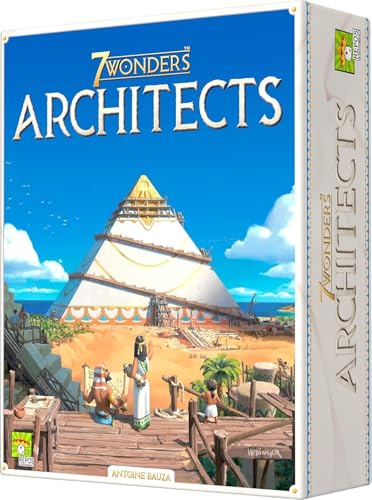
Asmodee 7 Wonders Architects, 2-7 Players
A civilization-building strategy game that uses face-up card drafting to balance resource gathering, academics, and military development across 25 minutes of gameplay. Designed as an accessible entry point for new board gamers and families, it accommodates 2 to 7 players ages 8 and up with streamlined rules and intuitive mechanics.
Pros
- Face-up card drafting creates engaging decision-making between personal needs and blocking opponents
- Short 25-minute playtime works well for casual gaming sessions
- Flexible player count from 2 to 7 makes it versatile for different group sizes
- Streamlined rules make it approachable for younger players and board game newcomers
Cons
- No verified buyer reviews available to assess real-world gameplay experience
- Limited to ages 8 and up, may not suit younger children
- Relatively short playtime may feel limiting for players seeking extended strategy gaming
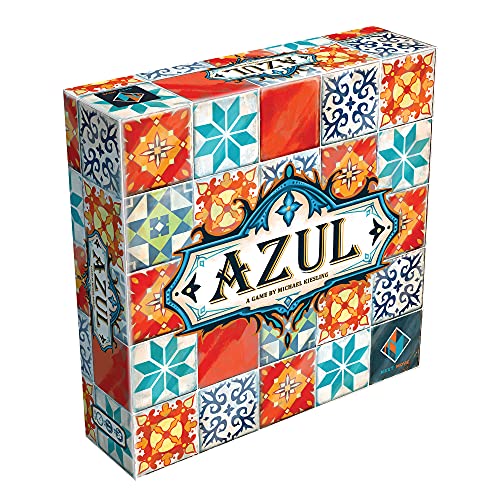
Asmodee Azul Board Game 2-4 Players
Azul is a tile placement strategy game that won the 2018 Spiel des Jahres, combining simple rules with engaging mosaic-building mechanics. It works equally well for casual family nights and experienced board gamers seeking tactical depth across 2 to 4 players.
Pros
- Accessible rules make it playable within minutes despite tactical complexity
- Excels in both 2-player competitive duels and multi-player games
- Draft and deny mechanics create satisfying strategic tension
- Portuguese mosaic theme brings visual appeal to gameplay
- Consistent replayability from randomized tile setups each round
Cons
- No user reviews available to validate quality claims or player experience
- Limited to 4 players maximum, excluding larger group play
- Box size (10.25 x 10.25 inches) may not fit compact shelves
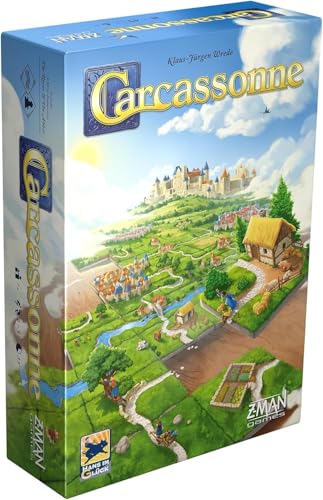
Z-Man Games Carcassonne Board Game, 2-5 Players
Carcassonne is a tile-placement strategy game where players build medieval landscapes and score points by claiming cities, roads, and monasteries with meeples. Its accessible rules and randomized tile draws make it equally enjoyable for families with kids 7+ and experienced adult gamers looking for a quick, replayable session.
Pros
- Simple ruleset with depth that scales from casual to competitive play
- Two mini-expansions bundled in, extending gameplay variety immediately
- Short playtime fits weeknight gaming without long commitment
- Randomized tile draws ensure no two games play identically
- Works well across a wide age and skill range
Cons
- No verified buyer reviews available to assess real-world durability or component quality
- Limited to 5 players maximum, excluding larger game groups
- Base game alone may feel repetitive after numerous plays without additional expansions
Asmodee 7 Wonders Board Game - 3-7 Players, 30 Minutes
A civilization-building strategy game where players draft cards across three ages to develop their ancient city and compete militarily with neighbors. Combines accessible 30-minute gameplay with enough depth to reward careful planning, making it suitable for families with kids 10+ and experienced board gamers alike.
Pros
- Fast playtime keeps engagement consistent regardless of player count
- Supports 3-7 players without significant downtime
- Multiple viable strategies reward different playstyles
- Expansion options available for extended gameplay
- Card-based systems generate different game states across plays
Cons
- No user reviews currently available to assess long-term durability or component quality
- Requires all three expansions be purchased separately as add-ons
- Age 10+ minimum may exclude younger players from family game nights
Jax SEQUENCE for Kids Strategy Game
A simplified version of the classic SEQUENCE game designed for young children ages 3-6 that requires no reading skills. Players match cards to characters on the board and race to get four chips in a row, making it accessible for early learners while building logical thinking.
Pros
- Designed specifically for ages 3-6 with accessibility in mind
- Teaches strategic thinking through intuitive card-and-chip gameplay
- Works for 2-4 players, flexible for different group sizes
- Compact and lightweight for easy portability
Cons
- No customer reviews available to verify real-world durability or gameplay experience
- Limited to the younger age range, not suitable for older children seeking complexity
- Board size may be tight for younger children's fine motor control with chip placement
Taco vs Burrito Card Game, 56 Cards, 2-4 Players
A strategic card game designed by a 7-year-old that plays in 15 minutes with five different rule variations. Best for families and casual game nights looking for something easy to learn but engaging for ages 6 and up.
Pros
- Multiple rule variations extend replay value without needing expansions
- Genuinely quick to learn and play, ideal for younger players and casual gatherings
- Complete set includes everything needed with compact storage footprint
- Creator backstory adds authentic appeal, especially for kids interested in game design
Cons
- No verified buyer reviews available to confirm real-world experience and durability
- Limited to 2-4 players, which restricts larger group play
- Action cards may create unpredictable outcomes that could frustrate strategy-focused players
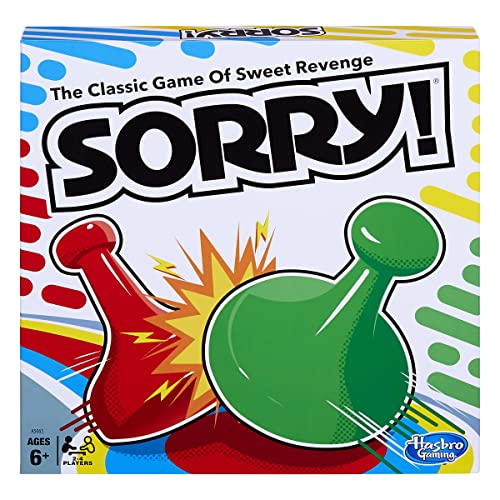
Hasbro Sorry! Board Game for Ages 6+
The classic Sorry! board game returns with familiar slide-and-send-back gameplay that works for families and casual players. It's straightforward fun built on card draws and strategic pawn movement, though the experience hinges entirely on luck and player count.
Pros
- Easy to learn with straightforward turn-based card play
- Sweet revenge mechanic keeps all players engaged throughout
- Works as both nostalgia play for adults and introduction for kids
- Compact and portable for travel or storage
Cons
- Outcome heavily dependent on card luck rather than deep strategy
- No reviews provided to assess real-world durability or component quality
- Limited gameplay depth may not sustain interest for strategy-focused players
Hasbro Mouse Trap Board Game for Ages 6+
A classic family board game where players race their mice around the board while building and using a mechanical trap to capture opponents. Combines light strategy, construction play, and interactive fun for 2-4 kids in one box.
Pros
- Interactive trap building keeps players engaged beyond basic board movement
- Teaches spatial reasoning and cause-and-effect mechanics naturally through gameplay
- Supports flexible player counts (2-4) for various group sizes
- Compact storage at 15.9 x 10.6 x 3.5 inches despite 25 components
Cons
- No verified customer reviews available to assess real-world durability or setup complexity
- Trap mechanism adds assembly steps that may slow early games for younger kids
- Limited to 4 players maximum, not suitable for larger group play
Hasbro Clue Home Alone Board Game
A licensed Clue variant that swaps classic weapons for Kevin McCallister's booby traps from the film. Designed for Home Alone fans aged 8+, it features the McCallister house board, character quotes from the movie, and mystery mechanics tied to the story.
Pros
- Authentic Home Alone integration with character-specific gameplay and movie quotes on cards
- Familiar Clue mechanics adapted for the film universe keeps rules accessible
- Detailed gameboard with house locations and fan-recognizable settings from the movie
- Card twists add variety, allowing players to swap cards or move to any room
Cons
- No verified buyer reviews available yet, so real-world gameplay and quality durability remain unconfirmed
- Limited to Home Alone fans; appeal narrows if players aren't familiar with or invested in the film
- Clue gameplay formula may feel repetitive for those already familiar with the original game
Hasbro Battleship with Planes Strategy Game
This Amazon-exclusive version adds aircraft to the classic Battleship formula, letting players sink ships and crash planes for more strategic depth. Comes with portable cases and organized storage, making it convenient for travel and family game nights.
Pros
- Familiar Battleship gameplay with planes introducing fresh strategic choices
- Compact, portable design with built-in storage for pieces
- Quick setup and play time ideal for casual game nights
- Appropriate difficulty for young players while engaging for families
Cons
- No verified buyer reviews available to assess real-world durability or gameplay experience
- Two-player only format limits group play options
- Planes addition increases complexity compared to classic Battleship, which some traditionalists may not prefer
Strategy Board Games for Kids Buying Guide
Choosing the right strategy game for a child is not just about picking the one with the coolest theme. Age-appropriateness, group size, complexity curve, and replayability all determine whether a game gets played twice or becomes a household staple.
The subsections below walk through every meaningful factor so you can match the right game to your child’s developmental stage and your family’s game-night style.
If you want a broader look at options beyond the strategy genre, our roundup of board games worth playing again and again is a great companion resource.
Age-Appropriateness and Cognitive Load

The single biggest mistake families make is buying a game one or two years ahead of a child’s readiness. Box age ratings are a starting point, not a guarantee.
A game rated 6+ might require reading fluency that a just-turned-six-year-old does not yet have, while a game marketed to ages 8 and up might have rule sets a sharp seven-year-old can handle comfortably.
Look beyond the number and assess the rule complexity: How many steps does setup require? Does a player need to hold multiple strategies in mind simultaneously?
Games like SEQUENCE for Kids are specifically designed to eliminate reading barriers entirely, making them genuinely accessible for younger players rather than just nominally so.
For children ages 6 to 8, look for games with a single core mechanism, one main decision per turn, and a play time under 30 minutes. Kids aged 9 to 12 can handle layered decision-making, resource management, and longer sessions.
Titles like 7 Wonders Architects and Carcassonne sit comfortably in the older half of that window, offering enough depth to stay interesting across many plays without tipping into frustrating complexity.
Expert reviewers from both gaming publications and educators consistently note that cognitive challenge just above a child’s current level, not far above it, produces the most meaningful skill development.
Also consider attention span honestly. A game with a 90-minute runtime is a poor fit for a household where kids routinely check out after 45.
Shortlisting games by their printed play time and matching that to observed attention windows in your household will save a lot of mid-game abandonments.
Player Count and Group Dynamics

Player count on the box tells you the mechanical range a game supports, but it does not tell you which count plays best.
Many games rated for 2 to 4 players are significantly more interesting at 3 or 4 because the negotiation, blocking, and interaction mechanics only come alive with more participants.
CATAN and CATAN Junior are textbook examples: the trading and social dynamics that make those games compelling require at least three players. At two players, the experience is functional but noticeably flatter.
If your household skews toward two players, either two adults and one child or two siblings playing together, prioritize games that were actually designed for two.
Games like Azul play beautifully at two because the drafting mechanism creates meaningful head-to-head tension. Alternatively, explore cooperative board games for kids and families, where everyone plays against the game itself, eliminating the competitive dynamic that can derail sibling sessions.
Also think about mixed-age groups.
If adults and children are playing together regularly, games with a handicap mechanism or games where experience advantage is naturally limited, such as Taco vs Burrito’s card-chaos dynamic, tend to keep things fun for everyone at the table rather than leaving younger players feeling outclassed.
Depth of Strategic Decision-Making
Not all strategy is created equal. There is a meaningful spectrum between light strategic games, where decisions are simple and outcomes partly luck-driven, and deep strategic games, where long-term planning consistently rewards skilled play.
For kids learning strategy for the first time, lighter games provide crucial early wins that build confidence. Sorry! and Mouse Trap sit toward the lighter end, where chance plays a significant role.
Games like CATAN, 7 Wonders, and Carcassonne sit toward the middle to deeper end, where planning genuinely pays off over time.
Verified buyer feedback across thousands of Amazon reviews consistently highlights that children who start on lighter strategy games and graduate to medium-weight games over one or two years develop a stronger intuitive grasp of probability, resource allocation, and opponent reading.
The progression matters. Trying to start an eight-year-old on 7 Wonders (the full version, not Architects) before they have internalized basic turn-based strategy often results in a game that sits on the shelf after one confusing session.
Replayability and Variability

A strategy game earns its shelf space by playing differently each time.
Replayability comes from several sources: variable setup (randomized starting positions or tile draws), emergent player interaction (each opponent’s choices create a unique board state), and multiple viable strategies (no single dominant approach).
Games with high replayability offer genuine long-term value, especially for families who invest in quality games and want them to remain relevant for years.
Tile-placement games like Carcassonne generate near-infinite board configurations because each draw and placement changes the landscape. Card-drafting games like 7 Wonders and Azul create different competitive puzzles depending on which cards or tiles happen to come up.
By contrast, games with fixed boards and predictable card sequences can feel repetitive after a dozen plays.
When comparing options in the same price tier, the game with higher variability is almost always the better investment for families who play regularly.
For more options worth considering for family game nights, see our guide to the best board games for families this year.
Setup Time and Rules Accessibility

A game that takes 20 minutes to set up and another 20 to explain rules is a game that often does not get played on a weeknight.
Setup time is a practical filter that rarely appears in formal reviews but dominates verified buyer feedback.
Parents consistently cite fast setup, under ten minutes, as one of the top factors in whether a game becomes a weekly fixture or gathers dust.
Games with modular components that all stay in organized trays, or games with a small footprint and simple starting configurations, dramatically lower the activation energy for play.
Rules accessibility is equally important. Games with a single-page rules summary that covers 90 percent of play situations are far more likely to hit the table regularly than games with a 20-page rulebook full of edge cases.
Look for games that describe their own mechanisms clearly on the box back, since that usually signals a designer who has thought carefully about the new-player experience.
Taco vs Burrito, for example, is notoriously easy to learn despite offering genuine strategic depth, which partly explains its viral popularity and strong performance in expert and buyer reviews alike.
Theme, Components, and Physical Quality

Theme is the hook that gets kids to sit down. Strategy is what keeps them thinking. The best games for children marry an engaging theme with mechanics that reinforce it rather than fighting against it.
CATAN Junior translates the resource-trading core of the original game into a pirate adventure that makes immediate intuitive sense to a six-year-old. Azul’s mosaic-tiling theme makes the abstract pattern-building feel purposeful and visually satisfying.
When theme and mechanism align, children internalize strategy naturally rather than having to memorize abstract rules divorced from any narrative.
Component quality matters more for children than for adults, because kids are harder on physical materials and respond more viscerally to tactile experience.
Thick cardboard tiles, chunky wooden pieces, and cards with a quality laminate coating hold up to repeated play and enthusiastic handling.
Verified buyer feedback frequently flags flimsy card stock and lightweight plastic pieces as sources of early disappointment, even when gameplay is solid.
Budget options are fine for initial exposure, but if a game is going to be played weekly for two or three years, mid-range to premium component quality pays for itself in longevity.
This consideration applies equally when you are browsing the broader category of board games for every game night and group size.
Why You Should Trust Us
ProductFind is an independent review platform. We do not manufacture, sell, or distribute any of the products we cover. Every recommendation on this page reflects editorial judgment based on consistent, transparent criteria applied equally across all candidates in the category.
Each product in this guide was evaluated and assigned a PF Score on a scale of 0 to 10.
Scores are built from a composite of factors relevant to strategy board games for kids: age-appropriateness, strategic depth, replayability, component quality, rules accessibility, player count flexibility, and overall value.
We do not conduct our own product trials; our evaluations are grounded in research, published data, expert review consensus, and verified buyer feedback.
Sources include specialist gaming publications, educational toy review outlets, parenting communities with documented purchase histories, and manufacturer-published specifications.
ProductFind may earn a commission when you purchase through links on this page. That affiliate relationship has zero influence on which products appear in our rankings, which scores they receive, or how they are described.
Our editorial process and scoring criteria were established independently and are applied before any affiliate consideration. We recommend a product because the research supports it, full stop.
Final Thoughts
After evaluating all twelve titles against our criteria, a few clear standouts emerged across different needs and age groups. Here are our category-level recommendations, each tied to the product’s performance in our research:
- Best Overall: CATAN Board Game (6th Edition) earns the top spot with the highest composite score in this group, combining deep resource-trading strategy, strong replayability, and a proven multi-decade track record with families and educators alike.
- Best for Young Strategic Thinkers: Taco vs Burrito ties at the top of our PF Score rankings and is the standout pick for households with younger kids, delivering surprising strategic depth in a fast, approachable format that even early elementary schoolers can own.
- Best Gateway Strategy Game: CATAN Junior is the strongest entry point for kids ages 6 and up who are ready to graduate from pure luck-based games to genuine strategic thinking, earning one of the highest scores in this review for its age-appropriate design and exceptional replayability.
- Best for Families Who Play Together: 7 Wonders Architects stands out for supporting up to seven players with a streamlined ruleset that keeps adults engaged while remaining genuinely accessible to kids from age 8, making it the most versatile pick for mixed-age households.
- Best Budget Strategy Pick: SEQUENCE for Kids delivers solid strategic fundamentals at an accessible price point, with no reading required and a simple color-matching mechanism that teaches pattern recognition and basic planning without overwhelming new players.
Whatever your family’s game-night style, the titles above represent the strongest options currently available based on our research.
Start with the game that matches your child’s current age and attention span, and plan to move up the complexity ladder over time.
The habits of strategic thinking that develop at the game table genuinely transfer to the classroom and beyond.
Frequently Asked Questions
What age is appropriate for strategy board games?
Most children are developmentally ready for light strategy games around age 6, when they can reliably take turns, follow multi-step rules, and hold a simple plan across a few moves.
Heavier strategy games with resource management and long-term planning tend to click better around ages 9 to 10. That said, individual readiness varies significantly, and a curious seven-year-old can often handle games rated for ages 8 and up with minimal adult support.
Games in this guide are rated for ages 6 through 10 and up, so there are strong options at every developmental stage. The buying guide section above covers how to read age ratings critically rather than taking them at face value.
Do strategy games actually help kids learn?
Yes, with meaningful evidence behind the claim. Strategic play engages working memory, planning, cause-and-effect reasoning, and emotional regulation when plans fail. Multiple studies in cognitive development research link regular strategic game play to improved executive function in school-age children.
The key is choosing games where decisions genuinely matter, where luck is not the dominant factor, so that children experience the direct connection between planning and outcome.
Games like CATAN, 7 Wonders Architects, and Carcassonne are frequently cited by educators and child development specialists as particularly effective because they require players to adapt plans in response to changing conditions, a direct analog to real-world problem-solving.
Are cooperative strategy games better for younger children?
For many families, yes. Cooperative games eliminate the competitive tension that can cause younger children, or kids who are sensitive to losing, to disengage or become upset.
When everyone plays against the game rather than each other, the focus shifts entirely to collaborative planning and shared problem-solving. This makes cooperative games an excellent entry point for building strategic habits before introducing head-to-head competition.
If cooperative play sounds appealing for your household, our dedicated guide to cooperative board games for kids and families covers the strongest options in that genre specifically.
How much should I expect to spend on a quality strategy board game for kids?
The games in this guide range from budget-friendly options to mid-range investments, with the premium end occupied by titles like 7 Wonders (the full edition).
Budget picks deliver solid fundamentals at a low commitment price point, which makes them good starting choices if you are unsure whether a child is ready for a particular type of game.
Mid-range and premium options generally offer better component quality, higher replayability, and deeper mechanics that justify the higher cost over multiple years of play.
As a general rule, a game played weekly for a year costs far less per session than most other forms of family entertainment. Prioritizing replayability and component durability over a low sticker price almost always results in better long-term value.
Can adults enjoy strategy board games designed for kids?
Many can, especially games designed with family play explicitly in mind. Titles like Azul, Carcassonne, and CATAN are genuinely enjoyed by adults at any level of board gaming experience.
They were designed to be accessible to children without sacrificing the strategic tension that keeps adults engaged.
Even CATAN Junior, built for ages 6 and up, is played enthusiastically by adults in the broader board gaming community because its core trading and building mechanics hold up regardless of age.
Games that work well for mixed ages are arguably the best value for families, since they do not require parents to merely tolerate the session but actually enjoy it. Our broader roundup of board games for families highlights more picks in that sweet spot.
How do I know when my child is ready to move to a more complex strategy game?
Watch for two signals: the child is winning their current game consistently (suggesting the strategic challenge is no longer stretching them), and the child is asking questions about the next move multiple turns in advance.
Both behaviors indicate readiness for a more layered experience.
A child who plans two or three moves ahead in Sorry! is probably ready for CATAN Junior; a child who naturally optimizes their CATAN Junior settlements is likely ready for Carcassonne or 7 Wonders Architects.
Progression is personal and non-linear. Some children plateau at a certain complexity level for months before a developmental leap makes the next tier suddenly click. Following the child’s interest and energy, rather than chasing age milestones, produces the best outcomes.
About the author
Manuel is a reviewer and writer for ProductFind who specializes in Board Games & Puzzles for Kids. Manuel evaluates products through independent research: specifications, expert review consensus, and verified buyer feedback, and rates each one on the PF Score. Manuel focuses on helping readers pick the right board games & puzzles for kid for their needs and budget.