The 10 Best Educational Board Games
From letter-building for preschoolers to geography strategy for teens, these educational board games make learning feel like play. Here are the picks worth buying.
 By Manuel Davidson
Updated July 23, 2026
By Manuel Davidson
Updated July 23, 2026
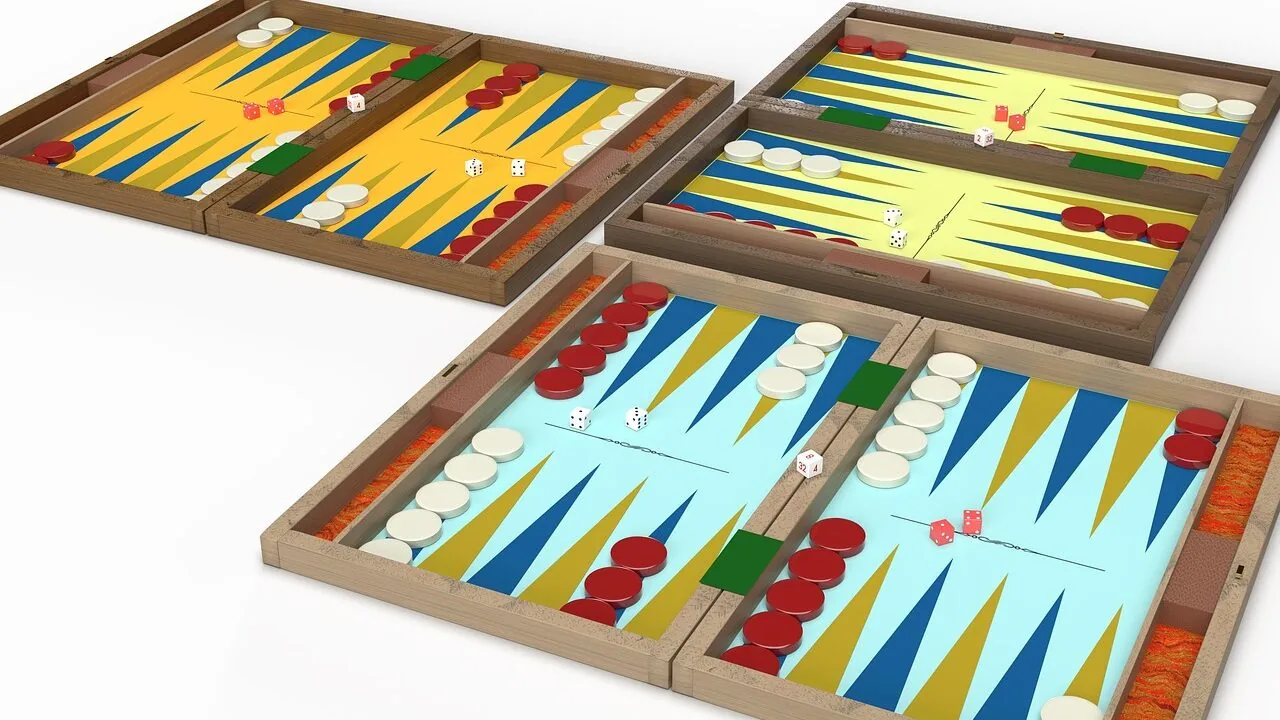
Educational board games have made a quiet comeback in homes and classrooms alike, and for good reason. Research consistently shows that play-based learning improves retention, builds critical thinking, and keeps children engaged far longer than passive instruction.
Whether you are shopping for a curious five-year-old who needs to practice letter recognition or a twelve-year-old ready to wrestle with geography and strategy, the right game can turn screen-free family time into something genuinely enriching.
A well-chosen game from brands like Hasbro Gaming, Underdog Games, and University Games can serve a household for years before it ever feels stale.
Sorting through dozens of options is the hard part, which is why ProductFind researched this category thoroughly, synthesizing product specifications, expert review consensus across the hobby and education space, and verified buyer feedback from confirmed purchasers.
The picks below span a range of ages, subjects, and budgets so you can find the right fit without guesswork. Read on for our top-ranked educational board games, followed by a practical buying guide to help you choose confidently.
| Award | Product | PF Score About PF ScoreThe PF Score is our own rating from 0 to 10, based on performance, design and build, ease of use, and value. It reflects independent research and is never influenced by manufacturers, retailers, or affiliate commissions. Learn more › | Price | |
|---|---|---|---|---|
| Best Overall |
 Hasbro Scrabble Classic Board Game with Wooden Tiles
|
9.2/10 | Buy | |
| Editor's Pick |
 Hasbro Scrabble Junior Board Game, 2-4 Players
|
9.1/10 | Buy | |
| Best Value |
 Underdog Games Trekking the National Parks Board Game
|
8.6/10 | Buy | |
| Top Rated |
 University Games Race Across USA Board Game
|
8.3/10 | Buy | |
 Hasbro The Game of Life Board Game, 2-4 Players
|
7.8/10 | Buy | ||
 DYCE Continent Race Geography Board Game
|
7.6/10 | Buy | ||
 The World Game Geography Board Game for Ages 9+
|
7.5/10 | Buy | ||
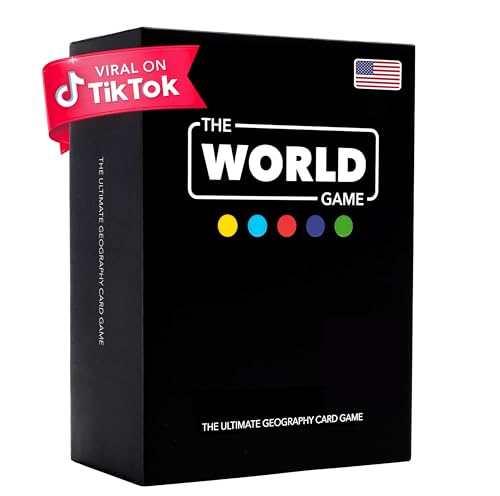 The World Game Geography Card Game for Kids 8+
|
7.4/10 | Buy | ||
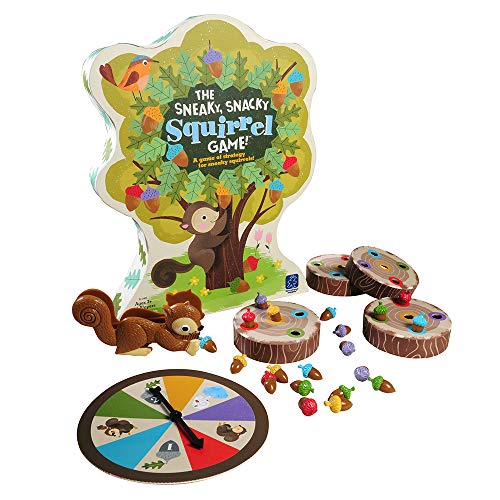 Educational Insights Sneaky Snacky Squirrel Game
|
7.2/10 | Buy | ||
 Skillmatics Rapid Rumble Fast-Paced Category Game
|
7.1/10 | Buy |
Hasbro Scrabble Classic Board Game with Wooden Tiles
The classic word-building game returns with wooden letter tiles and racks that keep pieces secure during play. Designed for 2-4 players ages 8 and up, it combines strategy and vocabulary across multiple game variations.
Pros
- Wooden components feel durable and substantial compared to plastic versions
- Textured gameboard prevents tiles from sliding during play
- Multiple game modes and team options extend replayability
- Clear point system with strategic square bonuses rewards vocabulary building
- Lightweight and compact at 1 pound, easy to store and transport
Cons
- No customer reviews available to verify real-world durability or component quality
- Limited to 2-4 players, does not accommodate larger groups
- Wooden tiles may require more table space than compact travel versions
Hasbro Scrabble Junior Board Game, 2-4 Players
A letter-matching word game designed for younger players with a dual-sided board that adapts as skills develop. The game includes cute character tokens and scales from simple pattern matching to word creation, making it suitable for ages 5 and up.
Pros
- Two-sided gameboard grows with player skill level, from beginner letter-matching to advanced word creation
- Includes four adorable character tokens for score keeping that appeal to young players
- Encourages vocabulary and spelling development in an engaging format
- Supports 2-4 players for flexible group play
Cons
- No verified customer reviews available to assess real-world durability or play experience
- Limited to junior-level gameplay, may not appeal to older children or advanced word game players
- Relatively niche appeal compared to broader family board games
Underdog Games Trekking the National Parks Board Game
Award-winning board game that combines educational content about U.S. national parks with accessible gameplay for ages 10 and up. Features premium components and supports 1-5 players in 30-60 minute sessions, making it suitable for family nights, classrooms, or solo play.
Pros
- Award-recognized design (Mensa Select, Parents' Choice) with over 500,000 copies sold
- Premium quality components including illustrated cards, wooden pieces, and detailed board map
- Flexible player count (1-5) and new solo mode in 3rd edition
- Compact storage and portable for travel or vacation use
- Blends learning about national parks with engaging gameplay
Cons
- No customer reviews available yet to verify real-world experience
- Minimum age 10 means younger children cannot participate
- Limited to 30-60 minute play sessions, which may feel short for extended game nights
University Games Race Across USA Board Game
An educational board game where players visit six states, answer geography questions, and race home. Designed for ages 8 and up with grade-appropriate questions that adapt to different skill levels, making it playable for mixed-age groups.
Pros
- Questions tailor to each player's grade level, keeping gameplay fair and appropriately challenging
- Accommodates mixed-age play, breaking down barriers between different grade levels
- Blends educational content with game mechanics, making geography learning engaging rather than textbook-style
- Compact dimensions (10.5 x 10.5 inches) make it practical for homes and classrooms
Cons
- No verified buyer reviews available yet, so real-world gameplay feedback is limited
- Requires 2-4 players, not designed for solo play
- Relatively narrow age range (8 and up) may exclude younger learners
Hasbro The Game of Life Board Game, 2-4 Players
A classic family board game where players navigate careers, vacations, and life choices across 115 cards and 31 unique career options. Best suited for families with kids 8+ looking for straightforward, accessible gameplay without heavy rules.
Pros
- Wide career selection keeps game fresh across multiple plays
- Simple rules make it accessible for younger players (8+) and casual gamers
- Extensive card deck (115 cards) provides meaningful decision-making throughout the game
- Spin mechanic adds unpredictability and keeps all players engaged
Cons
- No user reviews available to assess real-world gameplay experience or durability
- Game outcome heavily dependent on spin results rather than strategy, which may frustrate competitive players
- Designed for 2-4 players, limiting options for larger family gatherings
DYCE Continent Race Geography Board Game
An educational board game designed to teach kids about world geography, flags, and countries through interactive gameplay. Combines learning with family entertainment and includes problem-solving and critical thinking elements.
Pros
- Engages multiple age groups in educational gameplay
- Develops cognitive skills beyond simple memorization
- Socially conscious brand with charitable giving program
- Compact and portable board game format
Cons
- No verified customer reviews available to assess real-world performance
- Geographic scope unclear - unclear which continents and countries are covered
- Limited information on game rules, player count, and age recommendations
The World Game Geography Board Game for Ages 9+
A geography-focused board game that combines world travel with learning flags, capitals, and country facts across 194 nations. Players of mixed knowledge levels can compete together with adjustable difficulty, making it suitable for family nights or classroom settings.
Pros
- Covers 194 countries with detailed cards showing flags, capitals, populations, GDP, and neighboring countries
- Accessible rules that work for ages 9 and up while remaining engaging for adults
- 26 action cards add replayability and strategic twists to each game
- Naturally reinforces geography knowledge without feeling like a textbook approach
- Complete set includes all necessary components (board, cards, pawns, dice) with no additional purchases needed
Cons
- No verified buyer reviews available to assess real-world durability or gameplay experience
- 40-minute playtime may feel lengthy for younger children at the lower end of the age range
- Relies on player interest in geography; may not appeal to those seeking purely luck-based games
The World Game Geography Card Game for Kids 8+
An educational card game covering all 194 countries with flags, capitals, and map locations. Designed for ages 8 and up, it works for 2 to 5 players and doubles as flashcards or trivia for mixed-knowledge families.
Pros
- Covers all 194 countries with current data regularly updated
- Multiple game modes: flags, capitals, locations, and trivia questions
- Portable size makes it suitable for travel and road trips
- Playable by 2 to 5 players with varying knowledge levels
- Combines learning and entertainment without heavy rules
Cons
- No verified customer reviews available to confirm durability or card quality
- Smaller card dimensions may be difficult for young children under 8 to handle
- Learning curve depends on existing geography knowledge among players
Educational Insights Sneaky Snacky Squirrel Game
A color-matching board game designed for ages 3 and up that combines fine motor skill development with basic strategy play. Players use a squeezer tool to collect matching acorns while learning turn-taking and social skills in a 2-4 player format.
Pros
- Develops fine motor control through tweezers-based acorn picking mechanics
- Reinforces color recognition and matching in a game context
- Compact tree-shaped board doubles as storage box for easy cleanup
- Supports social-emotional learning like turn-taking and graceful losing
- Includes all necessary components: squeezer, 20 acorns, spinner, and game board
Cons
- No verified buyer reviews available to assess real-world durability or play experience
- Limited to 2-4 players, which may restrict larger group play scenarios
- Spinner-based gameplay introduces significant luck element over strategic control
Skillmatics Rapid Rumble Fast-Paced Category Game
A speed-based category game where players race to eliminate letter cards by matching quick answers to prompts. With 120 category cards and straightforward mechanics, it works for families and mixed-age groups looking for high-energy game nights.
Pros
- Compact medium size makes it portable for game nights or travel
- Award recognition signals quality design and engagement
- Simple turn structure minimizes downtime between players
- Multiple category types prevent gameplay from feeling repetitive
Cons
- No verified buyer reviews available to assess real-world performance or durability
- Timer and die components may wear from frequent use in fast-paced play
- Category-based gameplay may favor players with faster recall over strategy
Educational Board Games Buying Guide
Not every game that claims to be educational delivers equally on that promise. The best options strike a balance between genuine learning outcomes and replay value high enough to keep players coming back voluntarily.
Before you buy, it helps to think through the following criteria so the game you choose actually gets played rather than sitting on a shelf.
If you are also shopping for non-educational titles to round out your collection, our broader guide to board games for families covers a wide range of genres and age groups.
Age Appropriateness and Developmental Stage

The single most important factor is matching a game’s cognitive demands to the player’s actual developmental stage rather than the age printed on the box.
A game that is too simple loses its educational punch almost immediately; one that is too complex becomes frustrating and gets abandoned.
For preschoolers aged three to five, look for games that reinforce color recognition, fine motor control, counting, and simple matching.
The Educational Insights Sneaky, Snacky Squirrel Game is a textbook example: its spring-loaded squirrel squeezer doubles as a fine motor exercise while children practice color matching, making the learning invisible to the child.
For school-age children between six and twelve, the sweet spot shifts toward vocabulary, geography, strategy, and social skills like turn-taking and graceful losing.
Games such as Scrabble Junior (ages five and up) introduce letter placement and early word-building, while the full Scrabble board game raises the ceiling considerably for ages eight and up.
Teenagers and adults benefit from games that layer in geography, economics, or lateral thinking. Always check whether a title includes a simplified ruleset or dual-sided board, as those features dramatically extend the useful age range of a single purchase.
Subject Matter and Learning Outcomes
Educational board games tend to cluster around a handful of disciplines: language arts and vocabulary, geography, mathematics, social studies, and general trivia. Knowing which subject you want to reinforce helps narrow the field immediately.
Vocabulary and spelling games such as Scrabble or Scrabble Junior are among the most universally recommended by educators precisely because they build transferable skills: pattern recognition, word construction, and strategic thinking all at once.
Geography is another richly served category.
Titles like the Scholastic Race Across the USA and Continent Race take different approaches: the former uses a race mechanic tied to U.S. states and landmarks, while the latter introduces flags and countries from every continent.
The World Game, available in both card and board formats, layers in cartographic awareness by asking players to locate countries on a physical map.
If a child struggles with geography in school, pairing a dedicated map game with supplementary craft activities for kids that involve making their own maps can reinforce learning from multiple angles.
Player Count and Group Dynamics
Check both the minimum and maximum player counts before buying, because a game designed for two to four players will feel hollow if your household routinely has five or six people at the table.
Most of the games in this roundup accommodate two to four players comfortably, which suits the majority of family setups.
Trekking the National Parks is the notable exception, supporting one to five players and even offering a solo mode that appeals to independent learners or only children who still want educational engagement.
Also consider the competitive versus cooperative dynamic. Purely competitive games can be discouraging for younger children, especially when a skill gap between siblings is large.
If your household benefits more from a collaborative structure, our guide to cooperative board games for kids and families highlights options where everyone works together rather than against each other.
Competitive games like the classic Game of Life still teach valuable lessons about cause and effect, career planning, and resource management, but they work best when players are in a similar skill range.
Setup Time and Session Length
A game with a thirty-minute setup and two-hour session length is genuinely educational in theory but practically useless on a school night.
Realistic play time is a key quality-of-life factor that separates games that get used regularly from those that gather dust.
Fast-paced games like Skillmatics Rapid Rumble and The World Game card version are designed for shorter bursts of fifteen to twenty-five minutes, making them easy to fit into a homework break or a car trip with a travel-sized variant.
Longer games like Trekking the National Parks and the Game of Life reward the investment with richer gameplay and more layered learning, but they are better suited to weekend afternoons or school holidays.
A practical strategy is to own at least one quick game and one longer one, so you always have a match for however much time you actually have.
If you are building out a broader collection, the board games for kids roundup covers additional titles across varying session lengths.
Build Quality and Component Durability

Educational games for younger children take a beating. Thin cardstock tiles, flimsy spinners, and small pieces that splinter easily are frustrating to deal with and sometimes a safety concern for households with toddlers.
When evaluating component quality, verified buyer feedback is particularly telling: reviewers who have played a game dozens of times will flag whether cards warp, whether plastic pieces crack, or whether the box holds up to repeated opening and closing.
The Sneaky, Snacky Squirrel Game, for example, earns consistent praise for its chunky wooden acorn pieces and sturdy squirrel tool that can withstand enthusiastic three-year-old handling.
Hasbro’s Scrabble titles use thick tile racks and sturdy boards that are well-established over decades of production.
For games in the geography category, pay attention to whether the map board is laminated or printed on bare cardboard, since the former survives spills and repeated handling far better.
Replay Value and Scalability

An educational game that teaches the same fixed lesson every session will feel exhausted after a dozen plays. The best options have variability built in: different card draws, randomized board states, or dual-difficulty rulesets that keep the experience fresh.
Scrabble’s combinatorial tile draws mean no two games are identical; Race Across the USA uses card draws to vary which questions appear; Continent Race reshuffles territory and flag challenges each round.
Scalability is closely related. A game that grows with the child, whether through a two-sided board like Scrabble Junior’s beginner and advanced layouts or through expanding content, delivers significantly better long-term value than one with a single fixed difficulty.
Think about the age range of children in your home and pick games whose ceilings exceed where your child currently stands, so you are not replacing it within a year.
Why You Should Trust Us
ProductFind is an independent review publication with no affiliation to any manufacturer or retailer. Every product in this roundup was evaluated using a consistent, research-driven methodology.
We do not conduct our own product trials; our evaluations are grounded in research, published data, expert review consensus, and verified buyer feedback.
Each game was assessed across criteria including educational efficacy, age-range accuracy, component quality, replay value, and price-to-value ratio.
The result of that assessment is a PF Score on a scale of 0 to 10, which you can see displayed on each product card above.
ProductFind may earn a commission if you purchase through a link in this article. That affiliate relationship has no influence on which products are included, how they are ranked, or what PF Score they receive.
Our rankings reflect the quality of the research behind each evaluation, not the size of any commission. We assess products the same way whether or not a purchase link exists.
Our goal is simply to give you the clearest, most honest picture of which educational board games are worth your money and which are not.
Final Thoughts
After synthesizing specifications, expert review consensus, and verified buyer feedback across all ten titles in this roundup, a few clear standouts emerge. Here are our top category awards, each grounded in PF Score performance and real-world strengths:
- Best Overall: Hasbro Gaming Scrabble Board Game. The highest PF Score in the group reflects decades of refinement, near-universal availability, and a proven track record for building vocabulary and strategic thinking across ages eight and up. Few games deliver this level of replay value and genuine educational depth at a budget-friendly price point.
- Best for Young Learners: Hasbro Gaming Scrabble Junior Board Game. An exceptionally strong runner-up by PF Score, Scrabble Junior earns its place by delivering age-appropriate word-building and letter recognition with a two-sided board that extends its useful life well beyond the early years.
- Best for Geography Enthusiasts: Underdog Games Trekking the National Parks. With an award-winning design and one-to-five-player flexibility including solo play, this game makes U.S. geography and conservation genuinely exciting for ages ten and up. It earns the highest PF Score in the geography-focused subset of this list.
- Best for U.S. Geography Basics: University Games Scholastic Race Across the USA. A reliable classroom and family favourite, this race-format game blends competition with factual learning about U.S. states and landmarks in a way that keeps ages eight and up genuinely engaged session after session.
- Best for Toddlers: Educational Insights The Sneaky, Snacky Squirrel Game. Purpose-built for ages three and up, this game is a standout for fine motor skill development and color matching with chunky, durable components that survive enthusiastic small hands. It is one of the few games in this roundup that works before a child can read a single word.
Whatever age group or subject you are shopping for, the games in this list represent some of the most consistently well-regarded options available. Pair your pick with an engaging home environment, and you will be surprised how naturally learning follows.
For a wider view of what is worth adding to your family’s game shelf, the collection of top-rated board games for kids is a useful next stop.
Frequently Asked Questions
What age is best to start with educational board games?
Children as young as three can engage meaningfully with games designed for their developmental stage. Games that focus on color matching, counting, and fine motor skills, such as the Sneaky, Snacky Squirrel Game, are genuinely appropriate for preschoolers.
Word and geography games typically become engaging around ages five to eight, once foundational literacy and basic map awareness are in place.
The key is matching the game’s demand to what a child can actually do, not just the age range on the packaging.
Can educational board games replace traditional classroom learning?
Educational games work best as a supplement rather than a replacement. They reinforce concepts already introduced in school and help children retain information through active engagement and repetition in a low-pressure setting.
Geography games, for example, make country names and flag recognition stick in a way that rote memorization rarely achieves. Think of them as a high-quality revision tool that also happens to be fun enough to choose voluntarily.
How do I keep kids interested in educational games over time?
Replay value is the critical factor. Games with variable card draws, randomized setups, or adjustable difficulty levels stay fresh across many sessions.
Rotating between a few different titles also helps: a vocabulary game one evening and a geography game the next prevents any single game from feeling like homework.
Including adults as genuine competitors rather than throwing games also motivates children to improve, because winning against a grown-up feels like a real achievement.
If children enjoy working together rather than competing, pairing an educational game with a cooperative format can reinvigorate interest, because the social dynamic shifts from winning and losing to collective problem-solving.
Are educational board games worth buying over apps and digital learning tools?
Both have a place, but physical board games offer several advantages that digital tools do not. They build face-to-face social skills including turn-taking, communication, and gracious losing. They eliminate screen time, which many families and educators actively want to reduce.
They also tend to hold attention in a fundamentally different way: the tactile experience of handling tiles, cards, and game pieces engages spatial reasoning and working memory simultaneously.
For families already managing heavy screen use, a quality board game is a genuinely valuable counterweight.
What is the difference between the Scrabble Junior and regular Scrabble?
Scrabble Junior is designed for ages five and up and uses a two-sided board. The beginner side shows pre-printed words that children match letters to, making it accessible before a child can independently construct words.
The advanced side functions more like standard Scrabble but with simpler scoring. Regular Scrabble assumes full literacy and strategic word-building from the start, making it better suited to ages eight and up.
Households with a wide age gap between siblings may find it worth owning both rather than trying to stretch either into a range it was not designed for.
Do any of these games work well for classrooms or group settings?
Several titles in this roundup are explicitly recommended by teachers for classroom use. Scrabble Junior and full Scrabble are among the most classroom-evaluated word games available.
Geography games like Race Across the USA and Continent Race support two to four players per set, making it practical to run multiple simultaneous games in a group setting.
Skillmatics Rapid Rumble is designed as a fast, high-energy game that works well with groups of mixed ages, which suits classroom reward activities or after-school programs.
For large-group play, consider buying multiple copies so no one is left waiting too long between turns.
About the author
Manuel is a reviewer and writer for ProductFind who specializes in Board Games & Puzzles for Kids. Manuel evaluates products through independent research: specifications, expert review consensus, and verified buyer feedback, and rates each one on the PF Score. Manuel focuses on helping readers pick the right board games & puzzles for kid for their needs and budget.