The 11 Best Centrifuges
Choosing the right benchtop centrifuge depends on speed, rotor capacity, and tube compatibility. Our research covers eleven models across clinical and research applications.
 By Daniel Payne
Updated July 23, 2026
By Daniel Payne
Updated July 23, 2026

Centrifuges are essential instruments in clinical, research, and educational laboratories, yet choosing the right one can be surprisingly difficult.
Speed ratings, rotor capacity, RCF values, and timer controls all vary widely across models, and buying the wrong unit means wasted reagents, damaged samples, or simply a machine that sits unused because it cannot handle your tubes.
Whether you are processing blood for PRP therapy, spinning down bacterial cultures, or separating serum in a teaching lab, the specifications that matter differ significantly from one application to the next.
This guide covers eleven benchtop centrifuges ranging from entry-level options to professional-grade units from brands including ONiLAB, Labnique, NEWTRY, CGOLDENWALL, McKesson, and JOANLAB.
Our team at ProductFind analyzed published specifications, expert review consensus, and verified buyer feedback to identify models that genuinely earn their price. Scroll down to see our ranked top picks and find the unit that fits your workflow.
| Award | Product | PF Score About PF ScoreThe PF Score is our own rating from 0 to 10, based on performance, design and build, ease of use, and value. It reflects independent research and is never influenced by manufacturers, retailers, or affiliate commissions. Learn more › | Price | |
|---|---|---|---|---|
| Best Overall |
 ONiLAB Benchtop Centrifuge 6x50mL 4000rpm
|
8.2/10 | Buy | |
| Editor's Pick |
 ONiLAB DM0506 Benchtop Centrifuge 300-5000rpm
|
7.9/10 | Buy | |
| Best Value |
 Labnique Digital Benchtop Centrifuge 100-5000rpm
|
7.8/10 | Buy | |
| Top Rated |
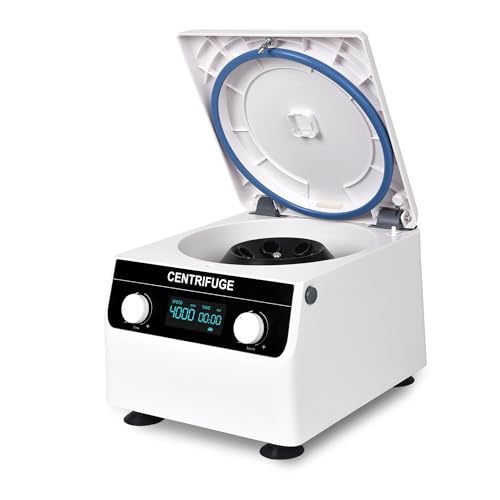 LACHOI 8-Well Benchtop Centrifuge 1920g RCF
|
7.7/10 | Buy | |
 NEWTRY 6-Tube Benchtop Centrifuge 4000r/min
|
7.6/10 | Buy | ||
 McKesson 6-Place Benchtop Centrifuge
|
7.5/10 | Buy | ||
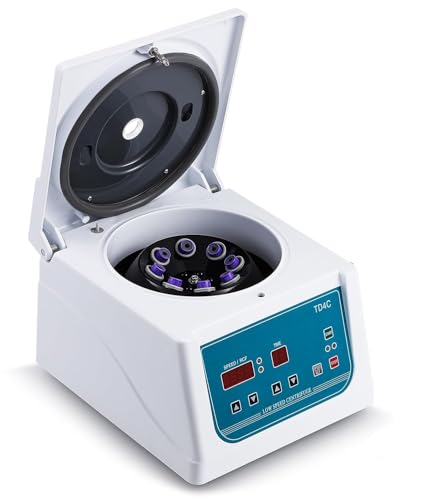 CGOLDENWALL 8x15ml Benchtop Centrifuge 100-4000RPM
|
7.4/10 | Buy | ||
 JOANLAB LC-6S Benchtop Centrifuge, 6-Place, 5000 RPM
|
7.2/10 | Buy | ||
 NEWTRY Mini Centrifuge 10ml x6, 300-4000 r/min
|
6.1/10 | Buy | ||
 CALU LUKY 4000 RPM Benchtop Centrifuge
|
5.2/10 | Buy | ||
 Super Deal 4000 RPM Benchtop Centrifuge, 6x20ml
|
4.5/10 | Buy |
ONiLAB Benchtop Centrifuge 6x50mL 4000rpm
A compact benchtop centrifuge designed for routine lab separation tasks with intuitive digital controls and safety features including door interlock and overspeed detection. Suitable for labs needing multi-tube capacity without industrial-grade footprint.
Pros
- Intuitive menu system with easy-to-read LCD display and sound alerts
- Multiple adapter sizes included for diverse tube formats without extra purchases
- Brushless motor design eliminates maintenance needs and improves durability
- Adjustable braking at 2 levels accommodates different sample sensitivity requirements
- Compact dimensions and 13.2 lb weight suit space-constrained laboratory benches
Cons
- No verified customer reviews available to confirm real-world reliability or performance consistency
- Maximum speed of 4000 rpm limits applications requiring higher centrifugal force for dense or viscous samples
- Fixed angle rotor configuration offers less flexibility compared to swing bucket alternatives for some separation protocols
ONiLAB DM0506 Benchtop Centrifuge 300-5000rpm
A compact, low-speed benchtop centrifuge designed for routine lab separation tasks, equipped with a fixed-angle rotor accommodating multiple tube sizes from 1.5mL to 15mL. Offers programmable operation with LCD display, safety interlocks, and quiet brushless motor, making it suitable for small labs and educational settings.
Pros
- Versatile rotor design accommodates six different tube sizes without extra adapters
- Two quick-start program settings reduce setup time for routine procedures
- Safety interlock prevents lid opening until rotor completely stops
- Brushless motor provides long service life with minimal maintenance
- Quiet operation suitable for shared lab environments
Cons
- Entry-level specifications limit use to low-speed applications only (max 2600xg RCF)
- No independent reviews or verified buyer feedback available to assess real-world reliability
- Fixed rotor configuration may be restrictive for labs requiring multiple rotor angles
Labnique Digital Benchtop Centrifuge 100-5000rpm
A compact benchtop centrifuge designed for labs handling standard 10ml and 15ml tubes, offering digital speed and time controls up to 5000rpm with safety features like lid-lock and automatic release. Best suited for small-scale sample processing where space and affordability matter.
Pros
- Safety lid-lock mechanism prevents accidental opening while rotor is spinning
- Digital controls with clear LCD display for precise speed and time settings
- Compact benchtop design fits easily into small laboratory spaces
- Includes quick spin button for efficient workflow
- US-based warranty and customer support included
Cons
- No reviews available to assess real-world reliability or user experience
- Limited to 6-tube capacity, not suitable for higher-throughput labs
- Speed display uses non-standard format (shown speed x 10), which may cause confusion during operation
LACHOI 8-Well Benchtop Centrifuge 1920g RCF
A compact benchtop centrifuge designed for routine lab work, offering variable speed control (500-4000 RPM) and a 1920×g max RCF across 8-well capacity. Best suited for educational labs, QC operations, and sample prep tasks that don't demand high-speed separation.
Pros
- Clear LCD interface makes operation straightforward for routine applications
- Reliable anti-vibration design minimizes noise and movement during runs
- Comprehensive safety suite protects samples and users in chemical/food labs
- Durable construction with resistance to aging and dust contamination
Cons
- Maximum RCF of 1920×g limits capability for demanding separation tasks requiring higher forces
- 8-well capacity may be restrictive for labs processing large sample batches
- No verified buyer reviews available to assess real-world reliability and durability claims
NEWTRY 6-Tube Benchtop Centrifuge 4000r/min
This compact benchtop centrifuge handles up to 6 samples of 15ml capacity with digital speed and timer controls up to 4000 rpm. Built-in safety lock and suction cup stabilization make it suitable for small labs and PRP applications, though it requires balanced sample loading for optimal performance.
Pros
- Digital display with precise real-time control over speed and runtime
- Built-in safety lock that automatically halts spinning if lid is opened
- Low vibration design with suction cup feet maintains stable, quiet performance
- Adequate rotor capacity for routine sample processing in small labs
Cons
- Requires perfectly balanced tube loading and identical sample volumes to prevent damage
- No reviews available yet to confirm real-world durability and performance
- 60W motor limits throughput compared to higher-powered clinical centrifuges
McKesson 6-Place Benchtop Centrifuge
A compact, fixed-rotor centrifuge designed for clinical and laboratory settings that emphasizes simplicity and durability. Operates at speeds from 500 to 4,000 rpm with mechanical timer control, making it suitable for routine blood separation and material processing in busy practices.
Pros
- Wide speed range (500-4,000 rpm) accommodates various separation needs
- 6-place fixed rotor handles standard 5-10 mL tubes efficiently
- Mechanical 30-minute timer with audible bell signal eliminates guesswork
- Compact footprint (14.4 x 14.8 x 11.8 inches) fits standard benchtop space
- Built for extended service life in high-use environments
Cons
- Fixed rotor design limits flexibility for different tube types or quantities
- No digital display or programmable settings, relying on manual linear speed control
- No verified buyer reviews available to assess real-world performance or reliability claims
CGOLDENWALL 8x15ml Benchtop Centrifuge 100-4000RPM
A compact desktop centrifuge designed for lab work including PRP separation, blood analysis, and biochemical testing. Operates across 100-4000rpm with programmable timing up to 99 minutes and delivers maximum centrifugal force of 1880xg.
Pros
- Wide RPM range covers most common lab applications from low to moderate-speed centrifugation
- 8-tube capacity allows processing multiple samples simultaneously
- LED display for intuitive control of speed, time, and RCF values
- Built-in safety features including lid lock and noise reduction under 65dB
- Programmable 1-99 minute timer with continuous run option
Cons
- No verified customer reviews available to validate real-world reliability and durability
- Maximum centrifugal force of 1880xg limits use for high-speed applications requiring greater force
- Specification sheet lacks details on motor type, warranty coverage, and maintenance requirements
JOANLAB LC-6S Benchtop Centrifuge, 6-Place, 5000 RPM
A versatile low-speed benchtop centrifuge with a 6-place rotor that handles multiple tube sizes (2ml to 15ml) and reaches 3074 xg maximum force. Designed for labs and educational settings running routine separations like serum and PRP work.
Pros
- Flexible 6-place aluminum rotor handles 2ml, 5ml, 10ml, and 15ml tubes simultaneously
- Intuitive digital control with adjustable spin time (10s to 99min 59s) and speed settings
- Electronic safety features including intelligent lid lock and auto-open design
- Brushless motor delivers reliable 3074 xg force for efficient sample separation
- Quick-Spin convenience function for routine urgent spins
Cons
- No verified buyer reviews available yet to confirm real-world performance and durability claims
- Maximum 5000 RPM may be limiting for high-speed applications requiring faster separation
- Manual verification of tube size compatibility required before use, adding prep time
NEWTRY Mini Centrifuge 10ml x6, 300-4000 r/min
Compact benchtop centrifuge designed for small lab spaces and portable use, offering variable speed control up to 4000 r/min with programmable timing up to 60 hours. Ideal for researchers and lab technicians needing a budget-friendly, lightweight unit for routine sample processing.
Pros
- Portable and space-saving footprint for lab benches with limited room
- Stepless speed regulation allows smooth, precise control and extended button lifespan
- Quiet operation under 50dB minimizes lab disturbance during extended runs
- Long programmable timer up to 60 hours supports overnight or unattended processing
- High-strength ABS construction with stable base reduces vibration and drift
Cons
- No customer reviews available to verify real-world reliability and performance consistency
- Limited tube capacity of 6 samples may not suit high-throughput applications
- Lower maximum speed of 4000 r/min compared to industrial-grade centrifuges limits some separation applications
CALU LUKY 4000 RPM Benchtop Centrifuge
A compact low-speed centrifuge designed for basic laboratory work like cell separation and particle isolation. Features manual speed and timer controls with capacity for six 20ml tubes, though it's built for routine applications rather than high-throughput processing.
Pros
- Low-speed design appropriate for cell and particle separation work
- Includes six tubes with standardized 20ml capacity
- Flexible timing options with up to 60-minute settings
- Compact benchtop footprint for laboratory space constraints
Cons
- 4000 RPM is relatively low compared to high-speed centrifuges, limiting some applications
- No verified customer reviews available to assess real-world durability or performance consistency
- Limited specifications provided on rotor type, safety features, or noise levels
Super Deal 4000 RPM Benchtop Centrifuge, 6x20ml
A compact benchtop centrifuge designed for medical labs and educational settings, offering precise speed control up to 4000 RPM and adjustable timers for diverse separation tasks. Quiet operation and durable construction make it suitable for professional and classroom environments.
Pros
- Precise timer and speed controller enable accurate centrifugation across diverse experimental needs
- Compact footprint with portability makes installation flexible across professional and educational environments
- Quiet operation minimizes lab disruption and creates a peaceful working environment
- Durable premium materials ensure reliable, consistent performance for long-term laboratory use
Cons
- No verified buyer reviews available to assess real-world reliability and user experience
- 4000 RPM maximum speed may be limiting for specialized high-speed separation applications
- Limited capacity at 6x20ml tubes, requiring multiple runs for larger sample volumes
Best Centrifuges Buying Guide
Buying a benchtop centrifuge is not as straightforward as picking the cheapest unit with the highest RPM on the label. Several interconnected factors determine whether a machine will serve your samples reliably over thousands of cycles.
The sections below walk through each key criterion, helping you match specifications to your actual use case rather than to marketing copy.
Speed Range and RCF Output
Rotational speed is typically listed in RPM, but the number that actually determines separation efficiency is Relative Centrifugal Force, expressed as xg. Two centrifuges running at identical RPM can produce very different RCF values depending on rotor radius.
Always cross-reference both figures before buying. For blood and PRP separation, most protocols require somewhere in the range of 1,500 xg to 3,000 xg; for simple sedimentation or urine analysis, even 1,000 xg is sufficient.
Entry-level machines commonly top out at 4,000 RPM and around 1,800 xg to 1,920 xg, which covers routine clinical tasks but excludes many molecular biology protocols.
Mid-range units that reach 5,000 RPM and 2,600 xg to 3,074 xg open the door to a wider variety of applications without crossing into the price territory of high-speed refrigerated centrifuges.
If your protocols call for speeds above 5,000 RPM consistently, the benchtop models reviewed here will not suffice and you should look at microcentrifuges or high-speed floor models instead.
Pair your centrifuge research with a look at analytical balances, since accurate sample mass measurements before spinning are critical for rotor balance and reproducible results.
Rotor Capacity and Tube Compatibility
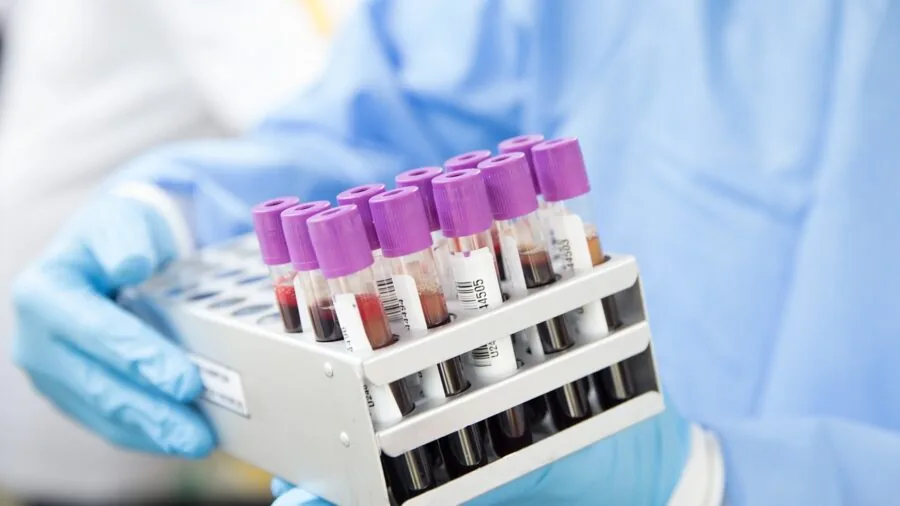
Capacity is defined by both the number of tubes and the tube sizes the rotor accepts.
A 6 x 50 mL configuration suits high-volume liquid separations, while a 6 x 15 mL or 8 x 15 mL rotor is more common in PRP clinics and small research labs.
Some models accept multiple adapter sets, letting you spin 1.5 mL microtubes, 7 mL collection tubes, and 15 mL conicals in the same machine by swapping a simple insert.
Verify tube compatibility carefully. A centrifuge listed as “15 mL x 6” may or may not fit the specific brand of blood collection tubes you use, especially if those tubes have extended caps or ridged bodies.
Verified buyer feedback consistently highlights mismatched tube fits as a leading cause of dissatisfaction in this category. If your workflow involves multiple tube formats, prioritize models that ship with multiple adapters or explicitly list compatibility with standard Vacutainer-style tubes.
Timer Controls and Run Programs
A reliable, accurate timer is not a luxury in laboratory equipment; it is a safety and reproducibility requirement. Basic units offer a simple knob with a maximum run time of 60 minutes, which is adequate for most clinical spins.
More sophisticated models extend the timer to 99 minutes and add quick-start programs that recall saved speed and time combinations at the press of a single button, reducing operator error during busy clinical sessions.
Look for models where the timer can be set to run continuously without an auto-shutoff at zero, particularly if you need timed batch processing.
LCD digital displays are far more readable than analog dials, especially under the mixed lighting common in laboratory environments.
The ONiLAB PRP unit, for example, is frequently cited by buyers for the clarity and responsiveness of its LCD interface and dual quick-start program storage.
Build Quality, Noise, and Vibration

Centrifuges that vibrate excessively can damage samples, accelerate bearing wear, and become a serious nuisance in quiet clinical or office-adjacent lab spaces.
Expert reviews and verified buyer reports consistently flag chassis rigidity and rotor balance as the primary drivers of vibration. Heavy-gauge metal housings outperform thin plastic shells in damping vibration at higher speeds, though they add to the shipping weight.
Noise levels are harder to compare from specifications alone, but buyer feedback for units like the CGOLDENWALL and NEWTRY models often specifically notes whether the machine runs quietly enough for a clinical reception area or medical office.
Anti-slip rubber feet and an imbalance auto-shutoff are meaningful safety features worth confirming before purchase, since an unbalanced rotor at 4,000 RPM can walk the unit off a benchtop in seconds.
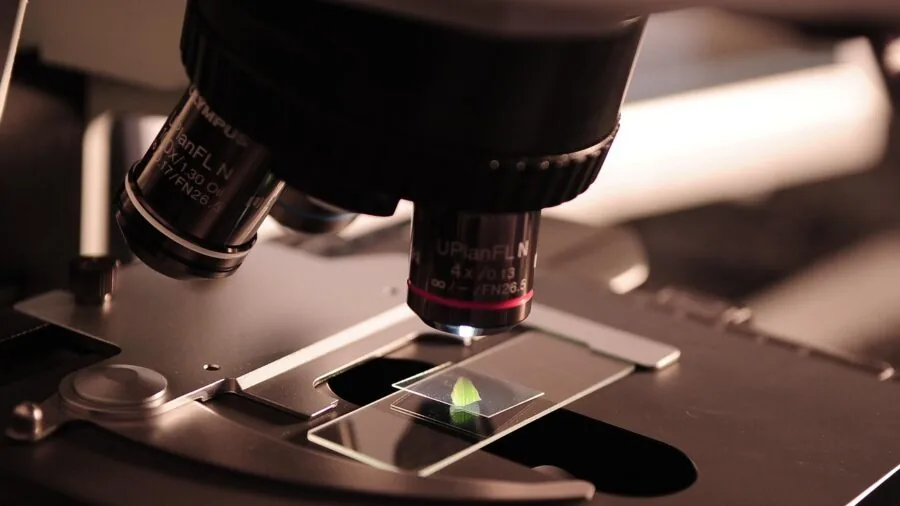
If your laboratory also relies on precise measurement instruments, our guide to microscopes for lab and classroom use may be a useful companion resource when outfitting a new workspace.
Display and Ease of Use
Operators running a centrifuge dozens of times per day need controls that are intuitive and hard to set incorrectly.
Knob-based analog controls are simple but imprecise; digital keypads allow exact RPM entry in increments as small as 100 RPM, which matters when your protocol specifies a precise speed.
Some units display both set speed and actual running speed simultaneously, which is a useful quality-control indicator that the rotor has reached the intended rate.
Consider how the machine is cleaned and maintained as well. Smooth interior bowls with removable rotors are far easier to decontaminate after a tube breakage event than units with complicated recesses.
For high-frequency clinical environments such as PRP clinics or veterinary practices, ease of decontamination should factor heavily into the decision alongside raw performance specifications.
Price, Warranty, and Brand Support

The centrifuges reviewed here span a wide budget range from very affordable entry-level units to professional-grade models priced at a significant premium. Price correlates reasonably well with build quality and feature depth in this category, but there are notable exceptions.
Some mid-range models from ONiLAB and Labnique deliver specifications and build quality that rival units sold at considerably higher prices, making them strong value propositions for budget-conscious labs.
Warranty terms and the availability of replacement rotors matter more for centrifuges than for many other lab instruments because the rotor is both a high-wear component and a safety-critical part.
Verify that the seller offers a meaningful warranty of at least one year and that rotor replacement parts are actually available before committing to a purchase.
The McKesson unit carries brand recognition and distribution reach that translates to reliable parts availability, which partly explains its position despite not offering the highest raw performance in the group.
Accurate measurement is central to any laboratory workflow. Digital scales worth buying are a natural complement to centrifuge work, especially when preparing balanced rotor loads or measuring reagents before processing.
Why You Should Trust Us
ProductFind is an independent review publication. We do not represent any manufacturer, retailer, or distributor, and our editorial team operates separately from our commercial relationships.
Every product in this roundup was assessed using a consistent, documented methodology built around four data streams: published technical specifications, expert review consensus drawn from credible third-party sources, verified buyer feedback aggregated from confirmed purchase reviews, and publicly available data on brand reliability and market positioning.
Each product receives a PF Score on a scale of 0 to 10, reflecting how well it performs across criteria including speed and RCF output, rotor capacity and compatibility, build quality, control accuracy, and overall value.
We do not conduct our own product trials; our evaluations are grounded in research, published data, expert review consensus, and verified buyer feedback.
This approach allows us to assess a broader range of products than any single-lab evaluation could cover while maintaining consistent scoring standards across the entire field.
ProductFind may earn a commission when you purchase through links in this article. That affiliate relationship has no bearing on PF Scores, product rankings, or editorial recommendations. Products are ranked on merit, not margin.
Final Thoughts
The centrifuge market at this price tier offers real quality options for clinical, research, and educational settings, but the right choice depends entirely on matching specifications to your actual workflow. Below are the standout picks from this roundup, each recognized for a specific strength.
- Best Overall: ONiLAB Benchtop Centrifuge 6x50mL earns the top spot with the highest PF Score in this roundup, offering a generous 50 mL rotor capacity, a broad speed range, and the build consistency that verified buyers cite repeatedly as a differentiator in professional lab settings.
- Best for PRP and Clinical Use: ONiLAB Lab PRP Benchtop Centrifuge is purpose-built for platelet-rich plasma protocols with multi-format tube compatibility, a responsive LCD interface, and two quick-start program slots that streamline high-volume clinical sessions.
- Best Mid-Range Value: Microyn Digital Bench-top Centrifuge by Labnique reaches 5,000 RPM and over 3,000 xg at a mid-tier price, making it one of the best-performing units per dollar for research labs that need real speed without a premium budget.
- Best Budget Pick: LACHOI Lab Centrifuge Machine LCD 8x10ml/15ml delivers an LCD display, 8-place rotor, and solid build at an accessible price point, earning a strong PF Score for buyers who need capable daily-use performance without a large capital outlay.
- Best for Brand Reliability and Availability: McKesson Centrifuge benefits from an established healthcare distribution network, consistent parts availability, and the brand trust that clinical purchasing managers often require for patient-facing environments.
Whichever model you choose, pair it with properly calibrated measurement tools and follow rotor balancing protocols on every run. A centrifuge is only as reliable as the habits built around it.
Frequently Asked Questions
What Is the Difference Between RPM and RCF in a Centrifuge?
RPM (revolutions per minute) measures how fast the rotor spins, while RCF (Relative Centrifugal Force, expressed as xg) measures the actual force applied to your sample.
Two centrifuges can spin at the same RPM but generate different RCF values if their rotors have different radii.
Always check the maximum xg rating alongside RPM when comparing models, and match the xg requirement listed in your protocol rather than defaulting to the highest RPM number available.
How Do I Know If a Centrifuge Is Compatible With My Tubes?
Check the rotor specifications for tube diameter (in millimeters) and length, then compare those to the physical dimensions of your collection tubes, not just the volume label.
Standard 15 mL conical tubes from different manufacturers can vary slightly in outer diameter and cap height. If the product listing does not specify outer diameter ranges, look at verified buyer feedback from users who mention your specific tube brand.
Many mid-range models include multiple adapter inserts to accommodate 1.5 mL, 7 mL, 10 mL, and 15 mL formats in the same rotor.
Are These Benchtop Centrifuges Safe for a Medical Office or Clinical Setting?
Most units reviewed here are marketed for medical and laboratory use and meet basic safety standards for clinical environments.
Key safety features to confirm include an automatic imbalance shutoff, a secure lid-lock mechanism that prevents opening during a spin, and a brushless or low-wear motor rated for continuous duty cycles.
Units marketed specifically for PRP therapy, such as the ONiLAB PRP model and the NEWTRY 15 mL unit, have received consistent positive feedback from clinical buyers.
Always verify that the unit you select carries appropriate certifications for your jurisdiction before use on patient-derived samples.
What Capacity Do I Need for PRP Processing?
Standard PRP protocols typically use 7 mL to 15 mL blood collection tubes, and most single-patient treatment sessions require two to six tubes per spin. A 6-place or 8-place rotor accepting 15 mL tubes covers the vast majority of clinical PRP workflows.
If you are running multiple patients in rapid succession, an 8-place rotor allows slightly higher throughput per cycle.
Make sure the centrifuge you select explicitly lists compatibility with the specific PRP kit or collection tube system your clinic uses, since adapter fit varies between brands.
How Do Benchtop Centrifuges Compare to Microcentrifuges for Lab Work?
Benchtop centrifuges in this category handle volumes from 1.5 mL up to 50 mL across multiple tubes simultaneously, making them suitable for clinical chemistry, PRP, urine analysis, and basic research separations.
Microcentrifuges are designed for 1.5 mL to 2 mL tubes and often reach much higher speeds (12,000 RPM or more), which is necessary for molecular biology applications like plasmid minipreps or protein pellets.
If your work spans both small-volume and larger-volume separations, you may ultimately need both instrument types. For general clinical use, the benchtop units reviewed here are the appropriate category.
How Should I Maintain a Benchtop Centrifuge to Extend Its Lifespan?
Always load the rotor in balanced pairs or sets to prevent vibration-induced bearing wear.
Clean the rotor and bowl after any spill or tube breakage using a mild disinfectant that is compatible with the rotor material (check the manual, since some aluminum rotors are sensitive to bleach).
Inspect the rotor for cracks or corrosion periodically, especially if you process corrosive buffers or biological fluids. Store the unit with the lid open between uses to allow moisture to evaporate and prevent condensation buildup inside the bowl.
Following the manufacturer’s recommended service interval for brush replacement (on brush-type motors) or bearing inspection will significantly extend operational life.
About the author
Daniel is a reviewer and writer for ProductFind who specializes in Lab & Scientific. Daniel evaluates products through independent research: specifications, expert review consensus, and verified buyer feedback, and rates each one on the PF Score. Daniel focuses on helping readers pick the right lab & scientific for their needs and budget.