The 10 Best Dehumidifiers
Excess indoor humidity encourages mold, dust mites, and air quality problems. Our research-backed picks cover every space, from a small bedroom to a 6,000 sq ft basement.
 By Constance Jenkins
Updated July 23, 2026
By Constance Jenkins
Updated July 23, 2026

Excess humidity is more than a comfort issue.
When indoor relative humidity climbs above 50 to 60 percent, mold and mildew begin to colonize walls and flooring, dust mite populations surge, and air quality deteriorates in ways that can worsen allergies and asthma.
A quality dehumidifier pulls that moisture out before damage sets in, and the right model will do it quietly, efficiently, and without demanding constant attention.
Whether you are managing a damp basement, a muggy bedroom, or a whole-home moisture problem, matching the machine to the space and use case makes a meaningful difference in results and energy costs.
At ProductFind, our editorial team analyzed specifications, synthesized expert review consensus, and combed through verified buyer feedback across models from Frigidaire, Waykar, AEOCKY, Midea, KNKA, KeepGlad, yaufey, and TABYIK to surface the options that genuinely perform.
We did not rely on a single source or a single price point: picks span from compact bedroom units to high-capacity basement workhorses, so there is a strong match no matter your situation.
Read on to see which dehumidifiers earned a place on our list.
| Award | Product | PF Score About PF ScoreThe PF Score is our own rating from 0 to 10, based on performance, design and build, ease of use, and value. It reflects independent research and is never influenced by manufacturers, retailers, or affiliate commissions. Learn more › | Price | |
|---|---|---|---|---|
| Best Overall |
 Frigidaire 50 Pint Dehumidifier with WiFi
|
8.4/10 | Buy | |
| Editor's Pick |
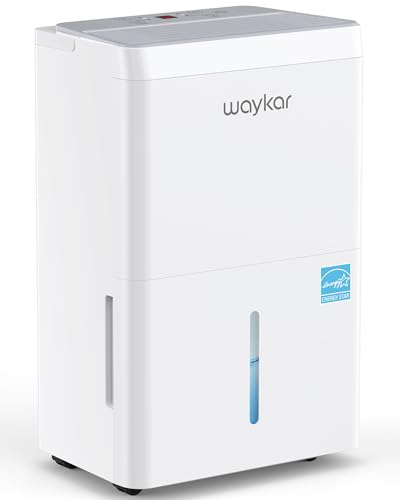 Waykar 120-Pint Dehumidifier for 6000 Sq. Ft
|
8.3/10 | Buy | |
| Best Value |
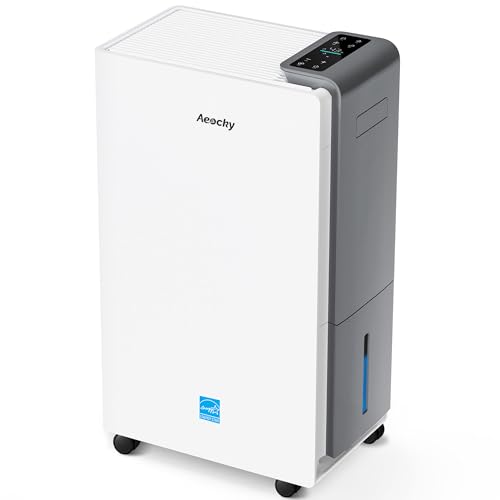 AEOCKY RHEA-001 80-Pint Dehumidifier, Energy Star Most Efficient 2025
|
8.2/10 | Buy | |
| Top Rated |
 AEOCKY BOREAS-001 50-Pint Dehumidifier
|
8.1/10 | Buy | |
 KeepGlad 80 Pint/Day Energy Star Dehumidifier
|
8.1/10 | Buy | ||
 Midea 50 Pint Wi-Fi Dehumidifier for 4,500 Sq. Ft.
|
8.0/10 | Buy | ||
 KNKA 80-Pint Dehumidifier for 4500 Sq.Ft
|
7.9/10 | Buy | ||
 Midea 22-Pint Wi-Fi Dehumidifier for 1,500 Sq. Ft.
|
7.8/10 | Buy | ||
 Yaufey 120-Pint Dehumidifier for 6000 Sq. Ft.
|
7.5/10 | Buy | ||
 TABYIK 35oz Compact Dehumidifier
|
5.2/10 | Buy |
Frigidaire 50 Pint Dehumidifier with WiFi
This 50-pint capacity dehumidifier offers customizable humidity control and a washable filter for easy maintenance. The WiFi connectivity adds convenience for remote monitoring, though the lack of verified buyer reviews means real-world performance data is limited.
Pros
- Washable filter design eliminates recurring replacement expenses
- Custom humidity control allows fine-tuned climate adjustment
- WiFi connectivity enables remote monitoring and adjustment
Cons
- No verified buyer reviews available to assess real-world reliability
- 44-pound weight may require significant effort for repositioning
- Filter maintenance requirements not detailed in available specifications
Waykar 120-Pint Dehumidifier for 6000 Sq. Ft
A quiet, energy-efficient dehumidifier that extracts up to 120 pints daily and covers large spaces, featuring smart auto humidity control and whisper-quiet 40dB operation. Best for basements, humid homes, and bedrooms where noise matters.
Pros
- Energy-efficient performance certified by 2025 Energy Star standards, reducing operating costs
- Remarkably quiet at 40dB on low mode, enabling use in noise-sensitive spaces without disruption
- Smart auto-humidity adjustment maintains comfort without manual adjustment across temperature ranges
- Extended cold-weather operation down to 42°F with auto-defrost, useful for unheated basements
- Includes 3.3-foot drain hose for convenience; wheels and handle simplify repositioning
Cons
- No verified buyer reviews available to confirm real-world performance claims
- Requires garden hose purchase separately if extending drainage beyond included 3.3-foot hose
- Heavy at 28.75 pounds; despite wheels, moving frequently may be cumbersome for some users
AEOCKY RHEA-001 80-Pint Dehumidifier, Energy Star Most Efficient 2025
AEOCKY's RHEA-001 is a high-capacity dehumidifier built around Energy Star Most Efficient 2025 certification, covering 4500 sq.ft with 80 pint/day capacity in peak conditions. It emphasizes energy efficiency, low-temperature operation, and quiet performance through a proprietary rotor compressor and copper-based heat exchange system.
Pros
- Genuine Energy Star Most Efficient 2025 certification with documented efficiency gains over standard models
- Durable copper piping and advanced heat exchanger design rated for at least 3 years normal use
- Strong low-temperature performance down to 65F, unlike many compressor dehumidifiers that frost up
- Compact footprint at 14.45 x 8.66 x 24.09 inches with 31-pound weight for a high-capacity unit
- Smart controls with power-off memory function compatible with smart home setups
Cons
- No verified user reviews available yet to assess real-world reliability and performance consistency
- Requires external drain hose for continuous operation, not ideal for temporary or portable use
- Marketing messaging emphasizes competitor misleading claims, which may overstate differentiation
AEOCKY BOREAS-001 50-Pint Dehumidifier
A heavy-duty compressor dehumidifier rated for up to 3,500 sq ft, delivering 50 pints per day in hot conditions with copper coil construction for durability. Best suited for basements, garages, and damp spaces where continuous drainage is practical.
Pros
- Durable copper coil construction rated for 3+ years vs aluminum alternatives
- Quiet operation at ~40dB makes it suitable for bedrooms and offices
- Effective drainage options: gravity drain with included hose or continuous drain via adapter
- Auto-defrost allows year-round use in cooler basements
- Multicolor humidity indicator provides instant room dampness feedback
Cons
- Small 0.8-gallon tank requires frequent manual emptying without continuous drain setup
- No verified buyer reviews available to confirm real-world performance claims
- Requires tank to remain installed even when using gravity drain, limiting portability
KeepGlad 80 Pint/Day Energy Star Dehumidifier
A powerful whole-house dehumidifier designed for large spaces up to 5,000 sq.ft, removing up to 80 pints of moisture daily with Energy Star 2025 certification. It operates at just 40 decibels, features flexible drainage options, and includes smart humidity controls, making it suitable for basements, bedrooms, and damp areas.
Pros
- Exceptionally quiet at 40 decibels, suitable for bedrooms and workspaces
- Multiple drainage options eliminate frequent water tank emptying
- Energy Star 2025 certified with recycled materials for eco-conscious buyers
- Three operational modes adapt to basements, laundry rooms, and continuous humidity control
- Safety features include overflow protection, auto-restart, and anti-freeze sensor
Cons
- No verified buyer reviews available yet, limiting real-world performance confirmation
- Large coverage area and 80-pint capacity suggests significant physical size and weight for positioning
- Effectiveness depends heavily on room ventilation and may require optimal placement for maximum moisture removal
Midea 50 Pint Wi-Fi Dehumidifier for 4,500 Sq. Ft.
This Wi-Fi-enabled 50-pint dehumidifier handles large spaces up to 4,500 square feet and operates quietly at 49 dB on low mode. Smart home integration via Alexa and Google Assistant, plus flexible drainage options, make it practical for basements and large rooms.
Pros
- Covers large areas up to 4,500 sq. ft. with adjustable humidity settings (35%-85%)
- Ultra quiet operation at 49 dB on low mode, suitable for bedrooms and living spaces
- Wi-Fi enabled with cloud control and voice command compatibility through Alexa and Google Assistant
- Flexible drainage with manual tank emptying or continuous hose connection option
- Includes reusable air filter and 360-degree rotatable wheels for easy repositioning
Cons
- No customer reviews available to verify real-world performance and reliability
- Hose for continuous drainage sold separately, adding extra cost
- Relatively heavy at 41.23 pounds may be difficult for some users to move frequently
KNKA 80-Pint Dehumidifier for 4500 Sq.Ft
Energy Star certified dehumidifier handling up to 80 pints daily in peak humidity, quieter than comparable units at 40-45 dB. Smart humidity controls and dual timer make it practical for basements, bedrooms, and large spaces seeking consistent moisture removal.
Pros
- Energy Star rated design reduces power consumption without sacrificing performance
- Quiet operation at 40-45 dB with sleep mode and indicator light off option
- Built-in 1.45 gallon tank plus drain hose eliminates frequent manual emptying
- Flexible humidity control with AUTO, DRY, and 30-80% customizable modes
- Washable filter and 360-degree casters simplify maintenance and relocation
Cons
- No verified customer reviews available to confirm real-world performance claims
- Humidity readings measured at air inlet may vary from external hygrometer readings
- Optional external tank (2.64 gallon) sold separately, adds extra cost for expanded capacity
Midea 22-Pint Wi-Fi Dehumidifier for 1,500 Sq. Ft.
This Energy Star certified dehumidifier removes up to 22 pints of moisture daily and operates at a quiet 47 dB, making it suitable for basements and large rooms. Smart home integration via Wi-Fi lets you control humidity settings remotely through Alexa or Google Assistant.
Pros
- Significant energy savings backed by Energy Star certification
- Smart home integration allows remote control and voice commands
- Quiet operation at 47 dB reduces disturbance during sleep or work
- Multiple drainage options accommodate different room setups
- Programmable timer and turbo mode for customized moisture removal
Cons
- No customer reviews available yet to verify real-world performance
- Hose for continuous drainage not included and must be purchased separately
- 33.51-pound weight requires some effort to move between rooms despite wheels
Yaufey 120-Pint Dehumidifier for 6000 Sq. Ft.
A large-capacity dehumidifier designed for basements and spacious rooms up to 6,000 sq. ft., offering ENERGY STAR efficiency and dual drainage options. Features smart humidity modes, quiet operation at 55 dB, and millisecond-precision sensors for automated climate control.
Pros
- Covers large spaces up to 6,000 sq. ft., suitable for basements, garages, offices, and RVs
- Two drainage options eliminate daily manual emptying when using included hose
- ENERGY STAR certification reduces electricity costs during continuous operation
- Quiet operation on low fan speed makes it suitable for bedrooms and living areas
- Four preset humidity modes simplify operation without complex settings
Cons
- No verified user reviews available to confirm real-world performance claims
- Heavy at 31.8 pounds, may require assistance for repositioning
- Effectiveness at 90 pints per day in moderate humidity (86F, 80% RH) is notably lower than peak capacity rating
TABYIK 35oz Compact Dehumidifier
A small, portable dehumidifier designed for bedrooms, bathrooms, and tight spaces, drawing up to 16oz of moisture daily with minimal energy use. Quiet operation at 28dB and convenient auto-shutoff make it practical for hands-off moisture control in rooms up to 280 sq. ft.
Pros
- Removes up to 16oz moisture per day in humid conditions (86°F, 80% RH)
- Extremely quiet at 28dB, minimally disruptive for sleeping areas
- Portable design with built-in handle fits small spaces easily
- Auto shutoff protection prevents overflow and reduces energy waste
- Large transparent tank allows real-time water level visibility
Cons
- No verified buyer reviews yet, making real-world performance harder to assess
- Limited to small spaces and rooms up to 280 sq. ft., unsuitable for larger areas
- Requires frequent manual water tank emptying given 16oz daily capacity
Best Dehumidifiers Buying Guide
Buying a dehumidifier is straightforward once you know what to match to your space, but the market is crowded with models that look similar on the surface.
The subsections below walk through every criterion that actually separates a great purchase from a frustrating one, drawing on the same factors our team weighed when scoring each model above.
Coverage Area and Pint Capacity

Pint capacity is the most prominent spec on any dehumidifier box, and it is also one of the most misunderstood.
The number refers to how many pints of water the unit removes per day under standardized conditions, not necessarily under the actual conditions in your home.
A 50-pint machine rated for up to 4,500 square feet is appropriate for a moderately damp space that size, but a very wet basement of the same area may genuinely need a 120-pint unit to keep up.
The general guidance from the Association of Home Appliance Manufacturers (AHAM) is to size up if your space has concrete walls, is below grade, or experiences standing water seasonally.
Buying too small means the compressor runs constantly and never quite reaches your target humidity, raising energy costs without solving the problem.
Buying too large in a small, well-sealed space costs more upfront but may reach the set point faster and cycle off, which can actually be more efficient in practice.
For small rooms and closets, a compact desiccant or thermoelectric unit is often sufficient and runs silently, while serious basement applications call for high-capacity compressor models.
If you are also trying to improve overall indoor comfort beyond dehumidification, pairing your dehumidifier with a capable air purifier addresses particulates and odors that dehumidification alone cannot remove.
For spaces where cooling is the primary goal, consider how a dehumidifier complements portable air conditioners, which also remove some moisture as a byproduct of cooling.
Energy Efficiency and ENERGY STAR Certification
Dehumidifiers run for long stretches, sometimes around the clock during peak humid months, which means energy consumption is a real operating cost consideration. ENERGY STAR certification from the U.S.
Environmental Protection Agency guarantees that a model meets efficiency thresholds that, according to the EPA, can reduce energy use by roughly 13 percent compared with non-certified equivalents.
Most of the picks on our list carry this certification, and it is a baseline worth holding firm on unless you are buying a very small unit for occasional use.
Beyond the certification label, look at the Energy Factor (EF) or Integrated Energy Factor (IEF) rating, which expresses liters of water removed per kilowatt-hour of energy consumed. Higher numbers mean more efficiency.
Models with smart humidity sensors that cycle the compressor off when the target relative humidity is reached are meaningfully more efficient than models that run on a timer or manual setting, because they avoid running when the air is already dry enough.
Drainage Options: Tank vs. Continuous Drain
Every dehumidifier collects water somewhere, and how you want to manage that water should factor heavily into your purchase. Tank-based models collect water in a removable reservoir that triggers automatic shut-off when full.
This is convenient for placement flexibility since the unit does not need to sit near a drain, but in a high-humidity basement a large tank can fill within hours and require multiple daily empties if you are not vigilant about it.
Continuous-drain models include a port that accepts a standard garden hose, allowing water to flow directly to a floor drain, utility sink, or sump pit.
This eliminates the need to monitor or empty anything, which is particularly valuable when the dehumidifier is in an out-of-the-way basement or crawl space.
Some premium units include an internal pump that pushes water upward to a sink or window, removing the requirement that the drain be lower than the machine itself.
If your intended install location does not have a convenient gravity drain nearby, a built-in pump is worth the extra cost.
For rooms where air circulation is part of a broader comfort strategy alongside moisture removal, a window air conditioner can work in tandem with a dehumidifier by also removing latent heat, making both systems more effective.
Noise Level

Compressor-based dehumidifiers are not silent appliances. The compressor, condenser fan, and evaporator fan all contribute to operating noise, and most full-size units produce between 40 and 55 decibels in normal operation.
At 40 dB, the machine is roughly as loud as a quiet library, while 55 dB approaches normal conversation level. For a mechanical room or utility basement you visit infrequently, this is barely relevant.
For a bedroom, living room, or home office, noise becomes a genuine quality-of-life factor.
Manufacturers increasingly publish noise ratings and offer dedicated sleep or quiet modes that throttle the fan speed at the expense of some dehumidification rate.
The Waykar model on our list, for example, is specified at 40 dB, which is notably quiet for a high-capacity unit.
Thermoelectric and desiccant units used for small spaces run near silently, making them preferable for bedrooms or nurseries where any mechanical hum would be disruptive.
Always factor in the room context when comparing noise specs, and treat manufacturer claims as approximate: verified buyer feedback often gives a more realistic picture of real-world volume.
Humidistat Accuracy and Smart Controls

An integrated humidistat lets you set a target relative humidity level, typically in five-percent increments, and the dehumidifier cycles on and off automatically to maintain it. The accuracy of this sensor matters more than most buyers realize.
A humidistat that reads five to ten points high will leave the machine running longer than necessary, wasting energy. One that reads low may allow humidity to creep up without triggering the compressor.
Independent expert reviews frequently flag humidistat accuracy as a differentiator between otherwise similar models.
Smart connectivity, available on models like the Frigidaire 50-pint Wi-Fi unit on our list, adds the ability to monitor readings and adjust settings remotely via a smartphone app.
This is especially useful for unfinished basements you do not visit daily: you can confirm the machine is running, check the current humidity reading, and receive alerts when the tank is full or a filter needs cleaning, all without physically going downstairs.
If you already track air quality more broadly, pairing smart dehumidifier control with an air quality monitor gives you a complete picture of indoor environment conditions.
Portability and Filter Maintenance

Full-size dehumidifiers are not light: most 50-pint and larger models weigh between 30 and 50 pounds. Caster wheels are therefore nearly non-negotiable for any model you plan to move between rooms or reposition seasonally.
Check that the casters are lockable if the unit will sit on a smooth floor, and that the handles are robust enough to assist with lifting over a threshold or up a stair.
A few compact models designed for closets and small bedrooms forgo wheels entirely, which is fine when they stay in one place.
Filters require periodic cleaning to maintain airflow and dehumidification efficiency. Most units use a washable mesh filter that should be rinsed every two to four weeks during heavy-use seasons. Models with a filter-check indicator light remove the guesswork.
Reusable filters are a practical advantage over proprietary disposable ones because there is no ongoing consumable cost and no risk of being unable to source a replacement.
The Midea models on our list specifically advertise reusable air filters, which verified buyers consistently cite as a low-maintenance convenience over multi-year ownership.
Why You Should Trust Us
ProductFind is an independent editorial platform. We do not sell the products we review, and we have no customer-service relationship with any manufacturer or retailer.
Every model in this article was evaluated by our research team using a consistent, criteria-driven methodology: we analyze published specifications, synthesize consensus from expert reviewers across the industry, and weigh verified buyer feedback at scale to understand real-world ownership experience.
Where applicable, we cross-reference published energy-efficiency data from the EPA ENERGY STAR database and AHAM-certified capacity ratings.
Each product receives a PF Score on a scale of 0 to 10, reflecting overall performance across the criteria most relevant to the category: capacity and coverage accuracy, energy efficiency, drainage flexibility, noise level, humidistat quality, and ease of maintenance.
We do not conduct our own product trials; our evaluations are grounded in research, published data, expert review consensus, and verified buyer feedback. The PF Score is calculated independently of commercial relationships.
ProductFind may earn an affiliate commission when you purchase through a link on this page. That relationship does not influence rankings, scores, or editorial selection in any way. Products are recommended because they merit it, not because of commission rates.
If a highly rated model is available at a better price elsewhere, we say so.
Final Thoughts
The dehumidifiers on this list cover the full range of real-world needs, from a tiny thermoelectric unit for a closet to industrial-grade 120-pint compressors built for large, wet basements.
Below are the standout picks by use case, each linked to the full product detail. PF Scores reflect our research-based assessment, not manufacturer claims.
- Best Overall: Frigidaire 50 Pint Dehumidifier with Wi-Fi earns the top PF Score in this roundup thanks to a trusted brand reputation, built-in Wi-Fi app control for remote monitoring, and a solid balance of capacity, efficiency, and usability that suits a wide range of households.
- Best for Large, Very Wet Spaces: Waykar 6000 Sq.Ft Energy Star Dehumidifier is specified at an impressively low 40 dB for its class and delivers serious 120-pint daily capacity with both a drain hose and a water tank, making it the strongest choice when coverage area and quiet operation both matter.
- Best Mid-Range Value: AEOCKY 4500 Sq.Ft 80 Pint Smart Compressor Dehumidifier earns ENERGY STAR’s Most Efficient designation and an intelligent humidistat with app integration at a mid-range price, offering near-flagship features without the flagship price tag.
- Best Budget-Friendly Full-Size Pick: Midea 1,500 Sq.Ft Energy Star Dehumidifier is a well-established model with a reusable air filter and a straightforward control set, ideal for medium-sized rooms where you want reliable moisture control without complexity or a large outlay.
- Best for Small Spaces and Bedrooms: TABYIK 35 OZ Small Dehumidifier handles up to 280 square feet with near-silent thermoelectric operation and auto shut-off, making it practical for a bathroom, closet, or RV where a full compressor unit would be overkill.
For broader home comfort, a dehumidifier works best as part of a layered approach. If cooling is also a priority, explore evaporative coolers for dry climates or a dedicated window or portable AC for humid ones.
If allergy relief is a key motivation for controlling humidity, a HEPA-equipped air purifier for allergy sufferers addresses the airborne triggers that dehumidification alone does not capture.
Frequently Asked Questions
What relative humidity level should I target indoors?
Most health and building science authorities, including the EPA, recommend keeping indoor relative humidity between 30 and 50 percent year-round. Below 30 percent, the air can become uncomfortably dry and irritate airways. Above 50 percent, mold growth and dust mite activity accelerate.
Setting your dehumidifier’s humidistat to 45 to 50 percent is a practical starting point for most homes; you can adjust downward if you notice condensation on windows or musty odors persisting.
How do I know if I need a dehumidifier or a humidifier?
A dehumidifier removes moisture from the air; a humidifier adds it.
You need a dehumidifier if you notice condensation on windows or pipes, musty smells, visible mold or mildew, peeling paint or warped wood, or if anyone in the household experiences worsened allergy symptoms during warm months.
You need a humidifier if winter heating makes your air excessively dry, causing static electricity, cracked skin, or irritated sinuses. Many homes need both at different times of year.
If you are considering adding moisture rather than removing it, our guide to cool mist humidifiers covers the best options in that category.
Are higher-pint dehumidifiers always better?
Not necessarily. A higher-pint capacity machine costs more upfront, draws more power, and produces more noise.
In a small bedroom, a 120-pint basement unit would be loud, expensive to run, and would cycle on and off so frequently that it could reduce overall efficiency.
Match capacity to the actual square footage and severity of moisture intrusion in your space.
Consult AHAM guidelines and, when in doubt, size up one tier rather than two: you will reach your target humidity faster without the downsides of gross over-sizing.
Do dehumidifiers work in cold basements or unheated crawl spaces?
Standard compressor-based dehumidifiers lose efficiency as temperatures drop and can ice up below about 65 degrees Fahrenheit, damaging the unit if run continuously.
Models with an auto-defrost function detect icing and pause the compressor to let the coils thaw before resuming, which makes them suitable for cooler basements. Some models are specifically rated for lower operating temperatures, down to around 41 degrees Fahrenheit.
Check the manufacturer’s stated operating temperature range before buying for an unheated or partially heated space. Desiccant dehumidifiers are an alternative for very cold environments because they do not rely on refrigeration to extract moisture.
How often does the filter need to be cleaned?
For most homes running a dehumidifier regularly during humid months, cleaning the air filter every two to four weeks is a reasonable schedule.
In dusty environments or homes with pets, monthly cleaning may not be enough, and bi-weekly rinsing is better. A clogged filter restricts airflow, reducing dehumidification efficiency and forcing the compressor to work harder.
Rinse reusable filters under warm water, let them dry completely before reinserting, and never run the unit without a filter in place.
Some models include an indicator light that signals when cleaning is due, which takes the guesswork out of maintenance.
Can a dehumidifier help with mold problems?
A dehumidifier can prevent mold from forming and slow the growth of existing mold by removing the moisture that mold colonies need to thrive. However, if mold is already established on surfaces, dehumidification alone is not a remediation strategy.
Visible mold growth covering more than about ten square feet generally requires professional assessment and remediation.
Once the source of moisture intrusion is addressed and mold is cleaned or removed, maintaining humidity below 50 percent with a properly sized dehumidifier is one of the most effective ways to prevent recurrence.
For broader air quality improvement alongside mold prevention, HEPA air purifiers can capture airborne mold spores that dehumidifiers do not address.
About the author
Constance is a reviewer and writer for ProductFind who specializes in Heating, Cooling & Air Quality. Constance evaluates products through independent research: specifications, expert review consensus, and verified buyer feedback, and rates each one on the PF Score. Constance focuses on helping readers pick the right heating, cooling & air quality for their needs and budget.