The 10 Best Lab Notebooks
From GLP-compliant hardbound volumes to carbonless duplicate systems, the right lab notebook protects your research record. Here are the top picks for scientists and students.
 By Daniel Payne
Updated July 23, 2026
By Daniel Payne
Updated July 23, 2026

A lab notebook is not just a place to jot down observations.
It is the legal record of your experiments, the first line of defense in a patent dispute, and often the only reliable proof that a breakthrough happened when you say it did.
Whether you are a graduate student running overnight reactions, a research scientist documenting multi-year studies, or an engineer designing precision systems, the notebook you choose affects how reliably your work can be reproduced, audited, or defended.
Poor paper quality causes bleed-through. Flimsy bindings let pages fall out. The wrong ruling format turns a two-minute sketch into a ten-minute struggle. These are not minor inconveniences; they are risks to your research integrity.
At ProductFind, we evaluated each option in this guide through comprehensive research: manufacturer specifications, expert review consensus from the scientific and academic community, verified buyer feedback from working researchers and students, and published data on materials, compliance, and durability.
The picks below span traditional hardbound notebooks with archival-quality paper, flexible carbonless duplicate systems, and budget-friendly grid formats, covering the range of needs from GLP-compliant documentation to everyday classroom science.
Read on to find the right notebook for your research environment.
| Award | Product | PF Score About PF ScoreThe PF Score is our own rating from 0 to 10, based on performance, design and build, ease of use, and value. It reflects independent research and is never influenced by manufacturers, retailers, or affiliate commissions. Learn more › | Price | |
|---|---|---|---|---|
| Best Overall |
 BookFactory Engineering Notebook, 96 Pages, 0.25" Grid
|
8.7/10 | Buy | |
| Editor's Pick |
 National 43649 Laboratory Notebook, 11x9.25, 100 Duplicate Sets
|
8.1/10 | Buy | |
| Best Value |
 National 53110 Laboratory Notebook, 96 Sheets, 5x5 Quad
|
7.6/10 | Buy | |
| Top Rated |
 Yeplan 96-Page Lab Notebook, Grid Format Hardcover
|
7.4/10 | Buy | |
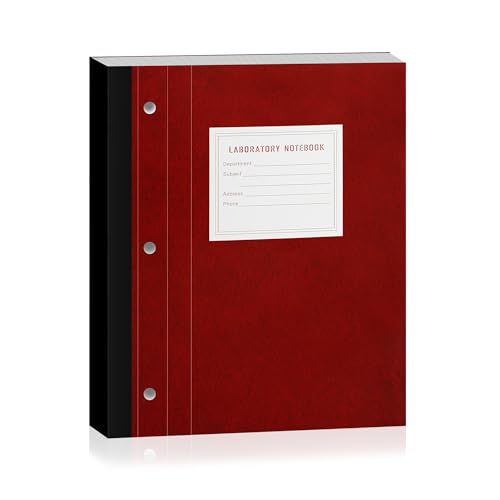 Yeplan Laboratory Notebook, 100-Page Carbon Copy Set
|
7.1/10 | Buy | ||
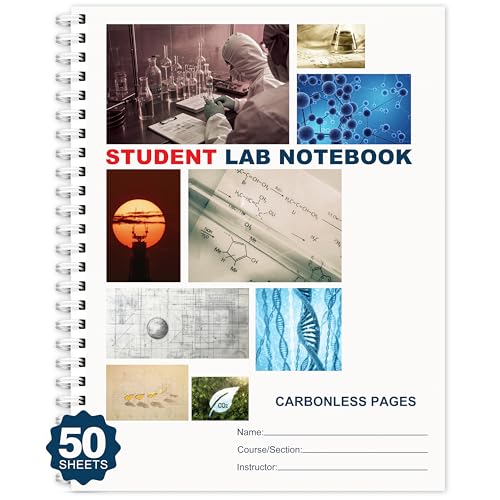 Yeplan Carbonless Lab Notebook 8.5x11 50 Pages
|
7.2/10 | Buy | ||
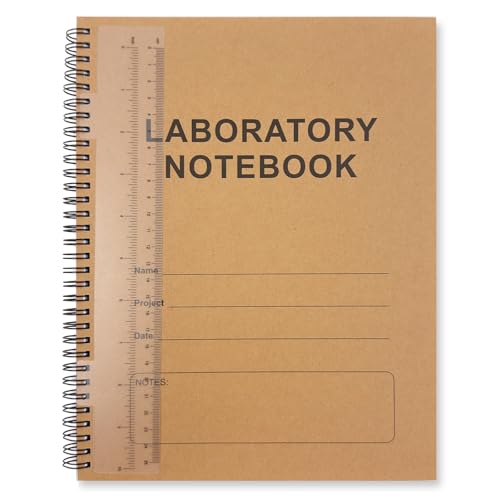 IWIZPRINT Carbonless Lab Notebook, 8.5x11, 50 Sets
|
7.0/10 | Buy | ||
 SKYDUE Carbonless Lab Notebook, 8.5x11 with Duplicate Pages
|
7.0/10 | Buy | ||
 JUBTIC Laboratory Notebook 8.5x11 Grid
|
6.5/10 | Buy | ||
 Yeplan Lab Notebook 105-Page 8.5x11 Grid
|
6.2/10 | Buy |
BookFactory Engineering Notebook, 96 Pages, 0.25" Grid
A hardbound lab notebook with section-sewn binding that lies flat for easy writing and documentation. Made in the USA by a veteran-owned manufacturer, it's built for engineers and scientists who need durable, compliant record-keeping.
Pros
- Section-sewn binding allows the notebook to lie flat when open, improving usability for writing and scanning
- Durable hardbound construction with imitation leather cover withstands daily lab use
- Includes pre-printed user data page, documentation guidelines, and table of contents for compliance and organization
- Made in USA by a veteran-owned business in Ohio
- 0.25 inch lab grid supports precise technical drawings and data entry
Cons
- No verified buyer reviews available to assess real-world performance and durability claims
- Limited color option (black only) offers no aesthetic variety
- 8x10 inch format may feel small for users accustomed to larger notebook sizes
National 43649 Laboratory Notebook, 11x9.25, 100 Duplicate Sets
A practical lab notebook with 100 numbered duplicate sets featuring 4x4 quad ruling for accurate record-keeping and easy distribution. The stitched binding and sturdy construction support frequent use in academic and research environments.
Pros
- 100 numbered duplicate sets with white and yellow sheets for systematic documentation
- Micro-perforated sheets enable quick tear-out without damaging the notebook
- 4x4 quad ruling accommodates charts, graphs, and scientific formulas effectively
- Stitched binding and durable cover withstand regular handling in lab settings
- Made in Canada with compact 11 x 9.25 inch size suitable for both desk and field use
Cons
- No verified customer reviews available to confirm real-world durability claims
- Single color option (brown) with limited customization for different organizational systems
- Fixed 100-set format may be excessive for shorter-term projects or insufficient for extensive research
National 53110 Laboratory Notebook, 96 Sheets, 5x5 Quad
A durable lab notebook with center-sewn binding and 96 sheets of quad-ruled paper, designed for researchers and students who need detailed note-taking space. The flexible green marble cover and 5x5 grid ruling support both written notes and technical diagrams.
Pros
- Ample page count reduces need for multiple notebooks during long research periods
- Quad ruling accommodates both written notes and scaled diagrams without separate grid paper
- Sewn binding resists pages tearing out during handling or transport
- Lightweight and portable for field work
Cons
- No customer reviews available to verify real-world durability claims
- Flexible cover offers less protection than hardcover alternatives for rough conditions
- Grid format may not suit users who prefer blank or lined pages exclusively
Yeplan 96-Page Lab Notebook, Grid Format Hardcover
A durable PU leather-bound lab notebook with 96 pages of premium grid paper, designed for scientists, students, and researchers who need organized documentation of experiments and data. The numbered pages and thick paper that resists ink bleeding make it practical for long-term professional use.
Pros
- Durable PU leather binding built for frequent use in lab and academic settings
- Premium thick paper prevents ink bleed-through, allowing two-sided writing
- Grid format with numbered pages provides structured organization for notes, calculations, and sketches
- Hardcover construction protects contents during transport and storage
- Compatible with multiple writing instruments including pencils and ballpoint pens
Cons
- No verified customer reviews available to confirm real-world durability claims
- Grid format may not suit users who prefer blank or lined pages for different note-taking styles
- Binding type listed as unknown, limiting clarity on exact construction quality
Yeplan Laboratory Notebook, 100-Page Carbon Copy Set
Hardcover lab notebook with built-in carbon copies that automatically duplicate each page, designed for chemists, biologists, and researchers who need permanent records and instant sharing. Quadrille-ruled pages with perforated edges tear out cleanly for submitting reports and documentation.
Pros
- Carbon copy feature automatically generates duplicates, eliminating manual copying and saving time on record-keeping
- Durable hardcover withstands spills, frequent handling, and long-term lab storage
- 100 sets of numbered, quadrille-ruled pages help organize experiments and track progress systematically
- Perforated pages tear cleanly for easy submission of lab reports and official documentation
- Large 11" x 9.25" format provides ample space for detailed scientific notes and diagrams
Cons
- No user reviews available to assess real-world durability or carbon copy effectiveness
- Fixed quadrille ruling may not suit researchers who prefer blank or lined formats
- Carbon copy pages add bulk, making the notebook heavier than standard lab notebooks
Yeplan Carbonless Lab Notebook 8.5x11 50 Pages
Carbonless chemistry notebook designed for students and researchers, featuring grid paper, built-in periodic table, and wire-O binding for flat-lay note-taking. Instant duplicate copies eliminate the need for carbon paper or manual record-keeping.
Pros
- Eliminates data loss by automatically creating backup records without carbon paper
- Precision grid layout and integrated measurement tools support chemistry notation and diagramming
- Durable translucent cover and sturdy wire binding withstand daily laboratory use
- Standard size integrates easily with existing lab organization systems
Cons
- Carbonless paper may require slightly firmer writing pressure to generate clear copies
- Limited to 50 pages per notebook, requiring multiple purchases for extended projects
- No verified buyer feedback available to confirm real-world performance in chemistry labs
IWIZPRINT Carbonless Lab Notebook, 8.5x11, 50 Sets
A wire-bound laboratory notebook with carbonless duplicate pages and scientific grid ruling, designed for researchers who need permanent dual records without traditional carbon paper. Includes archival-quality paper, back pocket, and ruler for field and lab documentation.
Pros
- Duplicate record system eliminates messy carbon paper while ensuring clean, permanent copies
- 1/4 inch scientific grid speeds up technical documentation and graph plotting
- Wire-O binding allows notebook to lay completely flat during use
- Archival-quality paper ensures records remain legible and intact over time
- Included ruler and back pocket add functional utility without extra purchases
Cons
- No verified buyer reviews available to assess real-world durability or user satisfaction
- Carbonless pages may be thicker than standard notebook paper, reducing total page count compared to alternatives
- Limited to 50 sets (100 total pages), requiring frequent replacement for active researchers
SKYDUE Carbonless Lab Notebook, 8.5x11 with Duplicate Pages
This carbonless notebook lets students submit lab reports while keeping originals for study and reference, with pre-printed sections for instructor comments, data tables, and a periodic table. Built with wire binding and a durable PP cover, it's designed for chemistry, AP classes, and STEM labs.
Pros
- Carbonless duplicate feature eliminates manual copying of lab data
- Pre-built structure with dedicated sections reduces setup time for students
- Included periodic table and conversion charts provide quick classroom reference
- Double-wire binding allows notebook to lay completely flat for writing
- Standard 8.5x11 size fits standard backpacks and school bags
Cons
- No verified buyer reviews available to confirm real-world durability claims
- Carbonless pages may require firmer writing pressure to ensure legible duplicates
- Quarter-inch grid format may not suit all lab recording preferences
JUBTIC Laboratory Notebook 8.5x11 Grid
A structured lab notebook with grid pages, index system, and vegan leather cover designed for scientists, engineers, and students to organize project notes and maintain detailed records. Features 100gsm acid-free paper and practical organizational tools like elastic bands and expansion pockets.
Pros
- Well-organized layout with dedicated sections for date, location, objective, and action items
- Thick, quality paper stock reduces ghosting and provides pleasant writing experience
- Index system with numbered pages makes locating past entries efficient
- Durable vegan leather construction looks professional and withstands regular use
- Suitable for professionals across multiple fields: teachers, engineers, architects, scientists
Cons
- No verified buyer reviews available to confirm real-world performance claims
- Large 8.5x11 size may be less portable than smaller lab notebooks for fieldwork
- Product description mentions carbonless copies but specifications unclear on whether this features actual carbon paper or standard pages
Yeplan Lab Notebook 105-Page 8.5x11 Grid
A straightforward grid-ruled lab notebook designed for chemistry students and researchers to document experiments and observations. The 105-page format with thick paper resists ink bleed-through, while the standard 8.5 x 11 inch size fits easily into lab bags.
Pros
- Thick, high-quality paper minimizes ink bleed-through for clean notes
- Blank 5x5 grid layout accommodates sketches, calculations, and detailed observations
- Durable flexible cover withstands daily lab use
- Standard 8.5 x 11 inch size is portable and easy to carry
- 105 pages provide substantial space for comprehensive experiment documentation
Cons
- No pre-printed lab-specific formatting or table structures to guide documentation
- Binding type unspecified, raising questions about long-term spine durability under frequent use
- No customer reviews available to verify durability or paper quality claims in real-world lab conditions
Lab Notebooks Buying Guide
Choosing a lab notebook requires more thought than picking any other stationery item. The decisions you make here directly affect data integrity, workflow efficiency, and sometimes legal defensibility.
The sections below break down the most important criteria, whether you are outfitting a full research team or buying your first science journal as a student.
Binding Type and Structural Durability
Binding is the most consequential structural choice in any lab notebook. Sewn binding, also called Smyth-sewn or section-sewn construction, keeps every page permanently attached to the spine.
This matters enormously in regulated research environments because loose or torn pages raise questions about record tampering. Hardbound notebooks with sewn binding from brands like National and BookFactory are standard in many academic and industry labs for precisely this reason.
If a page is present and numbered, it was always there.
Wire-O and spiral binding offer a different set of tradeoffs. These styles allow the notebook to lie flat on the bench, which is helpful when you need one hand free to operate equipment.
However, they are generally not accepted in strict Good Laboratory Practice (GLP) environments because pages can be added or removed without obvious evidence.
Carbonless duplicate notebooks almost always use Wire-O binding because the functional requirement of pressing through to a copy page demands consistent contact across the spread. If your setting does not require GLP compliance, wire-bound formats are practical and affordable.
A hardbound cover with a flexible spine strikes a middle ground and is a good choice for fieldwork or bench settings where the notebook is handled constantly.
Whatever binding you choose, check that numbered pages are printed during manufacturing, not added afterward, since sequentially pre-printed page numbers are a hallmark of audit-ready documentation.
Paper Quality and Ruling Format

Paper quality determines whether your notebook is a durable archival document or a disposable scrap pad.
Acid-free paper is the baseline requirement for any serious research application; acidic paper yellows, becomes brittle, and can degrade over years. Archival-quality paper is rated to last decades without significant deterioration, which matters for intellectual property records.
Look for paper weight in the 24 lb to 32 lb range (roughly 90 gsm to 120 gsm) to minimize bleed-through from gel pens, markers, and chemical-resistant inks.
Ruling format is a practical daily-use decision. The 4×4 quad ruling (four squares per inch) is the most common format for general lab use and works well for sketching apparatus, drawing graphs, and keeping handwriting aligned.
The 5×5 grid (five squares per inch) offers finer granularity and suits detailed technical drawings or engineering schematics. A 0.25-inch grid provides generous cells for clear diagramming without crowding.
If you regularly produce graphs that need to be scanned or shared, a lighter grid color (grey rather than dark blue or black) reduces visual noise in scans and photocopies.
For researchers who work alongside microscopes or analytical balances, a larger page format (11 x 9.25 inches or similar) gives you room to annotate instrument readings, sketch slide observations, and paste printouts without cramping the page.
Carbonless Duplicate Systems
Carbonless notebooks produce an instant handwritten copy as you write on the top page, without carbon paper or ink transfer.
Each “set” consists of a white original and a yellow (or canary) duplicate.
When the set is complete, the original stays bound in the notebook as a permanent record, while the duplicate can be submitted to a supervisor, filed in a shared drive folder, or retained as a working copy.
This workflow is standard in many pharmaceutical, clinical, and industrial research environments.
The key specification to check is the number of sets. Most carbonless lab notebooks offer 50 to 100 sets. A 100-set notebook from a brand like National or Yeplan lasts considerably longer before replacement and reduces the disruption of switching notebooks mid-project.
The tradeoff is thickness: a 100-set notebook is noticeably heavier and bulkier than a 50-set version. Wire-O binding handles this bulk better than a standard sewn spine, which is why most carbonless notebooks use it.
Writing pressure matters with carbonless systems. A ballpoint pen or a medium-tipped rollerball produces cleaner transfers than a fine felt-tip marker.
If your handwriting is light, practice pressing slightly firmer through to the duplicate page, especially toward the lower corner of the sheet where pressure from the hand tends to decrease.
Some researchers find it helpful to run a finger firmly over each line after writing to confirm transfer quality before separating the set.
Size and Portability

Lab notebooks cluster into two common size families: the large-format category at approximately 11 x 9.25 inches, and the letter-size or near-letter category at around 8.5 x 11 inches or 10.125 x 7.875 inches.
Large-format notebooks offer more writing area per page and are well suited to bench-top use where the notebook sits open for extended sessions.
Their size can be inconvenient if you carry the notebook between buildings, attend field sites, or use it in a shared space with limited bench room.
Letter-size notebooks fit neatly into a standard backpack or lab coat pocket in some cases, slide into a scanner platen without folding, and feel less intimidating for students who fill pages more slowly.
The flexibility of a smaller footprint suits rotating coursework, where a researcher might be in an organic chemistry lab one semester and a biology teaching lab the next.
Yeplan’s 8.875 x 11.25 inch hardbound option sits between the two categories and offers a useful compromise for researchers who want near-full-page area in a slightly trimmer package.
Page Count and Project Longevity

Page count shapes how long a notebook covers a project and how frequently you need to transition between volumes.
A 96-page notebook (48 spreads) covers a typical semester of undergraduate lab courses comfortably if entries are disciplined. For full-time researchers, 96 pages may represent only two to three months of active documentation, depending on experiment frequency and annotation style.
Longer projects benefit from notebooks with 100 or more pages per volume, reducing the number of transitions and the risk of losing context when starting a new book.
When choosing page count, consider how you index. Some researchers use the first two pages as a table of contents and update it as the notebook fills. Pre-numbered pages make this process straightforward.
If page numbers are not pre-printed, add them on the first day of use before writing any entries, as retroactive numbering looks suspicious in an audit.
For carbonless systems, remember that the set count (e.g., 50 sets) equals the number of usable data entry opportunities, not individual pages, since each set is two sheets.
Compliance, Archival Standards, and Intended Use

If your research touches patents, regulatory submissions, or clinical trials, the notebook you choose may need to meet specific standards.
Stitched binding with pre-numbered, acid-free, archival paper is the baseline for most GLP and Good Documentation Practice (GDP) environments.
Some programs require that corrections be made with a single strikethrough (never white-out), that each entry is dated and signed, and that no pages are removed.
A notebook with these structural properties supports those protocols naturally; a spiral-bound pad does not.
For students and independent researchers not bound by regulatory frameworks, compliance is less critical than practicality.
The most important characteristic is that the notebook supports your personal documentation habits: enough ruling granularity to sketch diagrams, enough page area to annotate readings from digital scales or other instruments, and a durable enough cover to survive a busy bench environment.
Made-in-USA notebooks from BookFactory and National have a long track record in academic settings and are often recommended by university research offices for their consistent quality.
Why You Should Trust Us
ProductFind is an independent review publication. We do not sell products, manage orders, or handle warranties.
Every recommendation on this site is produced by our editorial team through structured comparative research: we analyze manufacturer specifications, review consensus from expert sources in the scientific and academic community, and synthesize verified buyer feedback from confirmed purchasers across major retail platforms.
We do not conduct our own product trials; our evaluations are grounded in research, published data, expert review consensus, and verified buyer feedback.
Each notebook in this guide was assessed and scored on our 0 to 10 PF Score using a consistent set of criteria: binding integrity and archival suitability, paper quality and ruling accuracy, page count relative to price, carbonless system performance where applicable, and overall value within the category.
The PF Score reflects the aggregate of these weighted criteria, not a single feature or price point. Scores are recalculated when significant new buyer feedback or updated product versions emerge.
ProductFind may earn a commission when you purchase through links on this page. That affiliate relationship has no influence on which products are included, how they are ranked, or what PF Score they receive.
Our rankings are determined by research quality, not commercial relationships.
Final Thoughts
After evaluating the full range of options across binding type, paper quality, format, and price, a few picks stand out clearly for different research contexts.
Here are our editorial awards for this category:
- Best Overall: BookFactory Engineering Notebook (0.25″ Lab Grid). This hardbound, sewn-binding notebook earns the top PF Score in our comparison thanks to its archival-quality acid-free paper, pre-numbered pages, and Made-in-USA construction. It is the most defensible choice for research environments where documentation integrity matters.
- Best for High-Volume Documentation: National Laboratory Notebook 4×4 Quad Ruling (43649). With 100 numbered sets on large-format pages and a durable pressboard cover, this is the workhorse choice for researchers who fill pages quickly and need a permanent, structured record.
- Best Flexible-Cover Option: National Laboratory Notebook 5×5 Quad Ruling Flexible Cover (53110). The 5×5 ruling and sewn binding in a more compact, lightweight form factor suit researchers who carry their notebook between labs, offices, and field sites.
- Best Hardbound Budget Pick: Yeplan Lab Notebook Hardbound Sewn Binding Blue Hardcover. A hardbound, sewn-binding notebook at an accessible price point with a clean 0.25-inch grid, well suited to students entering a research lab for the first time.
- Best Carbonless Duplicate Notebook: Yeplan Laboratory Notebooks Carbon Copies 100 Sets. For teams that require instant duplicate records, this large-format carbonless notebook delivers 100 sets of quadrille-ruled pages at a competitive price, making it one of the more practical carbonless options in its size class.
If your priority is strict archival compliance and long-term record integrity, the BookFactory hardbound is the clear frontrunner.
If you need a duplicate copy system for a team or regulatory setting, the Yeplan 100-set carbonless or the National large-format option will serve you better.
Students on a tighter budget will find solid value in the Yeplan hardbound and the JUBTIC grid notebook for coursework.
Whatever your setting, the right lab notebook is one that matches your documentation workflow, not just the lowest price on the shelf.
Frequently Asked Questions
What is the difference between a lab notebook and a regular spiral notebook?
A proper lab notebook uses sewn or permanently bound pages, pre-numbered sequentially, on acid-free paper that resists yellowing and deterioration over time. These features make it suitable as a legal and scientific record.
A standard spiral notebook has removable pages, no sequential numbering, and typically lower-grade paper that degrades faster and allows pages to be added or removed without obvious evidence.
In regulated research environments, spiral notebooks are generally not accepted as primary documentation.
Do I need a carbonless notebook, or is a standard sewn notebook enough?
It depends on your documentation workflow. A standard sewn notebook is sufficient and preferred for most academic and independent research, where the original record stays intact in one place.
Carbonless notebooks make the most sense when you need to submit a copy of your entries to a supervisor, project manager, or shared filing system while retaining the original. Some pharmaceutical, clinical, and industrial labs mandate duplicate records.
If your institution or employer does not require it, a well-maintained sewn notebook is simpler and usually offers better paper quality.
Which ruling format should I choose: 4×4, 5×5, or 0.25-inch grid?
The 4×4 grid (four squares per inch) is the most versatile and widely used format in general science labs. It suits handwritten notes, simple diagrams, and graph sketches.
The 5×5 grid is finer and works better for detailed technical drawings, engineering schematics, or researchers with smaller handwriting who want more precision per page.
A 0.25-inch grid is essentially a coarser version of 4×4 and is favored in engineering and computer science contexts where larger, clearly legible cells reduce transcription errors. If you are unsure, 4×4 is the safest starting point for most disciplines.
Can lab notebooks be used for patent documentation?
Yes, and in many cases they are the primary evidence in a patent dispute.
For a notebook to be useful in intellectual property proceedings, it typically needs pre-numbered pages, sewn or permanently bound construction, dated and signed entries, and no signs of alteration (no white-out, no torn pages).
The United States moved to a first-to-file patent system in 2013, which reduced but did not eliminate the relevance of notebook documentation.
Inventors and research teams should always consult a patent attorney regarding their specific documentation requirements, but a properly maintained hardbound lab notebook remains a valuable supporting record.
How do I choose between a large-format and a letter-size lab notebook?
Large-format notebooks (around 11 x 9.25 inches) offer more writing area per page and work well when the notebook stays on a bench for extended sessions, when you regularly paste in printouts or labels, or when your entries include large diagrams and instrument annotations.
Letter-size options (8.5 x 11 inches) are easier to carry, fit standard document scanners without folding, and are less intimidating for students who fill pages more slowly.
If you move between settings frequently or attend courses in multiple disciplines, a letter-size or near-letter notebook is usually more practical. For dedicated bench researchers, a large-format notebook with a sturdy hardcover is the better long-term investment.
Are these notebooks appropriate for students as well as professional researchers?
Yes. The notebooks in this guide range from entry-level options suited to undergraduate coursework to professional-grade hardbound books used in industry and academic research labs.
Students entering a university lab course for the first time will find the budget-friendly grid notebooks from JUBTIC and Yeplan more than adequate for coursework requirements.
Researchers working in regulated or long-term study environments will benefit from the higher-end options from National and BookFactory, which offer archival paper, sewn binding, and numbered pages that meet more demanding documentation standards.
Pairing the right notebook with other quality lab equipment helps build consistent, reliable research habits from the start.
About the author
Daniel is a reviewer and writer for ProductFind who specializes in Lab & Scientific. Daniel evaluates products through independent research: specifications, expert review consensus, and verified buyer feedback, and rates each one on the PF Score. Daniel focuses on helping readers pick the right lab & scientific for their needs and budget.