The 12 Best Midi Keyboards
From compact 25-key portables to expressive 61-key semi-weighted controllers, these MIDI keyboards cover every workflow, DAW, and budget level worth considering.
 By Alexis Watson
Updated July 23, 2026
By Alexis Watson
Updated July 23, 2026
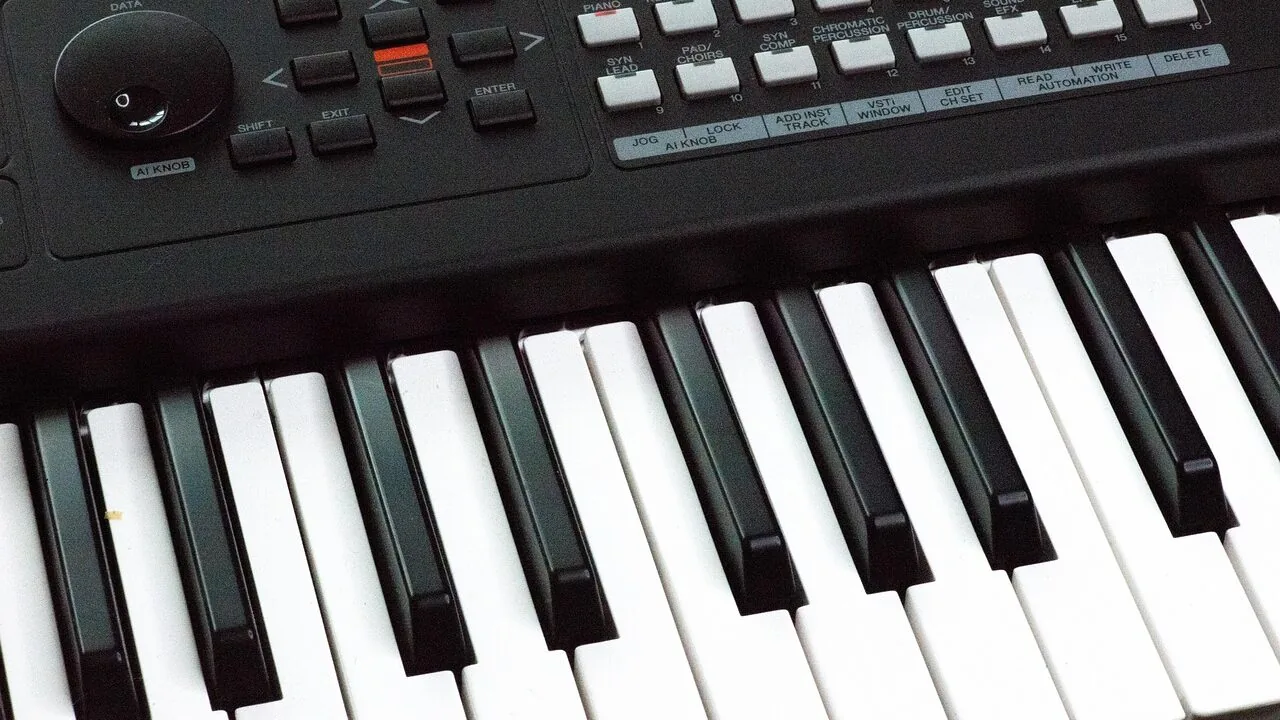
A quality MIDI keyboard is one of the most impactful upgrades any music producer, songwriter, or performer can make to their setup.
Whether you’re sketching chord progressions in a bedroom studio, triggering samples in Ableton Live, or layering synth patches in Logic Pro, the right controller shapes how naturally ideas flow from your fingers into your DAW.
The market ranges from ultra-portable 25-key mini controllers under a fold-out desk to full 61-key semi-weighted keyboards built for serious studio work, and navigating those options without clear guidance can be genuinely overwhelming.
At ProductFind, we researched the MIDI keyboard category by analyzing manufacturer specifications, synthesizing expert review consensus from across the audio production community, and cross-referencing verified buyer feedback from confirmed purchasers.
The result is a curated shortlist of the most reliable, well-rounded controllers available right now, spanning every budget and use case.
Whether you’re hunting for your first controller or upgrading to something more capable, the picks below give you a clear starting point.

Novation Launchkey 61 MK4 USB MIDI Controller
A 61-key semi-weighted keyboard controller designed for seamless DAW integration across Ableton Live, Logic, Cubase, and other major platforms. Its 16 FSR pads with polyphonic aftertouch enable drum pads, clip launching, and step sequencing, while chord and scale modes help prevent wrong notes during live performance and production.
Pros
- Extensive software bundle included covers production, learning, and sound design needs
- FSR pads function as multiple tools beyond drumming (clip launchers, step sequencers, chord triggers)
- Native Instruments integration via NKS standard expands workflow flexibility
- Semi-weighted keybed suitable for both keyboard and production work
Cons
- No verified buyer reviews yet to assess real-world reliability and user experience
- 61-key format limits lower octave range compared to 88-key alternatives
- Semi-weighted action may feel lighter than fully weighted keyboards for some players

Arturia KeyLab Essential 61 mk3 MIDI Controller
A 61-key MIDI controller built for producers who want hands-on DAW control without complexity. Ships with a substantial software bundle including Ableton Live Lite, Analog Lab V, and learning tools, making it practical for both beginners and working musicians.
Pros
- All-in-one bundle significantly reduces initial investment for new producers
- Wide range of physical controls supports multiple workflows and DAW platforms
- Responsive, tactile interface designed for intuitive studio navigation
- Built with durable components and backed by 2-year warranty
Cons
- 61-key format limits range for certain playing styles compared to larger controllers
- No user reviews currently available to assess real-world reliability and workflow integration
- Learning curve for maximizing DAW command mapping and custom scripts

Akai MPK Mini Plus 37-Key MIDI Controller
Compact USB MIDI keyboard with 37 mini keys, 8 MPC pads, and built-in 64-step sequencer for standalone composition. Includes Native Instruments Komplete 15 Select bundle and MPC Beats software, making it a self-contained production station for beat makers and DAW users alike.
Pros
- Built-in sequencer enables composition without a computer
- Comprehensive software bundle reduces need for additional purchases
- Dual connectivity options (USB, MIDI, CV/Gate) accommodate both digital and hardware workflows
- Transport controls for direct DAW navigation
- Chords and Scales modes simplify melodic performance
Cons
- 37 mini keys provide only 3 octaves, limiting range for some playing styles
- No user reviews available to validate real-world reliability or build quality
- Sequencer limited to two tracks, constraining complex arrangement possibilities

Arturia MiniLab 3 25-Key MIDI Controller
A compact USB MIDI keyboard with 25 velocity-sensitive keys, 8 drum pads, 8 knobs, and 4 faders designed for music producers and beat makers. Includes production software and adapts to various workflows without requiring external power.
Pros
- Portable and lightweight design fits any workspace
- Velocity-sensitive keys provide dynamic control for realistic playing
- 8 multi-color pads enable quick drum programming and track control
- Includes music production software, reducing additional costs
- USB powered eliminates need for external power supply
Cons
- 25 keys limit melodic range compared to full-size keyboards
- No user reviews available to verify real-world performance and build quality
- Limited specifications provided on software inclusion and compatibility

M-Audio Oxygen 49 MKV USB MIDI Controller
A 49-key MIDI controller built for beat makers and producers, featuring velocity-sensitive piano keys, 16 drum pads, and Native Instruments integration. Includes a solid software bundle with DAW support and auto-mapping for hands-on control of virtual instruments and plugins.
Pros
- Comprehensive software bundle reduces need for additional purchases, including MPC Beats, Ableton Live Lite, and AIR Music Tech instruments
- NKS integration simplifies browsing and controlling Native Instruments sound libraries directly from the keyboard
- Full-size keys and dual drum pad banks make it suitable for both keyboard playing and beat production workflows
- 8 knobs and 9 faders provide tactile control for mixing, effects, and synth parameters without menu diving
- Includes USB MIDI cable and straightforward firmware updates via M-Audio website
Cons
- No existing verified buyer reviews available to confirm real-world reliability or build quality durability
- 49-key layout limits range for players accustomed to 61+ key controllers or full 88-key keyboards
- Smart Chord and Scale modes may require learning curve for users unfamiliar with MIDI controller shortcuts

M-Audio Keystation 49 MK3 MIDI Controller
A compact 49-key USB MIDI keyboard built for beginners and bedroom producers who need plug-and-play simplicity without drivers or external power. Velocity-sensitive keys, assignable controls, and a solid software bundle make it a practical entry point into music production.
Pros
- Plug-and-play setup with no driver installation needed
- Decent software bundle for music production beginners
- Full-size keys on a compact, portable frame weighing under 5 pounds
- Assignable controls and transport buttons for DAW navigation
- Includes free interactive music lessons
Cons
- No user reviews yet to verify real-world durability and build quality
- 49 keys may feel limiting for pianists or more advanced compositions
- iOS support requires a separate Apple Camera Adapter (sold separately)
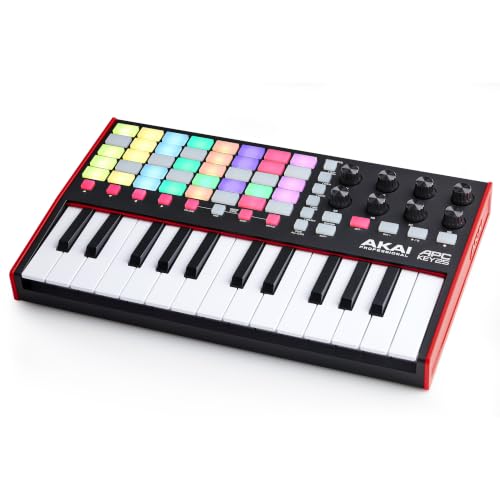
Akai APC Key 25 MK2 MIDI Controller with 40 RGB Pads
A compact USB MIDI keyboard built for Ableton Live, combining 25 velocity-sensitive keys, 40 RGB clip-launch pads, and 8 assignable knobs for studio and live performance. Ships with Ableton Live Lite and comes ready to use via USB plug-and-play, making it accessible for beginners to intermediate producers.
Pros
- Pre-mapped for Ableton Live ensures immediate workflow integration without manual setup
- Responsive 25-key keyboard with octave buttons extends playable range for melodic composition
- Bright RGB pad matrix provides instant visual feedback when launching clips and samples
- Includes Ableton Live Lite and three virtual instruments, lowering entry cost for new producers
- USB plug-and-play connectivity works on Mac and PC without additional drivers or power setup
Cons
- Mini keys may feel cramped for players accustomed to full-size keyboards
- Limited to 25 keys reduces capability for complex chord progressions and lead work
- No customer reviews available to verify real-world performance and reliability claims

Nektar Impact GX49 49-Key MIDI Controller
A straightforward 49-key MIDI keyboard built for producers who want native DAW integration without complexity. Comes bundled with Bitwig Studio 8-track and includes full-size synth-action keys, pitch/mod wheels, and octave controls across Mac, PC, and iOS.
Pros
- Full-size keys provide better playability than mini-key alternatives
- DAW integration and included Bitwig Studio add real production value
- Cross-platform support covers major operating systems and mobile
- Pitch/mod wheels and octave buttons enable performance control without extra gear
Cons
- No user reviews available to verify real-world reliability and build durability
- 49-key layout limits lower octave range compared to 61+ key models
- Integration features depend on DAW compatibility, which may vary across software

Native Instruments Komplete Kontrol M32 MIDI Controller
A compact 32-key MIDI controller designed for producers who need hands-on control over instruments and effects without taking up much desk space. It pairs solid build quality with an OLED display and touch-sensitive knobs, plus a generous software bundle including Ableton Live 10 Lite.
Pros
- Compact footprint makes it ideal for mobile or space-limited setups
- Substantial software package included adds immediate production value
- Touch-sensitive knobs and OLED display provide intuitive workflow for parameter control
- Bus-powered simplifies setup with no extra cables or power supplies required
Cons
- 32 keys limits melodic range compared to full-size controllers, requiring more octave switching
- No customer reviews available yet to assess real-world reliability and user experience
- Limited connectivity options mentioned, may require additional gear for complex studio integration

M-Audio Oxygen Pro Mini 32-Key MIDI Controller
Compact USB MIDI keyboard with 32 velocity-sensitive mini keys, 8 RGB drum pads, and 4 assignable knobs for DAW and plugin control. Ships with NKS integration for Native Instruments libraries, auto-mapping for major DAWs like Ableton and Logic, and a software bundle including MPC Beats and Ableton Live Lite.
Pros
- Auto-mapping to popular DAWs eliminates manual setup for Ableton Live, Logic, Cubase, and others
- NKS integration provides direct access to Native Instruments sound libraries with one of three Komplete 15 Select bundles included
- 8 velocity-sensitive RGB drum pads with Note Repeat for beat-making and clip launching
- Compact 32-key design fits tight studio spaces without sacrificing production controls
- Includes MPC Beats, Ableton Live Lite, and AIR Music Tech instruments in the box
Cons
- No verified user reviews available to assess real-world reliability or durability
- Mini keys may feel cramped for players with larger hands or those accustomed to full-size keyboards
- Limited to 32 keys, which restricts melodic range compared to larger controllers

M-Audio Keystation Mini 32 MK3 USB MIDI Controller
A compact 32-key USB MIDI controller designed for portable music production on laptops. Includes MPC Beats software and Melodics lessons, making it accessible for beginners and producers who need a lightweight setup without external power.
Pros
- True plug-and-play setup works immediately on Mac and Windows
- Customizable velocity curves adapt to different playing styles
- Bundled software and educational content adds real value for beginners
- Portable design fits easily in bags for mobile production
Cons
- Mini keys may feel limiting for experienced pianists used to full-size keyboards
- No verified customer reviews available to assess real-world reliability and build quality
- 32 keys restrict melodic range compared to standard 49-key controllers

Donner N-25 25-Key MIDI Controller
A compact, beginner-friendly MIDI keyboard with 25 velocity-sensitive mini keys, plug-and-play USB connectivity, and 40 included teaching courses. Best suited for bedroom producers and students exploring music production without breaking the bank.
Pros
- Extremely portable at under 1 pound, ideal for travel and small setups
- No driver installation required, works immediately with Mac, PC, iOS, and Android via USB or OTG adapter
- Velocity-sensitive keys and pitch-bend wheel deliver expressive playing despite compact size
- 40 structured lessons help absolute beginners learn music production fundamentals
- Compatible with major DAWs out of the box
Cons
- Mini keys take adjustment for players accustomed to full-size keyboards and limit complex playing techniques
- No reviews available yet to validate real-world durability and long-term user satisfaction
- 40 teaching courses quality and depth unknown without user feedback
MIDI Keyboards Buying Guide
Choosing among the many MIDI keyboards on the market is less about finding a single “best” option and more about matching the right set of features to your actual workflow.
The criteria below cover the factors that separate genuinely useful controllers from ones that collect dust after a week.
If you play acoustic guitars or electric guitars alongside keyboard work, these same principles of ergonomics and workflow integration apply across instruments.
Key Count and Key Size

Key count is the first spec most buyers focus on, and for good reason. Mini keyboards with 25 or 32 keys are ideal for producers whose priority is portability and who rely on octave-shift buttons to reach the full range.
Controllers with 49 keys give you enough real estate to play two-handed comfortably without committing to a large footprint.
Full 61-key models are the sweet spot for musicians who want expressive playability closer to a traditional piano layout, while 88-key weighted controllers serve pianists who need realistic touch response.
Key size matters just as much as count. Full-size keys match standard piano spacing, which is non-negotiable for pianists and very helpful for anyone playing chords with both hands.
Mini keys pack more notes into a compact chassis but require adaptation, particularly for players with larger hands.
Velocity sensitivity, which causes louder or softer notes depending on how hard you press, should be present on any controller you take seriously; avoid any keyboard that outputs a flat, non-dynamic signal unless it is genuinely priced as a starter toy.
If you are primarily a beatmaker or producer rather than a keyboard player, a 25-key or 32-key mini may be all you ever need.
If you want to record real piano parts or comp chords live, step up to at least 49 full-size keys. Models like the Novation Launchkey 61 MK4 and the Arturia KeyLab Essential 61 mk3 specifically target the 61-key segment for this reason.
Key Action: Synth Action vs. Semi-Weighted vs. Fully Weighted
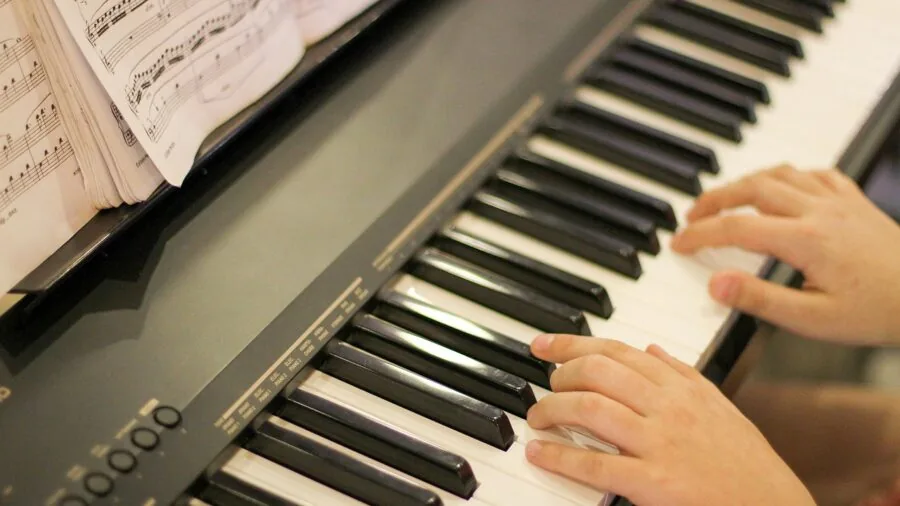
Key action describes the physical feel and resistance of each keystroke. Synth-action keys are light and springy, favored by synthesizer players and producers who want fast repetitive note entry without fatigue.
Semi-weighted keys add a modest amount of resistance, splitting the difference between synth feel and piano feel, and they work well across multiple playing styles.
Fully weighted or hammer-action keys mimic the mass and counterweight of acoustic piano keys, which is essential for pianists who want realistic dynamic response but adds significant bulk and cost.
For most studio producers, synth or semi-weighted action is the practical choice.
The Novation Launchkey 61 MK4 ships with semi-weighted keys in a 61-key layout, which is why it consistently earns strong marks from users who want piano-like expression without the weight of a digital stage piano.
If you are building a hybrid setup where you also need digital note-taking tools or other studio peripherals, factor in desk space before committing to a fully weighted 88-key board.
DAW Integration and Software Compatibility
Some MIDI keyboards are designed as generic class-compliant USB controllers that work with any DAW out of the box.
Others offer deep, proprietary integration with specific software: the Novation Launchkey series maps directly to Ableton Live’s session view, while Akai’s MPK series connects naturally with MPC software and Native Instruments’ NKS ecosystem.
Native Instruments’ own Komplete Kontrol M32 is built specifically to navigate the NKS library, surfacing plug-in parameters on-screen without touching the mouse.
If you work in a single DAW consistently, prioritizing a keyboard with native integration for that software will meaningfully improve your session speed.
If you move between Ableton Live, Logic Pro, FL Studio, and Reaper, a more universal controller with assignable knobs and faders will serve you better.
Most controllers in this roundup include a bundled software package covering at least one DAW license or a library of virtual instruments, which adds real value for beginners building their first production toolkit.
Pads, Knobs, Faders, and Performance Controls

Beyond the keys themselves, the additional controls on a MIDI keyboard define how versatile it is as a production tool. Drum pads let you finger-drum beats or trigger clips without switching to a separate pad controller.
Assignable rotary knobs give you hands-on control over plug-in parameters, filter cutoffs, and mix levels. Motorized or touch-sensitive faders take automation to another level, though they are typically found on more expensive units.
Pitch bend and modulation wheels are standard on most models above entry level and add expressive capability to synth and lead lines.
The Akai Professional MPK Mini Plus stands out in this area because it pairs 37 mini keys with 8 MPC-style pads, an onboard sequencer, and MIDI, CV, and Gate outputs for connecting analog synthesizers.
That combination is rare at its price point and makes it one of the most hardware-friendly compact controllers available. The Arturia MiniLab 3 similarly bundles 8 multi-color drum pads and 8 assignable knobs into an extremely compact 25-key chassis at a mid-range price.
Connectivity: USB, Bluetooth, and Hardware MIDI

The vast majority of modern MIDI keyboards connect via USB and are class-compliant, meaning they draw power directly from your computer without needing a separate power supply or additional driver installation.
This makes them genuinely plug-and-play on both macOS and Windows. Some compact models now offer USB-C connections, which is worth prioritizing if your laptop has moved away from USB-A ports.
Wireless Bluetooth MIDI exists on select models and removes the cable entirely, though latency can vary depending on your system.
If you work with hardware synthesizers, drum machines, or modular gear, look for a controller that also carries a 5-pin DIN MIDI output so you can sequence external hardware without an additional interface.
The MPK Mini Plus is notable for including MIDI out alongside CV and Gate connections, which is a meaningful advantage for hybrid studio rigs. For purely in-the-box producers, USB alone is sufficient.
Portability and Build Quality

Portability comes down to weight and footprint.
A 25-key mini controller like the Arturia MiniLab 3 or Donner N-25 slips into a laptop bag, making it viable for travel, coffee shop sessions, and live performance setups where space is at a premium.
A 61-key controller needs a dedicated desk or keyboard stand and is not something most people carry to gigs. Consider your primary use environment honestly before deciding which size works for you.
Build quality affects both longevity and feel. Metal chassis controllers feel more durable under daily use; plastic bodies vary widely from solid to flimsy depending on the brand and price tier.
Verified buyer feedback across this category consistently rewards Arturia, Novation, and Akai for build quality relative to price, while budget-tier options from newer brands are adequate for beginners but may show wear faster.
Pay attention to key wobble and pad sensitivity in user reviews, since those two contact points determine the daily feel of any controller.
Why You Should Trust Us
ProductFind is an independent review publication. We do not manufacture, retail, or distribute any of the products we cover, and our editorial team operates separately from any commercial relationships the site holds.
Every product in this roundup was evaluated using a consistent research framework that includes detailed specification analysis, expert review consensus drawn from audio production publications and professional musician communities, and verified buyer feedback sourced from confirmed purchasers across major retail platforms.
Each product receives a PF Score on a scale from 0 to 10, reflecting how well it performs across the criteria most relevant to its category: key feel and action, DAW integration, build quality, feature set relative to price, and real-world reliability reported by buyers.
We do not conduct our own product trials; our evaluations are grounded in research, published data, expert review consensus, and verified buyer feedback.
This methodology means our recommendations are based on patterns across many sources rather than the impressions of a single reviewer on a single day.
ProductFind may earn a commission when you purchase through links on this page. That affiliate relationship does not influence rankings, PF Scores, or product selection in any way. Products are chosen and ordered based on research merit, not on commission rates or brand relationships.
Final Thoughts
After evaluating every model in this roundup across key action, DAW integration, feature density, build quality, and verified user satisfaction, a clear hierarchy emerges.
The options here span from approachable budget controllers for first-time producers to fully featured 61-key workstations built for professional studio work. Here are the standout awards from this group:
- Best Overall: Novation Launchkey 61 MK4 earns the top PF Score in this roundup with its 61 semi-weighted keys, deep Ableton Live integration, chord and scale modes, OLED display, and a generous software bundle that makes it equally strong for beginners and experienced producers.
- Best for Studio Producers: Arturia KeyLab Essential 61 mk3 pairs 61 full-size keys with 9 encoders, 9 faders, pitch and mod wheels, and Arturia’s expansive software suite, making it a compelling all-in-one studio controller at a competitive price for its feature set.
- Best for Analog and Hardware Rigs: Akai Professional MPK Mini Plus is the rare compact controller that includes MIDI, CV, and Gate outputs alongside 37 mini keys, 8 MPC pads, and an onboard sequencer, giving hardware synthesizer users direct connectivity without extra gear.
- Best Compact Pick: Arturia MiniLab 3 delivers genuine production capability in a travel-friendly 25-key chassis, with 8 multi-color pads, 8 assignable knobs, and Arturia’s software package included at a mid-range price that overdelivers for its size.
- Best Budget Entry Point: Donner Mini MIDI Keyboard N-25 is the most affordable option in the roundup and a reasonable first controller for beginners who want to explore music production without a large upfront investment, particularly given the 40 included tutorial courses.
The right MIDI keyboard is ultimately the one that fits your playing style, your DAW, and your desk.
Producers who prioritize portability will find plenty to love in the compact tier, while musicians who want expressive, two-handed playability should look at the 49-key and 61-key options in this list.
Every pick here has earned its place based on consistent research and real-world performance patterns, not marketing claims.
Frequently Asked Questions
Do I need a MIDI keyboard if I already have a regular piano or keyboard?
A traditional acoustic or digital piano does not send MIDI data to your computer or DAW unless it has a dedicated MIDI or USB output.
A MIDI keyboard controller is specifically designed to integrate with music production software, triggering virtual instruments, plug-ins, and sample libraries on your computer.
If your existing instrument has MIDI output, you may be able to use it as a controller, but a dedicated MIDI keyboard typically offers tighter DAW integration, assignable knobs and pads, and a lighter footprint more suited to a studio desk.
How many keys do I need as a beginner?
For most beginners, a 25-key or 32-key mini controller is a practical and affordable starting point. It covers the essentials for entering melody lines, triggering drums, and programming chords with octave-shift buttons.
If you have piano experience and want to play two-handed parts naturally, consider starting at 49 full-size keys instead. You can always expand your setup later once you have a clearer sense of how you produce music.
Pairing a compact controller with capable digital workflow tools keeps a small-desk setup productive.
What is the difference between a MIDI keyboard and a synthesizer?
A MIDI keyboard controller produces no sound on its own. It sends MIDI data, which is essentially a stream of performance instructions, to your computer, DAW, or external hardware, which then generates the actual audio.
A synthesizer has its own onboard sound engine and produces audio independently.
Some synthesizers also send MIDI data and can double as a controller, but a dedicated MIDI controller is typically lighter, less expensive, and more tightly integrated with DAW software than a standalone synthesizer.
Is a MIDI keyboard compatible with my DAW?
Almost every USB MIDI keyboard is class-compliant and works with any major DAW on macOS or Windows without additional drivers. Basic MIDI input, including note data, velocity, and pitch bend, is universally supported.
Deeper integration, such as automatic parameter mapping, session view control, or plug-in browsing, depends on whether the controller and DAW have a dedicated partnership.
Novation’s Launchkey series integrates natively with Ableton Live, Akai’s MPK series connects tightly with MPC software and the NKS ecosystem, and Arturia’s KeyLab line works seamlessly with Arturia Analog Lab.
If you use a specific DAW heavily, check whether your shortlisted controller has a native mode for it.
Can I use a MIDI keyboard for live performance?
Yes. Many producers and keyboardists use MIDI controllers in live settings, triggering clips, launching loops, and playing lead lines through a laptop running Ableton Live or similar software.
For live use, prioritize build quality, reliability over USB, and a key action that suits your playing style under pressure. Compact models like the Arturia MiniLab 3 and the M-AUDIO Oxygen Pro Mini are easy to carry to venues.
Larger controllers with semi-weighted keys, such as the Novation Launchkey 61 MK4, are better suited for keyboard-forward live performances where expressive playing is central to the set.
A stable keyboard stand, similar to thinking through the ergonomics of any performance instrument, makes a real difference in a live context.
What software comes bundled with most MIDI keyboards?
Most controllers in this price range include at least one DAW lite license (commonly Ableton Live Lite or similar), a library of virtual instruments or samples, and occasionally a producer plug-in bundle.
Arturia’s bundles are among the most generous in the category, typically including Analog Lab with hundreds of synthesizer presets. Akai and M-AUDIO frequently bundle Native Instruments content through NKS integration.
These bundles can represent significant value for beginners who would otherwise need to purchase virtual instruments separately. Always verify what is included in the current retail package, as bundle contents occasionally change.
About the author
Alexis is a reviewer and writer for ProductFind who specializes in Musical Instruments & Accessories. Alexis evaluates products through independent research: specifications, expert review consensus, and verified buyer feedback, and rates each one on the PF Score. Alexis focuses on helping readers pick the right musical instruments & accessorie for their needs and budget.