The 11 Best Puzzle Sets for Kids
Not all puzzle sets are created equal. We researched piece quality, age fit, storage design, and educational value to find the options kids actually stick with.
 By Manuel Davidson
Updated July 23, 2026
By Manuel Davidson
Updated July 23, 2026
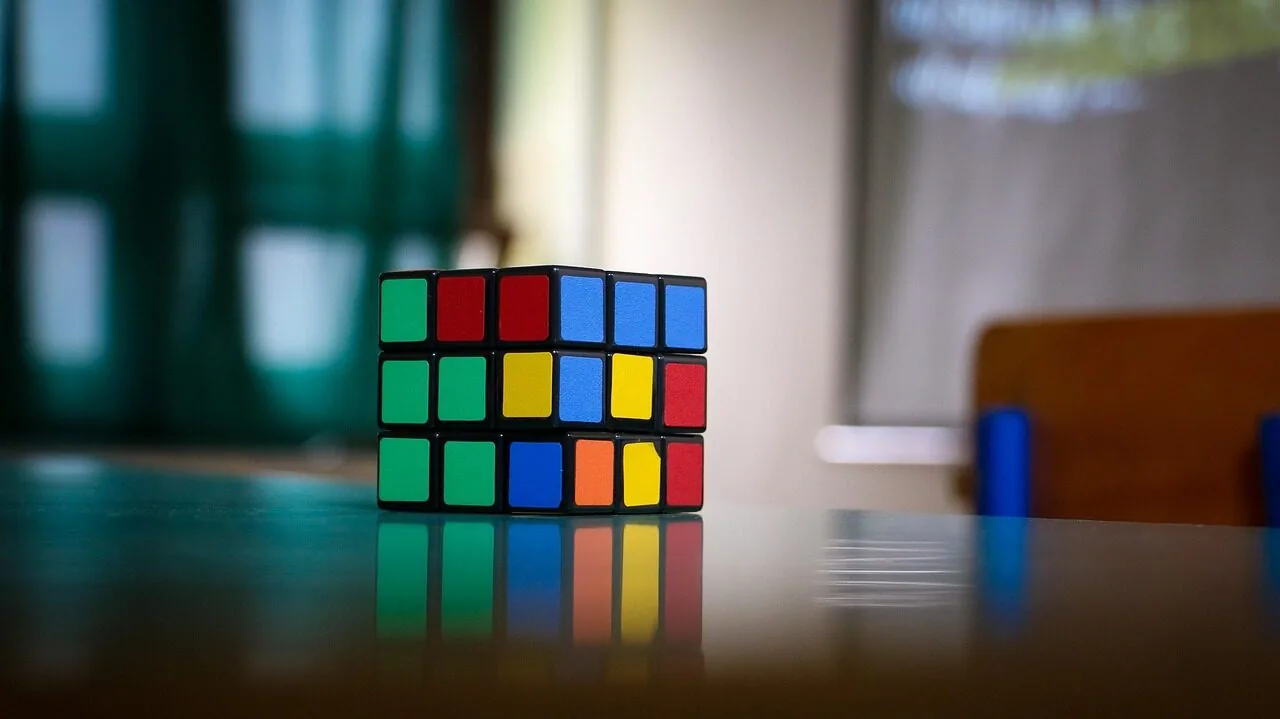
Puzzles are one of the few toys that genuinely grow with a child.
From simple peg boards that build fine motor skills in toddlers to multi-pack jigsaw sets that challenge grade-schoolers with spatial reasoning, the right puzzle set delivers screen-free learning without feeling like homework.
The challenge for parents is that the market is flooded with options spanning wooden pegs, glow-in-the-dark jigsaws, wire disentanglement puzzles, and oversized floor sets, all marketed with overlapping age claims and vague quality promises.
If you also enjoy exploring other kinds of family-friendly play, our roundup of board games for kids covers a complementary category worth bookmarking.
To cut through the noise, ProductFind researched this field by analyzing manufacturer specifications, synthesizing expert review consensus across the category, and weighing verified buyer feedback from thousands of confirmed purchases.
We considered piece count and age-appropriateness, material quality and durability, educational value, theme variety, storage solutions, and overall value. Every product in this list is scored on our 0 to 10 PF Score scale.
Read on for our top picks across budgets and age groups.

Melissa & Doug 4-in-1 Wooden Vehicle Puzzle Set, 48 Pieces
This 4-in-1 puzzle set combines four 12-piece vehicle-themed jigsaw puzzles in a single wooden storage box with compartments, making it portable and easy to organize. Designed for children ages 3 and up, it supports fine motor skills and problem-solving without screens.
Pros
- Built-in compartmentalized storage box keeps pieces organized and serves as puzzle board
- Four different vehicle puzzles offer variety and extended play value in one package
- Lightweight and portable design suits travel and on-the-go play
- FSC-certified wood supports responsible forestry practices
- Encourages skill-building through problem-solving and fine motor development
Cons
- No verified customer reviews available to assess real-world durability or fit quality
- 12-piece puzzles may be too simple for older children despite 3+ age recommendation
- Individual puzzle piece count is relatively small, limiting complexity for advanced puzzlers

Nashrio 4-Pack Wooden Jigsaw Puzzles, 20 Pieces
A budget-friendly set of four wooden puzzles with dinosaur, space, transportation, and animal themes designed for preschoolers ages 3-6. Each puzzle comes in a sturdy wooden storage tray with guides, making assembly and cleanup straightforward for young learners.
Pros
- Four different puzzle themes provide variety without buying separately
- Wooden construction with rounded edges designed specifically for toddler safety
- Built-in storage trays and removable guides simplify assembly and cleanup
- Developmentally appropriate piece count for preschool-age coordination
Cons
- No verified buyer reviews available to confirm durability claims in real-world use
- 20-piece puzzles may feel too simple for advanced 5-6 year olds
- Limited information on wood material sourcing or finish specifications
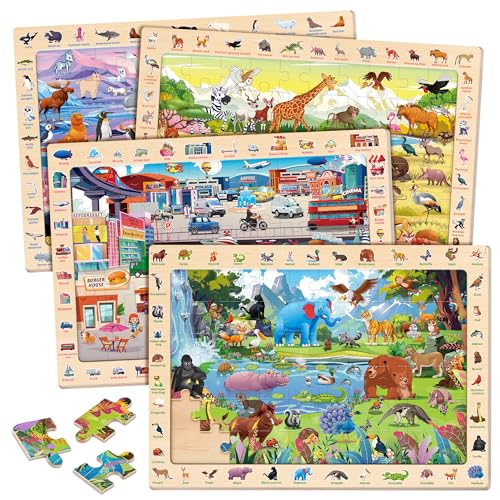
SYNARRY 60-Piece Wooden Puzzles, 4-Pack with Frames
A four-puzzle set featuring 60 wooden pieces each with jungle, polar, savanna, and city themes designed for ages 4-8. Thicker-than-standard pieces, self-correcting shapes, and included reference posters support independent learning, though there are currently no verified buyer reviews to assess real-world durability.
Pros
- Thicker pieces (2x industry standard) reduce breakage and splinter risk for younger hands
- Unique self-correcting shapes naturally guide correct placement without trial-and-error frustration
- Four diverse themed puzzles encourage repeated play and learning across different habitats and environments
- Wooden frames keep pieces contained during and between play sessions
- Removable reference posters support independent completion without adult assistance
Cons
- No verified customer reviews available to confirm durability claims or real-world performance after extended use
- 4.6-star rating appears placeholder with zero reviews, limiting confidence in quality assessment
- Four-puzzle set may feel bulky for storage despite keepsake box presentation

Ciesa 100-Piece Jigsaw Puzzles 4-Pack for Kids Ages 4-10
A four-pack bundle featuring dogs, cats, cupcakes, and donuts themes designed for children ages 4-10. Made from recycled cardboard with thick, durable pieces and a reference poster included per puzzle.
Pros
- Four distinct themes with bright colors to engage different interests
- Thick recycled cardboard pieces that resist tearing and maintain color vibrancy
- Each puzzle includes a 1:1 reference poster to guide assembly
- Develops hand coordination, problem-solving, and logical thinking skills
- Smooth edges and proper fit make assembly accessible for target age range
Cons
- 100-piece count may be too challenging for younger end of 4-6 age range without adult assistance
- No customer reviews available to verify quality claims or durability over time
- Dimensions listed appear incomplete (1 x 1 x 0.1 inches seems inconsistent for packaged puzzles)

GRINNNIE 6-Pack Wooden Peg Puzzles for Toddlers
A six-puzzle bundle covering alphabet, numbers, shapes, animals, dinosaurs, and vehicles, designed for ages 3-5. Made from export-grade wood that passes ASTM safety standards, with bright colors and palm-sized pieces meant to build learning and hand-eye coordination.
Pros
- Six different educational themes in one set covers letters, numbers, shapes, and real-world objects
- ASTM-certified wood materials confirm safety and non-toxic construction
- Peg sizes engineered for toddler hand grip based on palm research
- Bright color design helps capture and hold children's attention
- Compact 7x7x3 inch box makes it portable for travel or storage
Cons
- No verified buyer reviews available to confirm actual durability or quality in use
- 4.9 rating appears unverified with zero review count, raising questions about authenticity
- Limited information on peg durability or whether pieces withstand frequent use by multiple children

Ravensburger Disney Princess 3x49-Piece Puzzle Set
A three-puzzle collection featuring Disney princesses with 49 pieces each, designed for kids ages 5 and up. Ravensburger's premium cardboard and uniquely-shaped pieces promise a smooth solving experience, though the set lacks verified buyer feedback to assess real-world durability.
Pros
- Premium thick cardboard construction with linen-finish for durability and smooth fit
- Each puzzle piece is uniquely shaped to prevent forced fitting
- Three varied Disney Princess scenes provide extended play value
- Ravensburger's established reputation for consistent jigsaw puzzle quality across generations
Cons
- No verified customer reviews available to confirm actual quality claims and piece accuracy
- 49 pieces per puzzle is relatively small, limiting challenge for older children despite age 5+ recommendation
- Product description lists ages 8 and older as target for brain-building benefits, creating unclear age suitability messaging
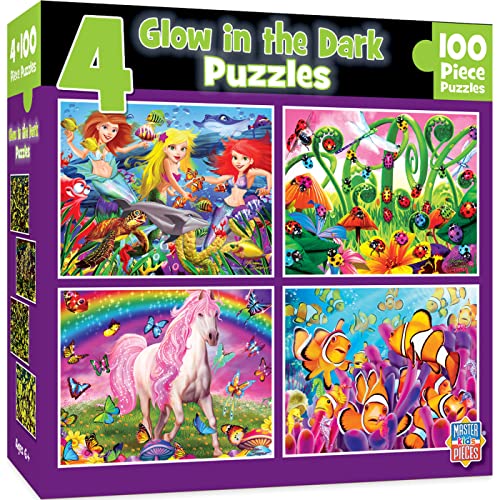
MasterPieces 4-Pack 100-Piece Jigsaw Puzzles for Kids 6+
A four-puzzle variety set designed for children ages 6 and up, featuring 100 interlocking pieces per puzzle with glow-in-the-dark designs. Made from recycled materials with non-toxic inks, it combines screen-free entertainment with skill-building for young learners.
Pros
- Variety pack offers multiple puzzles in one purchase
- Eco-friendly construction using recycled materials and non-toxic inks
- Designed specifically for the 6+ age group with appropriately-sized pieces
- Thick, interlocking pieces hold together securely
- Screen-free entertainment that promotes developmental skills
Cons
- No verified buyer reviews available to assess real-world durability or assembly experience
- Glow-in-the-dark feature mentioned in title but not detailed in specifications
- Image size (8 x 10 inches) may be on the smaller side for group puzzle activities

Chuckle & Roar 4-Pack Jigsaw Puzzles 100-200 Pieces
A four-themed puzzle multi-pack featuring space, fantasy, maps, and food scenes designed for ages 6 and up. The set pairs two difficulty levels with storage bags and durable pieces, making it practical for family play and classroom use.
Pros
- Four distinct themes hold varied interest and encourage exploration of different topics
- Progressive difficulty structure helps kids transition from 100 to 200 pieces at their own pace
- Reusable storage bags with color-coded backs keep puzzles organized and portable
- Thick pieces with satisfying snap fit together well and maintain durability across multiple builds
Cons
- No customer reviews available yet to confirm real-world durability and piece quality claims
- Limited to two difficulty levels, which may plateau engagement for advanced puzzlers quickly

RANSUNN Underwater World 100-Piece Jigsaw Puzzle
A 100-piece jigsaw puzzle designed for kids ages 4-8 featuring underwater and prehistoric artwork. The finished puzzle measures 15.75 by 11 inches and emphasizes safe construction with rounded corners, making it suitable for younger puzzlers developing concentration and problem-solving skills.
Pros
- Age-appropriate difficulty at 100 pieces for target age group 4-8
- Safe design with processed corners and no sharp edges
- Develops cognitive skills like concentration and creativity through play
- Reasonable completed size at 15.75x11 inches
- Works as solo or group activity, suitable for gifts
Cons
- No verified customer reviews available to assess real-world durability
- Prehistoric landscape theme description conflicts with underwater world branding, creating unclear actual imagery
- Limited detail on piece quality, fit precision, or material composition

MYJJTYS 60-Piece Kids Puzzle 2-Pack, Ages 4-8
A budget-friendly two-pack jigsaw puzzle set featuring large 2.7-inch pieces and full-size reference posters, designed for children ages 4-8. Made from BPA-free, waterproof material with included storage bags for travel and home use.
Pros
- Large pieces and reference posters make puzzles accessible for younger kids to solve independently
- Durable waterproof material resists wear from repeated play and outdoor use
- Storage bags included for easy portability and piece organization
- Two puzzles provide variety and value for families or gift-givers
Cons
- No verified buyer reviews available to assess real-world durability or construction quality
- 60-piece count may be limiting for children at the upper end of the 4-8 age range seeking more challenge
- Vibrant color specification is vague, unclear if designs are engaging or educational themed

GEKELI Metal Wire Puzzle Set, 24 Pieces
A 24-piece metal disentanglement puzzle collection with varying difficulty levels, designed to challenge problem-solving skills and provide screen-free engagement. Comes in a carrying pouch and uses nickel-plated construction to prevent rust and hand irritation.
Pros
- Comprehensive 24-piece set offers extended challenge variety without needing multiple purchases
- Smooth nickel-plated edges designed to prevent hand injuries during use
- Compact and lightweight with included pouch makes it genuinely portable for commutes or travel
- No batteries or screens required, appealing to those seeking analog brain exercises
- Progressive difficulty structure accommodates both beginners and experienced puzzle solvers
Cons
- 4.8 rating with zero verified reviews limits real-world user feedback on actual puzzle quality and difficulty accuracy
- No information provided about expected solving times or specific difficulty progression between models
- Some users may find metal puzzles frustrating rather than relaxing, depending on patience tolerance
Puzzle Sets for Kids Buying Guide
Choosing the right puzzle set comes down to matching the product to where your child is developmentally, what themes hold their attention, and how much mess you are willing to manage. The subsections below walk through every factor worth weighing before you buy.
Age-Appropriateness and Piece Count

Piece count is the single most important spec to check, yet it is also the one most commonly misread on packaging.
A 100-piece puzzle marketed as suitable for ages 4 and up may technically be achievable at that age, but only with significant adult involvement, which can tip a fun activity into a frustrating one.
As a general framework: toddlers aged 2 to 3 thrive with peg puzzles of 6 to 12 large pieces; children aged 3 to 5 are well served by 20 to 60 pieces with bold, simple imagery; kids aged 6 and up can handle 100 pieces and beyond, especially in multi-pack formats that let them build confidence before tackling the next difficulty level.
Look for packaging that specifies a piece count range rather than just a minimum age, since developmental variation among children in the same age group is substantial.
Multi-pack sets that include puzzles of graduated difficulty, such as a 4-pack spanning 20 to 100 pieces, let one purchase serve a child across multiple years.
If a set only ships with one difficulty level, make sure it aligns with where your child is right now, not where the brand hopes they will be.
Material Quality and Durability

Cardboard and wood represent two very different durability profiles. Cardboard puzzles are lighter, cheaper to produce, and easier to find in high piece counts, but verified buyer feedback consistently flags edge-softening, warping, and interlocking tabs that loosen after repeated assembly.
Premium cardboard sets from established puzzle brands tend to use thicker substrate and tighter die-cutting, which noticeably extends usable life.
Wooden puzzles, by contrast, hold up to rough handling, teething, and repeated drops, making them the preferred choice for children under 4.
Beyond the base material, check the finish. Laminated surfaces resist moisture and sticky fingers far better than uncoated ones, and they wipe clean without degrading the image.
For wooden peg puzzles especially, confirm that pegs are securely embedded and that the wood is smooth rather than splinter-prone.
Expert reviewers consistently note that sanding quality on budget wooden puzzles is uneven, so buyer feedback from verified purchasers who mention splinters or rough edges is a meaningful warning sign.
Educational Value and Theme Variety
The best puzzle sets for kids do more than keep children busy. They introduce vocabulary, reinforce category knowledge, and build pattern-recognition skills.
Look for themes that map onto things your child is already curious about: animals, vehicles, food, space, geography, or alphabet and numerals.
Sets that combine multiple themes in one box, such as a 4-pack covering dogs, cats, and baked goods, give children the variety that sustains engagement across multiple sittings rather than burning out on a single image.
Match-and-find formats add a second learning layer by asking children to identify objects in the assembled image, which extends the play session and reinforces observation skills.
Alphabet and numeral peg puzzles explicitly teach letter and number recognition through tactile handling, making them especially useful for preschool preparation.
For parents who also want to encourage group play, puzzles pair naturally with cooperative board games as part of a broader family game night rotation.
Piece Size and Fit Tolerance

Piece size affects both safety and usability. Sets with pieces small enough to pose a choking hazard should never be used with children under 3, regardless of what the box claims.
For toddlers and preschoolers, oversized pieces that fit comfortably in a small fist are essential.
The interlocking fit tolerance matters too: pieces that are too loose fall apart during assembly and frustrate young children, while pieces cut too tightly require adult hand-strength to separate and reassemble.
Verified buyer feedback is especially valuable here because fit issues are difficult to assess from product photos alone. Look for reviews that specifically mention whether pieces lock satisfyingly without being hard to pull apart.
Glow-in-the-dark sets add an engagement novelty but use the same quality criteria: the phosphorescent coating should not flake, and piece fit should be consistent across the entire set.
Storage and Organization

Storage is an underrated purchase criterion that parents almost universally wish they had prioritized. Multi-pack sets that ship every puzzle loose in one shared box create instant chaos once the first box is opened.
The most practical sets include individual compartments, separate resealable bags, or dedicated storage boxes for each puzzle so that pieces from different sets never intermingle.
For families who travel, a compact set that ships with its own portable storage bag is a meaningful convenience.
Wooden peg puzzles sidestep the storage problem elegantly because each piece has a dedicated hole in the board, making it immediately obvious when a piece is missing.
Cardboard multi-packs benefit from sets that include piece-count callouts on the back of each puzzle image so you can quickly verify completeness during cleanup.
If a set does not address storage in any meaningful way, factor in the cost and effort of buying separate containers before committing.
Value and Multi-Pack Economics

Multi-pack puzzle sets consistently offer better per-puzzle value than single-image options at similar price points.
A 4-pack of 100-piece puzzles at a budget-friendly price delivers more play hours, more theme variety, and more replayability than a single 500-piece puzzle at the same cost.
The trade-off is that per-piece quality in budget multi-packs can be thinner, so it is worth cross-referencing expert assessments and verified buyer feedback before assuming that more puzzles automatically means more value.
Budget picks in the under-$15 range can be genuinely excellent, particularly from brands with strong reputations in the educational toy space like Melissa and Doug and Ravensburger.
Mid-range sets in the $20 to $30 range often step up in material quality, storage organization, or piece count variety.
Wire disentanglement puzzle sets occupy a niche: they are best suited to older children and adults with patience for abstract problem-solving, and their value proposition is different from the developmental play offered by jigsaw or peg formats.
Families who want to extend game-based learning beyond puzzles will also find value in exploring a broader family board game collection.
Why You Should Trust Us
ProductFind is an independent review publication. We do not sell products, accept manufacturer samples in exchange for favorable coverage, or allow commercial relationships to influence our rankings.
Every product in this guide was scored using our PF Score system, a consistent 0 to 10 scale applied across specifications, educational value, material quality, storage design, age-appropriateness, and verified buyer satisfaction.
We do not conduct our own product trials; our evaluations are grounded in research, published data, expert review consensus, and verified buyer feedback.
Our research process for this guide included cross-referencing manufacturer-published specifications against category benchmarks, synthesizing patterns from thousands of verified buyer reviews on major retail platforms, and assessing where expert consensus in the children’s toy and educational product space aligned or diverged from consumer sentiment.
Products with inflated ratings driven by a small number of unverified reviews were weighted accordingly.
ProductFind may earn a commission if you purchase through links on this page. That affiliate relationship has no bearing on which products we recommend, how we score them, or how they are ranked. Our editorial independence is the foundation of this site’s usefulness to readers.
Final Thoughts
The puzzle sets in this guide cover the full range of formats, age groups, and budgets a parent is likely to need.
Whether you are outfitting a toddler’s playroom or looking for a screen-free activity that challenges a grade-schooler, the picks below earned their spots through consistent performance across our evaluation criteria. Here are the standout awards from this roundup:
- Best Overall: Melissa and Doug 4-in-1 Wooden Vehicle Jigsaw Puzzle Set earns the top spot with the highest PF Score in this group, combining FSC-certified wooden construction, a built-in storage box, and four vehicle-themed puzzles in one package that serves toddlers from age 3 onward with durable, reusable pieces.
- Best for Preschool Learning: NASHRIO Wooden Educational Jigsaw Puzzles for Preschool Kids delivers a 4-pack of 20-piece wooden puzzles across dinosaur, space, and transportation themes, offering an ideal first jigsaw experience for children aged 3 to 6 at a budget-friendly price point.
- Best Match-and-Find Format: SYNARRY Wooden Puzzles for Kids Ages 4 to 6 stands out for its match-and-find mechanic across four 60-piece puzzles covering jungle, savannah, polar, and city themes, adding an observation layer that extends play well beyond a single assembly.
- Best for Toddler Development: GRINNNIE Wooden Peg Puzzle 6-Pack is the strongest option for children aged 3 to 5, covering alphabet, numbers, shapes, animals, dinosaurs, and vehicles in a tactile wooden peg format that directly supports letter and number recognition alongside fine motor development.
- Best Budget Multi-Pack: Ciesa 4-Pack 100-Piece Puzzles for Kids Ages 4 to 10 offers four themed jigsaws at an accessible price, with dog, cat, cupcake, and donut imagery that sustains attention across multiple sittings and serves a wide age range from early elementary through upper primary.
Puzzles fit naturally into a broader play diet that includes other unplugged, social activities.
If you want to round out your family’s collection, kid-friendly board games and cooperative family games pair well with puzzle sessions as a complement for evenings when you want everyone at the table together.
Frequently Asked Questions
What piece count is right for a 4-year-old?
Most 4-year-olds are ready for puzzles in the 20 to 60-piece range, particularly when the imagery is bold, familiar, and broken into large, clearly defined sections.
Sets that include a reference image on the box or a guide sheet inside are helpful for younger children who benefit from seeing the completed picture as a target.
Starting at the lower end and moving up as confidence builds is always a safer strategy than pushing piece count too quickly.
Are wooden puzzles worth the extra cost over cardboard?
For children under 4, wooden puzzles are almost always worth the difference in price. They withstand the kind of rough handling, mouthing, and repeated dropping that cardboard cannot survive, and they do not degrade after dozens of reassemblies.
For children aged 5 and up who are ready for higher piece counts, quality cardboard from established brands performs well and opens up a much wider range of designs and themes at lower price points.
The decision largely comes down to the age of the child and the intensity of the use.
How do I stop pieces from different puzzle sets getting mixed up?
The most reliable solution is to store each puzzle in its own sealed bag or compartment before pieces ever have a chance to mix.
Many multi-pack sets now ship with individual resealable bags for each puzzle, which is a feature worth specifically looking for at purchase. If your set did not include separate storage, small zip-lock bags labeled with a marker work well.
Color-coding the back of each puzzle set’s pieces with a small dot of marker is another practical method that makes sorting fast even after a mix-up.
At what age can kids handle wire disentanglement puzzles?
Wire disentanglement puzzles are generally most appropriate for children aged 8 and up, and many sets are genuinely better suited to teens and adults.
They require abstract spatial reasoning, patience for trial-and-error problem-solving, and enough hand coordination to manipulate small metal loops without bending them.
For younger children who enjoy a challenge, graduated jigsaw sets in the 100 to 200-piece range are a more developmentally appropriate way to build the same persistence and problem-solving skills.
Do glow-in-the-dark puzzle sets actually engage kids differently?
Yes, the novelty is genuine and measurable in buyer feedback: children who have assembled a puzzle many times will often re-engage with it when the lights go out and the image transforms.
The glow effect is strongest immediately after light exposure and fades over 20 to 30 minutes, which creates a natural window for a bedtime puzzle session.
The key quality check is that the phosphorescent coating should be embedded in the piece surface rather than applied as a loose powder, which can flake and create a mess.
Verified buyer reviews are the most reliable indicator of coating quality since it cannot be assessed from product images.
How many puzzles does a child typically need?
There is no single answer, but the pattern in verified buyer feedback is consistent: children cycle through puzzles they have mastered quickly and return to favorites periodically.
A 4-pack at the appropriate difficulty level tends to sustain engagement longer than a single higher-piece-count puzzle, because theme variety keeps the activity feeling fresh.
A good starting point for most households is one multi-pack set matched to current ability, with a second set one difficulty level higher available to introduce when the first set feels too easy.
Rotating puzzles in and out of a toy shelf, rather than keeping everything accessible at once, also restores novelty without requiring new purchases.
About the author
Manuel is a reviewer and writer for ProductFind who specializes in Board Games & Puzzles for Kids. Manuel evaluates products through independent research: specifications, expert review consensus, and verified buyer feedback, and rates each one on the PF Score. Manuel focuses on helping readers pick the right board games & puzzles for kid for their needs and budget.