The 12 Best Solar Generators
Capacity, output power, charge speed, and battery chemistry all shape how useful a solar generator is when it matters most. Here are the top picks for camping, home backup, and off-grid living.
 By Jamie Shelton
Updated July 23, 2026
By Jamie Shelton
Updated July 23, 2026
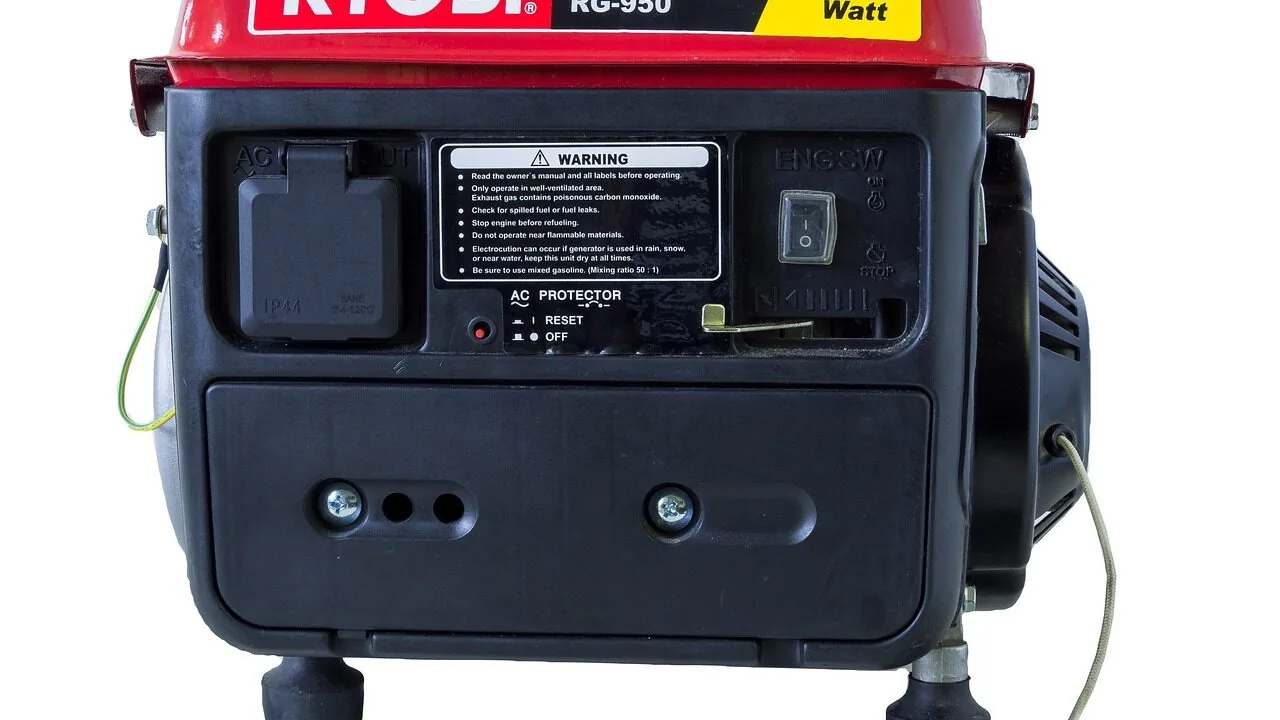
Power outages, off-grid adventures, and emergency preparedness have pushed solar generators from niche gadgets to essential household equipment. Unlike traditional fuel generators, solar generators run silently, require no gasoline, and pair with solar panels to recharge anywhere the sun shines.
Whether you need a compact unit to keep your phone and laptop alive during a campout or a high-capacity system capable of running a refrigerator through a multi-day blackout, the market has expanded dramatically with options from Jackery, EF ECOFLOW, and Anker all competing for your dollar.
This guide cuts through the noise by synthesizing manufacturer specifications, expert review consensus, and verified buyer feedback across dozens of models.
We focused our research on twelve of the most compelling solar generators available today, spanning compact entry-level units to expandable whole-home backup systems.
Our picks cover a wide range of use cases and budgets, so you can find the right match without second-guessing yourself.
Browse our top picks below, then dive into the buying guide to understand exactly what separates a great solar generator from an overpriced paperweight.
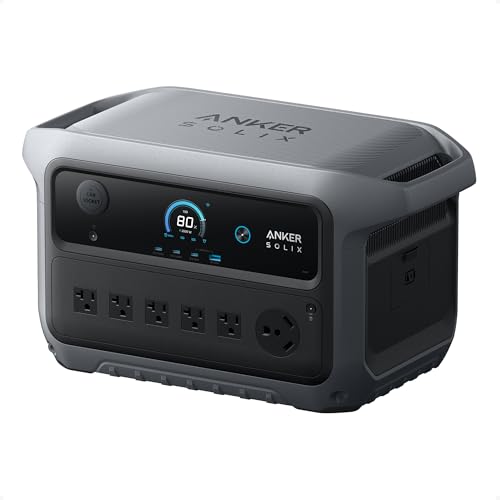
Anker SOLIX C2000 Gen 2 2048Wh Power Station
A compact 2,400W portable power station with 2048Wh LiFePO4 battery that charges fully in 58 minutes and can expand to 4kWh capacity. Built for home backup, camping, and RV use with minimal standby power draw.
Pros
- Fast AC recharge and multiple charging options reduce downtime
- Lightweight and compact design for portability without sacrificing capacity
- Expandable battery system offers flexibility for increasing runtime without replacing unit
- Low standby power means efficient backup for extended appliance operation like fridges
- Handles demanding loads with 4,000W peak power output
Cons
- No customer reviews available yet, so real-world reliability unconfirmed
- Solar panels sold separately, adding to total cost
- 2,400W continuous output may limit running multiple high-wattage appliances simultaneously
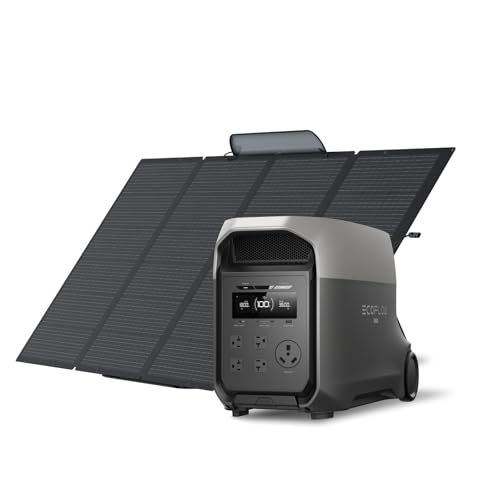
EcoFlow Delta 3 Ultra 3072Wh Power Station
A high-capacity portable power station with 3600W continuous output and LiFePO4 battery built for 10 years of daily use. The sub-10ms UPS switching and quiet 25dB operation make it suitable for home backup, RVs, and off-grid setups, especially when paired with the included 400W solar panel.
Pros
- Fast sub-10ms automatic backup switching ensures uninterrupted power for PCs, routers, and medical devices
- Exceptionally quiet at 25dB, suitable for apartments and overnight use without disturbance
- Robust LiFePO4 battery with 10-year daily-use lifespan and integrated 24/7 protection system
- Flexible four-way charging keeps you prepared for various scenarios
- Handles high-demand appliances like refrigerators and power tools reliably
Cons
- No existing customer reviews available to assess real-world durability and performance consistency
- Power station and 400W solar panel ship separately, requiring additional coordination
- Premium pricing typical of high-capacity models may be a barrier for budget-conscious buyers

EcoFlow DELTA 3 Max 2048Wh Portable Power Station
A premium portable power station with 2048Wh LiFePO4 capacity and 3400W X-Boost output designed for home backup, RV trips, and camping. Fast charging reaches 80% in just over an hour, while smart app control lets you monitor and optimize energy use in real time.
Pros
- Exceptionally fast recharge time minimizes downtime between uses
- High continuous output handles demanding appliances without oversizing
- LiFePO4 chemistry offers superior longevity and safety compared to lithium-ion alternatives
- Real-time app monitoring enables smart load management and scheduling
- Quiet operation and rapid switchover protect sensitive electronics during outages
Cons
- No verified buyer reviews available yet to assess real-world reliability and long-term performance
- Premium price positioning may exceed budget for casual users or shorter-term needs
- Specifications list incomplete, missing port details, weight, and supported input/output options

EcoFlow DELTA 2 1024Wh Portable Power Station
A mid-range portable power station with 1024Wh capacity and 1800W output, designed for home backup, camping, and RVs. LiFePO4 chemistry and expandable design offer long-term reliability, though lack of verified buyer feedback limits confidence in real-world performance claims.
Pros
- Rapid charging speed (80% in 50 minutes) makes it practical for emergency home backup
- Modular design allows capacity expansion from 1kWh to 3kWh without buying a new unit
- 1800W output and 15 outlets support simultaneous charging of multiple devices
- LiFePO4 chemistry with 3000+ cycles rated for years of regular use
Cons
- No verified customer reviews available to confirm manufacturer claims about reliability and performance
- Solar panels sold separately, adding to total cost for off-grid charging capability
- 27-pound weight may be cumbersome for frequent travel despite 'portable' classification

Anker SOLIX C1000 Gen 2 1024Wh Portable Power Station
A 1,024Wh portable power station delivering 2,000W continuous output with ultra-fast 49-minute recharge capability and optional solar integration. Built for emergency backup, off-grid living, and RV use with reliable UPS switchover and LiFePO4 longevity.
Pros
- Fast AC and solar recharging options minimize downtime between uses
- Lightweight 24.9 lbs design balances capacity with genuine portability
- LiFePO4 battery chemistry ensures multi-year durability and consistent output
- 10 ports accommodate diverse device types simultaneously
- Sub-10ms UPS function protects sensitive equipment during grid loss
Cons
- No customer reviews available yet to validate real-world reliability claims
- Solar panels sold separately, adding to total system cost
- 1,024Wh capacity may require multiple charge cycles for extended off-grid periods
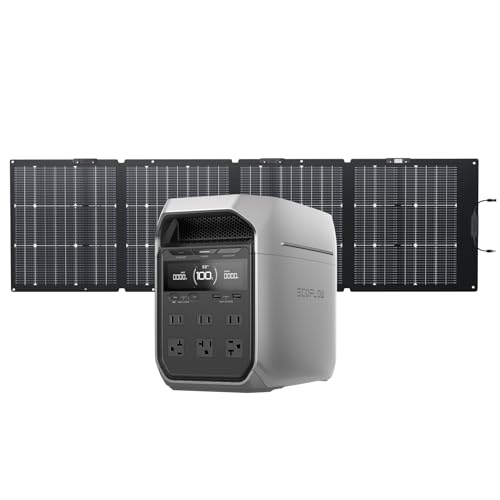
EcoFlow Delta 3 Plus with 220W Solar Panel
A portable power station with LFP battery technology and fast multi-mode charging that supports up to 13 simultaneous devices, backed by a 10-year durability promise. Best suited for home backup, camping, and RV users seeking reliable off-grid power.
Pros
- Multiple charging paths (AC, solar, alternator, hybrid) with genuine speed advantages
- LFP battery chemistry delivers 25% more durability than standard lithium with 4000+ cycle rating
- Bifacial solar design captures up to 28% more energy in ideal conditions
- High power output handles 13 devices plus X-Boost for high-demand appliances
- IP65 rating provides practical splash, dust, and oil resistance
Cons
- Heavy at 62 pounds, limiting true portability for frequent relocation
- No verified user reviews available to confirm real-world performance claims
- Solar panel and power station ship separately, requiring assembly before use

Jackery HomePower 3000 3072Wh Portable Power Station
A 3072Wh portable power station with 3600W continuous output and UPS switching under 20ms, designed for home backup during outages. Includes two 200W solar panels and recharges fully in 1.7 hours via hybrid charging, making it practical for emergency power and RV use.
Pros
- Rapid recharge times and multi-input charging options (AC, hybrid, solar, car charger, generator)
- Strong runtime for essentials: powers household for up to 15 hours and keeps refrigerators running 1-2 days
- Compact and lightweight design relative to its 3072Wh capacity using CTB technology
- Reliable LiFePO4 chemistry with extended cycle life and ChargeShield 2.0 AI-enhanced management
Cons
- Premium price point reflects the capacity and feature set, positioning it as a significant investment
- No verified customer reviews available yet to confirm real-world reliability and long-term performance
- Relatively heavy at 59.52 pounds, limiting portability despite being lighter than competing models
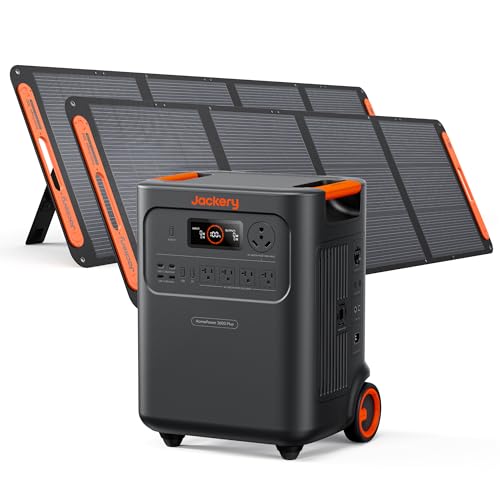
Jackery HomePower 3600 Plus 3584Wh Power Station
A portable LFP power station designed for home backup and off-grid use, delivering 3600W output expandable to 21kWh capacity. Best suited for households seeking emergency power or RV applications with fast multi-mode charging and long-term durability.
Pros
- Strong output capacity handles high-demand appliances like pumps, heaters, and dryers
- Extensive expandability allows scaling from 3.6kWh to 21kWh in a single unit
- Multiple fast charging methods reduce downtime in real-world use
- LFP battery chemistry offers exceptional cycle life and thermal safety margin
- Compact and wheeled design simplifies moving between rooms or vehicles
Cons
- Heavy at 77 pounds despite claims of being lighter, still requires effort to maneuver on stairs
- No user reviews available to assess real-world reliability and long-term performance
- Premium positioning likely commands higher price than entry-level portable generators

Jackery Explorer 1000 v2 1070Wh Portable Power Station
A mid-range portable power station with 1500W AC output and LiFePO4 battery designed for camping, RVs, and emergency backup. Fast charging to full capacity in 1.7 hours (or 1 hour with app override) and app-controlled charging modes make it versatile, though it requires Jackery solar panels for solar compatibility.
Pros
- Durable LiFePO4 battery with exceptional cycle life and 10-year warranty potential
- Compact and lightweight design with foldable handle suits outdoor adventures and travel
- ChargeShield 2.0 technology optimizes charging speed and battery longevity
- App-controlled charging modes provide flexibility for different use scenarios
- Multiple simultaneous charging options with USB-C fast charging up to 100W
Cons
- Solar panel compatibility limited to Jackery brand panels only, reducing third-party options
- One-hour emergency charging requires manual activation via app each charging cycle
- No reviews available to verify real-world performance and long-term reliability claims

Jackery Explorer 300 Portable Power Station
A lightweight 292Wh portable power station weighing just 7.1 lbs, the Explorer 300 combines LiFePO4 durability with versatile connectivity for outdoor use. Its fast solar charging capability and multi-device output make it practical for camping, travel, and emergency backup, though capacity limits sustained high-power demands.
Pros
- 17% lighter than industry average while maintaining robust capacity
- Premium LiFePO4 chemistry ensures extended lifespan and reliability
- Diverse port selection handles laptops, drones, cameras, and CPAP devices
- Fast solar charging with optional Jackery panel compatibility
Cons
- 292Wh capacity may be insufficient for extended high-power device use
- Solar panels sold separately, increasing total system cost
- No reviews available yet to validate real-world performance claims
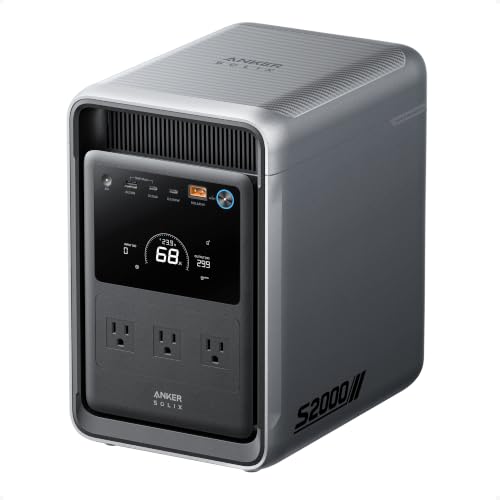
Anker SOLIX S2000 2kWh Portable Power Station
A compact 2,010Wh LFP power station designed for home backup and camping, offering 1,500W continuous output with up to 35-hour fridge runtime. Its 10,000-cycle battery, dual-outlet setup, and six recharging options make it versatile for emergencies and off-grid use.
Pros
- Exceptional runtime: 35-hour fridge backup thanks to 6W idle draw and high efficiency design
- Durable LFP battery rated for 10,000 cycles with 15-year lifespan, avoiding degradation issues of older battery types
- Industry-leading form factor: 30% smaller and 25% lighter than comparable 2kWh systems at just 35.7 lbs
- Fast UPS switchover under 10ms for seamless home office protection during power loss
- Flexible recharging: Accepts up to 400W solar input plus five other charging methods for any scenario
Cons
- No 12V DC outlet, limiting compatibility with some car and RV accessories
- 1,500W continuous output may be insufficient for simultaneous high-draw appliances like air conditioners or large power tools
- Premium positioning in the 2kWh segment, so budget-conscious buyers may find more affordable alternatives

Anker SOLIX C1000 1056Wh Portable Power Station
A 1056Wh LiFePO4 power station built for home backup and outdoor use, with fast 58-minute charging and 2400W peak output across 11 ports. Best suited for those needing reliable power for camping, RVs, or outage preparedness without breaking the bank.
Pros
- Exceptionally fast recharge times compared to similar capacity units, practical for emergency situations
- LiFePO4 battery chemistry provides reliability and extended cycle life for long-term ownership
- Peak output sufficient for high-draw appliances thanks to SurgePad technology
- Compact footprint makes it portable without sacrificing capacity
- App integration allows real-time monitoring and charging customization
Cons
- Requires smartphone and Anker app to access UltraFast recharging feature, limiting offline flexibility
- Solar panels sold separately, adding to total cost for off-grid charging
- No verified customer reviews available yet to confirm real-world performance reliability
Solar Generators Buying Guide
Choosing a solar generator is genuinely more complex than picking most portable electronics. Capacity, output power, charge speed, battery chemistry, weight, and expandability all interact in ways that can make a technically impressive unit feel deeply frustrating in real-world use.
The sections below walk through every factor worth understanding before you commit.
Battery Capacity and What It Actually Powers

Capacity is measured in watt-hours (Wh) and tells you roughly how much total energy the unit stores.
A 300Wh unit like the Jackery Explorer 300 can recharge a laptop several times or keep a fan running overnight, but it will struggle to power a full-size refrigerator for more than a few hours.
Mid-range units in the 1,000 to 2,000Wh range, such as the EF ECOFLOW DELTA 2 or Anker SOLIX C2000 Gen 2, hit a practical sweet spot: enough capacity for an extended campout or a 24-hour power outage without becoming unmanageably heavy.
For serious home backup scenarios, where you want to run a refrigerator, medical equipment, and essential lights simultaneously for 48 hours or more, look at units above 3,000Wh.
The Jackery HomePower 3000 and HomePower 3600 Plus enter that territory, and several of the models on our list support expandable battery modules that push usable capacity into the tens of kilowatt-hours.
Think carefully about your actual load before over-buying: a bigger unit means more money, more weight, and longer recharge times.
A useful rule of thumb is to add up the wattage of every device you plan to run simultaneously, multiply by the number of hours you need them running, and add a 20 percent buffer for inverter inefficiency.
That gives you your minimum capacity floor.
If you also plan to pair your generator with dedicated solar panels for daytime recharging, you can get away with a smaller base capacity because the panels continuously top the battery off during daylight hours.
AC Output Power and Surge Capacity
Capacity tells you how long a generator can run; output wattage tells you what it can run right now. Every appliance has a running wattage and a surge wattage: the spike of power it needs the moment the motor starts.
A portable air conditioner might draw 900W continuously but surge to 1,600W at startup. If your generator’s inverter cannot handle that surge, it will shut down or refuse to start the appliance altogether.
Entry-level units typically offer 300W to 600W of continuous AC output, which comfortably handles small electronics, lighting, and phone charging but rules out most kitchen appliances.
Mid-range units from EF ECOFLOW and Anker now commonly deliver 1,800W to 2,400W continuous with surge capacities of 3,000W to 4,000W, which is enough to run a microwave, electric kettle, or full-size coffee maker.
The Anker SOLIX C2000 Gen 2 tops our list partly because its 2,400W continuous output (with a 4,000W peak) makes it genuinely useful for kitchen and workshop loads that cheaper units cannot touch.
Some brands, including EF ECOFLOW, market a feature called X-Boost that uses software to adjust voltage and allow higher-wattage appliances to run at reduced performance levels on a lower-rated inverter.
This is a clever workaround, but understand that it does not give you full appliance performance; a 1,800W hair dryer running through X-Boost on a 1,000W inverter will blow lukewarm air.
For critical loads, match real inverter wattage to real appliance demands.
Battery Chemistry: LiFePO4 vs. NMC
Nearly every premium solar generator sold today uses one of two lithium battery chemistries: lithium iron phosphate (LiFePO4 or LFP) or nickel manganese cobalt (NMC).
LFP batteries are heavier and slightly less energy-dense, but they offer dramatically longer cycle life, typically 3,000 to 4,000 full charge-discharge cycles before capacity degrades to 80 percent.
NMC batteries are lighter and pack more energy per kilogram, but cycle life is generally shorter, around 500 to 1,000 cycles depending on how aggressively they are charged.
For a generator you plan to use regularly as a home backup or off-grid living tool, LFP is almost always the better long-term investment. Every product on our list uses LFP chemistry, which reflects where the market has moved.
LFP also has a better safety profile: it is far less prone to thermal runaway than NMC, which matters when you are storing a large battery inside a home or RV.
Warranty terms are closely tied to chemistry. Brands willing to offer five-year warranties, like Anker on its SOLIX lineup, are essentially betting on the longevity of their LFP cells.
Shorter warranties on LFP units can signal lower cell quality or less confidence in the thermal management system, so read the fine print before buying.
Charge Speed: Solar Input and AC Recharge
A solar generator is only as useful as its ability to recharge, and charge speed matters far more than most buyers realize.
Slow AC recharge means a unit sitting dead for six hours after a blackout while your refrigerator warms up. Slow solar input means you need more panels or accept that your unit may not fully recover on an overcast day.
Look for two numbers: maximum AC input wattage (how fast it charges from a wall outlet) and maximum solar input wattage (how fast it charges from panels).
Top-tier units like the Anker SOLIX C1000 Gen 2 advertise a full AC recharge in under 50 minutes, which is a genuine game-changer for emergency use. The EF ECOFLOW DELTA 3 Max achieves 0 to 80 percent in roughly 68 minutes.
By contrast, budget units may take 8 to 14 hours to recharge fully from AC, which can be a serious problem if the grid comes back briefly during an outage and you need to top up quickly.
Solar input capacity varies widely.
The EF ECOFLOW DELTA 3 Plus bundle with its 220W bifacial panel is designed to accept up to 1,000W of solar input, which means on a clear day a bank of four to five compatible panels can fully recharge a 1,000Wh unit in about an hour of peak sun.
For off-grid use, higher solar input limits give you much more flexibility, letting you size your panel array to match your daily consumption rather than waiting days for a slow charger to catch up.
Portability, Weight, and Form Factor

Portability is the factor most often glossed over in spec sheets and most frequently complained about in verified buyer reviews.
A 3,500Wh unit powerful enough to run your home for two days may weigh over 30 kilograms, making it genuinely difficult for one person to move without a dolly.
If you plan to take your generator camping, to tailgate events, or to a job site, weight and handle design matter enormously.
The Jackery Explorer 300 sits at the light end of the spectrum, designed to slip into a car trunk without drama. Mid-capacity units in the 1,000 to 1,100Wh range typically weigh between 9 and 14 kilograms, manageable for most adults to carry short distances.
Units above 2,000Wh usually require wheels or two people, and home-focused units like the Jackery HomePower 3600 Plus are essentially stationary appliances with handles for repositioning rather than genuine portability.
Consider also where you will store the unit. Flat designs stack better in a closet; taller units with recessed handles are easier to carry.
If your primary use case is camping, a lightweight mid-capacity unit paired with a foldable solar panel is almost always the better choice over a bulky high-capacity unit that you will resent hauling from the car to the campsite.
Expandability and Ecosystem Compatibility

Several brands now sell modular battery systems where the base unit can be paired with expansion battery packs to multiply usable capacity without buying a new generator.
The Jackery HomePower 3600 Plus, for example, supports expansion up to 21kWh, turning what starts as a portable generator into a meaningful whole-home backup solution. EF ECOFLOW and Anker offer similar ecosystems across their DELTA and SOLIX lineups respectively.
Ecosystem lock-in is real: expansion batteries from one brand almost never work with another brand’s base unit.
If you think you might want to expand capacity in the future, pick a brand whose expansion ecosystem you trust and whose pricing for add-on batteries is transparent.
Buying the cheapest base unit from a brand with no expansion path can cost you more in the long run if your needs grow.
App connectivity is increasingly standard on units above 1,000Wh. Bluetooth and Wi-Fi apps let you monitor real-time power draw, set charge limits to protect battery longevity, schedule charging during off-peak electricity hours, and receive alerts.
These features add genuine value for home backup use, where you want visibility into the system without physically checking the unit. For casual camping use, app connectivity is a nice-to-have rather than a necessity.
Why You Should Trust Us
ProductFind is an independent review publication with no brand affiliations or manufacturer relationships.
Every solar generator in this guide was evaluated using our structured research methodology: we analyze published specifications, cross-reference expert review consensus from multiple credible publications, examine verified buyer feedback at scale, and compare published performance and reliability data.
We do not conduct our own product trials; our evaluations are grounded in research, published data, expert review consensus, and verified buyer feedback.
Each product is rated using our proprietary PF Score on a 0 to 10 scale.
The score is calculated across a consistent set of criteria weighted for the solar generator category: battery capacity and chemistry, continuous AC output and surge capacity, charge speed (both AC and solar), portability, expandability, app and connectivity features, warranty terms, and overall value at the asking price.
Scoring criteria are applied uniformly across all products regardless of brand or price tier, so a budget Jackery and a premium Anker are judged by the same standards.
The product ranked first in this guide earned the highest PF Score in our evaluation, not the highest affiliate commission.
Transparency about affiliate relationships: ProductFind may earn a commission when you purchase through links in this article. This financial relationship has no influence on our rankings, scores, or editorial recommendations.
Products are selected, ranked, and described based solely on their merit as assessed through our research methodology. We will update this guide as new models are released and as verified buyer feedback accumulates on newer units.
Final Thoughts
The solar generator market has matured rapidly, and the twelve models we evaluated represent the strongest field we have seen.
Whether you are preparing for grid outages, outfitting a van build, or simply want reliable power on remote camping trips, there is a well-engineered unit in this group for your situation.
Here are our standout picks by use case, each earning recognition based on its performance across our evaluation criteria.
- Best Overall: Anker SOLIX C2000 Gen 2 earned the top PF Score in our entire evaluation. Its combination of 2,400W continuous output, a 4,000W surge peak, a sub-60-minute full recharge, LFP battery chemistry, and a five-year warranty makes it the most well-rounded solar generator we assessed at any price tier.
- Best High-Capacity Bundle: EF ECOFLOW Delta 3 Ultra with 400W Solar Panel is our pick for buyers who want an out-of-the-box solar generation system. Its 3,072Wh LFP battery, 3,600W output, and included 400W panel create a genuinely self-sufficient power setup for extended home backup or full-time off-grid use.
- Best Mid-Range Pick: EF ECOFLOW DELTA 3 Max delivers the best balance of capacity and versatility in the mid-range tier. With 2,048Wh of LFP storage, 3,400W X-Boost output, and fast recharge to 80 percent in just over an hour, it punches significantly above its price class.
- Best for Fast Charging: Anker SOLIX C1000 Gen 2 is the right choice when charge speed is the deciding factor. Its ability to reach a full charge in under 50 minutes from AC means you can top up during any brief window of grid power and be ready for the next outage faster than any comparable unit we assessed.
- Best Entry-Level Pick: Jackery Portable Power Station Explorer 300 remains the most sensible starting point for buyers new to solar generators. Its compact footprint, LFP battery, and lightweight design make it genuinely portable, and its price keeps the barrier to entry low for campers and light emergency users.
Whichever unit fits your budget and use case, pairing it with quality solar panels will dramatically extend its usefulness and reduce your dependence on grid recharging.
Invest in the right capacity for your real needs, prioritize LFP chemistry for long-term reliability, and choose a brand whose expansion ecosystem leaves room to grow.
Frequently Asked Questions
How many watt-hours do I need to run my refrigerator during a power outage?
Most modern full-size refrigerators draw between 100W and 200W on average when accounting for compressor cycling.
To run one for 24 hours you typically need 1,000 to 2,000Wh of usable battery capacity, depending on how often the compressor runs and your ambient temperature.
A unit in the 1,000 to 1,100Wh range can realistically power a fridge for 12 to 18 hours, while a 2,000Wh-plus unit covers a full day with capacity to spare for lighting and device charging.
Add a compatible solar panel and daytime sun exposure can keep the fridge running indefinitely during daylight hours even without grid power.
Can I use a solar generator indoors safely?
Yes. Unlike gasoline generators, solar generators produce no exhaust or carbon monoxide, making them completely safe to operate indoors, in garages, in RVs, and in tents.
There is no combustion involved: the battery stores electrical energy and the inverter converts it to AC power.
The only ventilation consideration is that lithium batteries produce a small amount of heat during heavy discharge or fast charging, so avoid blocking any vents on the unit and keep it away from direct heat sources.
This is one of the most significant practical advantages solar generators have over traditional fuel-based alternatives.
How long does it take to recharge a solar generator using solar panels?
Recharge time via solar depends on three variables: the battery capacity of the unit, the wattage of your panel array, and the quality of sunlight available.
As a rough formula, divide the battery capacity in watt-hours by your total panel wattage to get the number of peak sun hours needed. A 1,000Wh generator paired with a 200W panel needs about five hours of strong direct sunlight.
Units with higher solar input limits, such as the EF ECOFLOW DELTA 3 Plus which accepts up to 1,000W of solar input, let you add more panels and cut recharge time proportionally.
Overcast conditions reduce panel output by 50 to 80 percent, so plan accordingly for multi-day off-grid trips.
What is the difference between a solar generator and a portable power station?
The terms are often used interchangeably, but there is a technical distinction. A portable power station is the battery and inverter unit itself: it stores energy and converts it to usable AC or DC power.
A solar generator is a portable power station designed and marketed to be charged by solar panels, either sold bundled with panels or with a high enough solar input rating to make solar charging practical.
In casual usage, both terms refer to the same category of product.
When comparing listings, focus on the solar input wattage rating rather than whether the product is called a generator or a power station, since that number tells you how seriously the brand has designed the unit for solar recharging versus treating it as an afterthought.
Are solar generators worth buying for home backup power?
For most households experiencing occasional outages lasting 12 to 48 hours, a mid-to-high capacity solar generator in the 1,000 to 3,000Wh range is a practical and cost-effective backup solution.
They require no fuel storage, no maintenance, produce no noise or fumes, and can be recharged for free using sunlight.
The limitations are real: they cannot power central air conditioning, electric stoves, or whole-home heating at full load, and they are not a substitute for a whole-home standby generator in regions with extended multi-day outages.
For critical medical equipment or businesses that cannot tolerate any downtime, consult an electrician about a dedicated transfer switch and a higher-capacity system.
For the average household’s essential loads during a typical grid interruption, the solar generators on this list represent excellent value and genuine peace of mind.
Do solar generators work during a blackout if my panels are on the roof?
The portable solar generators reviewed here are standalone units that are independent of your home’s electrical grid connection. They work by charging from portable panels via a direct cable connection, not through your home’s wiring.
If your rooftop solar installation is a standard grid-tied system without battery backup, it will shut down automatically during a blackout for safety reasons.
The units in this guide bypass that issue entirely: you connect portable panels directly to the generator using the provided cables, and the system works regardless of what the grid is doing.
This makes portable solar generators particularly valuable precisely when the grid is down and your rooftop system is offline.
About the author
Jamie is a reviewer and writer for ProductFind who specializes in Power & Charging. Jamie evaluates products through independent research: specifications, expert review consensus, and verified buyer feedback, and rates each one on the PF Score. Jamie focuses on helping readers pick the right power & charging for their needs and budget.