The 9 Best Surge Protectors
Voltage spikes can silently destroy computers, TVs, and smart devices. Here are the surge protectors that deliver real protection, not just extra outlets.
 By Jamie Shelton
Updated July 23, 2026
By Jamie Shelton
Updated July 23, 2026
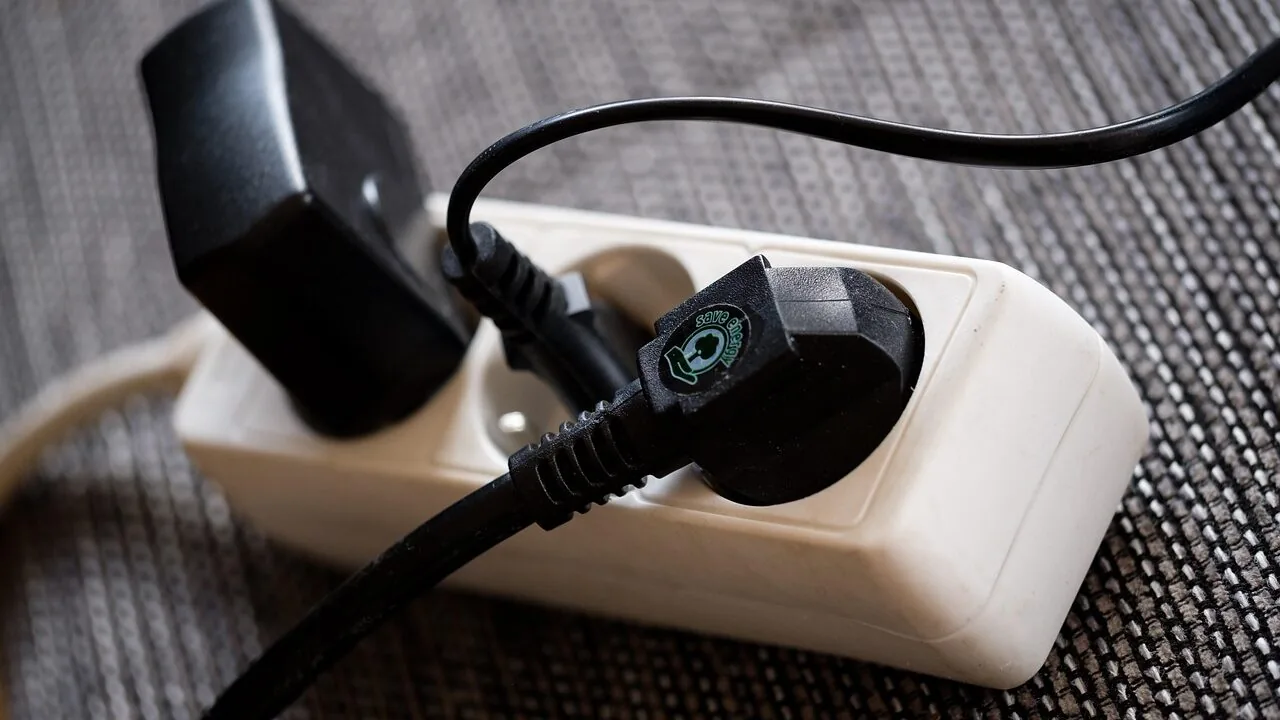
A power surge lasting less than a millisecond can silently destroy a gaming PC, a smart TV, or a home office setup worth thousands of dollars.
Whether caused by a nearby lightning strike, utility grid switching, or even a large appliance cycling on, voltage spikes are far more common than most homeowners realize.
A quality surge protector sits between your wall outlet and your electronics, absorbing or redirecting that excess energy before it reaches anything valuable.
For anyone who relies on computers, home theater gear, or always-on smart home devices, a surge protector is not optional equipment but essential infrastructure.
This guide covers the best surge protectors across a range of needs and budgets, from compact wall-mounted options to full 12-outlet power strips built for home theater racks.
The ProductFind editorial team assembled these picks through comprehensive research: we analyzed published specifications, synthesized expert review consensus from across the industry, and weighted verified buyer feedback to surface the options that deliver real protection, not just extra outlets.
Scroll down for our ranked top picks, then use the buying guide below to find the right match for your setup.
| Award | Product | PF Score About PF ScoreThe PF Score is our own rating from 0 to 10, based on performance, design and build, ease of use, and value. It reflects independent research and is never influenced by manufacturers, retailers, or affiliate commissions. Learn more › | Price | |
|---|---|---|---|---|
| Best Overall |
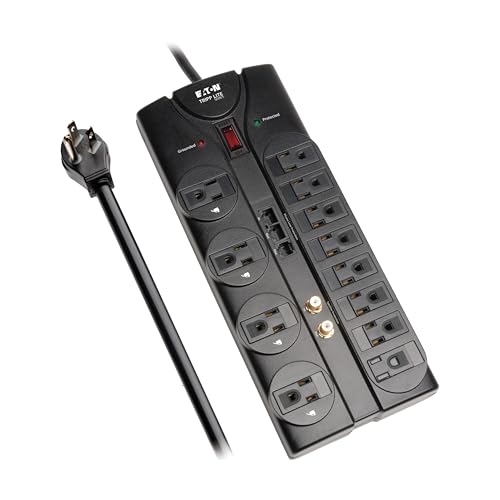 Tripp Lite TLP1208SAT 12-Outlet Surge Protector
|
9.2/10 | Buy | |
| Editor's Pick |
 Belkin 12-Outlet Surge Protector with 8ft Cord
|
6.2/10 | Buy | |
| Best Value |
 Anker 341 Power Strip with 20W USB-C, 8 Outlets
|
7.9/10 | Buy | |
| Top Rated |
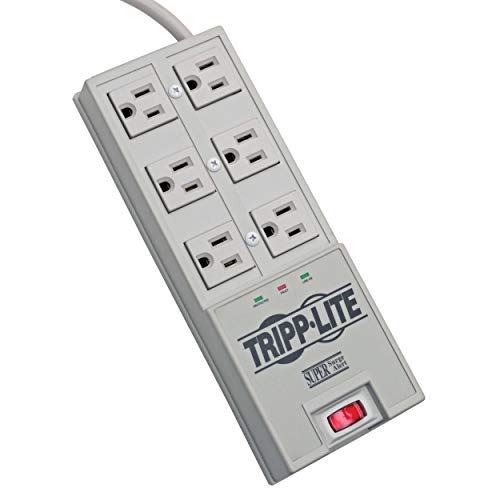 Tripp Lite TR-6 6-Outlet Surge Protector with 6ft Cord
|
7.8/10 | Buy | |
 GE 37442 6-Outlet Surge Protector with 10ft Cord
|
7.5/10 | Buy | ||
 Alestor 12-Outlet Surge Protector with 4 USB Ports
|
7.1/10 | Buy | ||
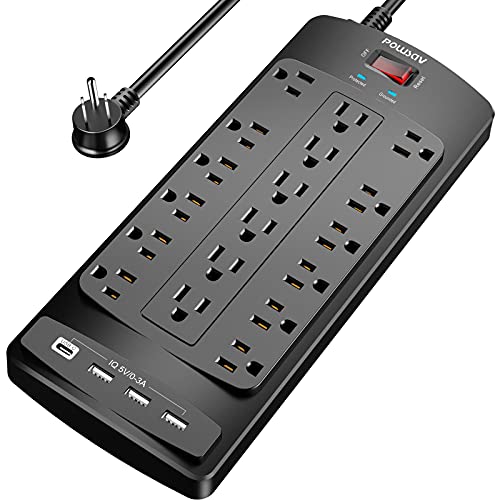 POWSAV 18-Outlet Surge Protector with 6-Ft Cord
|
7.0/10 | Buy | ||
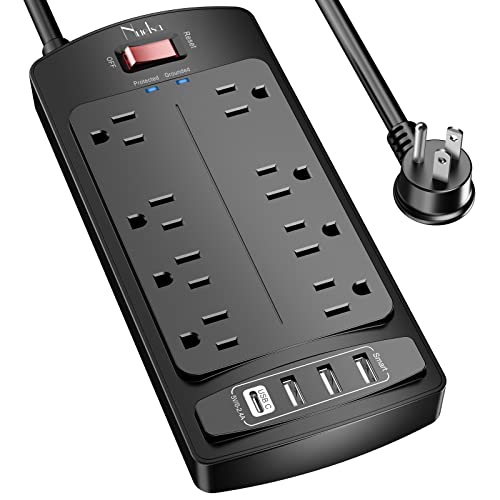 Surge Protector Power Strip - Nuetsa Flat Plug Extension Cord with 8 Outlets and 4 USB Ports, 6 Feet Power Cord, 2700 Joules, ETL Listed, Black
|
6.8/10 | Buy | ||
 One Beat 6-Outlet Surge Protector with 4 USB Ports
|
6.2/10 | Buy |
Tripp Lite TLP1208SAT 12-Outlet Surge Protector
A comprehensive surge protection solution designed for home theater setups, offering 12 outlets with 2880 joules of protection plus dedicated ports for cable, phone, and ethernet lines. The 8-foot flat-plug extension cord and wall-mounting options make it practical for both desk and entertainment center installations.
Pros
- Multiple data line protection (coax, phone, ethernet) covers entire home theater ecosystem
- Generous outlet count with four wide-spaced slots prevents adapter conflicts
- 8-foot cord and flat plug design allows flexible furniture placement against walls
- Built-in diagnostic LEDs and circuit breaker provide visible safety confirmation
- Includes necessary cables (6ft phone and ethernet) in the box
Cons
- No user reviews available to verify real-world reliability or long-term performance
- Ethernet port limited to 100 Mbps, which may not suit gigabit network speeds
- No information on noise or heat generation under heavy load
Belkin 12-Outlet Surge Protector with 8ft Cord
This 12-outlet power strip delivers substantial surge protection (3,940 joules) for multi-device setups across home offices and workstations. Widely spaced outlets accommodate larger plugs, while the compact profile and 8-foot flat cord handle tight spaces effectively.
Pros
- High joule rating protects computers, monitors, and appliances from power surges
- Widely spaced outlets accommodate oversized plugs without blocking adjacent sockets
- 8-foot cord length and flat 3-prong plug design suit confined spaces and desk setups
- Safety indicator light confirms protection status
- Made with 72% minimum recycled content, addressing sustainability concerns
Cons
- No user reviews available to verify real-world durability or performance reliability
- Fixed outlet configuration offers no flexibility if you need fewer outlets or different spacing
- Limited information on whether surge protection resets automatically or requires manual reset after power events
Anker 341 Power Strip with 20W USB-C, 8 Outlets
This compact power strip combines 8 AC outlets with dual USB ports and 2000J surge protection in a smartphone-sized footprint. The 20W USB-C port and 3-sided outlet design make it practical for desks, nightstands, and tight spaces where standard strips won't fit.
Pros
- Exceptional outlet density in a compact, lightweight form factor
- 20W USB-C charging provides fast power delivery for modern devices
- 2000J surge protection with substantial equipment warranty coverage
- 5-foot cord and flat-plug design suits tight spaces where full-size strips fail
- 18-month warranty and responsive customer support
Cons
- No verified buyer reviews available to assess real-world durability or user experience
- Limited surge protection level compared to commercial-grade models rated 3000J or higher
- Compact size may make it harder to grip or unplug devices in tight outlet clusters
Tripp Lite TR-6 6-Outlet Surge Protector with 6ft Cord
A straightforward surge protector with six outlets, 2420 joules of protection, and a 6-foot cord featuring a right-angle plug for space-conscious setups. Backed by lifetime warranty and $50,000 equipment damage insurance, it's practical for home offices and moderate power needs.
Pros
- High joule rating (2420) provides solid surge protection for multiple devices simultaneously
- Right-angle flat plug design allows furniture to sit flush against walls
- Lifetime warranty and $50,000 insurance offers genuine financial protection for connected equipment
- Three status LEDs let you verify protection is active before plugging in valuables
- Thoughtful outlet spacing prevents transformers from blocking adjacent sockets
Cons
- No customer reviews available to validate real-world durability or performance
- Limited to standard 15-amp outlets, may not suit high-power equipment
- Placement of right-angle plug may not suit all wall configurations
GE 37442 6-Outlet Surge Protector with 10ft Cord
A straightforward surge protector that extends a single outlet into six grounded ports with 800 joules of protection and a 10-foot reach. The flat plug design keeps furniture clearance, while twist-close safety covers and wall-mount options add practical safety features for home, office, or workshop use.
Pros
- 10-foot extension cord provides flexible reach and centralized power solution
- Flat angled plug design fits behind furniture without blocking adjacent outlets
- Wall or desk mounting options with keyhole slots for space-efficient setup
- 800 joules surge protection with integrated circuit breaker and indicator light
- Twist-to-close safety covers on unused outlets and ETL certified
Cons
- No customer reviews available to verify real-world performance and durability claims
- Limited to 15 amps and 1,875 watts, not suitable for high-power appliances
- Six outlets may feel cramped for larger plug sizes depending on configuration
Alestor 12-Outlet Surge Protector with 4 USB Ports
This power strip combines 12 AC outlets with 4 USB charging ports (including USB-C) on a 6-foot cord, offering 2700 joules of surge protection. It's designed for users who need multiple device connections and appreciate the spacing for bulkier adapters.
Pros
- Wide spacing on select outlets accommodates bulkier power adapters without blocking adjacent sockets
- USB-C port offers faster charging for modern devices
- 2700 joules provides meaningful surge protection for electronics
- ETL safety certification across cord and components
- 24-month warranty with responsive customer support
Cons
- No verified buyer reviews available to confirm real-world performance and durability claims
- 6-foot cord length may not suit all room layouts or desk setups
- Heavy-duty design adds bulk compared to compact power strips
POWSAV 18-Outlet Surge Protector with 6-Ft Cord
A high-capacity power strip designed for desk setups and gaming rigs, offering 18 AC outlets plus 4 USB ports on a 6-foot flat-plug extension cord. Rated 4.4 stars with 2100 joules of surge protection and ETL certification, though no verified buyer reviews are available yet to assess real-world reliability.
Pros
- 18 AC outlets plus 4 USB ports provide ample connectivity for multiple devices
- 6-foot flat-plug extension cord with cable ties for flexible placement and cord management
- 2100 joules surge protection with overload protection and safety indicators
- ETL certified with flame-resistant housing rated for durability
- Affordable price point with 30-day return and 12-month warranty
Cons
- No verified buyer reviews available to confirm actual performance and durability claims
- Flat-plug design may limit outlet accessibility if devices have bulky adapters
- Limited information on maximum power draw and safe device load capacity
Surge Protector Power Strip - Nuetsa Flat Plug Extension Cord with 8 Outlets and 4 USB Ports, 6 Feet Power Cord, 2700 Joules, ETL Listed, Black
One Beat 6-Outlet Surge Protector with 4 USB Ports
This compact 10-in-1 wall outlet extender combines 6 AC outlets with 4 USB ports (including 2 USB-C) and 1800J surge protection in a space-saving 3-sided design. The rotating plug and wide outlet spacing make it practical for home offices and travel, though it lacks verified user reviews to confirm real-world durability.
Pros
- 3-sided layout with wide spacing between outlets prevents large plugs from blocking each other
- 180-degree rotating plug adapts to horizontal or vertical wall sockets
- 1800J surge protection with three complementary circuit types (TVS, MOV, GDT) responds in under 1 nanosecond
- USB-C ports deliver up to 3A at 5V with smart IC detection for optimal charging speed
- Compact dimensions (6.3 x 2.76 x 2.17 inches) make it portable for office and travel use
- ETL certified with fire-resistant ABS shell rated to 1382°F
Cons
- No verified buyer reviews available yet to validate performance and longevity claims
- 15A maximum current means users must monitor total wattage to avoid exceeding 1875W rated capacity
- USB output maxes at 3.1A total across all four ports, limiting simultaneous high-speed multi-device charging
Surge Protectors Buying Guide
Shopping for a surge protector looks simple on the surface, but the specs on the box can be misleading and the differences between a good pick and a mediocre one are not always visible at a glance.
The sections below walk through every criterion that matters, so you can match a model to your specific situation rather than just grabbing whatever has the most outlets.
Joule Rating: How Much Protection Is Enough?
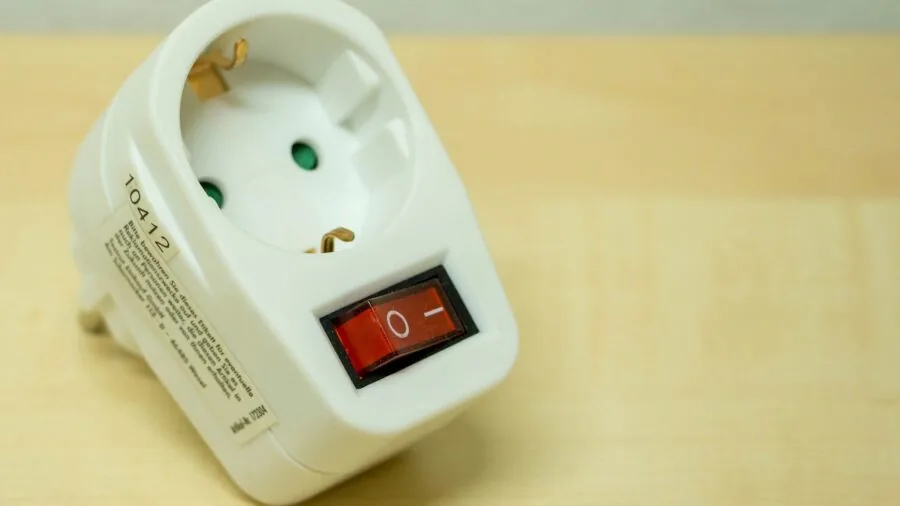
The joule rating tells you how much cumulative surge energy a protector can absorb over its lifetime before its protection degrades. A higher number means the unit can handle more or larger surges before it needs to be replaced.
Consumer-grade units typically range from around 800 joules for basic protection up to 3,780 joules or more for premium strips designed to protect high-value electronics.
For a basic home office setup or a single device like a router, an 800-joule strip is workable. For a full desktop PC, ultrawide monitors, and peripheral stack, aim for at least 2,000 joules.
If you are protecting a dedicated home theater with a 4K TV, AV receiver, and streaming devices, prioritize something in the 2,700 to 3,780 joule range.
Treat the joule rating as a consumable budget, not a permanent guarantee: every absorbed surge draws down that total, and the protector will eventually need replacement.
Critically, look for a surge protector that includes a protection-active indicator light.
When the internal MOV (metal oxide varistor) components wear out, a good unit will either cut power entirely or illuminate a warning light so you know it is no longer doing its job.
Models without this feature can fail silently, leaving you with a strip that passes power but provides zero protection.
Number of Outlets and Layout

Outlet count ranges from a single wall-tap extender to 18-outlet power strips designed for packed server closets or entertainment centers. The right number depends entirely on your device count, but layout matters just as much as quantity.
Transformers and oversized wall adapters for routers, smart home hubs, and cable boxes are notoriously good at blocking adjacent outlets on standard strips.
Look for strips with widely spaced outlets or a staggered layout. Some designs alternate outlet angles, while others offer a rotating central block to accommodate bulky adapters.
If you are building out a home theater alongside a 4K TV or a multi-device living room setup, a 10- to 12-outlet strip with spaced outlets will save you the frustration of wasted sockets.
For a desk or nightstand where you only need to charge a few devices, a compact 6-outlet or wall-mounted option keeps the clutter manageable.
Wall-mountable options or those with a low-profile flat plug are particularly useful in tight spaces behind furniture or under desks. A flat or right-angle plug sits flush against the wall, allowing furniture to sit closer without bending the cord.
USB Ports and USB-C Charging
Most modern surge protectors include at least two USB-A charging ports. Better options add USB-C at useful wattages of 18W or higher, which can fast-charge a smartphone, tablet, or pair of wireless earbuds without occupying an AC outlet.
For a desk where you are charging multiple devices daily, built-in USB ports simplify your setup considerably.
Pay attention to total shared USB wattage. Some strips advertise four USB ports but share a single low-wattage charging brick across all of them, meaning each port delivers much less current than expected if all are in use simultaneously.
Dedicated USB-C ports with clearly labeled wattage are a strong sign that the manufacturer has invested in actual charging circuitry rather than a bare-minimum spec.
Safety Certifications and Build Standards

UL 1449 is the baseline safety standard for surge protective devices in North America, covering both surge protection performance and the safety of the unit itself. ETL Listed is an equivalent third-party safety certification.
Any surge protector you seriously consider should carry at least one of these marks.
Unmarked strips that claim surge protection but show no recognized certification body are a red flag and should be avoided, particularly for anything connected to high-value equipment.
Beyond the label, look for thermal protection or automatic shutoff in the event of overload. A metal chassis or fire-resistant housing is also worth noting on higher-end options.
Some manufacturers back their surge protectors with connected equipment warranties, covering damage to devices plugged in during a surge event.
These warranties vary widely in their terms and caps, so read the fine print before treating them as a primary selling point.
Cord Length and Cable Management

Cord length is one of the most practical considerations and one of the most overlooked. A 6-foot cord handles most desk and bedside table setups.
An 8-foot cord gives you meaningful flexibility to route cables behind furniture or reach a wall outlet that is not conveniently placed.
For entertainment centers where the power outlet is behind a cabinet, a 10-foot cord can be a significant quality-of-life improvement.
Braided or reinforced cables tend to resist fraying and kinking better than bare plastic-jacketed cords, especially in high-traffic areas.
If you are mounting a strip under a desk or along a baseboard, a flat or right-angle plug makes routing much cleaner.
For travel or a compact workstation, a wall-tap design with no cord at all may be the neatest solution, though outlet-count trade-offs apply.
Coaxial, Ethernet, and Phone Line Protection
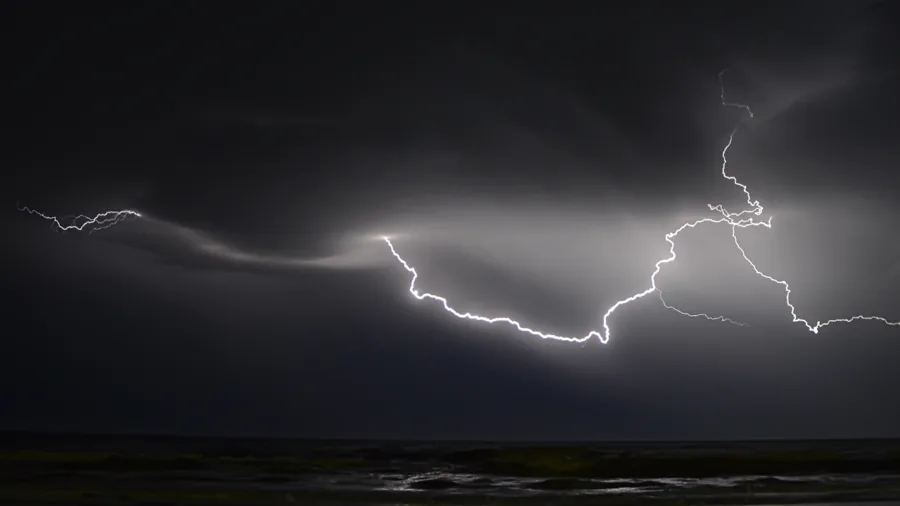
Surges do not only travel through AC power lines. A lightning strike can deliver a damaging surge through coaxial cable, phone lines, or ethernet connections just as easily.
If you have a cable modem, satellite receiver, DSL router, or phone system, look for a surge protector that includes coaxial and RJ11 or RJ45 pass-through ports with integrated surge protection on those data lines as well.
Home theater setups in particular benefit from coaxial protection, since the cable TV or antenna line enters the home from outside and is a direct path for outdoor surges.
Whole-home surge protection at the electrical panel is the most comprehensive solution for serious cases, but a strip with multi-line protection covers the most common entry points for the average household at a fraction of the cost.
If you pair your setup with a backup solar generator for outage protection, verify that any surge protector you use is compatible with modified sine wave or pure sine wave output, since not all strips behave well with alternative power sources.
Why You Should Trust Us
ProductFind is an independent editorial platform.
Every product in this guide was assessed using the PF Score system, a consistent 0-to-10 scoring methodology that weighs published specifications, expert review consensus drawn from across the industry, and verified buyer feedback at scale.
We do not conduct our own product trials; our evaluations are grounded in research, published data, expert review consensus, and verified buyer feedback.
This approach lets us compare products on equal terms and catch patterns that a single hands-on session might miss, such as long-term reliability trends or common failure modes reported after extended use.
Our scoring is applied uniformly across every model in a category. A higher PF Score reflects a stronger overall profile across safety certification, surge protection capacity, build quality, outlet usability, and value relative to the competition.
Scores are not influenced by brand relationships or advertising. ProductFind may earn an affiliate commission when you purchase through links in this article, but our affiliate relationships have no effect on scores, rankings, or which products are included.
Our picks are editorially independent.
Final Thoughts
Surge protection is one of the few equipment purchases where spending slightly more upfront can prevent the loss of electronics worth many times the cost of the protector itself.
The options in this guide span a wide range of form factors and feature sets, and there is a strong pick here for every common use case.
- Best Overall: Eaton Tripp Lite TLP1208SAT earns the top spot with the highest PF Score in this roundup, offering 12 AC outlets, coaxial and data line protection, and a strong joule rating that covers full home theater and home office setups with equal confidence.
- Best Premium Pick: Belkin 12-Outlet Surge Protector delivers the highest joule rating in the group alongside a reputable brand warranty and a flat plug design that works well in space-constrained environments.
- Best New Entry: Anker Power Strip with 2000J Surge Protector brings Anker’s well-regarded build quality to the surge protection category, with a clean layout and reliable USB charging that suits desk setups and bedside tables.
- Best Budget Pick: GE Surge Protector Power Strip keeps the price accessible without sacrificing ETL safety certification, making it the sensible choice for protecting a router, lamp, or secondary device cluster without overspending.
- Best Compact Option: One Beat Surge Protector Outlet Extender is the most portable pick in the group, with a rotating plug design and USB-C port that make it useful for travel, dorm rooms, and any spot where a full strip is overkill.
If your priority is comprehensive protection for high-value gear, start with the Tripp Lite TLP1208SAT or the Belkin 12-outlet model. For straightforward desktop or bedside charging with basic surge coverage, the Anker or GE options deliver solid value.
Whatever you choose, replace your surge protector if the protection indicator goes dark, if the unit sustains a significant surge event, or after several years of continuous use, since the internal components degrade over time regardless of visible damage.
Frequently Asked Questions
What Is the Difference Between a Power Strip and a Surge Protector?
A basic power strip simply adds extra outlets to a single wall socket. It provides no protection against voltage spikes.
A surge protector includes internal components, typically metal oxide varistors, that absorb or divert excess voltage before it reaches connected devices.
They can look identical from the outside, so always check for a joule rating and a UL 1449 or ETL certification before assuming a strip offers any protection at all.
Do Surge Protectors Wear Out?
Yes. Every surge a protector absorbs draws down its total joule capacity. Once those internal components are exhausted, the unit will still pass power but will no longer protect against surges.
Quality models include an indicator light that turns off or changes color when protection is gone. If your surge protector lacks this indicator, replacing it every three to five years or after any significant electrical event is a reasonable precaution.
Will a Surge Protector Protect Against Lightning?
A standard surge protector can handle the minor to moderate surges that result from indirect lightning activity on the power grid.
However, a direct lightning strike to your home or the utility line feeding it can produce a surge far larger than any consumer strip can handle.
For maximum protection against lightning, whole-home surge suppression at the electrical panel combined with a quality point-of-use surge protector is the recommended approach. Unplugging sensitive electronics during severe electrical storms remains the most reliable option when conditions warrant it.
Is a Higher Joule Rating Always Better?
A higher joule rating generally means the protector can handle more cumulative surge energy before its protection degrades, which is a meaningful advantage for long-term use and for setups exposed to frequent minor surges.
However, the joule rating is only one factor. Clamping voltage, the threshold at which the protector begins diverting energy, matters just as much for determining how well a unit protects sensitive electronics.
Look for both a strong joule rating and a low clamping voltage for the best combination of capacity and responsiveness.
Can I Use a Surge Protector with a Generator or UPS?
Most surge protectors work fine with a UPS (uninterruptible power supply) or a pure sine wave generator.
Modified sine wave output from some generators can occasionally trigger the overcurrent protection on certain surge protectors or cause minor incompatibilities with sensitive electronics.
If you use solar panels with an inverter-based home power system, confirm the output waveform before connecting a surge protector downstream. When in doubt, the product documentation or manufacturer support line can confirm compatibility.
How Many Outlets Do I Actually Need?
Count every device you plan to connect, including wall adapters for routers, smart home hubs, and chargers that block adjacent outlets. Then add two or three extra outlets as a buffer for future devices.
A 6-outlet strip covers most single-desk setups comfortably. A 10- to 12-outlet strip is appropriate for a full home office or home theater.
Avoid the temptation to daisy-chain surge protectors or plug one strip into another, since this bypasses protection circuitry and creates a fire risk. If you consistently run out of outlets, step up to a higher-count model rather than stacking strips.
For a well-organized workspace, pairing your surge protector with a good TV wall mount and proper cable routing makes the whole setup cleaner and safer.
About the author
Jamie is a reviewer and writer for ProductFind who specializes in Power & Charging. Jamie evaluates products through independent research: specifications, expert review consensus, and verified buyer feedback, and rates each one on the PF Score. Jamie focuses on helping readers pick the right power & charging for their needs and budget.